Spain was supposed to be three days. A conference in Bilbao, maybe a week if I felt like stretching it. Instead, it became a tale of missed trains, backpacking across eight cities, with my laptop in tow.
Three days quietly turned into a month. This happened somewhere between figuring it all out as I went. I watched real flamenco in a Granada basement. I also spent too many hostel rooftop nights with strangers who turned into friends.
This is the Spain edition of Let’s Goto X. If you are reading this, I hope it helps you plan your own Spanish run better than I did. And if you are a remote nomad, you are the kind of person who might have to answer a Slack message from a hostel rooftop. This one is written specifically for you.
Spain at a glance
- Trip: 30 days, eight cities, September 2023
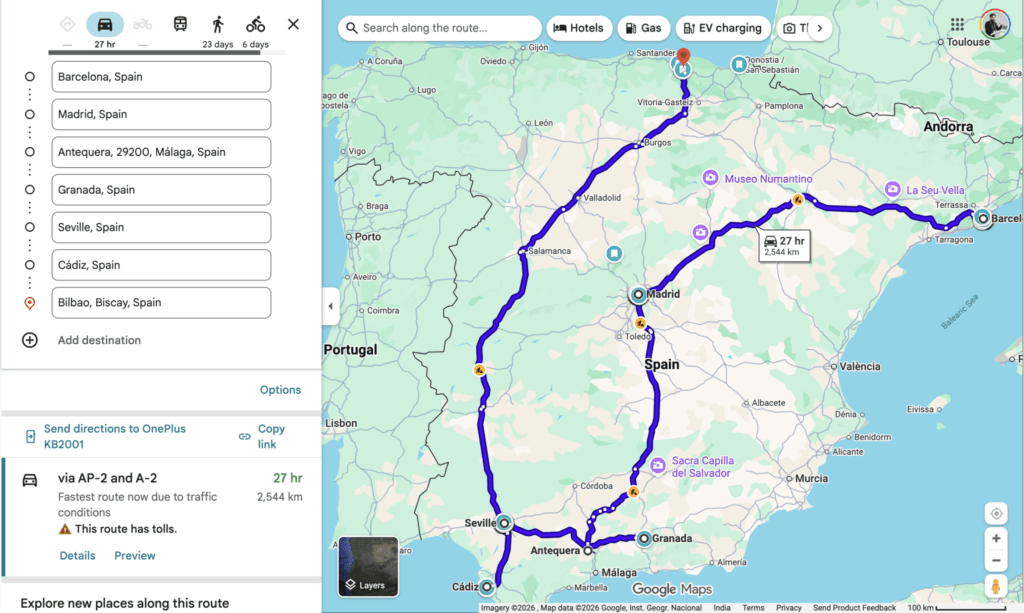
- Route: Barcelona, Antequera, Granada, Seville, Cádiz, Málaga, Bilbao, back to Madrid
- Total spend: Check below for the final round-up!
- Best time to go: spring (March to May) or autumn (September to November). Otherwise gets too hot.
- Visa: Schengen, around 10 days to process
- Connectivity: physical Orange Holidays Europe SIM, 30 GB, worked everywhere
Spain, how did that happen?
September 2023. I was accepted to speak at Open Source Summit 2023 in Bilbao. The Linux Foundation was hosting it. Thousands of developers talking Linux, Kubernetes, security, OSPO, the whole stack I geek out about. My talk was scheduled for September 21 to 25.
I looked at my calendar and did the math a remote worker does instinctively: if the conference is the work anchor, and I can work from anywhere the rest of the time, then the only real cost of staying longer is the bed and the tapas.
So why not see Spain properly? Barcelona’s architecture. Granada’s Alhambra, Madrid’s museums. Seville’s tapas. This was my one shot.
The plan then?
You must be new here. We don’t do detailed itineraries.
I have never locked myself into one, and itineraries rarely survive first contact with reality anyway. I booked Delhi to Barcelona. I plotted a route to be in Bilbao for the conference at the time. Then, I booked a return from Madrid. Everything in between I left open. Train tickets were bought at the station. Bus tickets were bargained for. Hostels to introduce me to people. And the laptop to keep the lights on.
That is planning enough. It has been my guiding principle for a decade of travelling non-stop. The only two accommodations I had locked in advance were the first Barcelona hostel and the Bilbao stay for the conference. That approach stresses some people out. For me, it is freedom.
Working remotely from Spain (the part most guides skip)
This is the section I wish someone had written for me. Spain is one of the easiest countries in Europe to work from while you are on the move.
- The timezone maths: India runs at UTC+5:30. Spain in September sits at UTC+2. That is a 3.5-hour gap, with Spain behind.
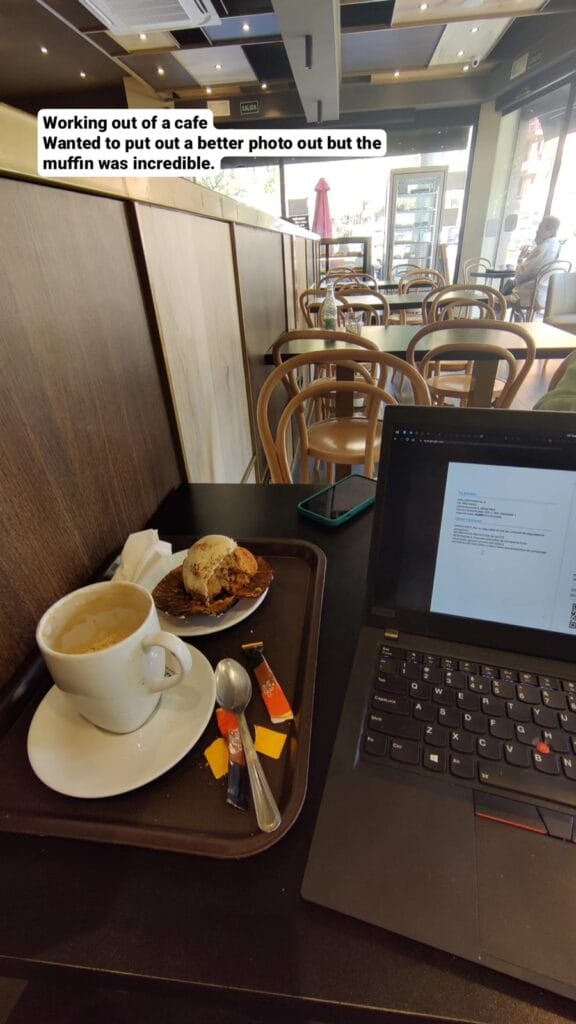
- Where I actually worked: Beautiful cafe, hostel rooftops, and common rooms. Spanish cafe culture works in your favour here. A couple of cortados and a generous tip go a long way.
- The trick is to do focused work in the calm morning hours, because the country genuinely shuts down for the afternoon, and then go be a traveller once the calls are done.
The daily rhythm is a feature
Spain eats late and lives late. Lunch is the big meal, dinner is 9 to 10 PM, and the streets only fill up after that.
For a remote worker this is great: the morning is yours for deep work, the long lunch is your break, and the social part of the day starts exactly when you have logged off. I leaned into it instead of fighting it, and my work and my travel stopped competing for the same hours.
Logistics
Flights
I flew Etihad. Delhi to Barcelona via Abu Dhabi on the way in, and back out of Madrid via Abu Dhabi to Hyderabad (long story, I was organizing PyCon India 2023 in Hyderabad right after). If the price is right, I always choose Ethiad for my travel.
TIP: Nothing beats a hot shower after 10 hours of travel at Abu Dhabi’s Airport Lounge.
Visa
Indian passport holders need a Schengen visa. The process is straightforward, but it tests your patience. I had a year-long visa from Spain.
I applied at the Spain Visa Application Centre in Delhi. Paid around €80 plus VFS service charges (another ₹2,000 or so). Got it in 10 days. When I landed in Barcelona, the immigration officer looked at my passport, stamped it, said “enjoy Spain,” and waved me through. That was it. If you travel Europe often, look into the year-long Schengen visa; it changes the whole calculus for nomads.
SIM and internet
You need data. For maps, for booking trains last minute, for finding a hostel at 2 AM when plan A collapses, and for tethering a laptop when the cafe wifi is rubbish. I bought an Orange Holidays Europe SIM at Barcelona airport. €40 for 30GB plus unlimited calls within Europe. The shop is right after baggage claim; you cannot miss it.
Along with that, I always activate international roaming on my Jio phone to get OTPs and messages from India.
Cash, cards, and money
Spain runs on Euros. My exchange rate when I went was roughly 1 EUR to 90 INR. I used my Niyo card for almost everything. Visa and Mastercard work everywhere, even the tiniest tapas bar takes a card. I pulled cash a couple of times: €200 at Barcelona airport as backup, and once in Granada for a cash-only market. ATMs are everywhere with minimal fees.
Look for ones attached to actual banks rather than the standalone machines in tourist zones.
Insurance
Mandatory for the Schengen visa. I got mine through Tata AIG, €30,000 medical coverage, around ₹2,500 for 365 days. Never had to use it. But the one time you need it and do not have it, you are finished. Just get it.
Getting Around
- Trains: Renfe runs most of it, the high-speed AVE connects the major cities, and the carriages have free wifi that actually works, which matters when you want to clear your inbox between cities. Book through the Renfe app; it is far cheaper in advance.
- Buses: Cheaper than trains, slower. Alsa handled my shorter hops. Granada to Sevilla was €15 and three hours, comfortable enough, with free wifi.
- Metro: Barcelona and Madrid both have great systems. In Barcelona, buy a T-10: ten rides for €11 versus €2.40 a single trip.
- Walking/Cycling: I walked everywhere, 15 to 20km most days. Barcelona’s Gothic Quarter, Madrid’s literary district, Granada’s Albaicín, and Sevilla’s Santa Cruz. You catch the things you miss from the metro: random plazas, hidden tapas bars, street art, and actual life.
- BlaBlaCar: Europe’s ridesharing app. I used it for the Cádiz leg out of Sevilla, €10 each way, split with three others.
- Flights: Domestic flights don’t break the bank if you need them.
Where I stayed
Hostels, almost entirely. Cheap, social, and the best way to travel solo. You meet people, swap tips, and end up exploring with strangers who are friends by the end of the night. For a nomad I add one filter: somewhere I can actually work. A rooftop, a quiet common room, and reliable wifi. The three that nailed it are flagged below.
- Madrid, CATS Hostel. Near Gran Vía, €20/night. Party hostel. Wouldn’t recommend for long stays. Go for the Theatro nights pub crawl.
- Antequera, Small hotel by the train station, €30. I was the only guest. Not planned. Sometimes solo travel means actual solitude.
- Granada, ECO Hostel, In the Albaicín, €22/night. Incredible place, it has its own cafe.
- Sevilla, Oasis Backpackers, Central near the Cathedral, €20/night, rooftop bar, and a small pool on the rooftop.
- Cádiz, 1 night. A cheap room in the old town off the cathedral square, €35. Completely optional.
- Málaga, 1 night. A central hostel a few streets from the Roman theatre, €19. Costa del Sol energy, Picasso’s birthplace.
- Bilbao, 5 nights. A service apartment right next to San Mamés, the Athletic Bilbao stadium, covered by the Linux Foundation as a speaker. Cosy, quiet, my own kitchen and a walk to the venue that took me right past the stadium every morning.
I wrote a whole guide to finding good hostels if you want the full method.
Food and how much it costs
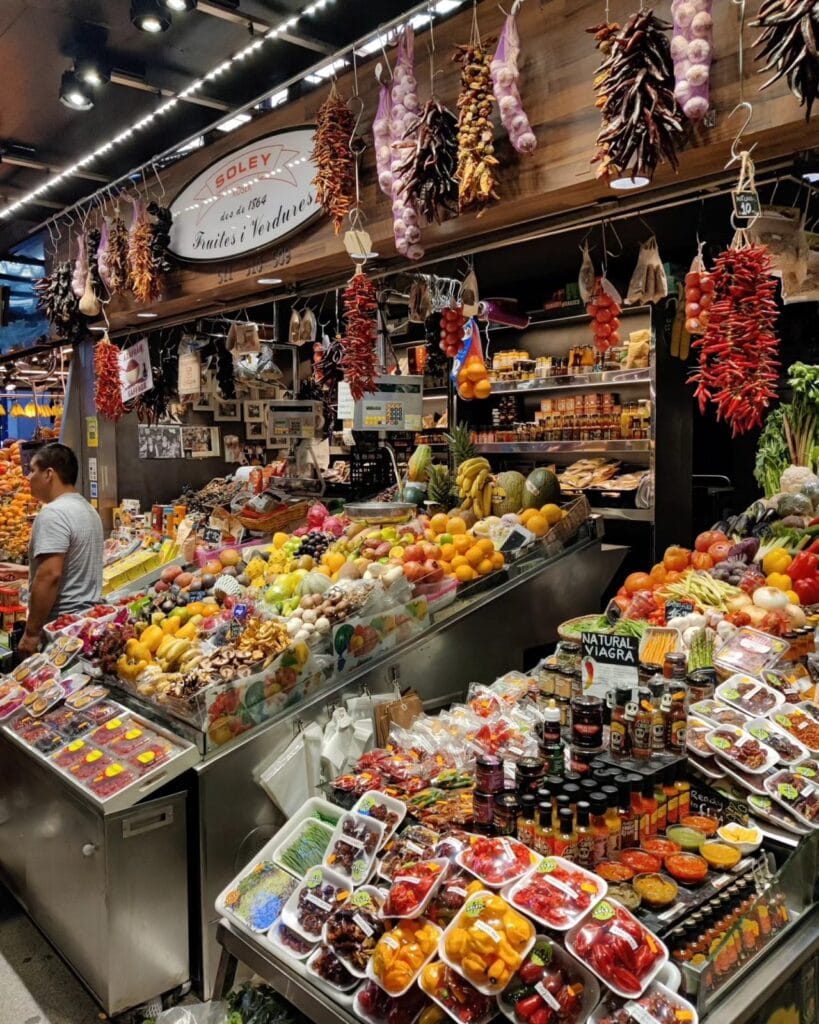
Spanish food is incredible. Fresh, bold, and the portions actually fill you. Rough costs: Menu del Día (the lunch special) is €10 to 15 for a starter, main, dessert and drink. Tapas run €3 to 8 a plate, coffee €1.50 to 2.50, beer €2 to 4, and supermarket breakfast supplies €5 to 7.
The hack that funds a nomad budget: in Granada, many bars hand you free tapas with every drink. Not a token, actual food. Order a €2.50 beer, get a plate of patatas bravas or croquetas. Do this at five bars and dinner costs you €12. The system is genius.
My pattern was one proper Menu del Día at lunch, bread, cheese, and fruit from Mercadona for breakfast, and tapas at night. That averaged €15 to 30 a day on food and drinks.
The timeline: how 30 days actually happened
This is the route I followed.
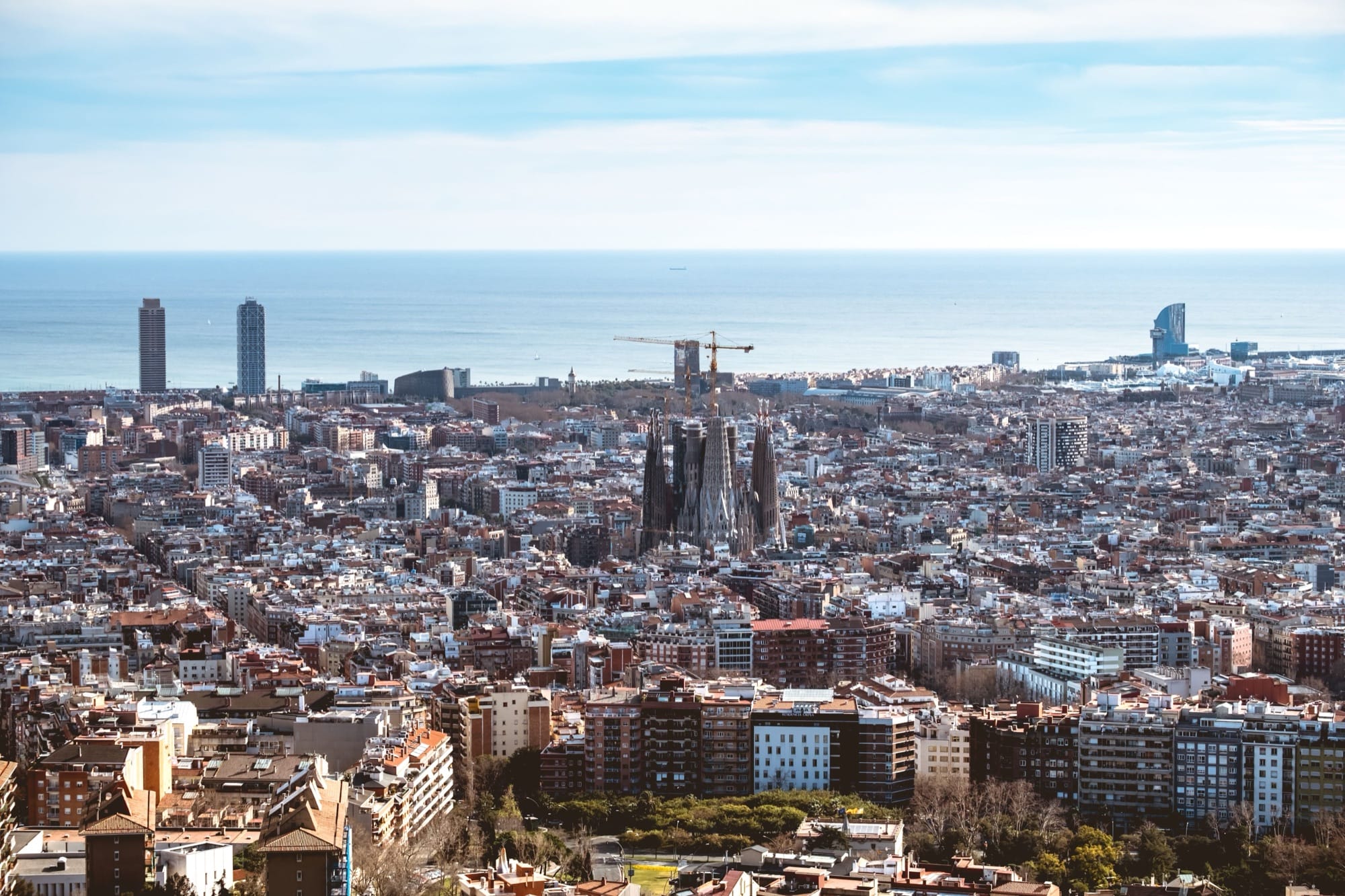
Barcelona, you have my heart.
Barcelona
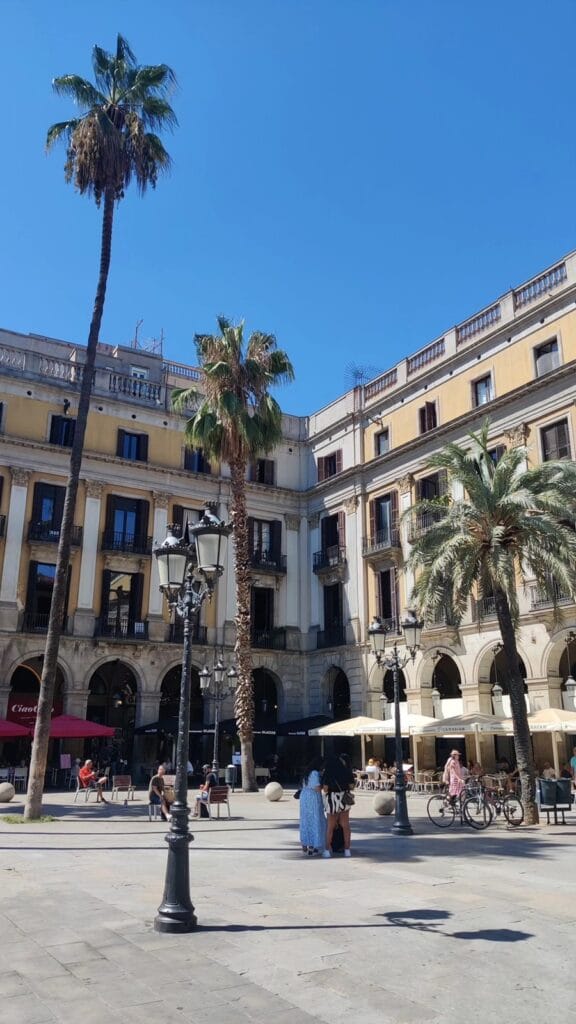
First impression: Barcelona is loud, vibrant, colourful. People everywhere, bikes everywhere, the Mediterranean sun hits different.
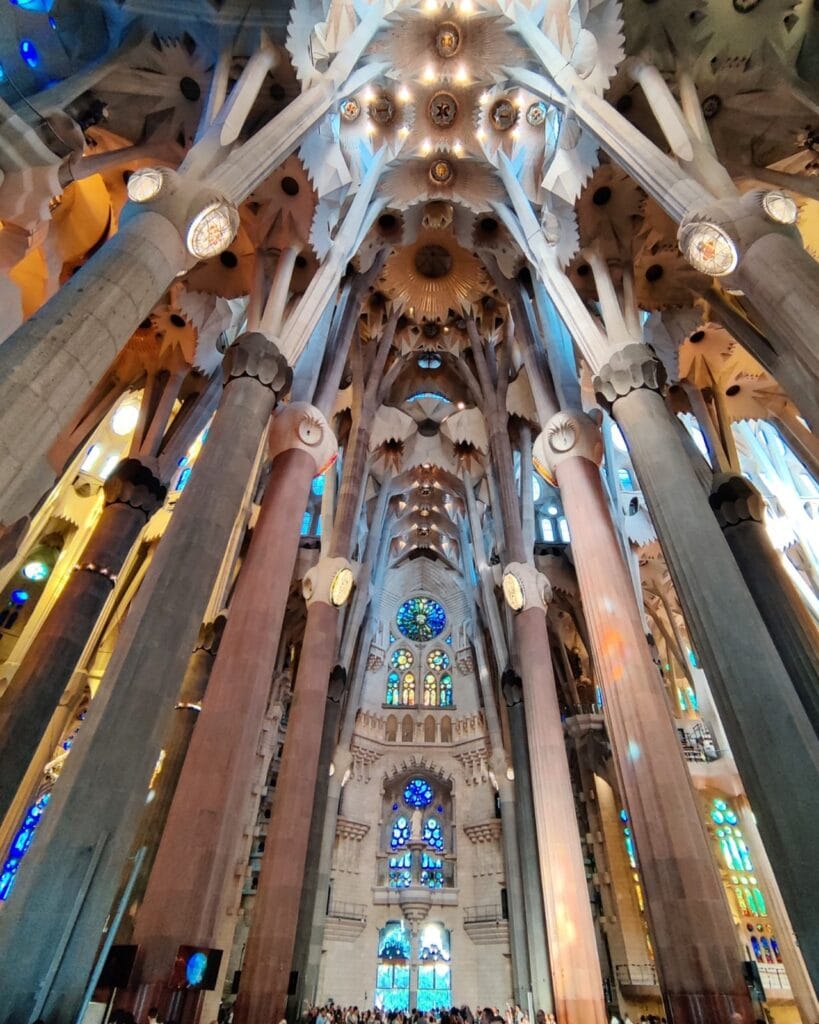
My ex-colleague at the company was kind enough to host me at her incredibly beautiful home. This made Barcelona the best time I have ever had in Spain. I was able to use the card to rent the bicycle every day for 30 minutes each in Barcelona. I cycled the coast from Barceloneta to Port Olímpic, stopping for a cortado and watching people swim before noon. Day two was the Sagrada Familia, tickets booked the night before, €26 entry. I walked in, and my brain broke a little. The stained glass throws rainbow light across columns built to look like a stone forest.
Gaudí designed it knowing he would never see it finished, and it has been under construction since 1883. That is commitment to a vision.
Day three was Park Güell, more Gaudí, €10 entry. Mosaic benches, organic architecture that looks grown rather than built, panoramic views down to the sea.
Evenings were for wandering: the Gothic Quarter’s medieval lanes, the Gràcia neighbourhood where locals actually live, and a tiny bar near the Gothic Quarter whose croquetas were perfect, crisp outside, creamy inside, €4 for three. On night four, I joined the hostel pub crawl through five bars and learned that Spanish nightlife does not start until 11 PM.
My internal clock was confused, then adapted fast, which is exactly the rhythm that later made working here easy.
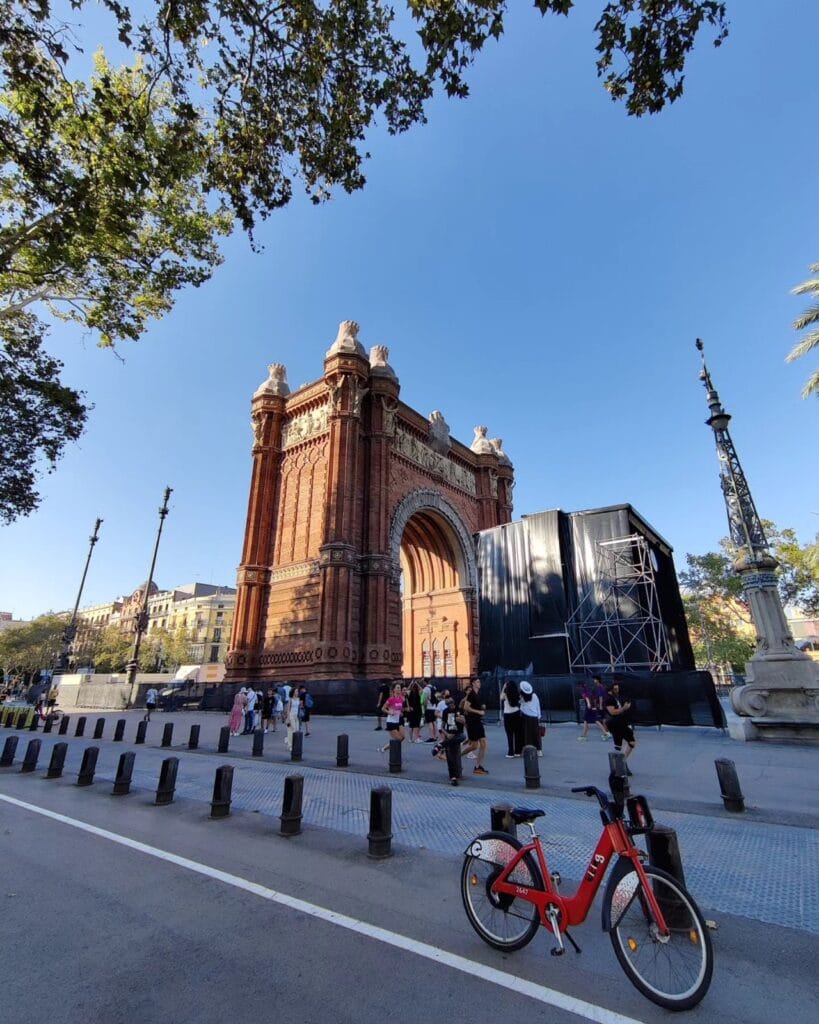
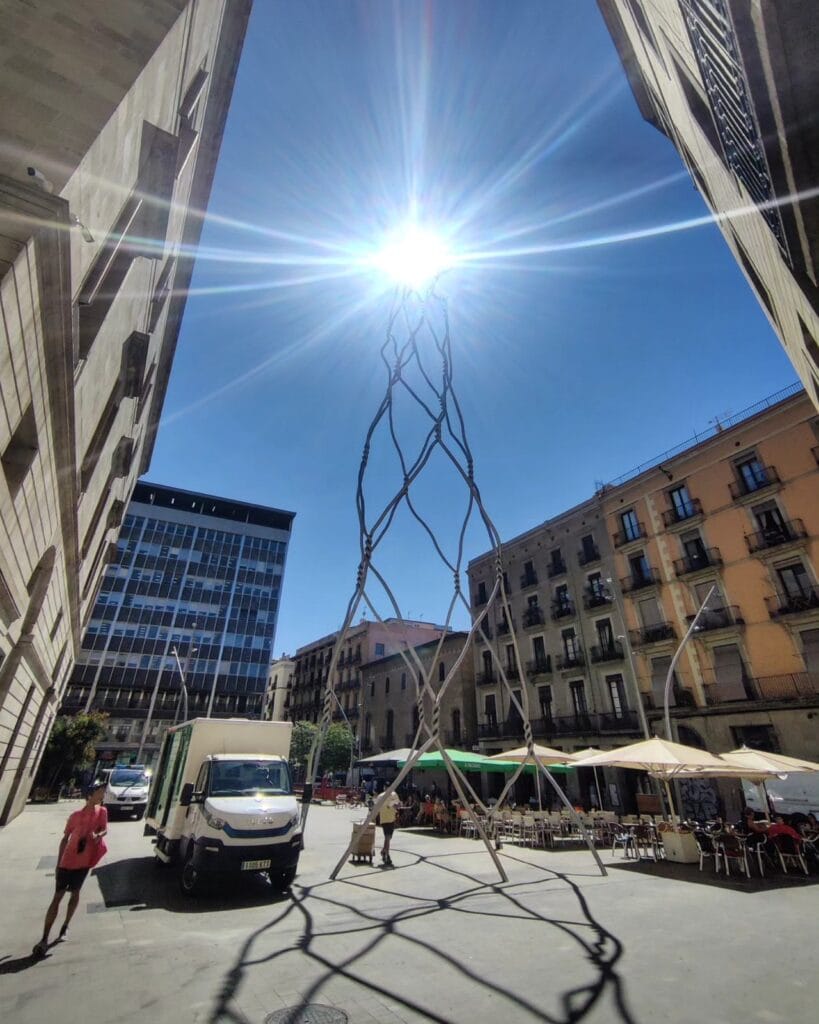
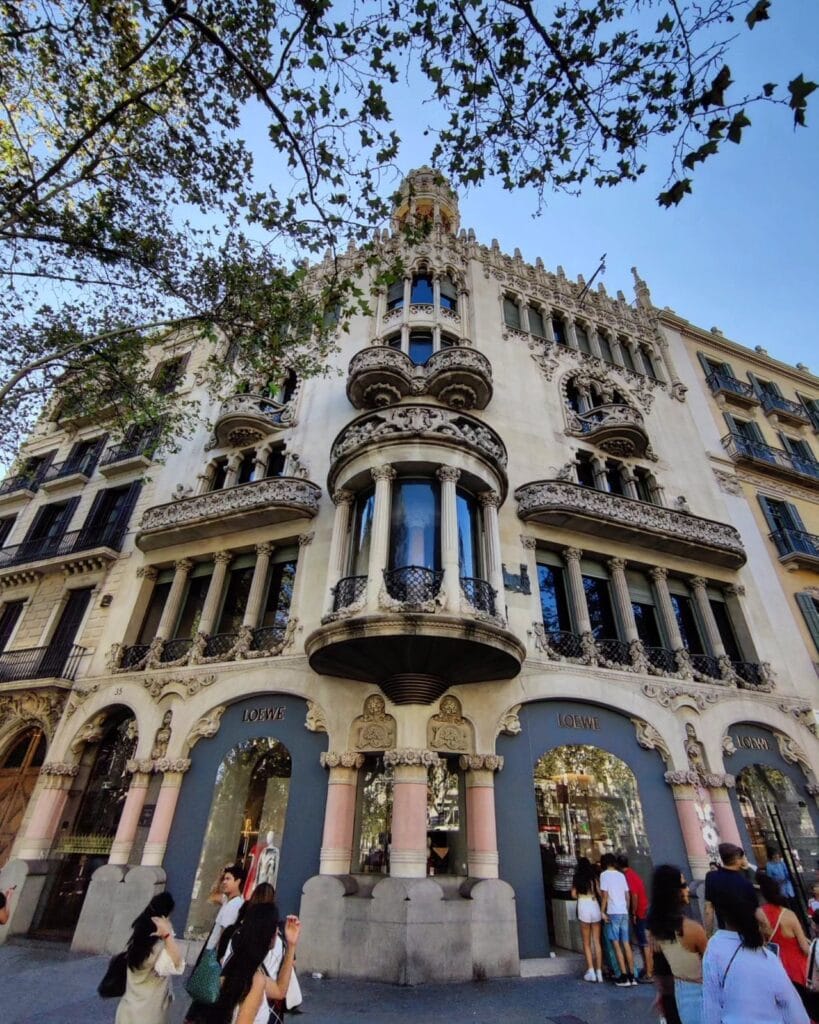
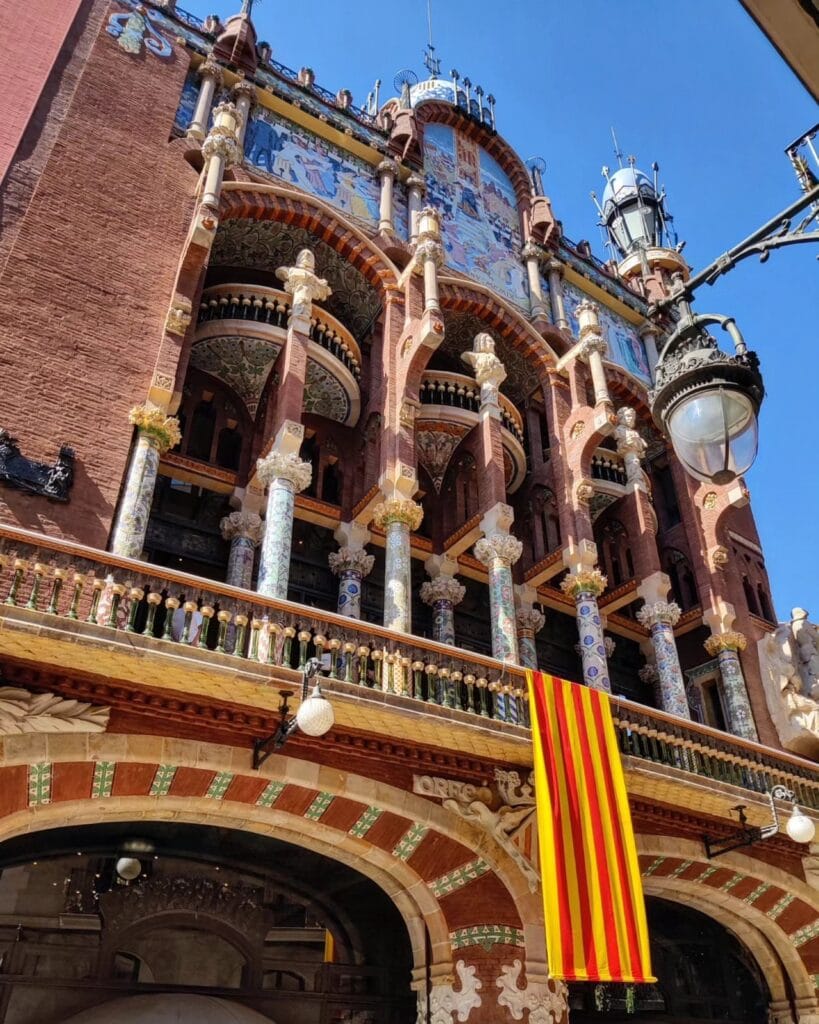
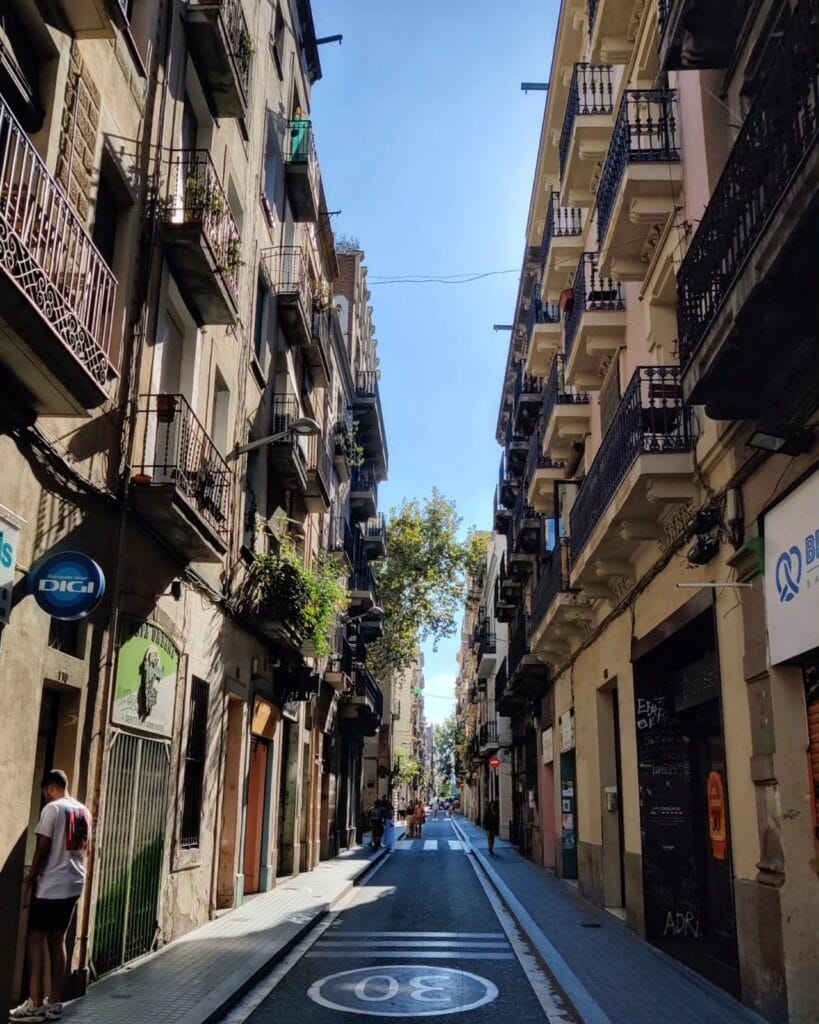
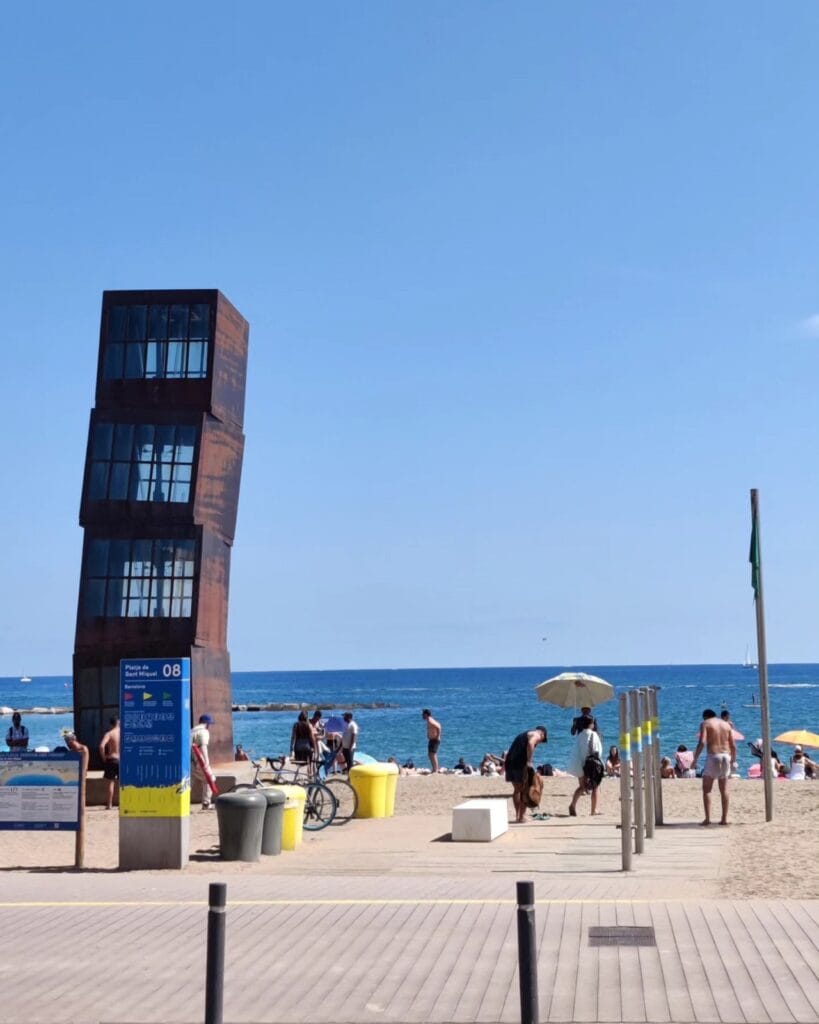
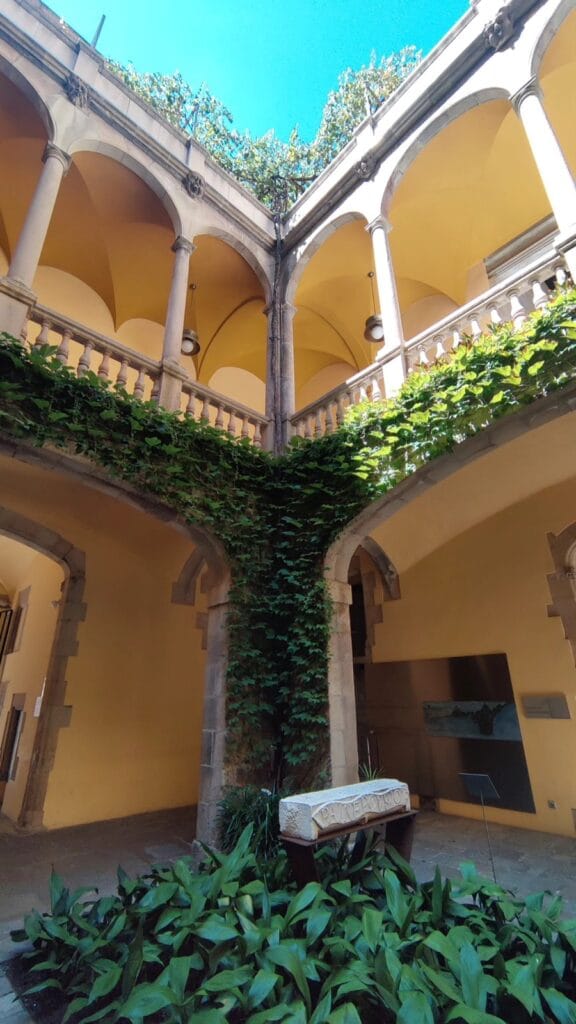
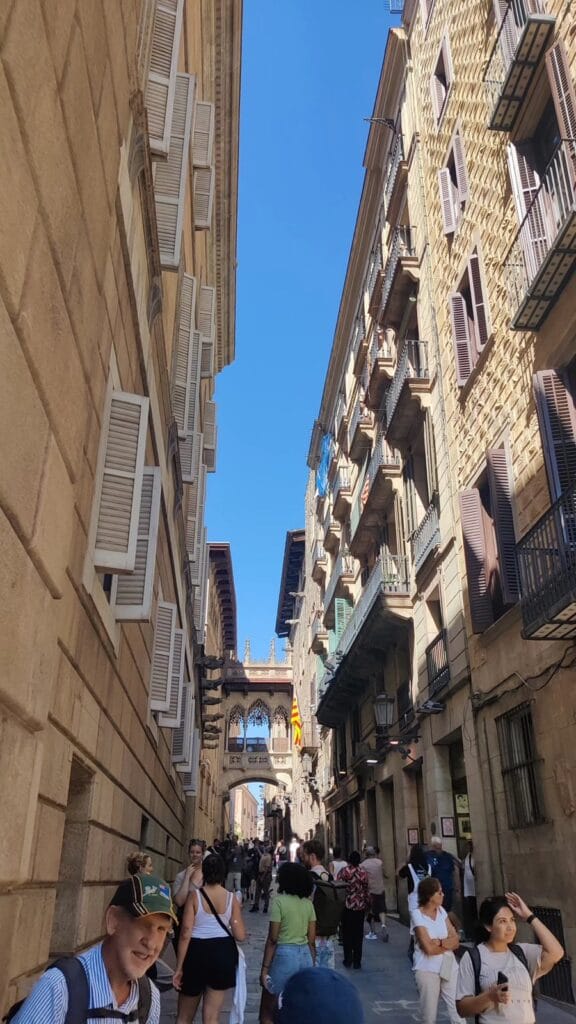
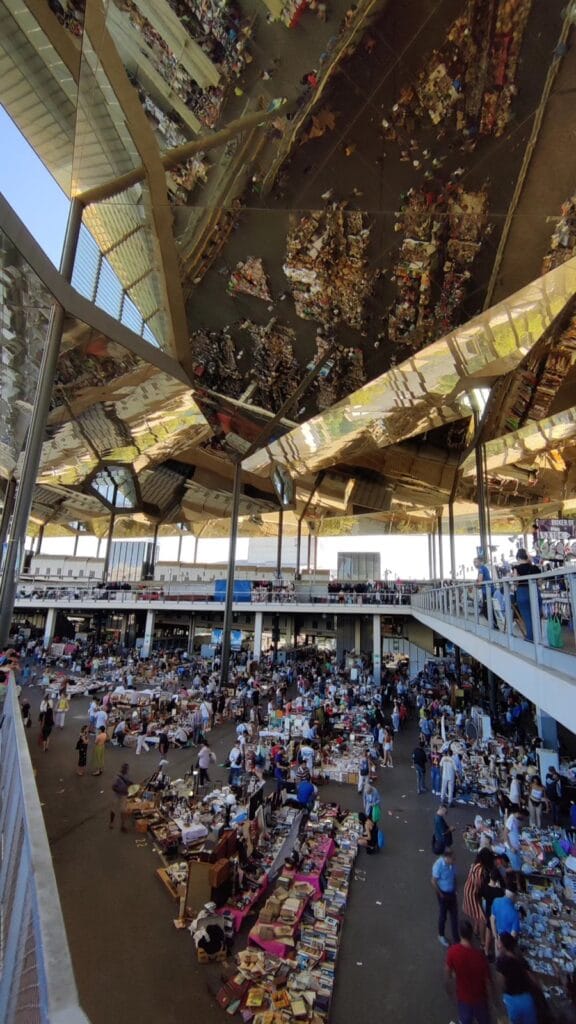
I cycled across most of the city and made a point of getting into its barrios, each one a slightly different city: Barceloneta for the beach, the Barri Gòtic and El Born for medieval lanes and cocktail bars, El Raval for the grittier edge, Eixample for the Gaudí grid, Gràcia for the village-in-a-city feel, Poble-sec and Sant Antoni for vermouth and local life, and Poblenou and Montjuïc for space and views.
Between rides, I worked out of cafes and bars, took an aperitivo while wandering near the Park Güell gates, and watched someone tuck into a plate of pulpo (octopus), the first time I had seen it eaten, which felt like a small initiation. I promptly left after that.
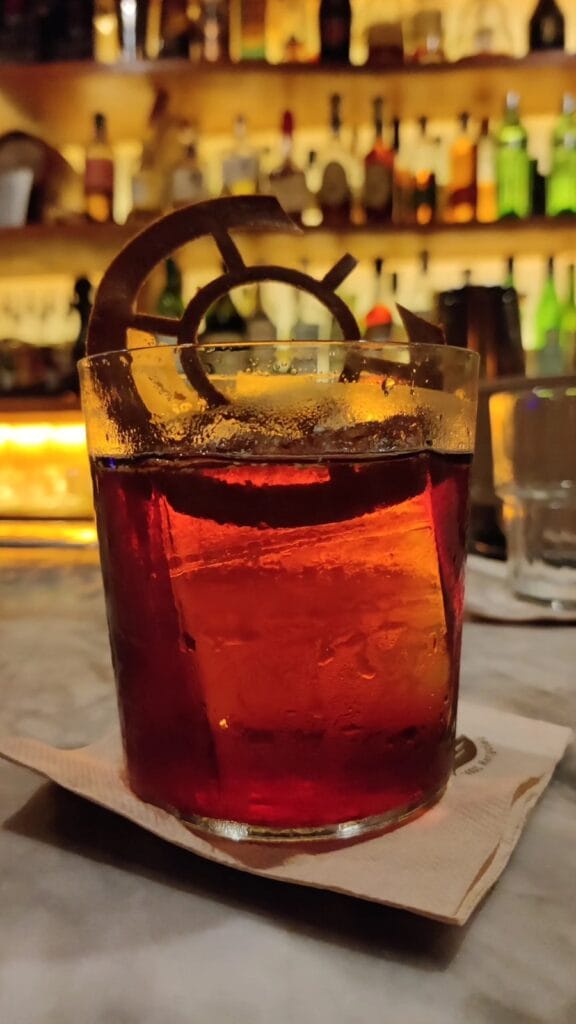
I was able to get into Paradiso right at the last minute before they closed down. The best bar in the world. It’s a hidden bar, tucked behind a sandwich shop which is actually a front.
On the thing everyone warns you about: nothing happened to me with pickpockets, not once. Barcelona has a reputation, and the old-city streets do get shady, especially the further you wander off the main drags. But the metro is excellent and well-connected, and if you keep the ordinary level of street sense, you will be fine anywhere.
There is so much to see here, beaches and back streets both, that the worst thing you can do is stay tense and miss it.
The night it became a story.
The first train I have ever missed: Antequeera
This one gets its own heading, because it is the part of the trip I tell people about first.
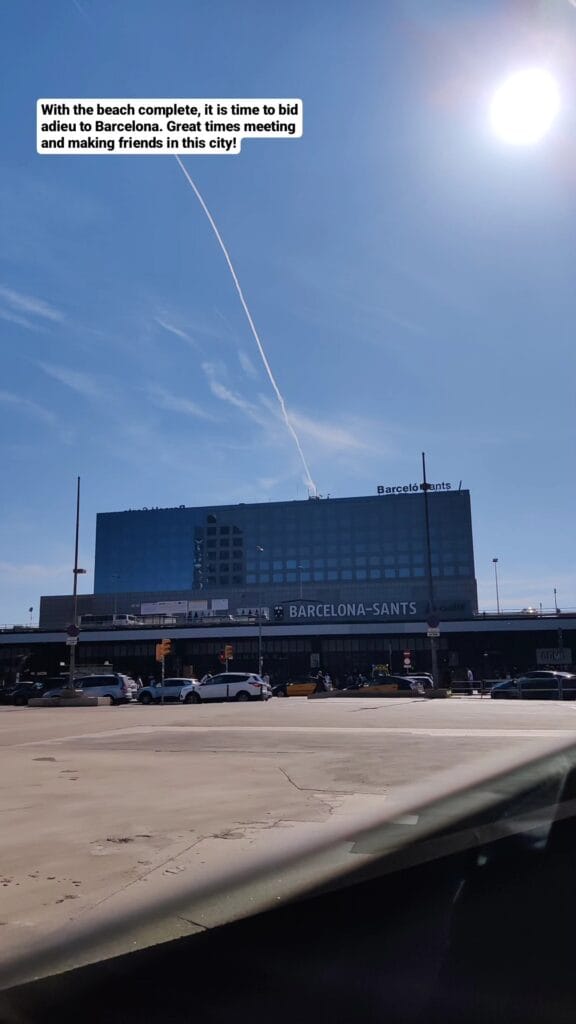
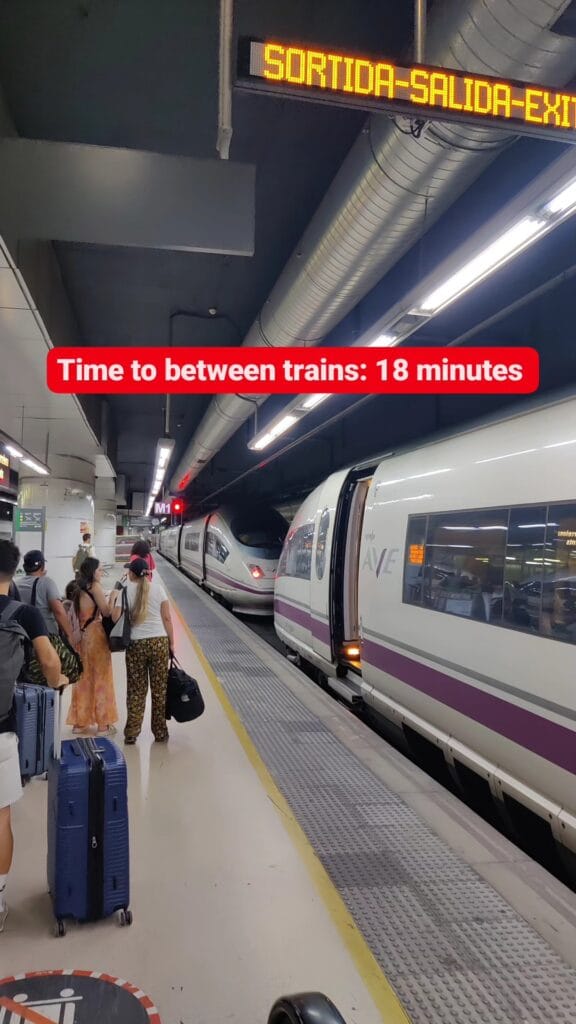
After six days in Barcelona I said goodbye to my friend and took a bullet train for the first time in my life. The AVE, Spain’s high speed pride, the kind of train whose entire point is that it does not run late. From Madrid I had a connecting train booked onward to Granada. And then, with a timing too ironic to script, the bullet train ran late.
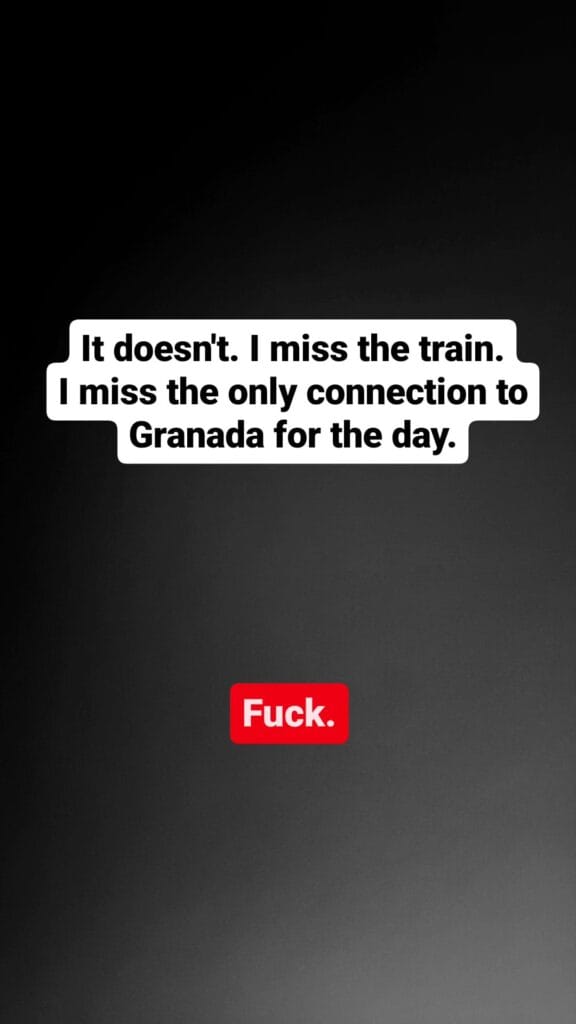
The fast train. I pulled into Madrid behind schedule and watched my Granada connection slip out of reach. First train I have ever missed, anywhere, in years of travelling. That ticket, €35, gone. Renfe runs the network and runs it well, which somehow only sharpened the irony.
So there I was, stranded in Madrid with a backpack and no bed booked. Rather than burn a whole day waiting for the next direct train south, I grabbed a late train that routed through a town I had never heard of: Antequera. €40. The plan, if you can call it that, was to land there and find a cab or a bus onward to Granada.
I reached Antequera station around midnight. Pitch black. The station sits out on its own, ringed by what felt like forest and nothing else, no bus and no onward anything at that hour, and for a few minutes it was genuinely scary, quite possibly one of the most challenging nights I have had on the road.
I called a cab from a board that was there at the railway station, and waited 30 minutes in the cold for it. No human in sight. Having a feeling that someone was watching me from the treeline. I found a hotel on booking.com and asked the driver to take me into Antequera itself. I checked into the place, the owner was barely awake and me as the only guest. Very Hotel California vibes. The lift shook as it carried me to my room upstairs. And, once I was behind locked doors, I finally thought the nightmare is over. Barely go any sleep after that.
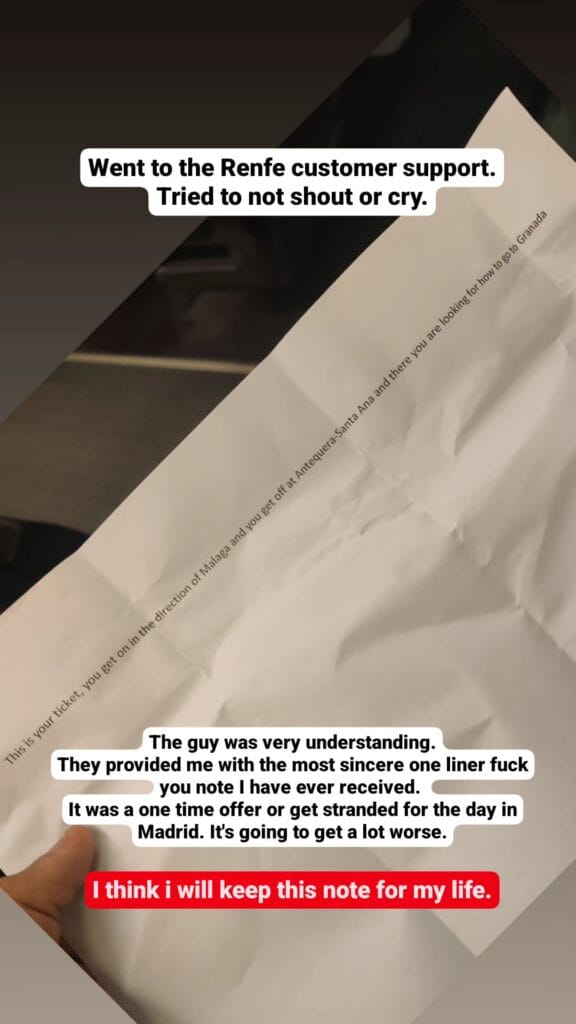
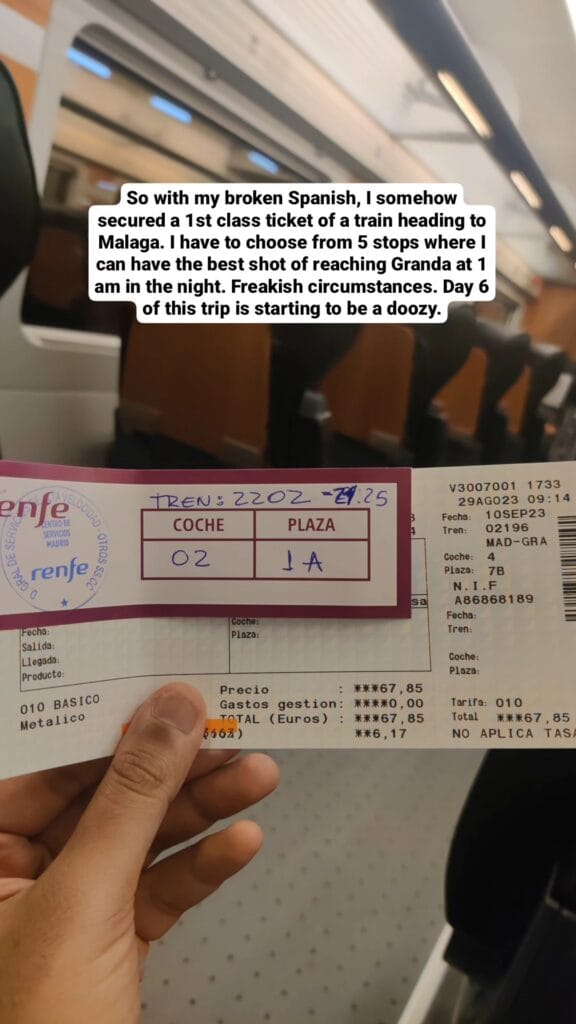
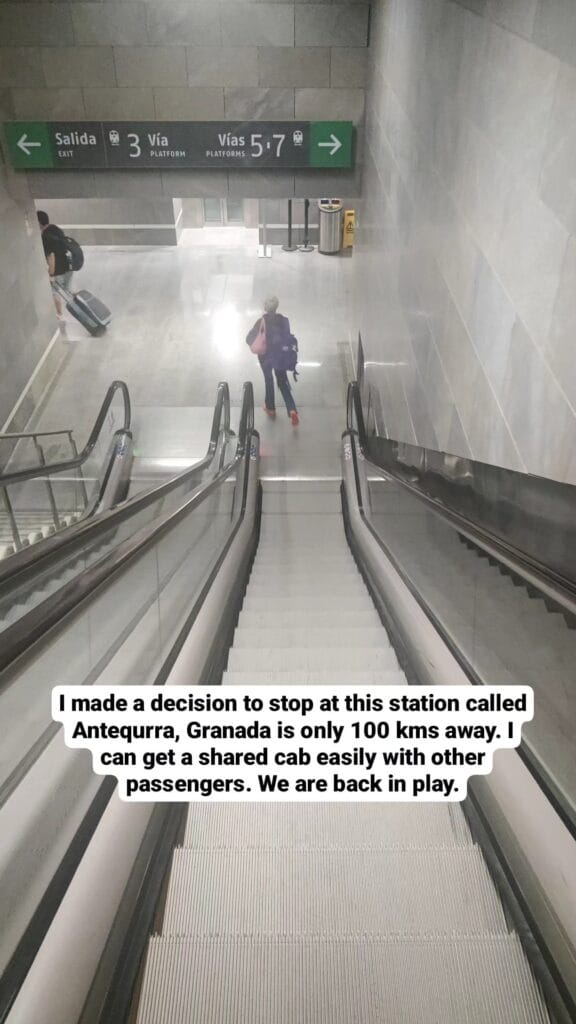
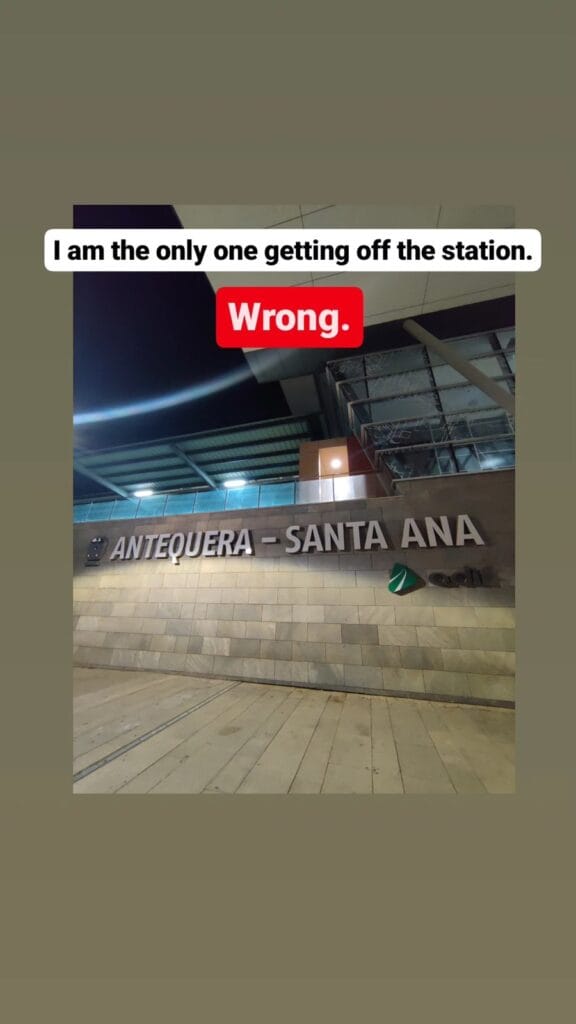
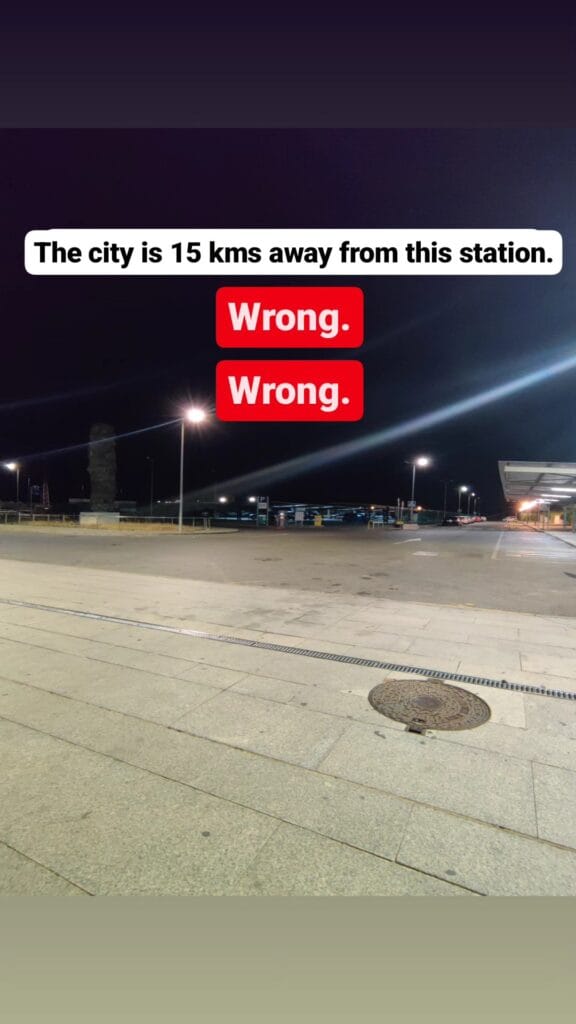
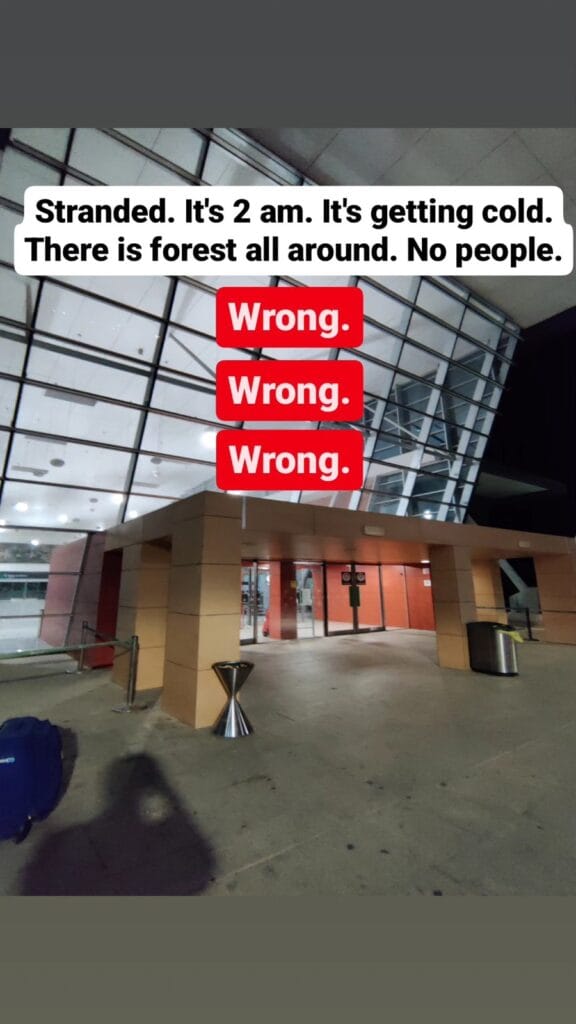
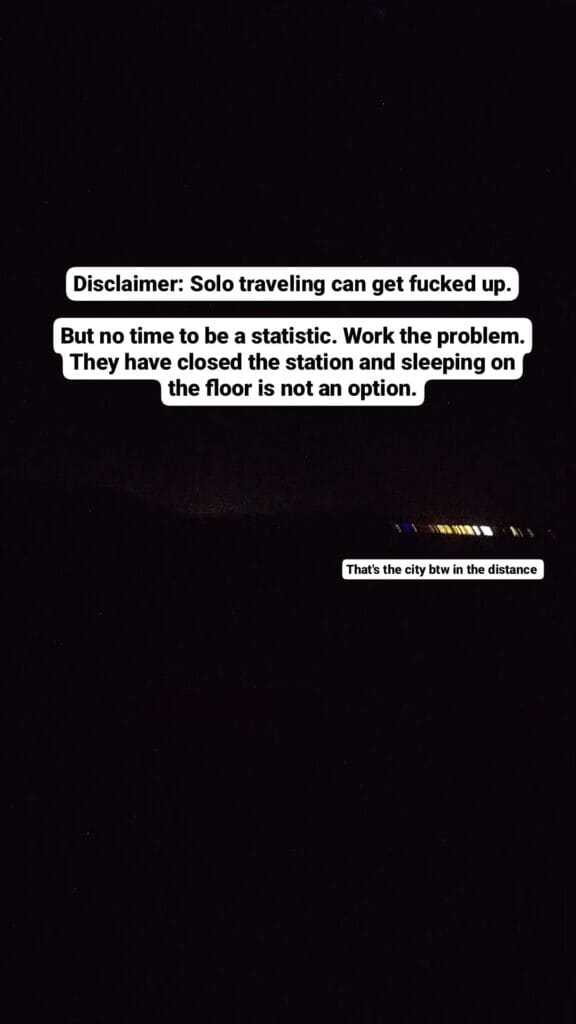
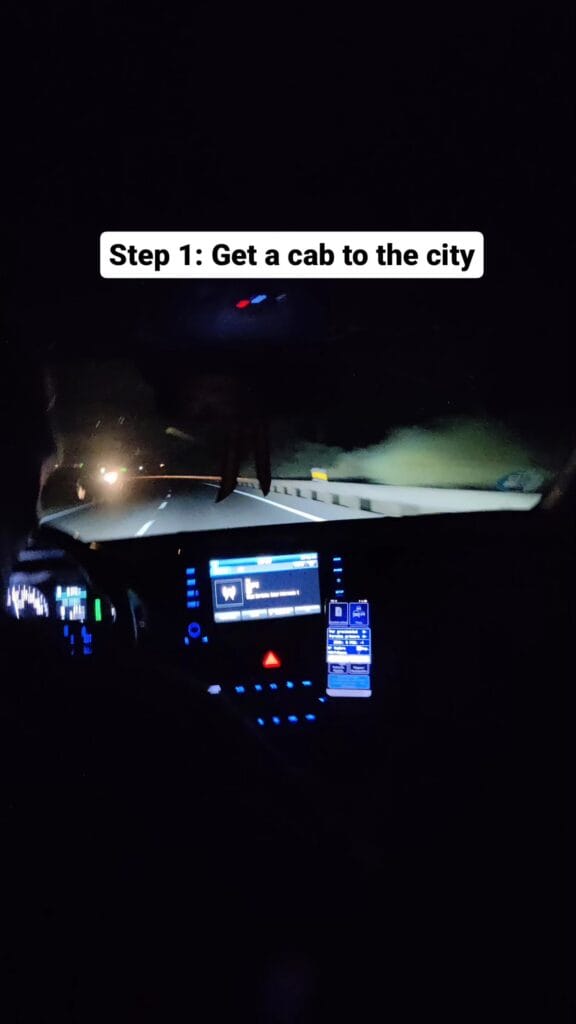
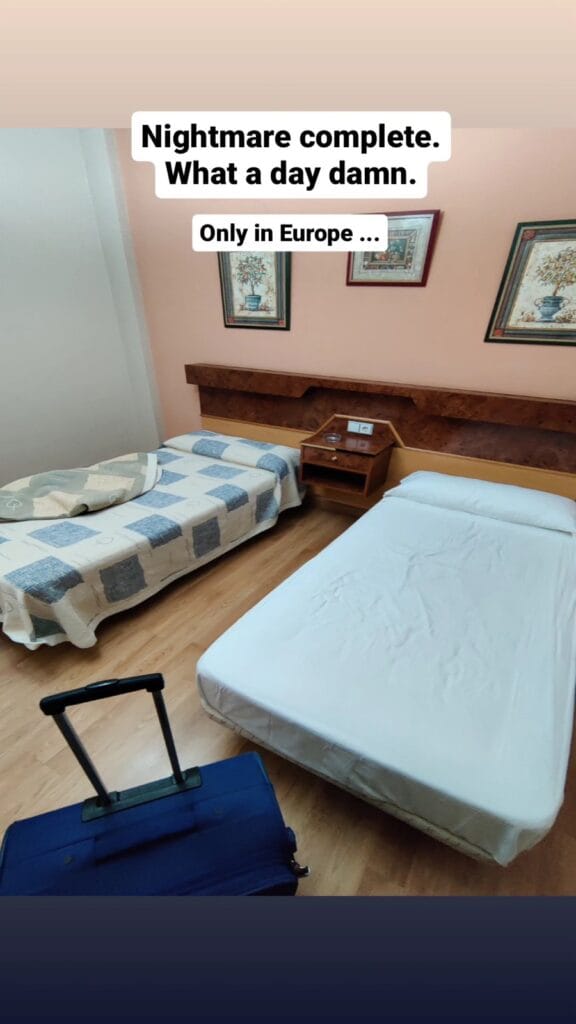
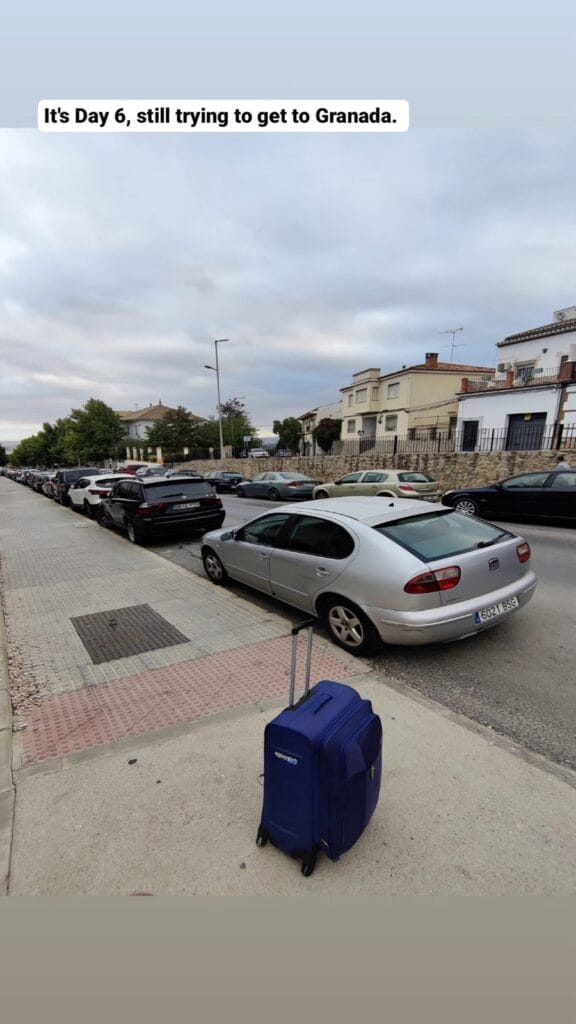
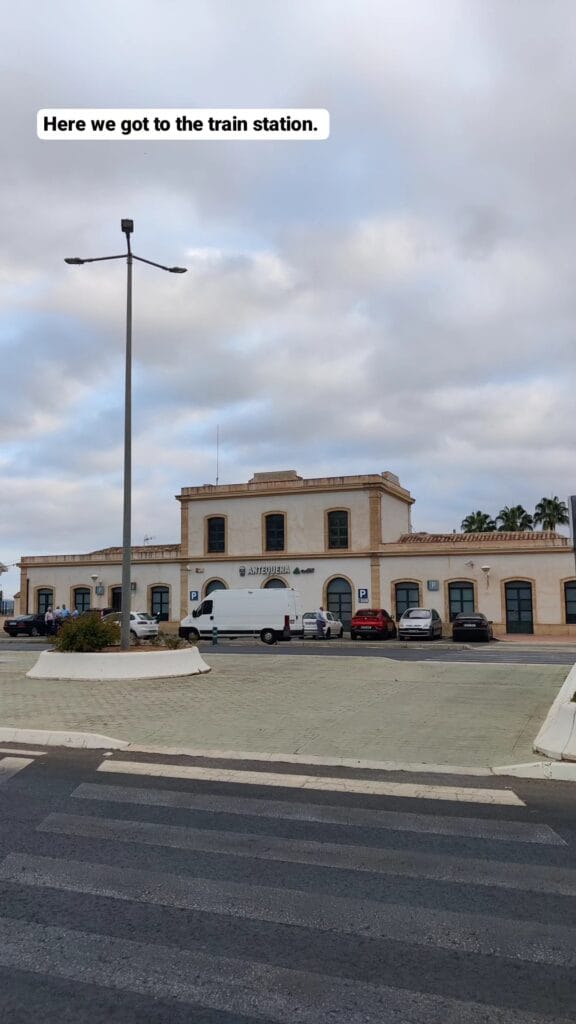
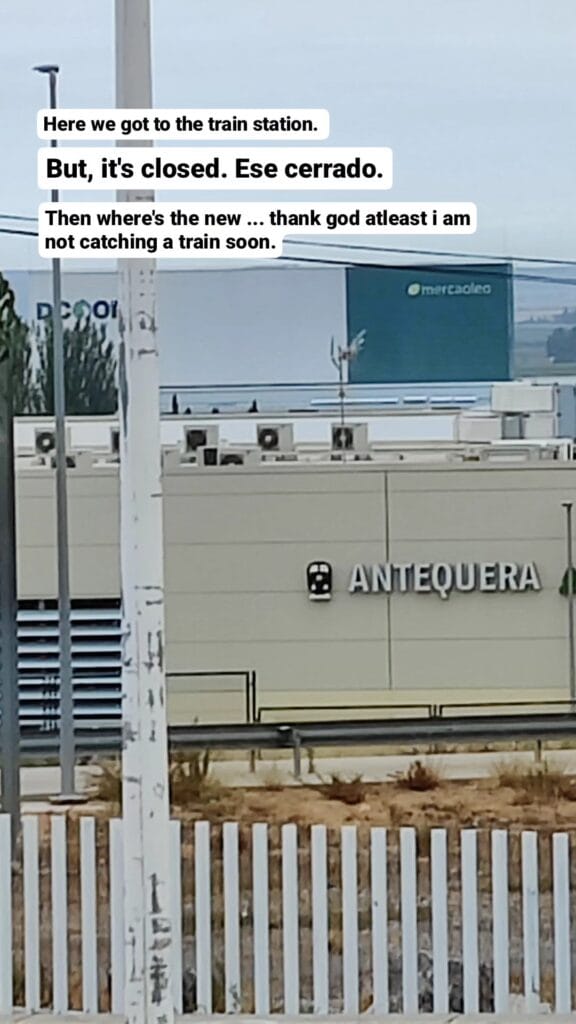
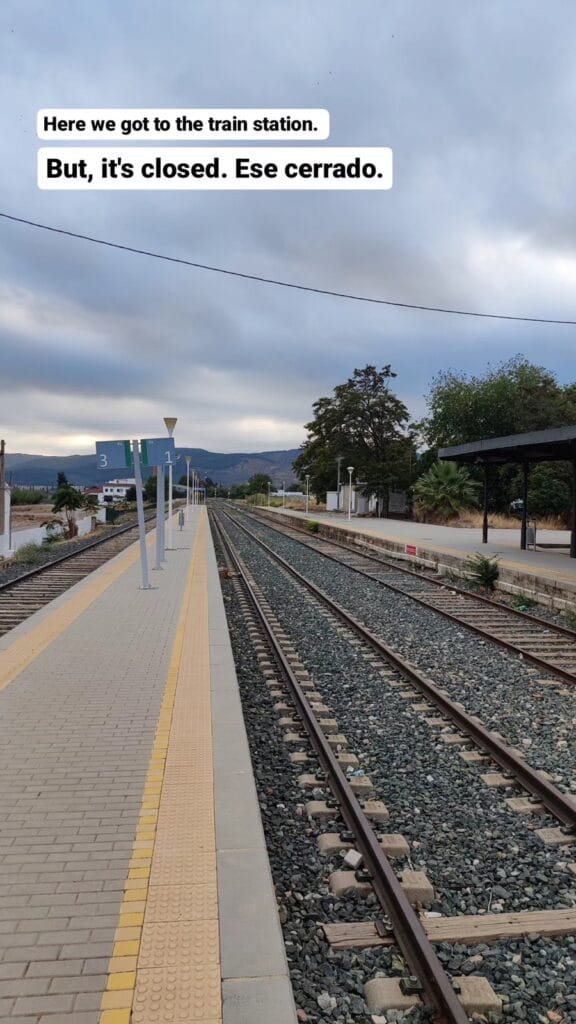
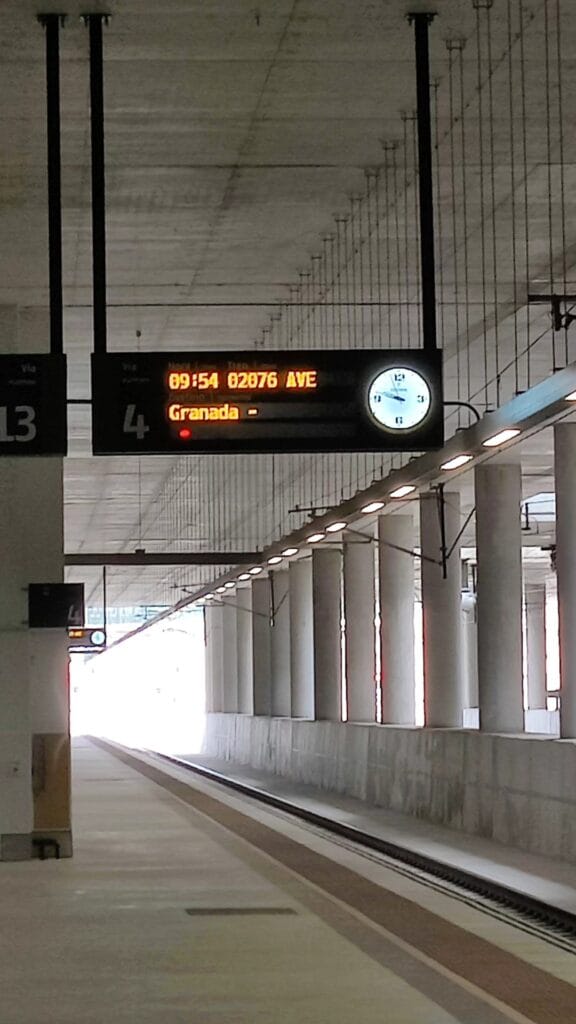
The night I missed my first train ever, and the quiet town that caught me.
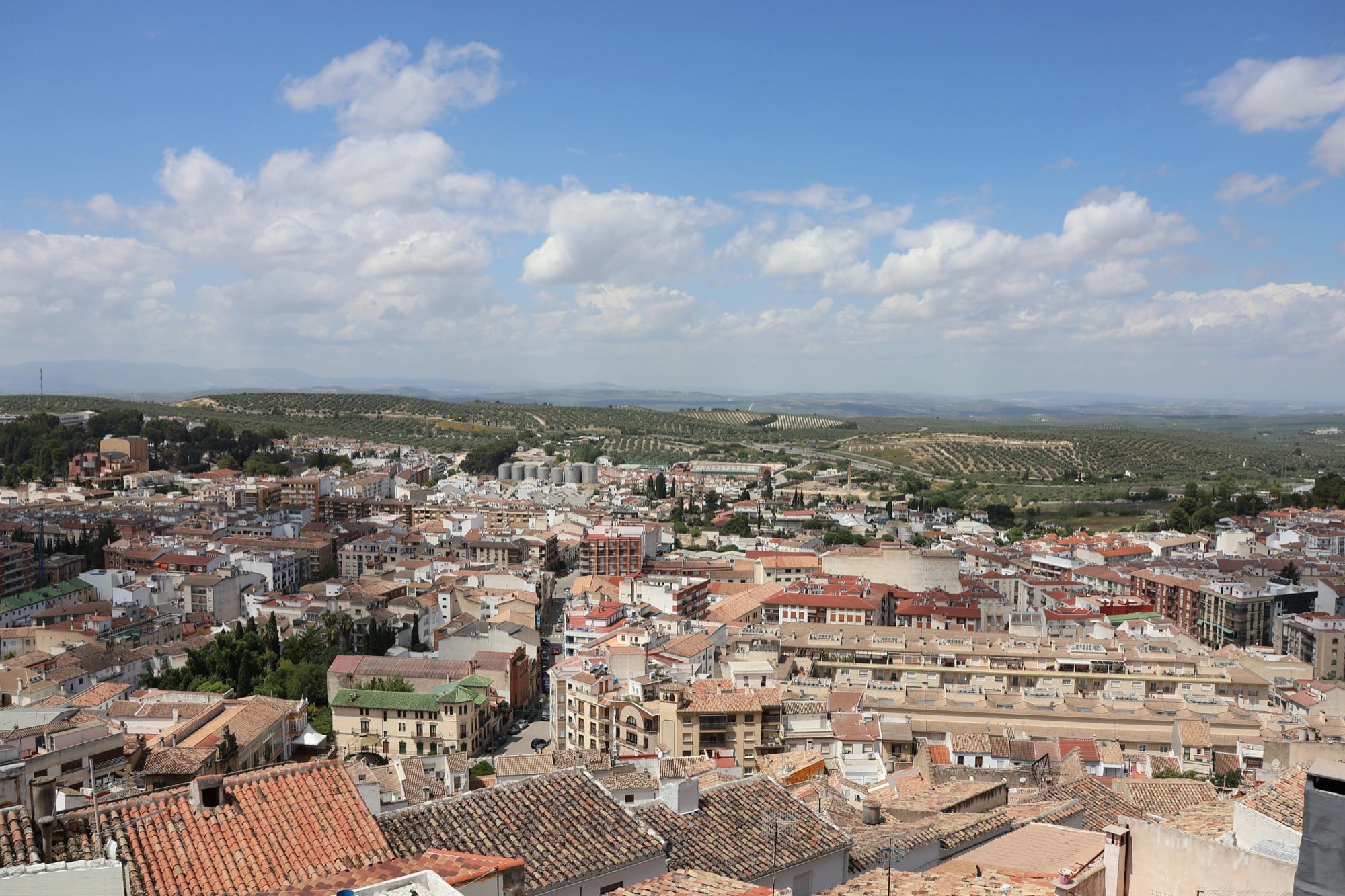
The next morning, the panic was gone, and the gift was obvious. Antequera is a quiet Andalusian town, with white walls and terracotta roofs, mountains behind it, no tourists, just a place getting on with its day. I climbed to a church on a hill and sat on the steps watching it all below, warm sun, cool breeze, nobody around.
Then I walked back to the station and carried on to Granada. The detour cost me one pre-booked night at my Granada hostel, which I never got to use, a fair price for the story. Sometimes missing your first train ever drops you exactly where you needed to be. This was the night the trip stopped being a plan and became a story.
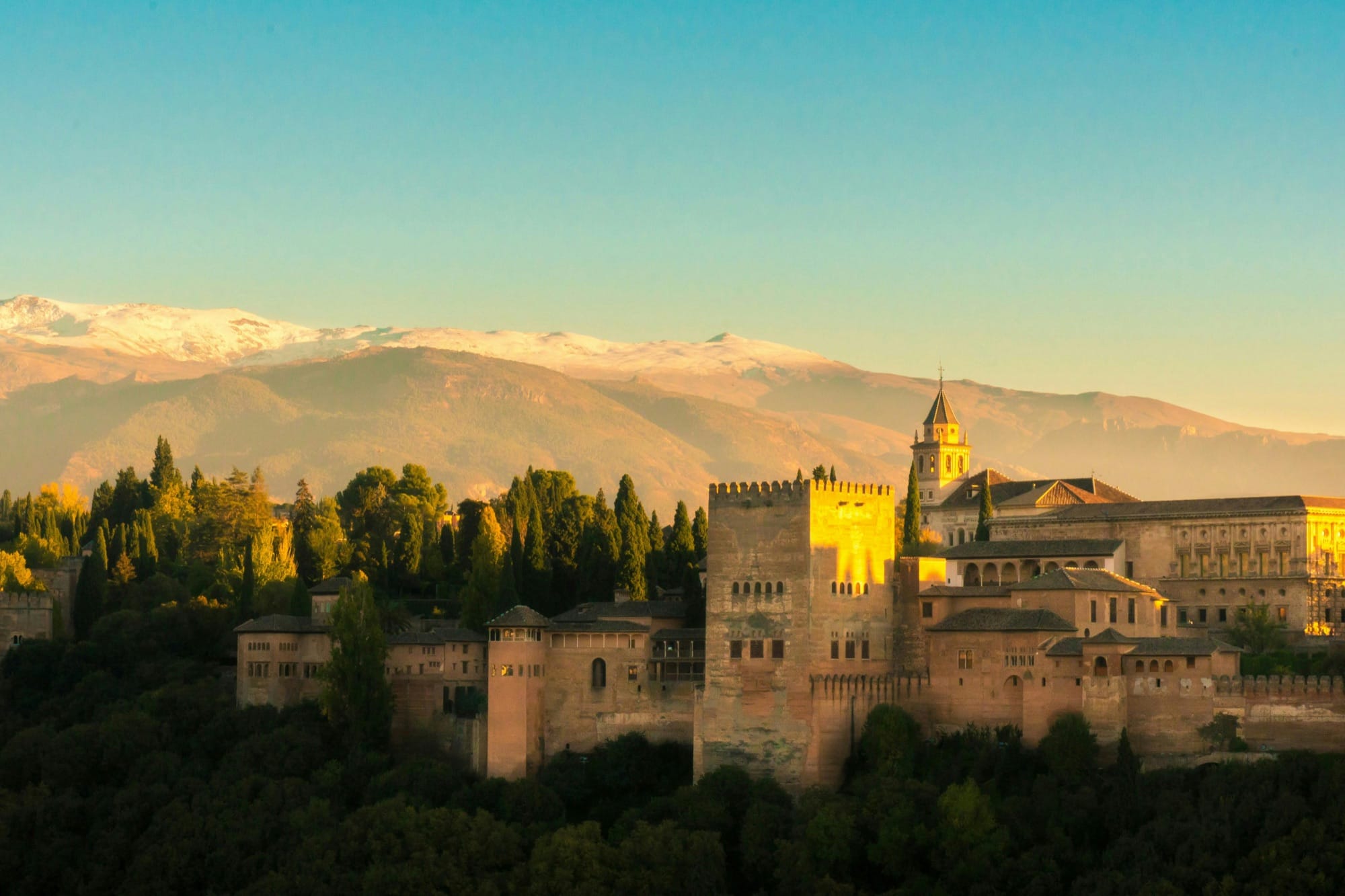
Granada changed everything.
Granada
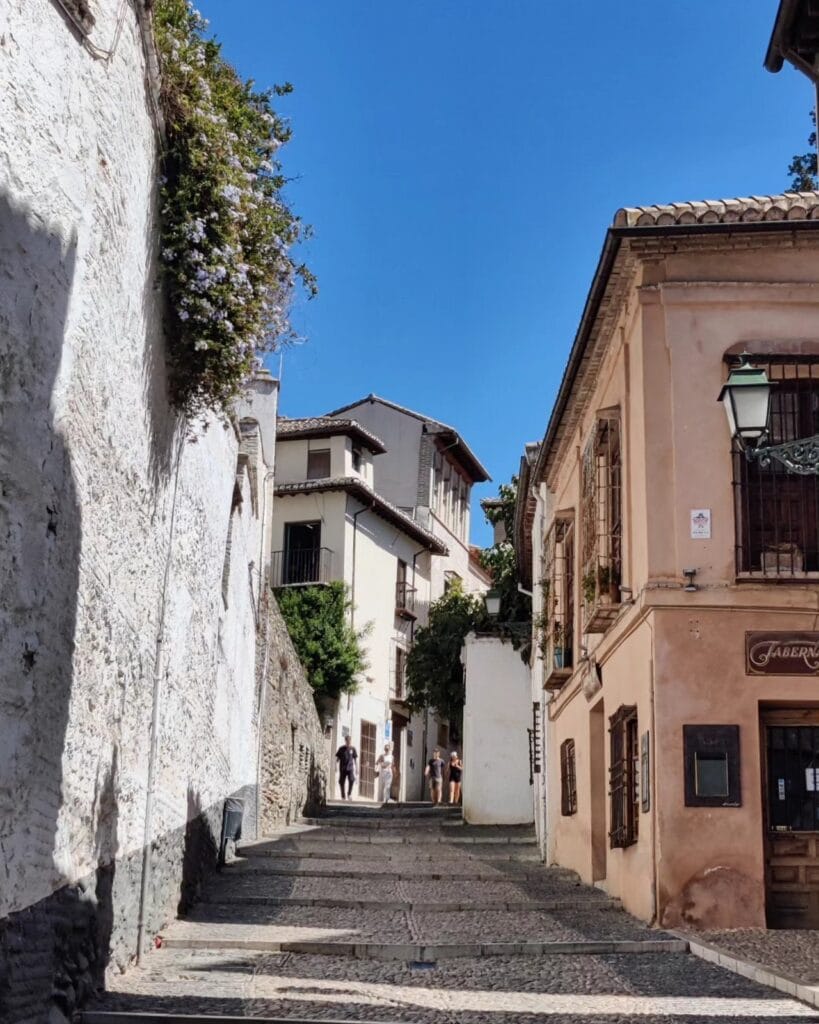
Granada changed everything, and looking back, it was my favourite city of the whole trip. ECO Hostel in the Albaicín, old building, a courtyard with plants and wooden benches, a quiet common room where people actually talked. My kind of place, and the kind where slow, productive work mornings happen on their own. I got real work done from that courtyard and never resented it.
Before the main event, I did a free walking tour of the city, on my own, which gave me the lay of the land and the history before I saw any of it up close. Then I gave the Alhambra an entire day. Tickets booked three days out, €14, timed entry to the Nasrid Palaces (do not miss your slot, they are strict).
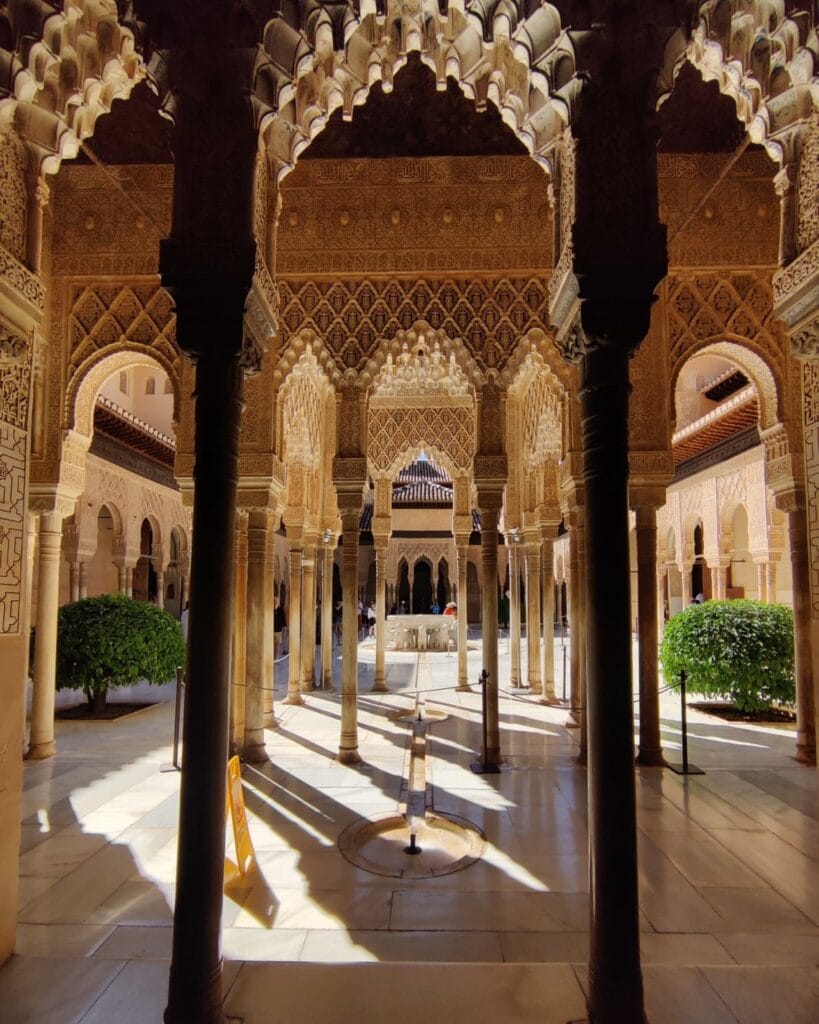
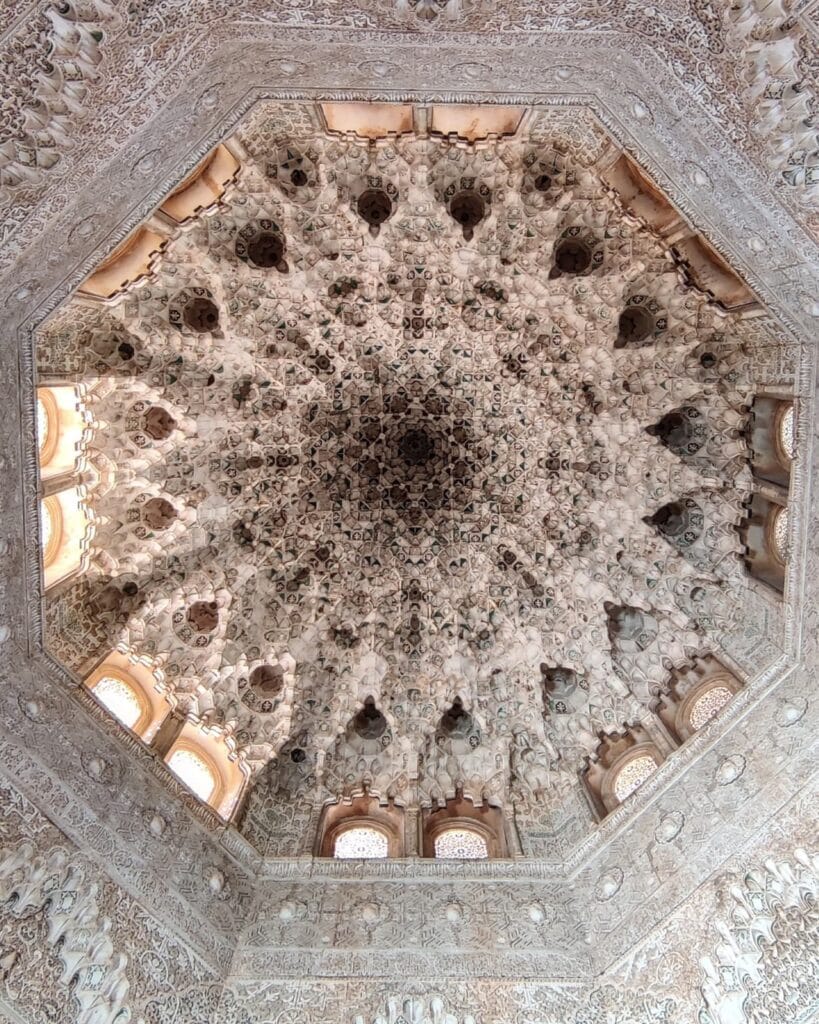
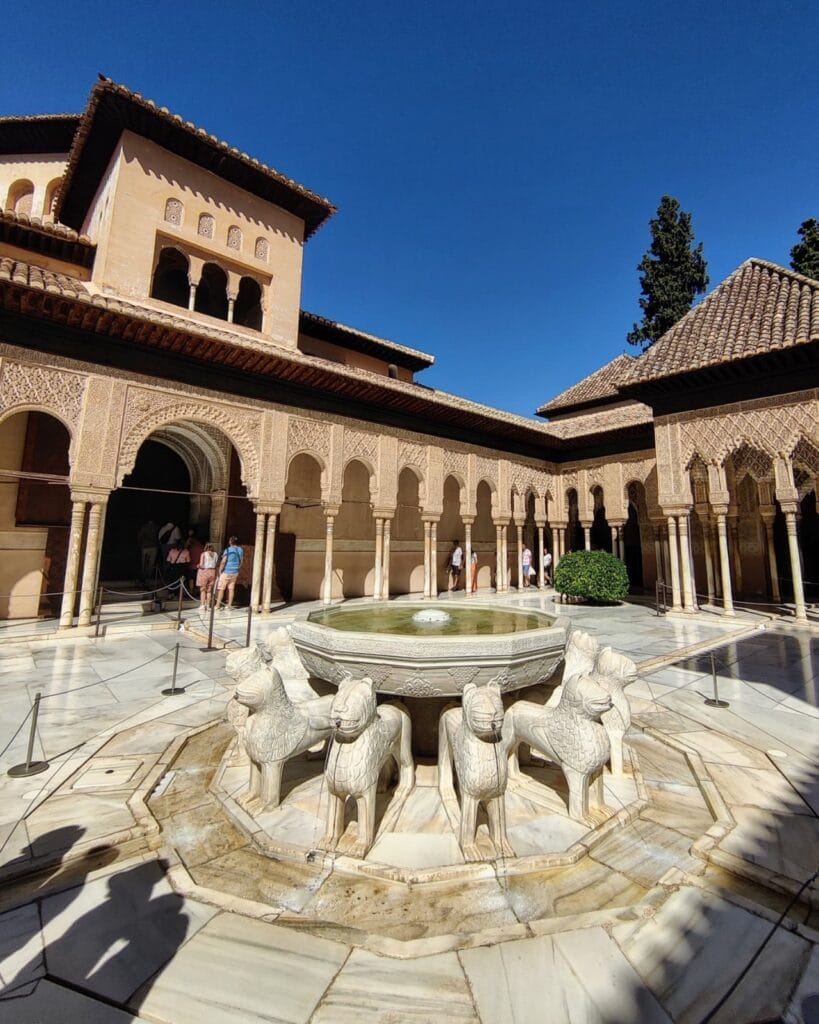
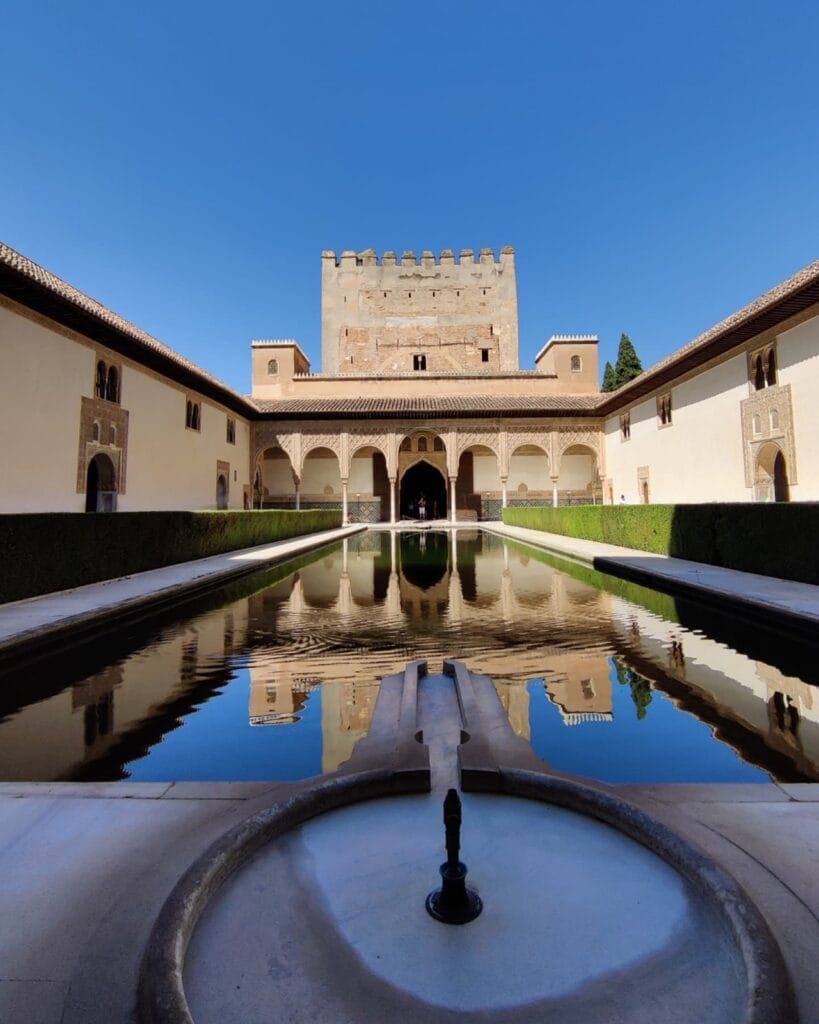
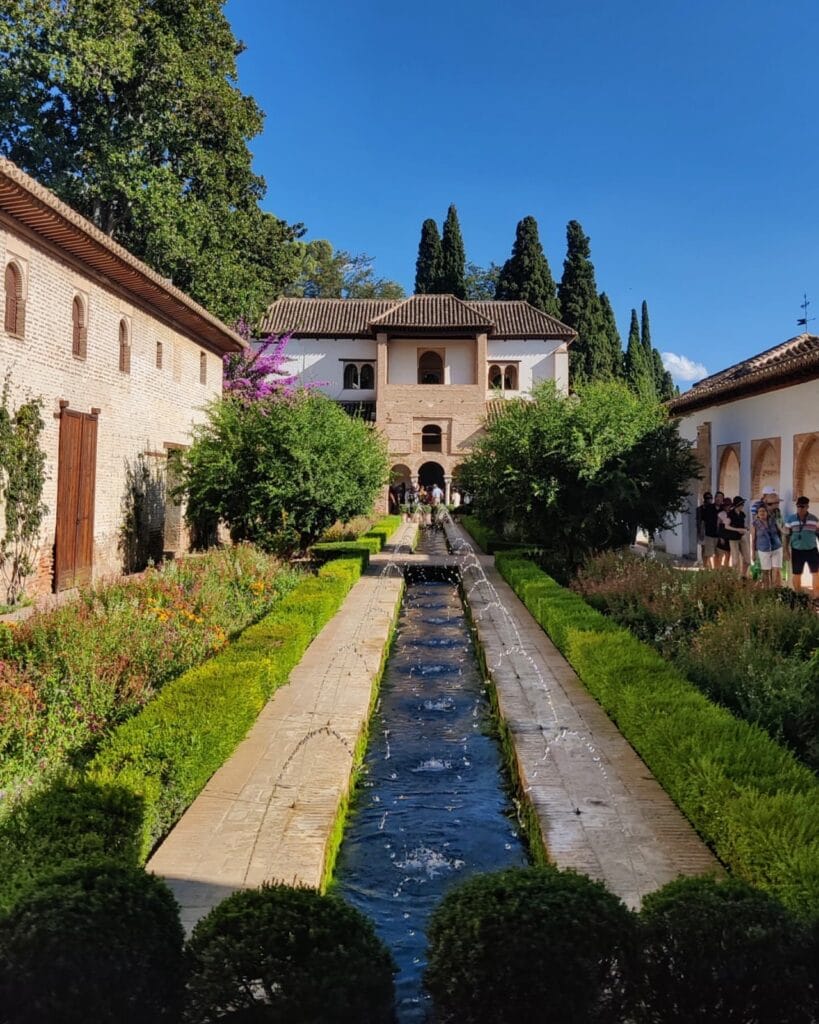
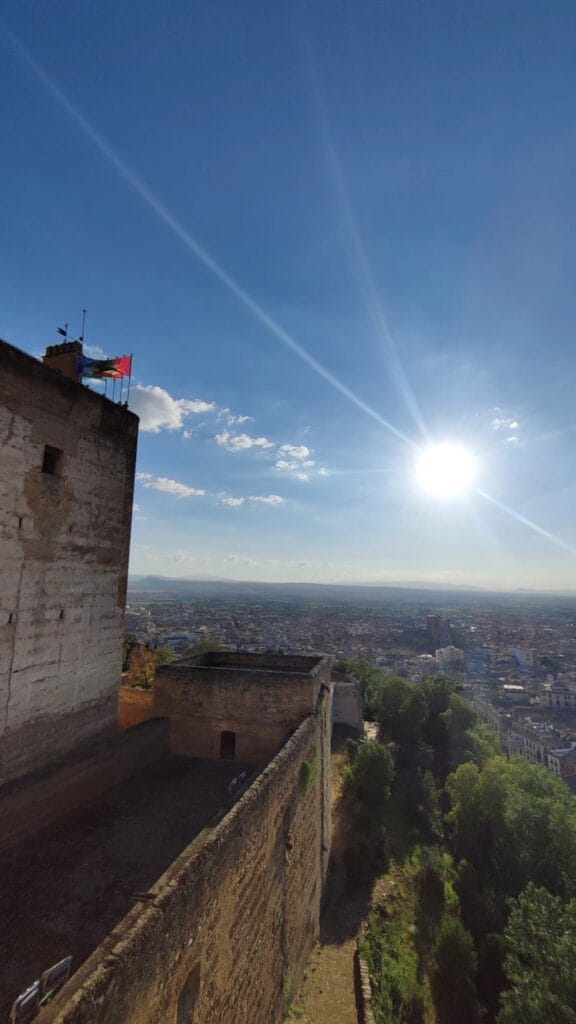
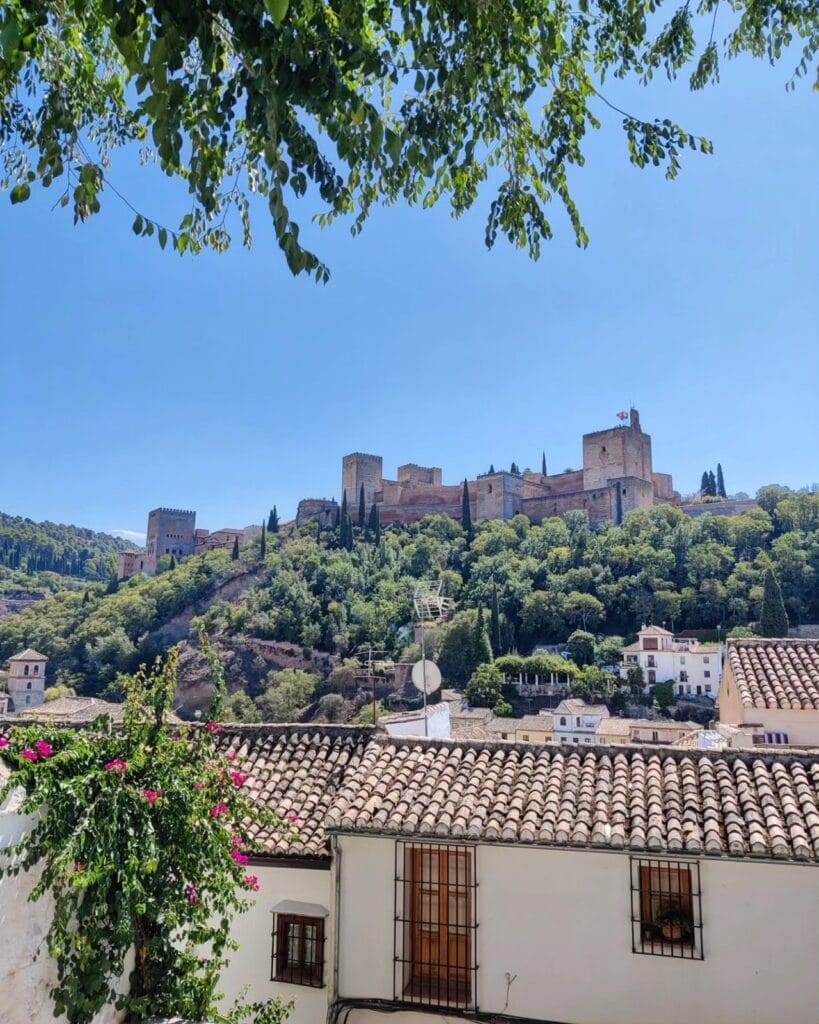
Walking through it is like stepping into another world. Built in the 14th century by the Nasrid Dynasty, Islamic architecture at its peak, every surface carrying geometric patterns and calligraphy, water everywhere making a constant soft sound.
The Court of Lions, with its twelve stone lions, rooms where light and shadow move across glazed tiles, and acoustics that feel almost spiritual. The Generalife gardens are just as good. I clicked close to a thousand photos and still felt like I had undersold it.
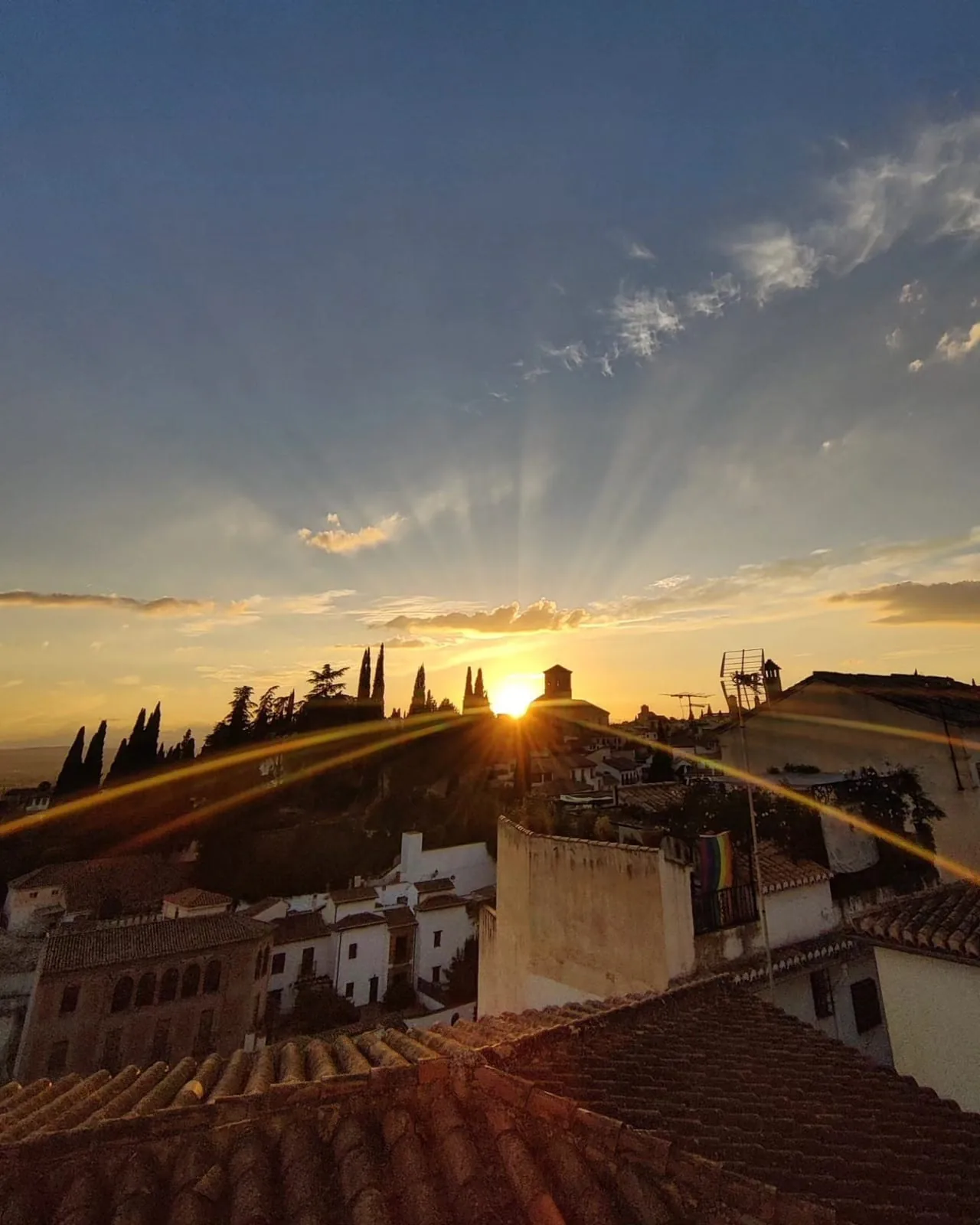
The sheer width and breadth of the place is mind-blowing, and watching the sunset from up there with Granada laid out below is the best hour of the whole city.
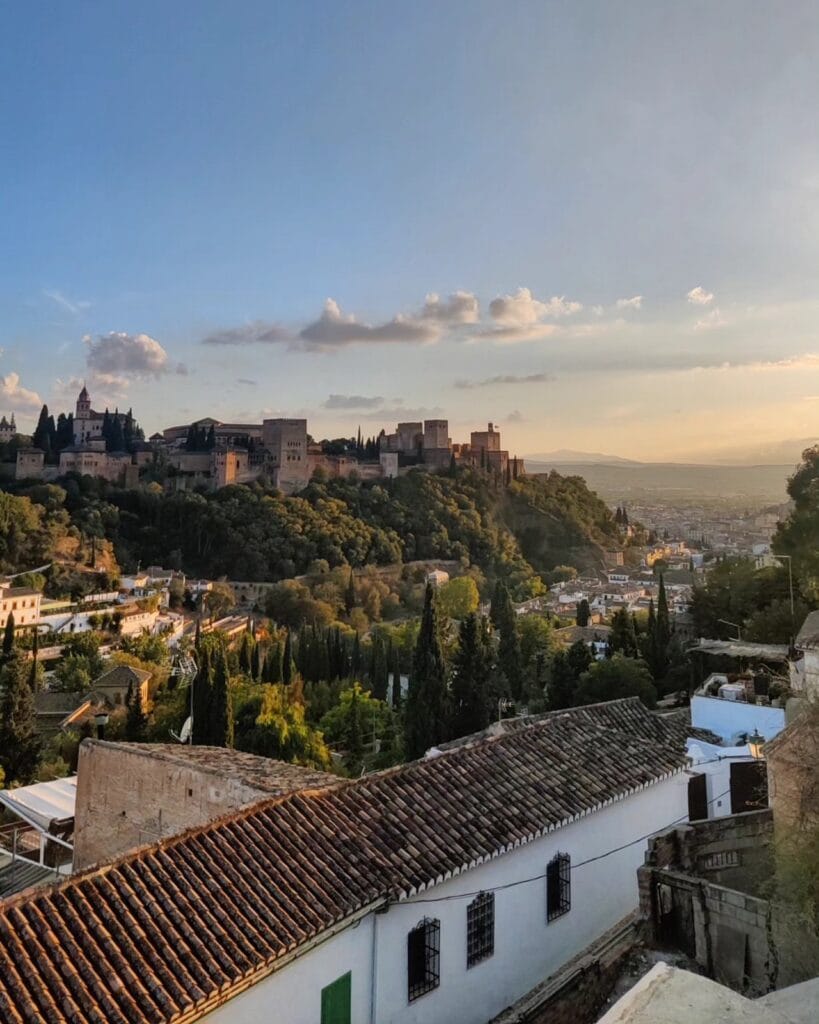
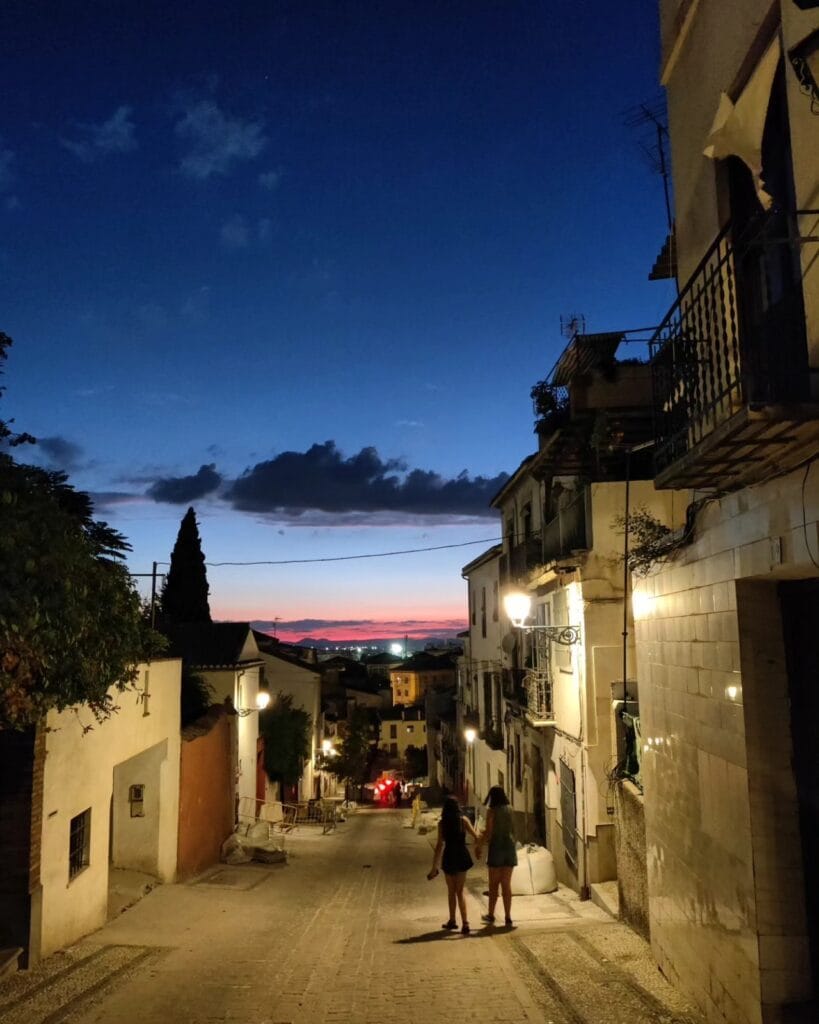
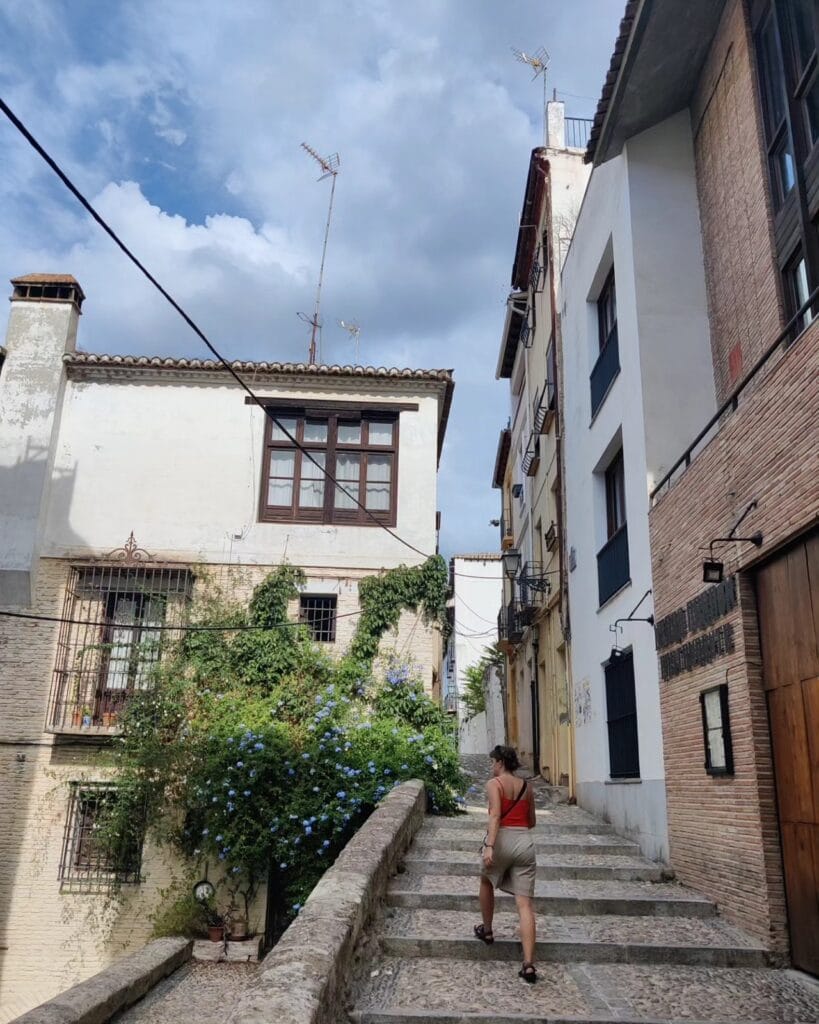
Day two I got lost on purpose in the Albaicín, narrow streets climbing upward, white houses with flowers on the balconies. At sunset, I went to Mirador de San Nicolás, a free viewpoint where the Alhambra lights up against the Sierra Nevada, street performers play guitar, and locals and travellers share wine on the wall. I went back three times.
Each one was different and perfect. Evenings were the free tapas circuit, and I worked my way through ten or fifteen bars across the stay.
The ones worth building a crawl around: Bodegas Castañeda, the rustic classic with hams hanging from the ceiling and house vermouth on tap; Los Diamantes for fried seafood and a standing-room buzz; Taberna La Tana; Bar Poë, where you actually get to choose your international tapa; Bar Casa Julio for the fish; and La Sitarilla near Plaza Nueva, whose homemade jamón croquetas and albondigas came free with the drinks.
Order a small caña each time and you maximise the free plates. Five or six stops is dinner.
Day three took me to Sacromonte, where people still live in cave houses carved into the hillside, some centuries old. At night I found a flamenco performance in a small venue. Not a tourist show, actual locals, old men clapping complex rhythms, dancers moving with precision and real passion. No production, just people expressing something deep. Granada stole my heart, and I did not want to leave.
The soul of Sevilla.
Sevilla
Bus from Granada to Sevilla.
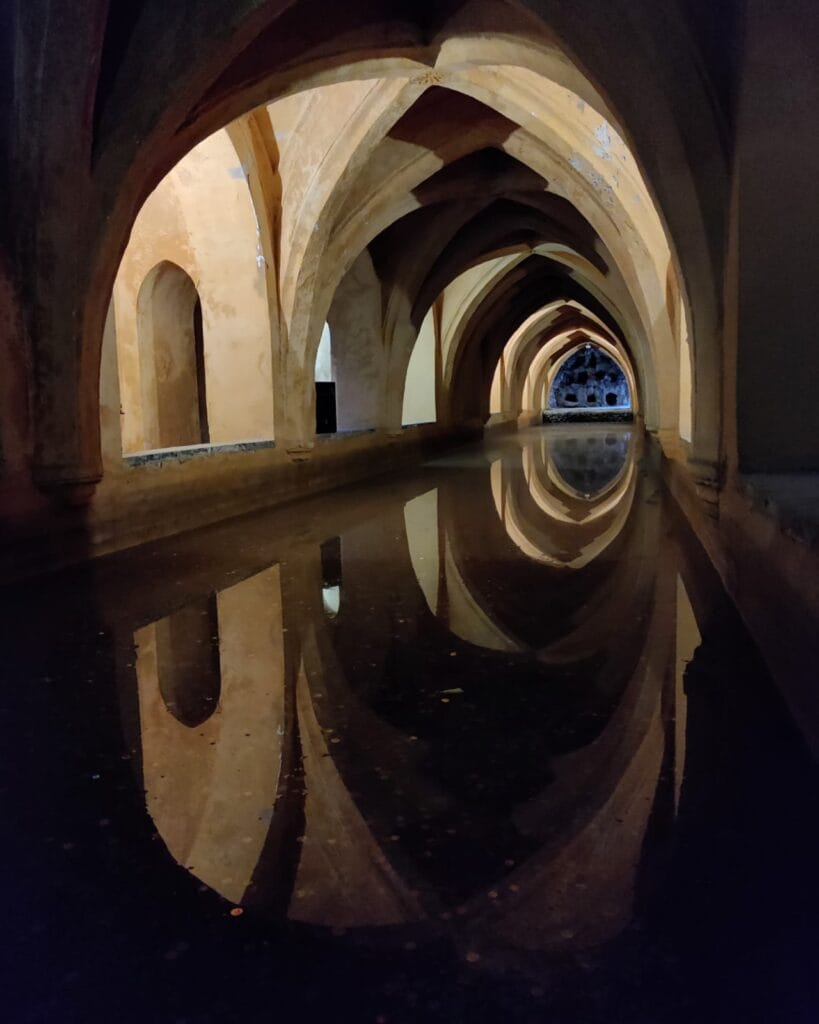
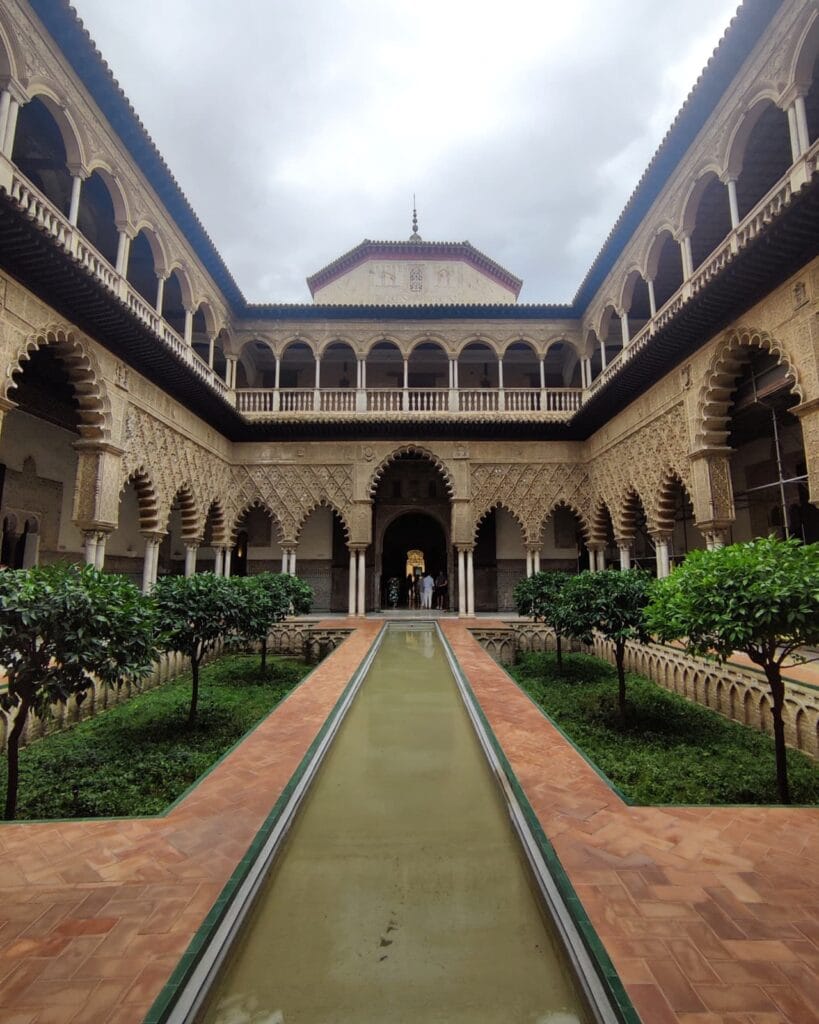
Day one was the Cathedral, the largest Gothic cathedral in Europe, overwhelming in scale, with Murillo and Zurbarán on the walls, as if it were normal. The real magic is La Giralda, the bell tower, originally a minaret for the mosque that stood here before the Reconquest, an Islamic base and Renaissance top blending seamlessly, with ramps instead of stairs inside.
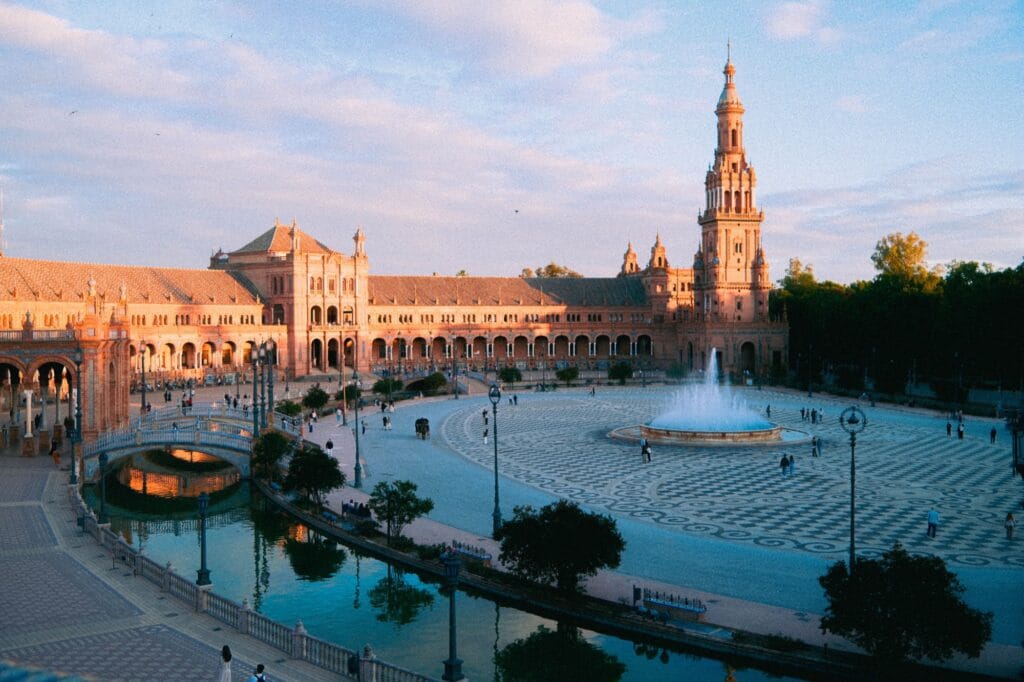
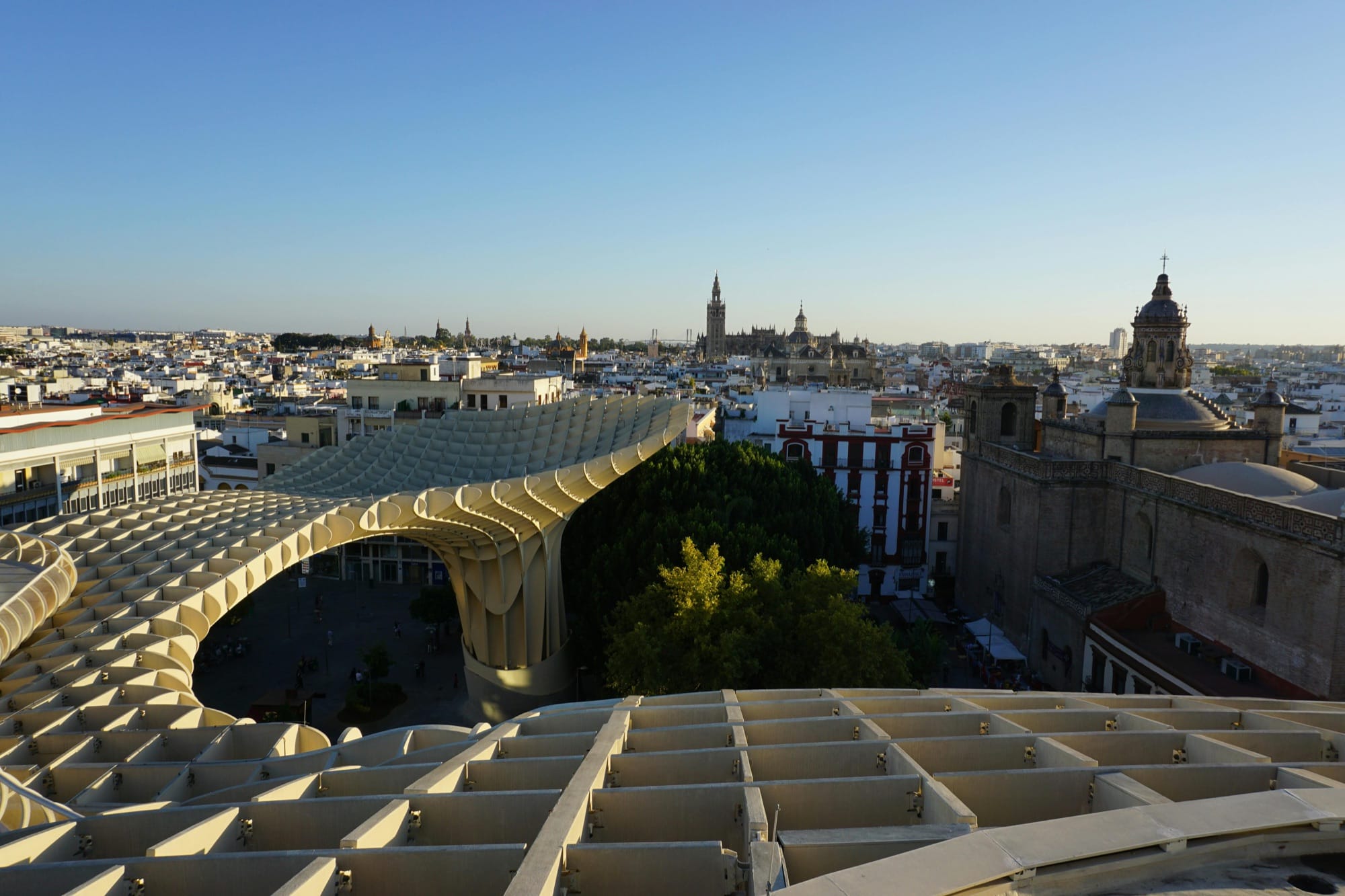
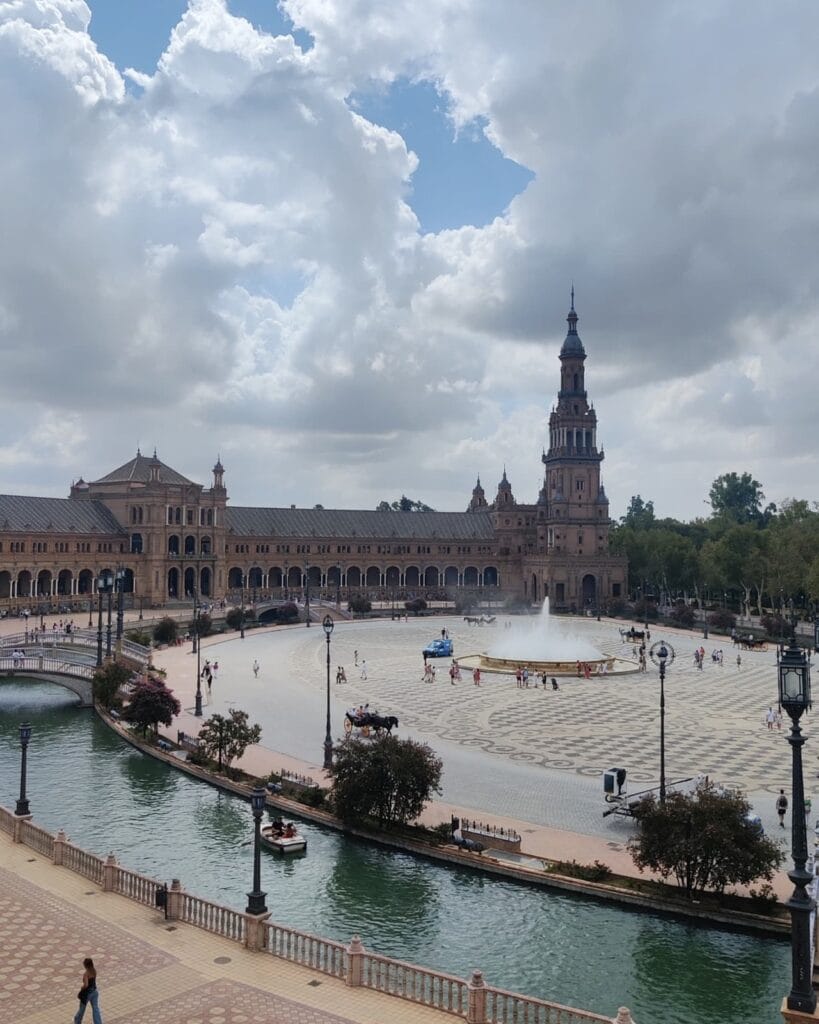
Beyond the big two, the Sevilla sights worth your time: Plaza de España, the grand half-moon of tiled alcoves and a little canal you can row, easily the most photogenic spot in the city; Las Setas (the Metropol Parasol), the giant wooden mushroom whose rooftop walkway gives you the best sunset view in town; the Santa Cruz quarter and Maria Luisa Park for wandering; and Triana across the river.
For flamenco, skip the ticketed tourist shows and find La Carbonería, a cavernous bar behind a plain door in Santa Cruz where the nightly show is free. It is raw and a bit unpredictable, which is the point. Get there early for a bench.
On drinks, learn three words: tinto de verano (red wine and lemon soda, the local everyday drink), rebujito (chilled sherry and soda, dangerously easy), and a cold Cruzcampo, the Sevilla beer. Order the way locals do, and you blend right in.
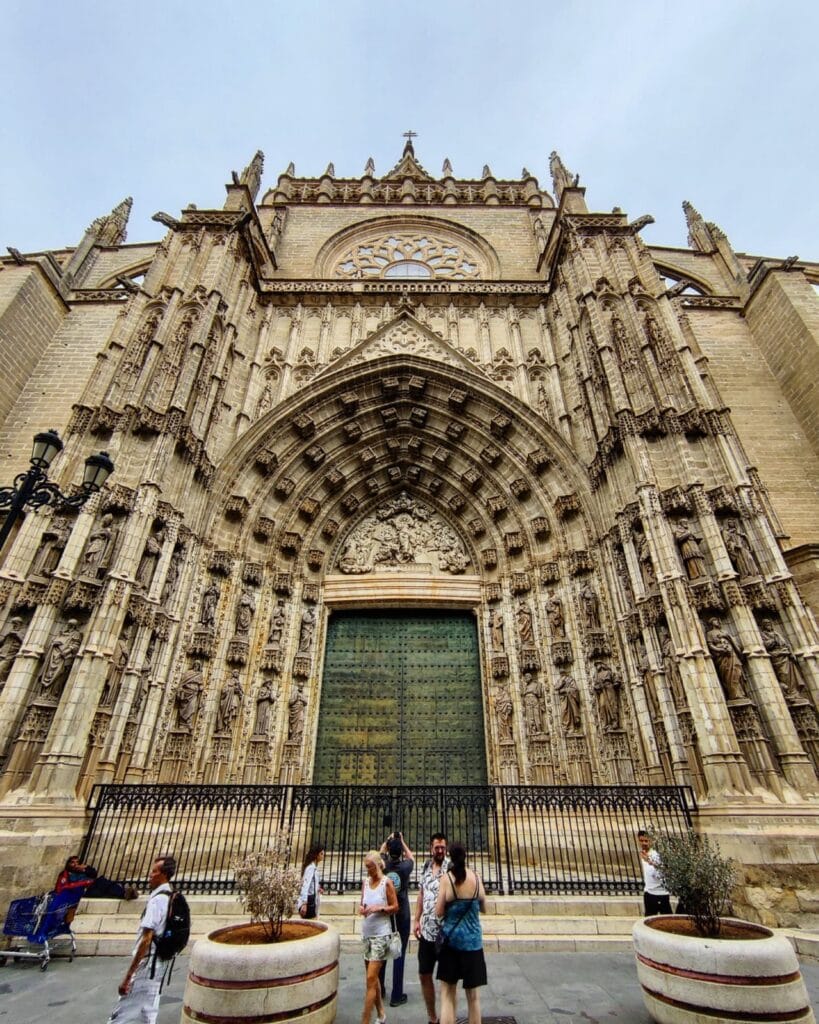
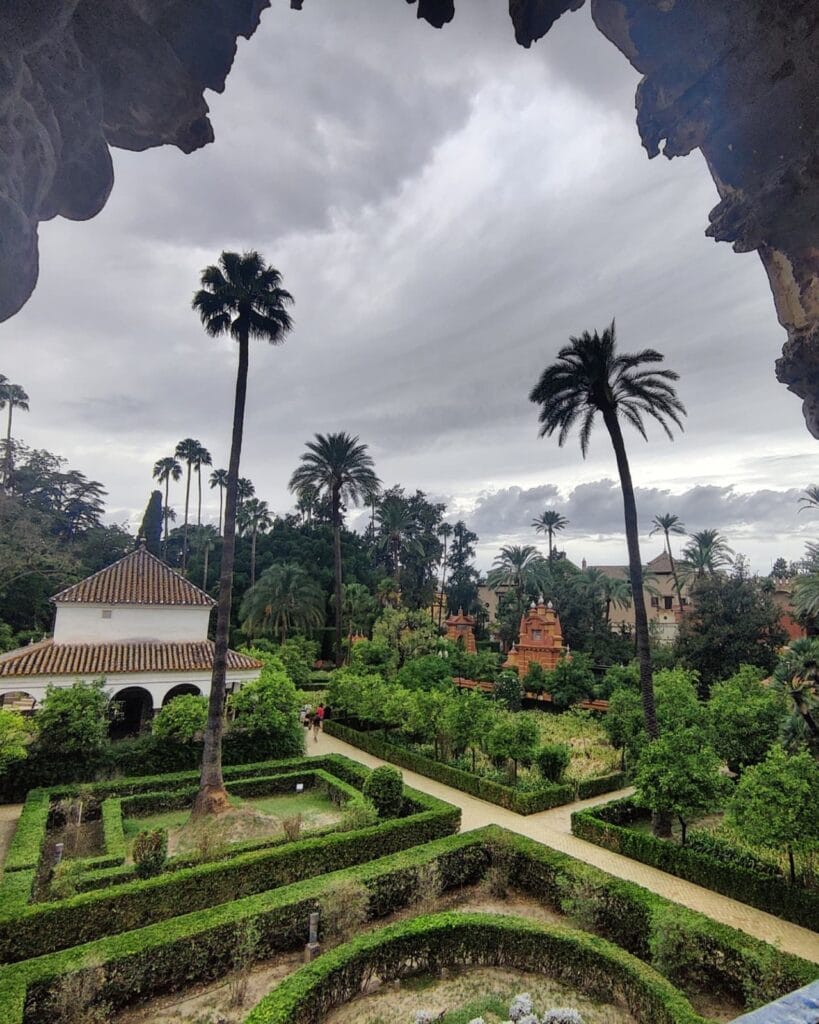
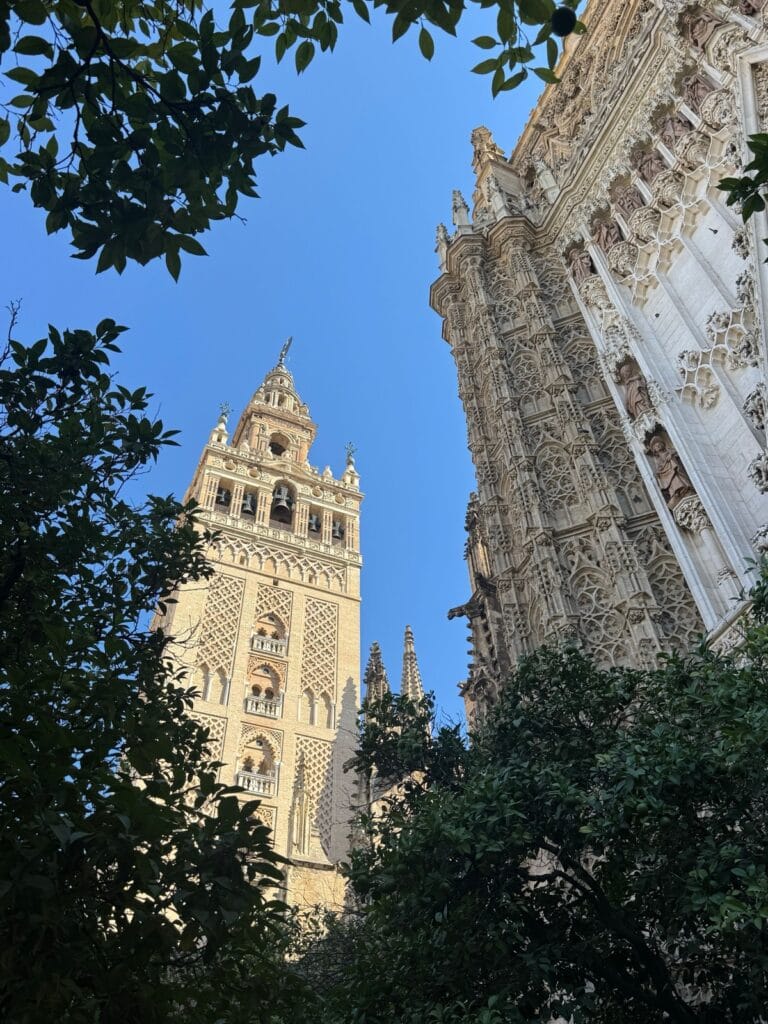
A word on the heat. September in Sevilla was brutal in the middle of the day, the kind that flattens you. But it never ruined anything, because the rhythm of the place is built around it: you go hard in the morning, retreat to the hostel or a shaded bar through the worst of the afternoon, and come back out once it cools.
Being able to duck back to the Oasis rooftop or pool anytime made the heat a non-issue rather than a problem.
I also crossed the river to Triana, where the flamenco tradition really lives, more bohemian and less polished, walked the riverfront, and poked through ceramic shops.
Tapas favourites over the two days: Bodega Santa Cruz Las Columnas on Mateos Gago for exceptional croquetas at €3 each, Casa Tomate with a Giralda view, Bar Catedral for a fancier pork tenderloin plate at €14, and Ovejas Negras for unbeatable value, five tapas and drinks for €15.
Cádiz
After two days in Sevilla, I caught a BlaBlaCar down to Cádiz. Cádiz sits on a peninsula in the Atlantic, one of Europe’s oldest cities, and the energy is different from the Mediterranean coast, more connected to the sea.
I walked almost the entire coastline, all the way round to the old city where the churches and the squares are, taking in the sights and then looping back. I hit Playa de la Caleta, framed by two 18th-century castles, and ate my way through local Cádiz dishes by the water.
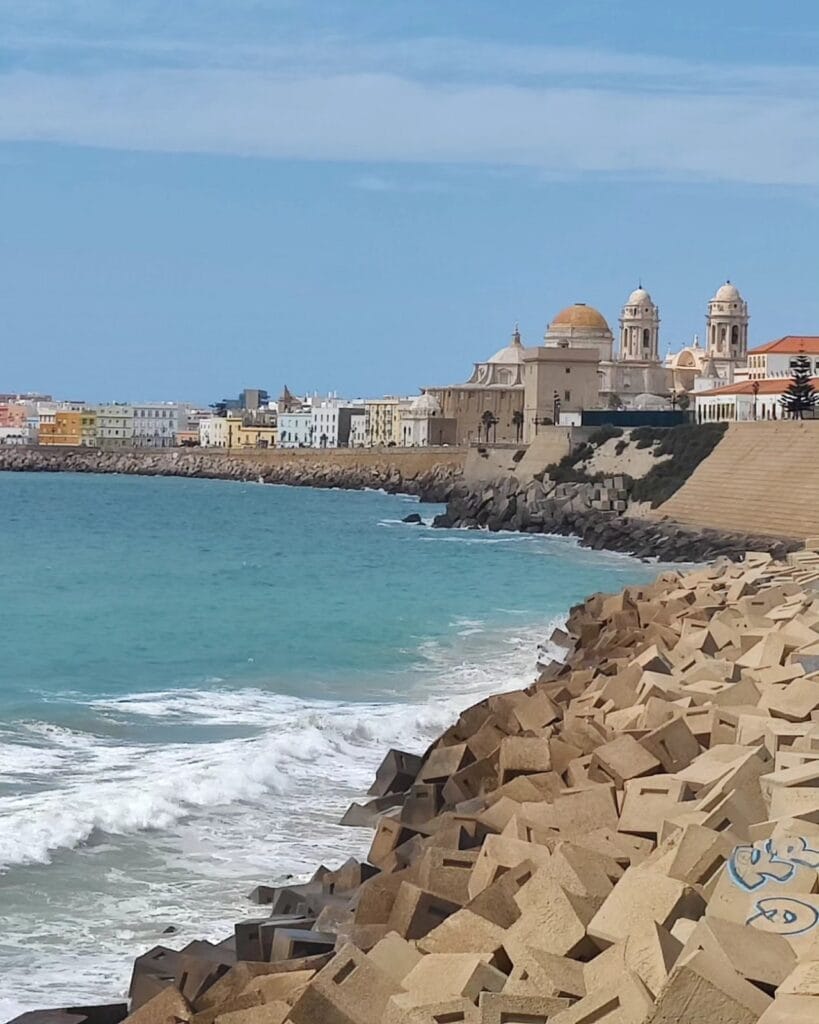
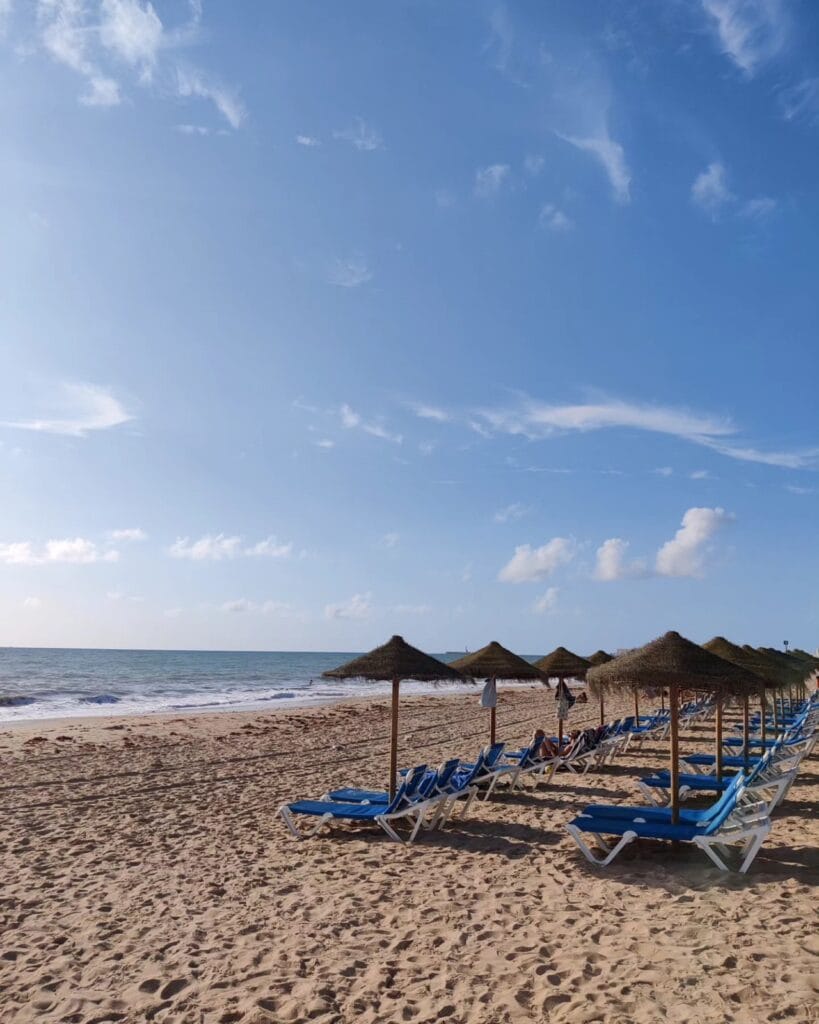
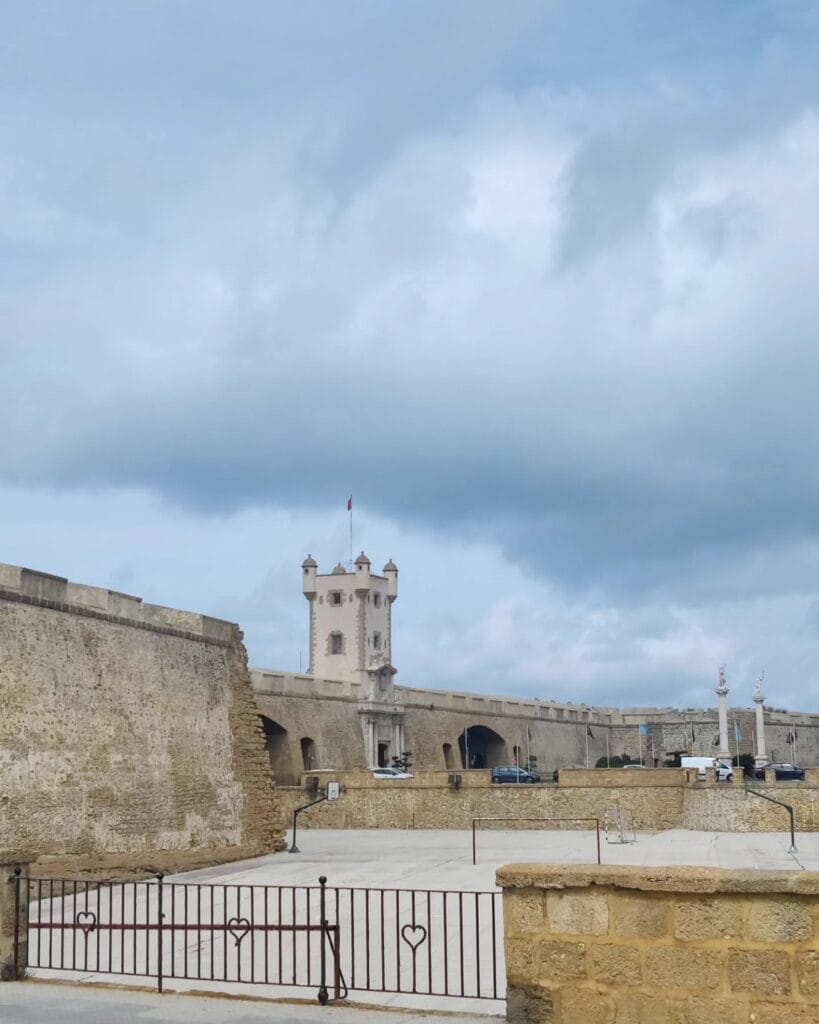
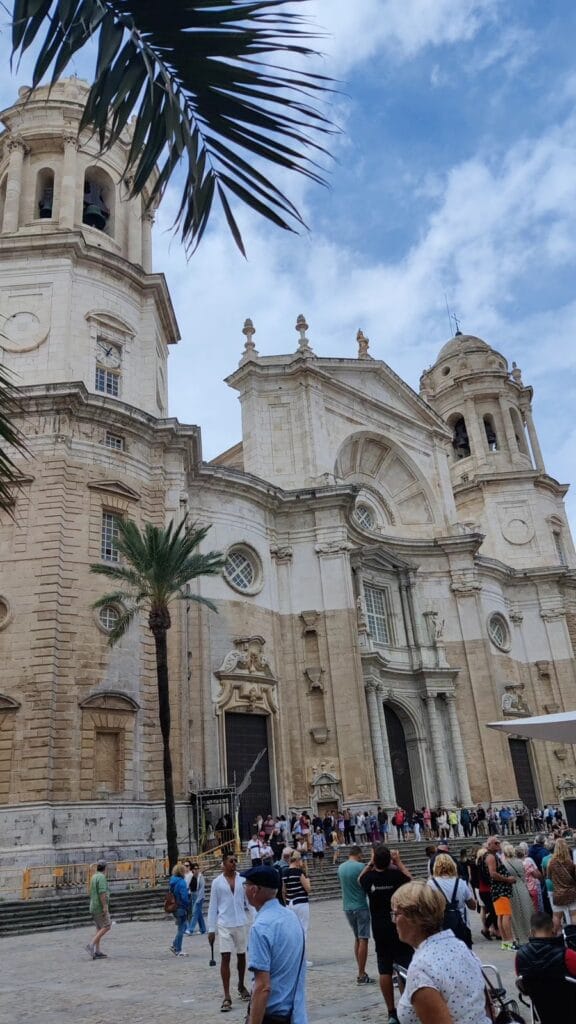
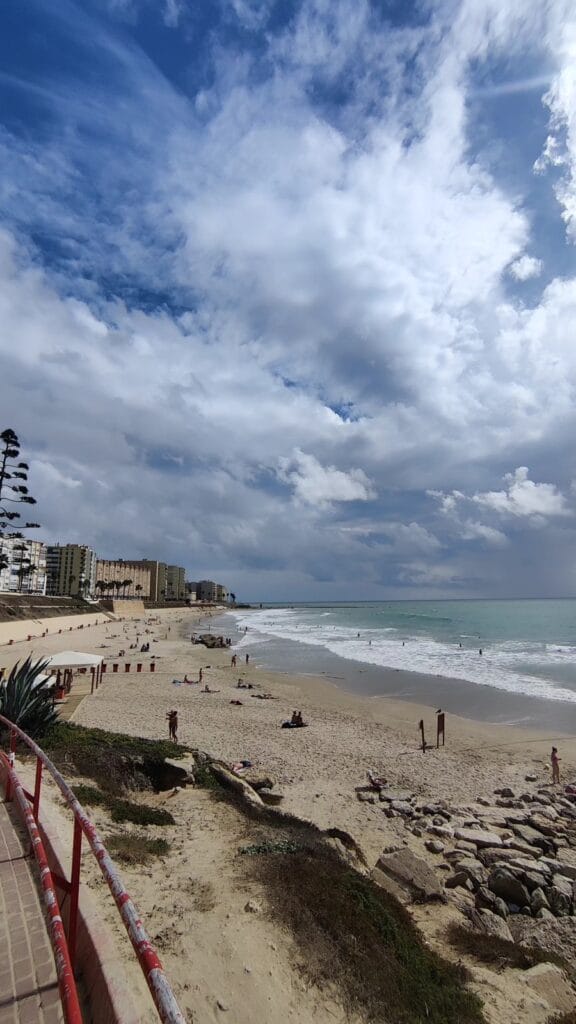
The Atlantic was just about swimmable. I went in, but the water was so cold I mostly ended up taking photos instead.
I caught an F1 race playing on a screen in one of the central squares, got chatting with strangers, had a few of my best photos taken by people I will never see again, and instead of rushing back to Seville, I found a cheap room and stayed the night. As detours go, it was close to perfect.
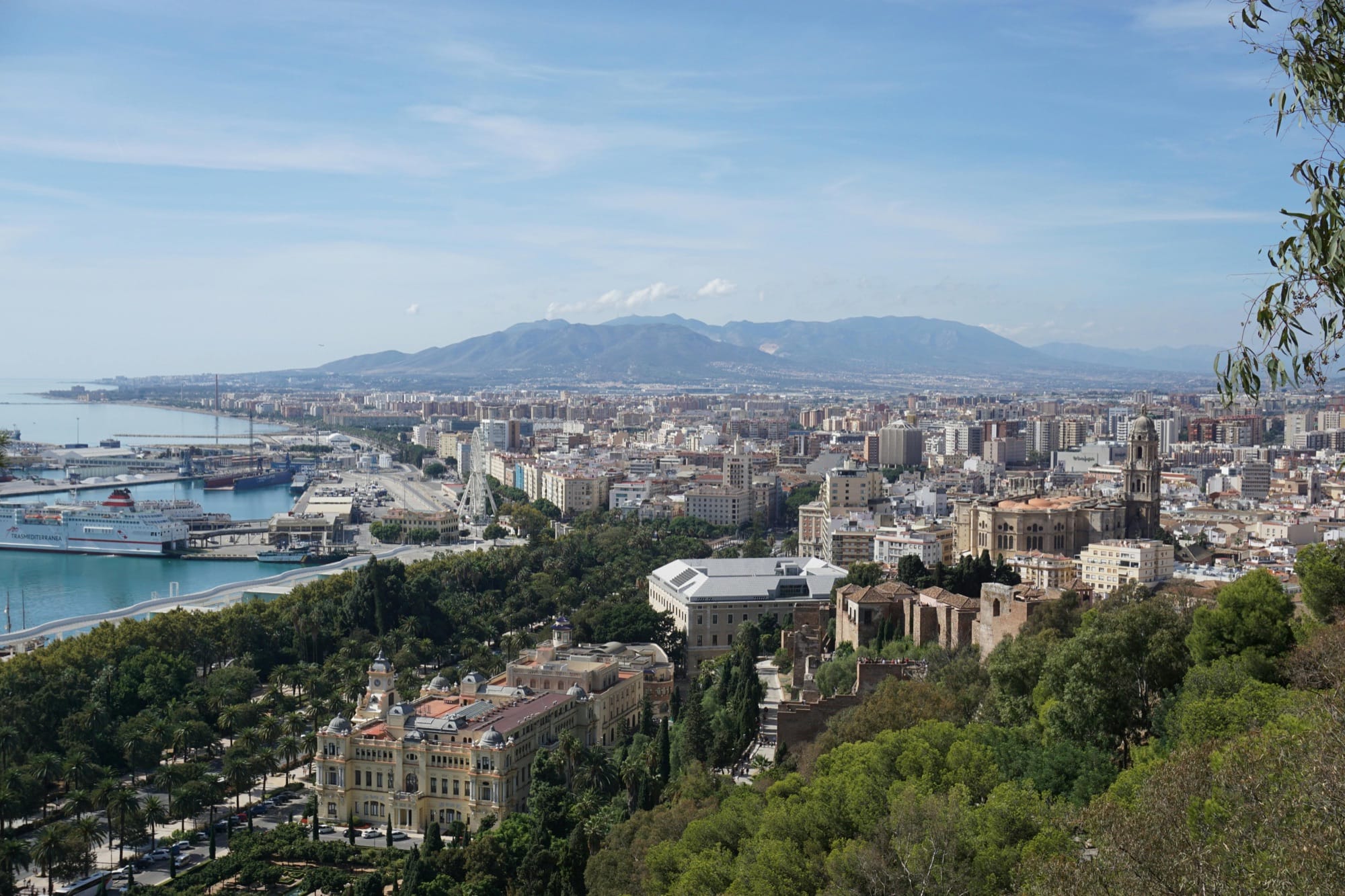
One night on the Costa del Sol. Malaga.
Málaga I almost skipped, and I am glad I did not. One night on the Costa del Sol in the Andalusian city that raised Picasso, with a Roman theatre sitting right under a Moorish fortress in the middle of town, and the Mediterranean a short walk away.
I dropped my bag, climbed up to the Alcazaba as the light went gold over the port, and ate a plate of espetos, sardines skewered on a cane and grilled over a driftwood fire on the sand, the local ritual and reason enough to come.
It is a proper working city that has taught itself to be relaxed: marble streets and tapas bars in the old centre, the port reworked into a long palm-lined promenade, and museums everywhere now, the Picasso one included. For a single night, it was the perfect decompression between the heat of the south and the long haul north to Bilbao. Next time, I would give it three.
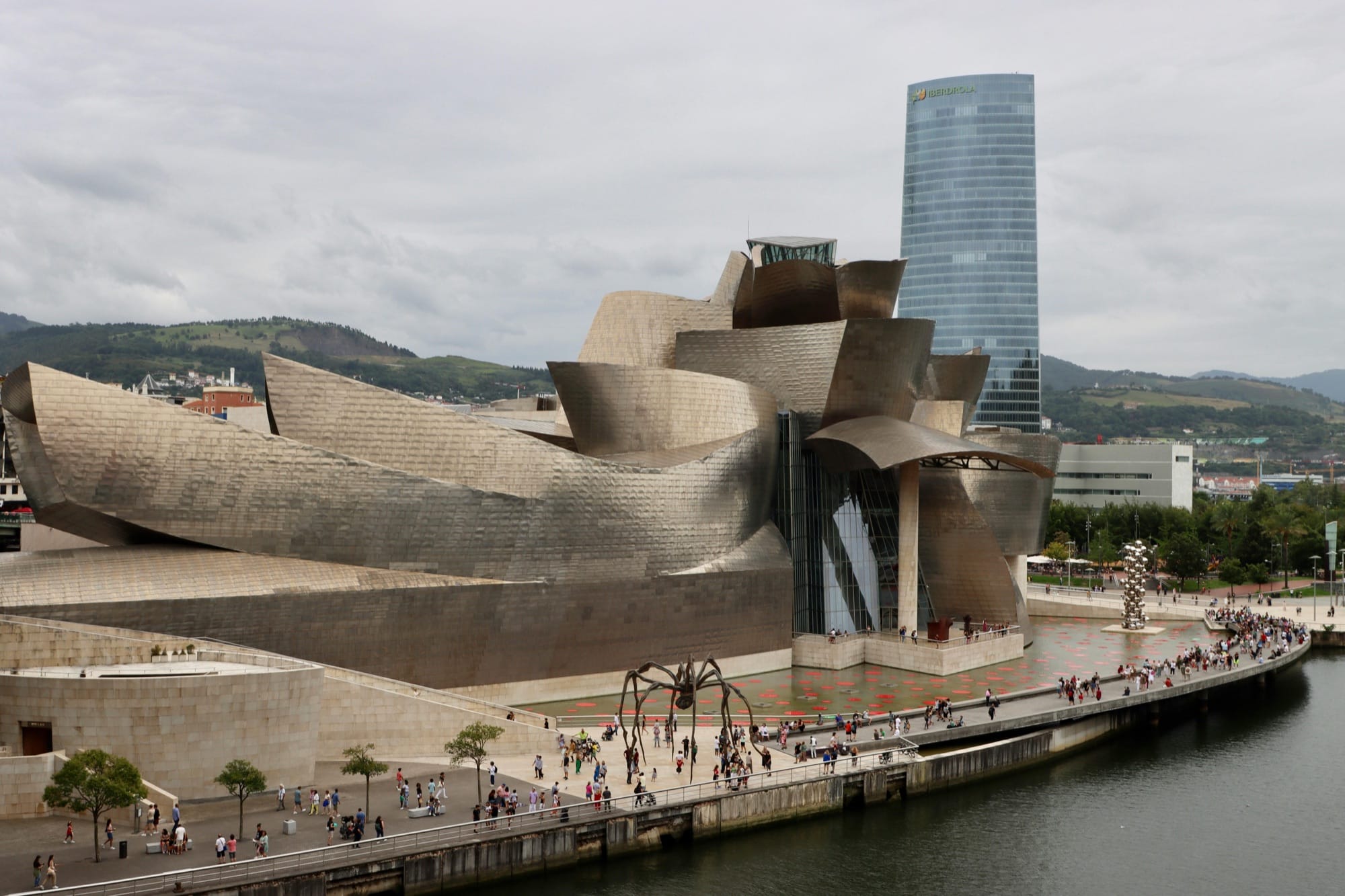
The reason I came. The home to the Guggenheim.
Bilbao
Flight from Sevilla to Bilbao airport, then a bus to the city centre and into my service apartment. Felt like home.
Every morning, I walked to the venue straight past the stadium, all of it within walking distance. Between sessions, I explored. The Guggenheim is impossible to miss, Frank Gehry’s titanium masterpiece that single-handedly turned Bilbao from an industrial city into a cultural destination when it opened in 1997. Photographs do not capture it. You have to walk around it and watch the light change on the surface.
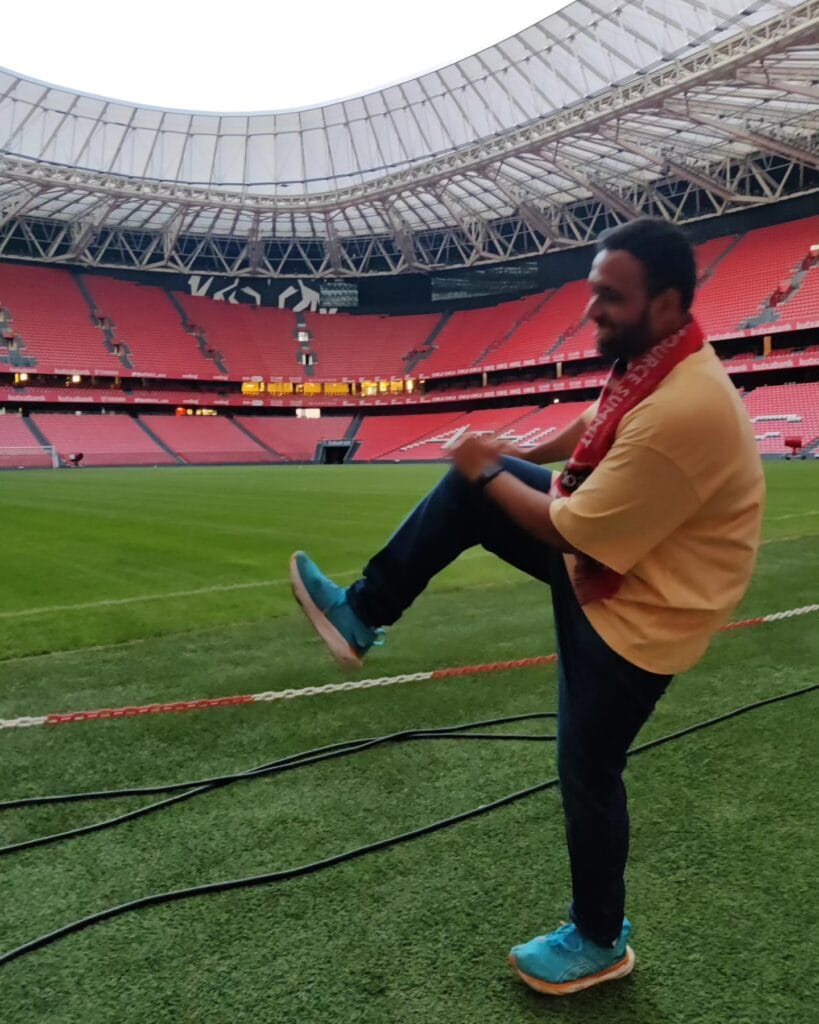
A group of us also toured Athletic Bilbao’s stadium, the club with the famous policy of only signing players of Basque heritage, choosing cultural identity over competitive advantage, which is its own kind of beautiful.
I did not make it out to San Sebastián for a day trip, the one obvious thing I would add next time, but I made sure to try txakoli, the slightly fizzy Basque white they pour from a height, which is reason enough to come back.
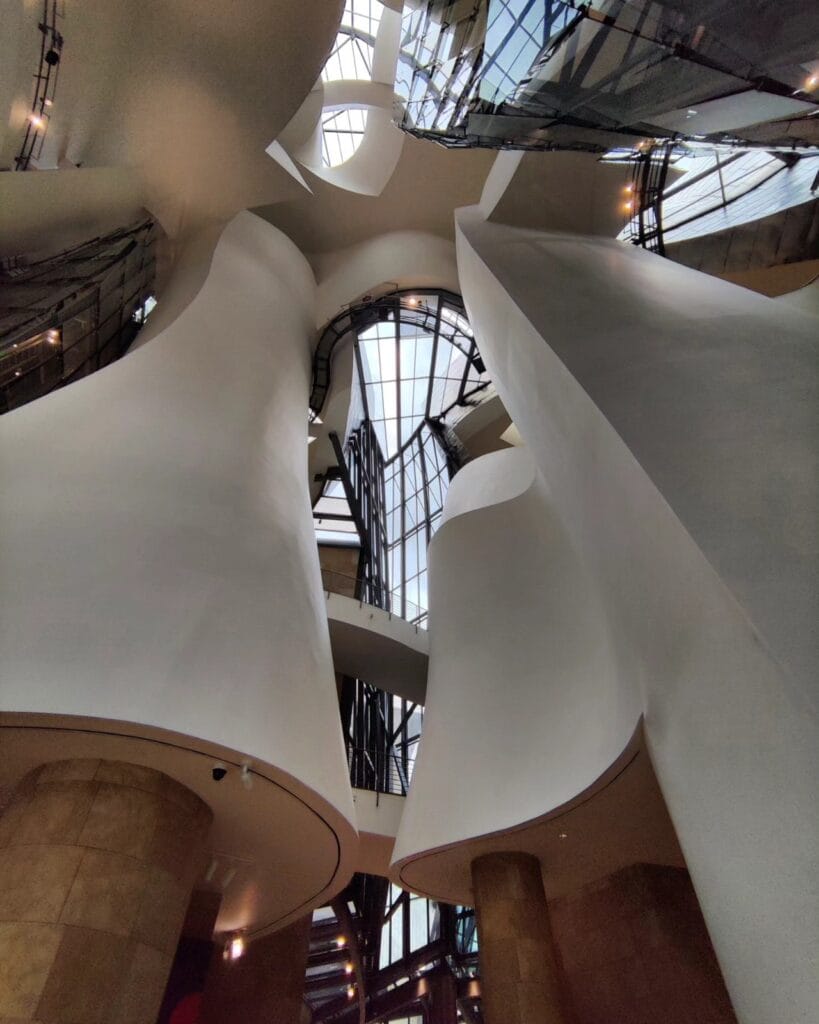
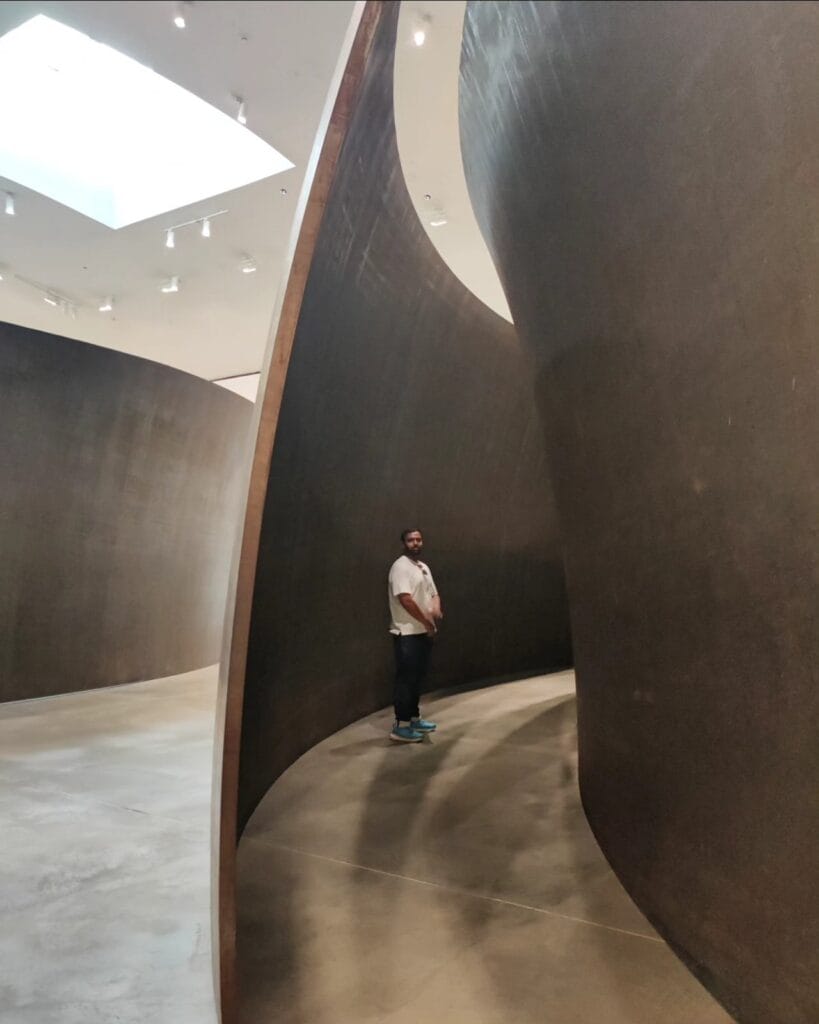
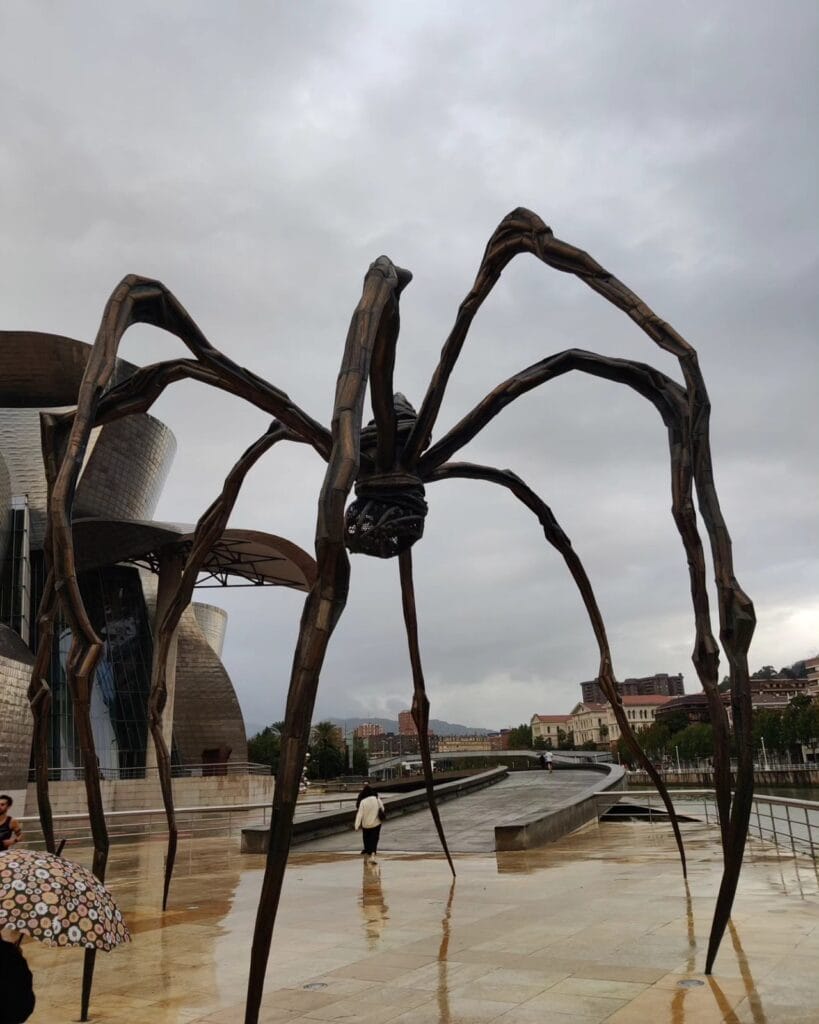
Evenings were pintxos, which the Basque Country takes seriously. Small bites on bread, you walk the bars grabbing different ones, €3 to 5 each. Plaza Nueva is the spot. Gure Toki for a legendary cheese soup pintxo, Sorginzulo for pastry-wrapped txistorra sausage, Cafe Bar Bilbao for bacalao al pil pil. The conference closed on day three with the keynote and a round of contact swapping.
Madrid
Train from Bilbao back to the CATS Hostel. With the better part of a week here, I could split the days cleanly: focused work in the calm mornings, museums and neighbourhoods in the afternoons.
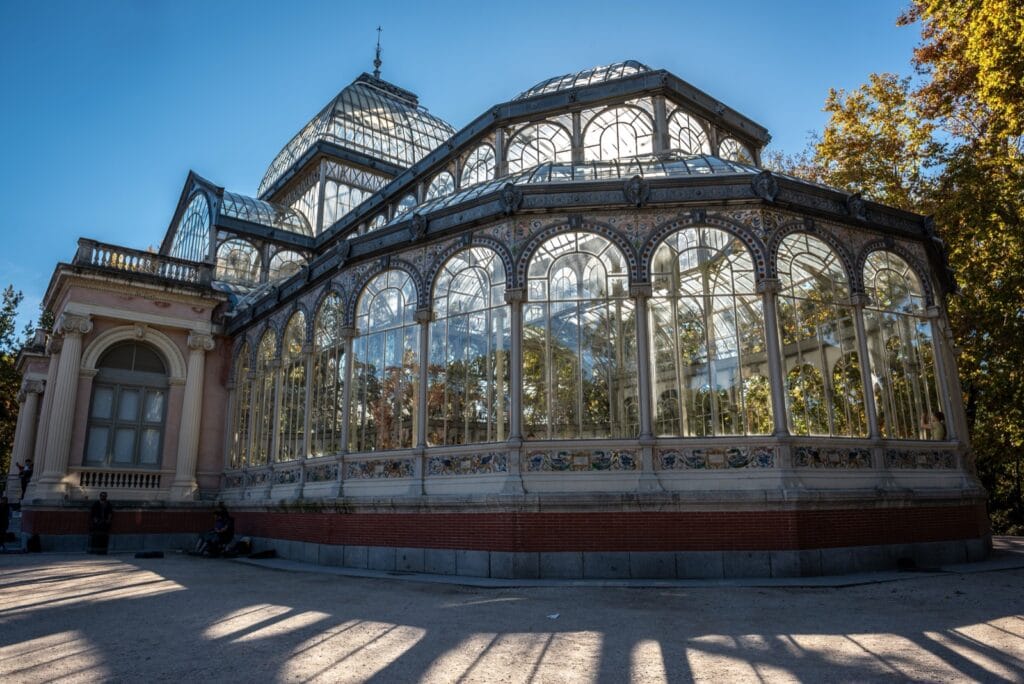
Madrid’s museums are world-class, and many are free during set hours, which is a gift for a budget. The Prado is free Monday to Saturday, 6 to 8 PM, and Sunday 5 to 7, with Goya, Velázquez, and Bosch, and I gave “Las Meninas” another two hours.
Reina Sofía is free Monday to Saturday, 7 to 9 PM, and Sunday afternoon, and Picasso’s “Guernica” lives there, massive and shattering in grayscale. Thyssen-Bornemisza is free Mondays 12 to 4 PM, less crowded, underrated, medieval to contemporary.
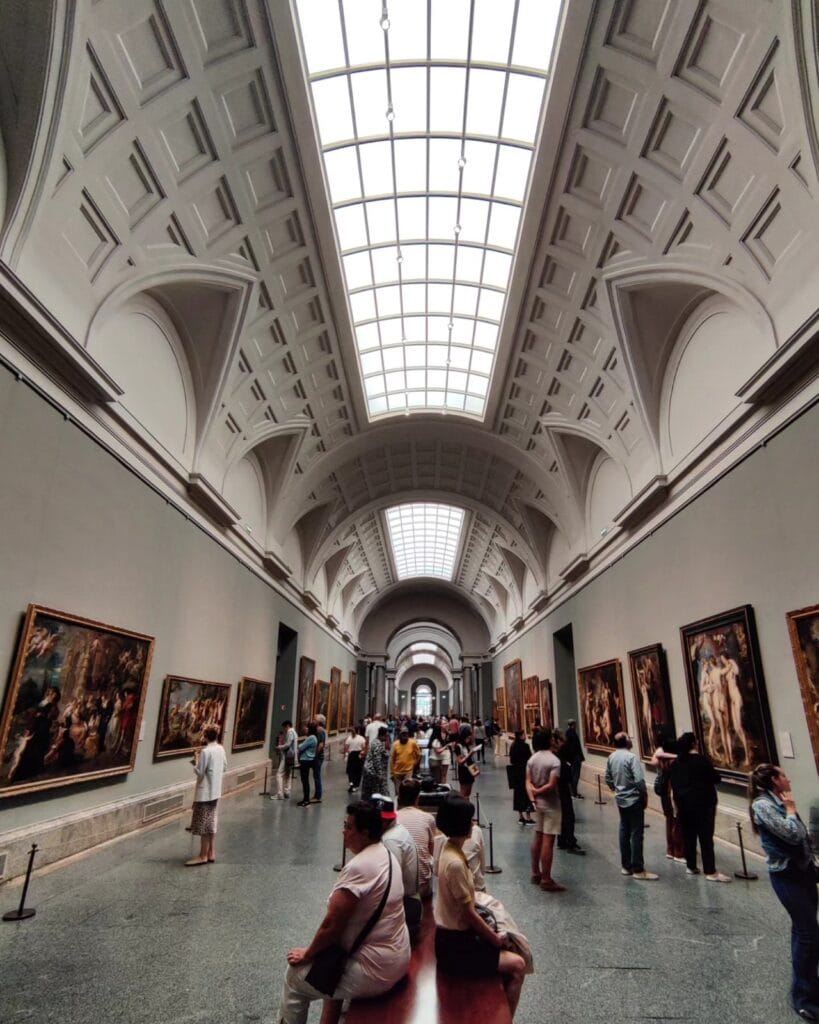
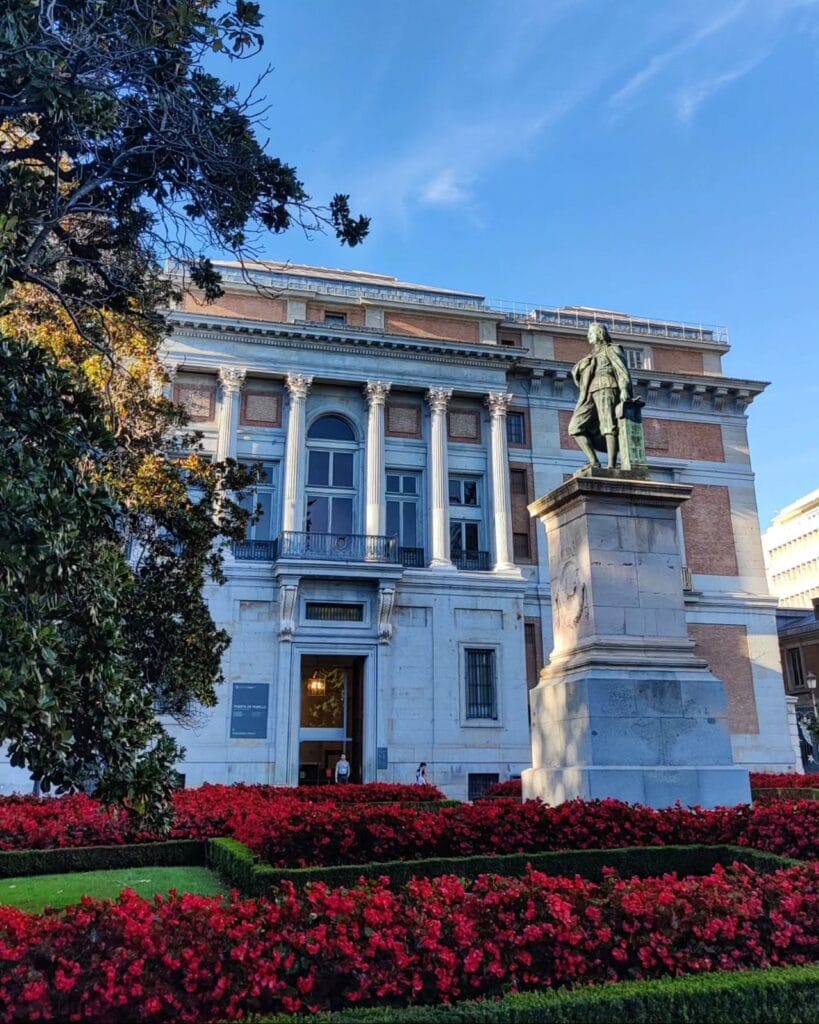
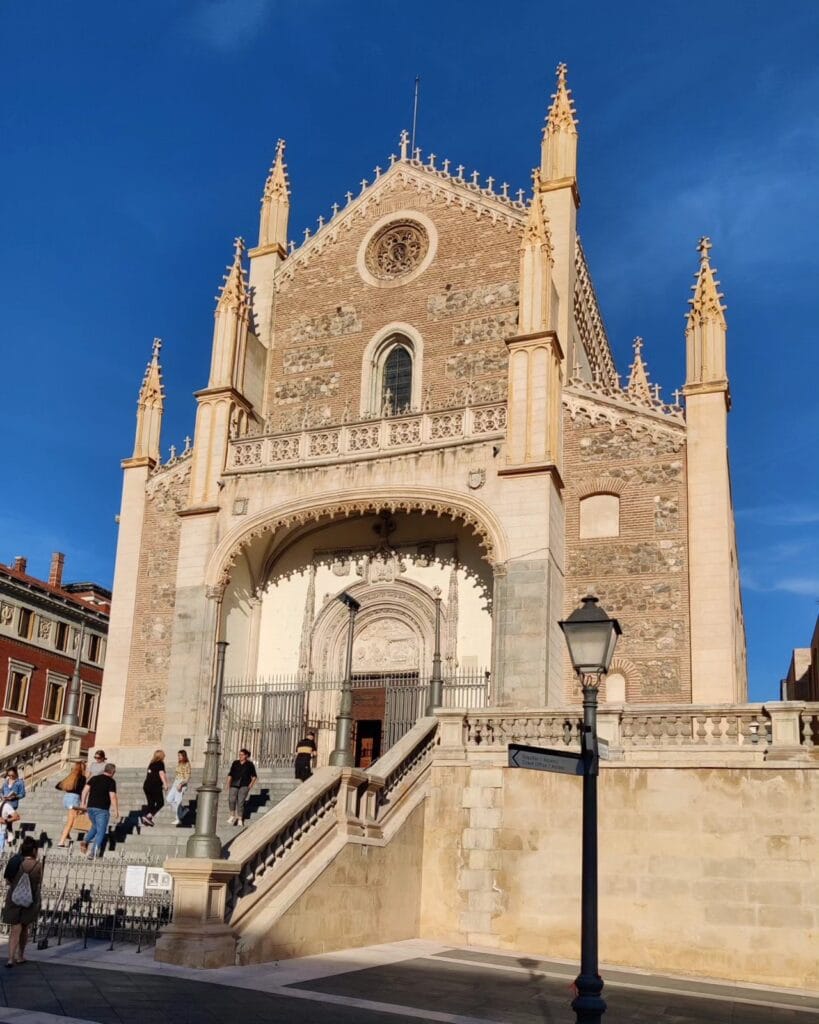
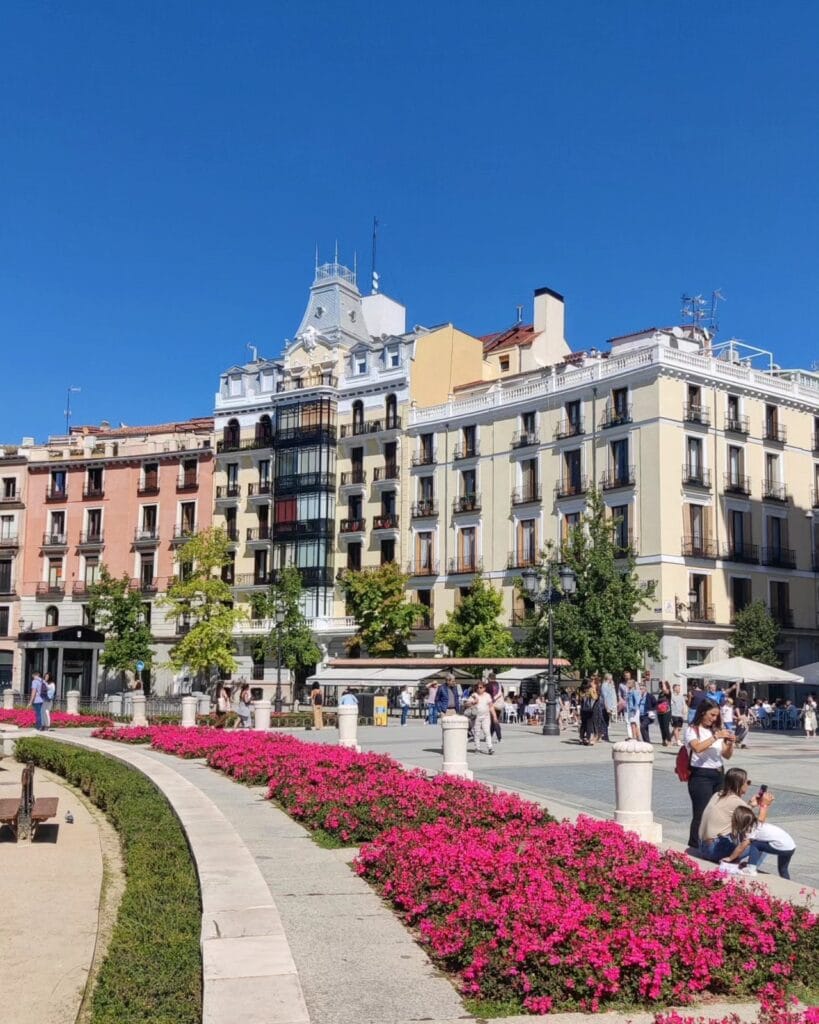
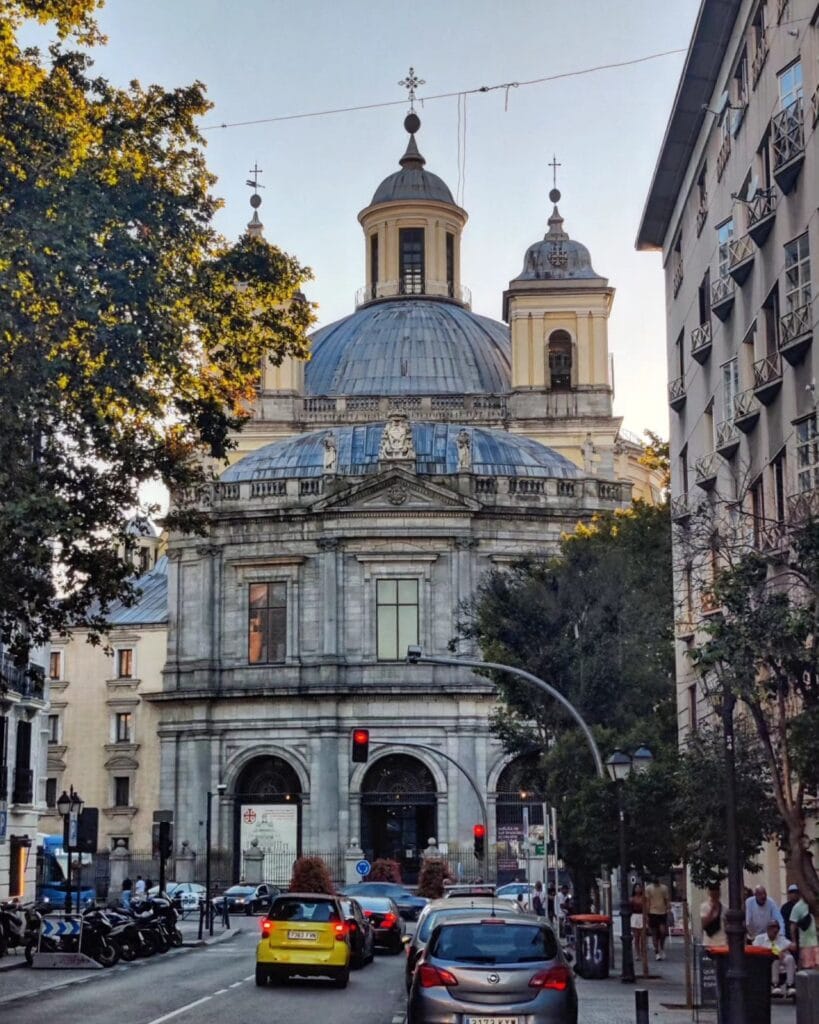
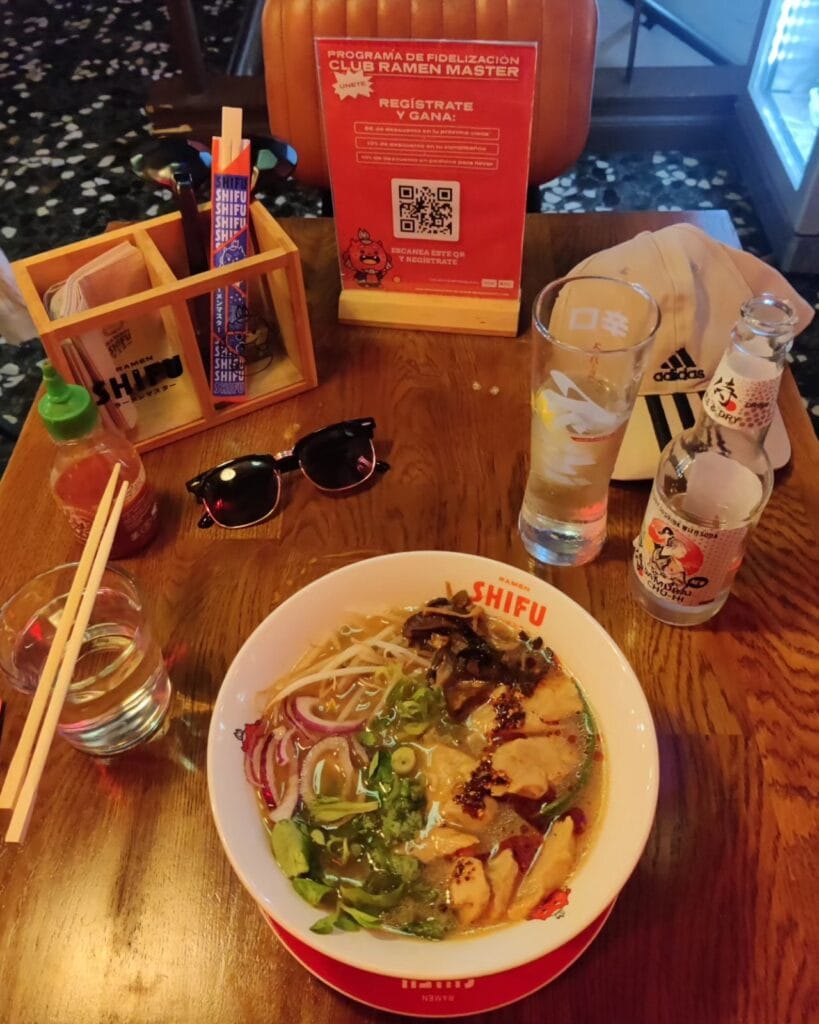
I did a free walking tour starting at Plaza Mayor and winding through the Royal Palace, Puerta del Sol, and Almudena Cathedral, pay what you wish, I gave €15. One evening, someone from the hostel knew a flamenco bar in Malasaña, not a tourist show, locals dancing in a dim room down a side street, old and young mixing, the passion visible.
The last days were for soaking it in. No rush, no checklist, just Madrid.
That is what a month of travel gives you: time to feel a place instead of just seeing it.
Apps you actually need
- Renfe (train bookings, essential)
- Google Maps (download offline maps for each city)
- Google Translate (camera translate for menus saved me more than once)
- Hostelworld (booking and reviews)
- Booking.com (backup)
- Alsa (bus bookings)
- BlaBlaCar (ridesharing)
- Official Alhambra app (for Granada)
What did it all cost?
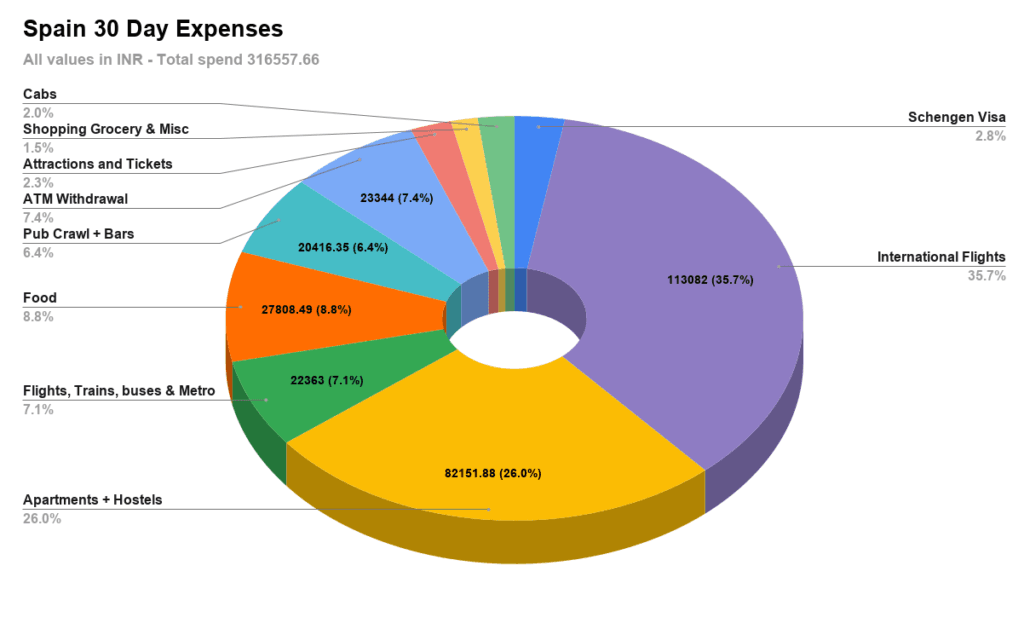
Exchange rate when I went: 1 EUR to 90 INR (September 2023). These are the real figures, pulled from card statements and cash withdrawals, not rounded guesses. Here is the whole trip, broken down by where the money went.
Final thoughts
The chaos and energy of Barcelona. The museums and history of Madrid. The Moorish beauty of Granada. The architecture and open source of Bilbao. The Atlantic energy of Cádiz. The marble light of Málaga. The quiet of an unplanned night in Antequera. The soul of Sevilla. All of it woven into one month that changed me, and all of it done with a laptop in the bag and the work still getting done.
What started as a three-day conference trip became 30 days of figuring things out. Missing trains, finding hidden bars, making friends on rooftops, eating free tapas, watching sunsets over the Alhambra, getting lost in medieval streets, and answering Slack from a courtyard in the morning sun. If you get the chance to spend a month in Spain, take it.
Bring comfortable shoes, an open mind, a willingness to get lost, and a little Spanish, because effort matters. The best parts happen when you are not following a guidebook. Spain taught me that.
Till then, live in the mix.