
I went to Sri Lanka for two weeks and came back after three and a half. The island nation can really do that to people. You book a hostel for two nights in a horseshoe-shaped bay called Hiriketiya, and then it’s day nine and you’re still there. Taking the 9:30 standup from a garden with a dog asleep under the desk, walking to yet another new coffee spot, and grabbing breakfast from a roadside vendor. Living the best life. That’s what I did.
Some context. I was coming off a rocky few months in 2024, and Sri Lanka was meant to be my little escapade. A chance to actually work remotely, join the calls, ship the work, and see an entire country in the gaps. Three and a half weeks of trains and buses and tuk-tuks. Scuba diving off the coast of Trincomalee, late-night parties, a 3 am return where a dog nearly bit me, surfing lessons, and then learning to cook Sri Lankan food. Most of all, the friendliest people I’ve met anywhere. It’s truly a different world so close to home.
If you’ve read Let’s Goto series before, you know the deal. Logistics first, then my very spontaneous plan going city by city, then the real numbers off my card statements at the end to give you a good idea in planning your adventure. You must be new here if you wanted a tidy day-by-day itinerary. We don’t do those.
Sri Lanka at a glance
- Trip: 24 days; End of August into September 2024, working remotely the whole time
- Route: Colombo, Trincomalee, Sigiriya and Dambulla, Kandy, Nuwara Eliya, Ella, Hiriketiya, with day trips to Galle and Weligama
- Getting around: trains, long-distance buses, and tuk-tuks for the last mile. No domestic flights available.
- When I went: September, the one month both coasts are in their off-season together. Cheaper and emptier, but pack for rain.
- Visa: an ETA you sort online before you fly. Ten minutes of form-filling, instant approval.
- SIM: Dialog tourist plan, sorted at the airport in fifteen minutes
- Total spend: 60k with round trip flights, including business class return; Check the end for the final round-up!
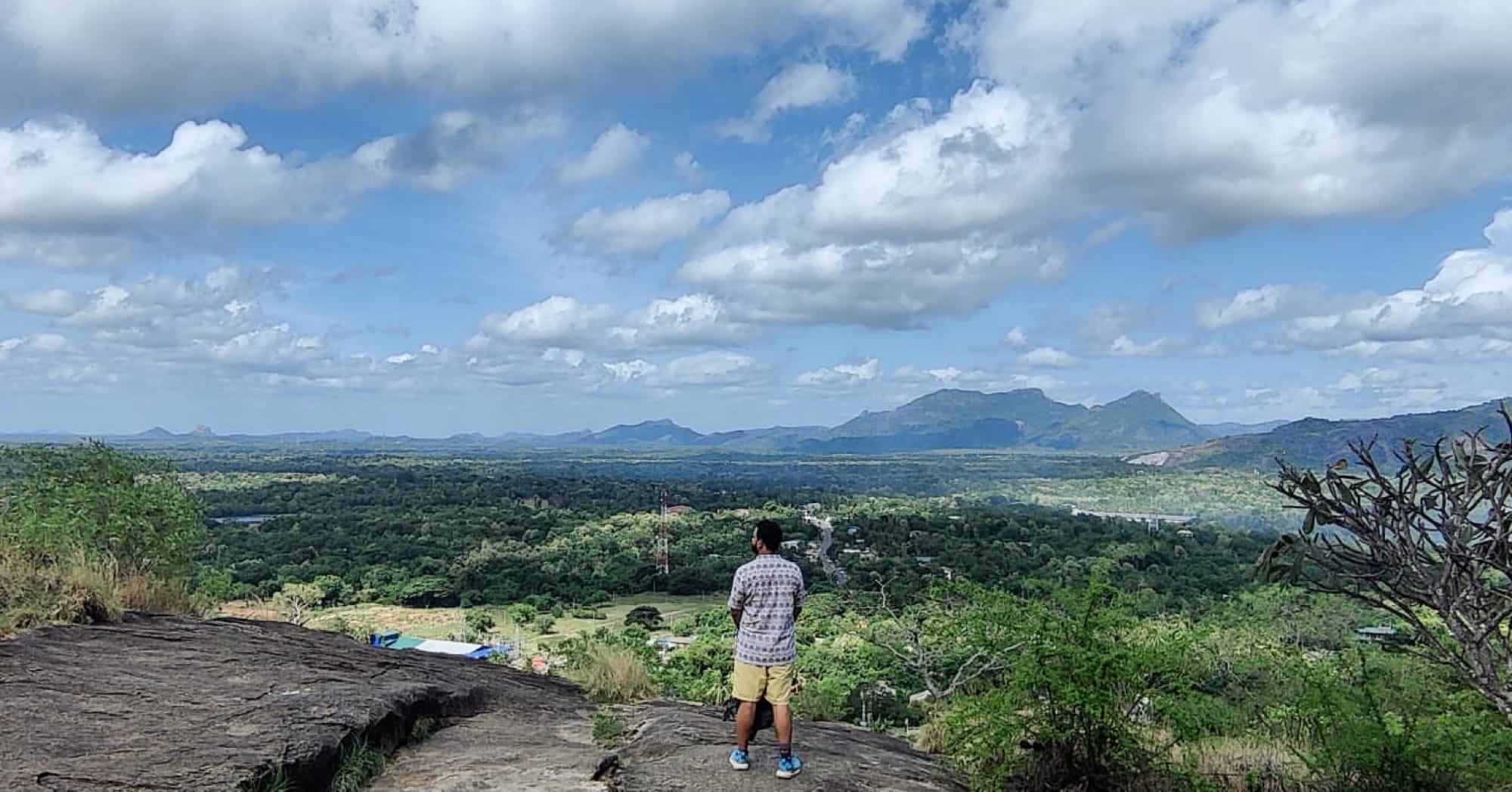
Wait, you worked the whole time?
Yes, and that’s the part that makes a 24-day trip possible. Sri Lanka is on the same timezone as India. The standups that mattered landed in my morning just like they would at home. I’d be done with the important calls by lunch and on a beach or on a train by the afternoon.
The long middle stretch was a co-working hostel in Hiriketiya. Decent fiber, a desk facing the garden, and the resident dog, Kreemy who attended every meeting. My coworkers knew I was travelling. At the time, if the work was getting done, nobody really cared where I was calling in from.
It’s the same workcation setup, that I improved from my month in Spain.
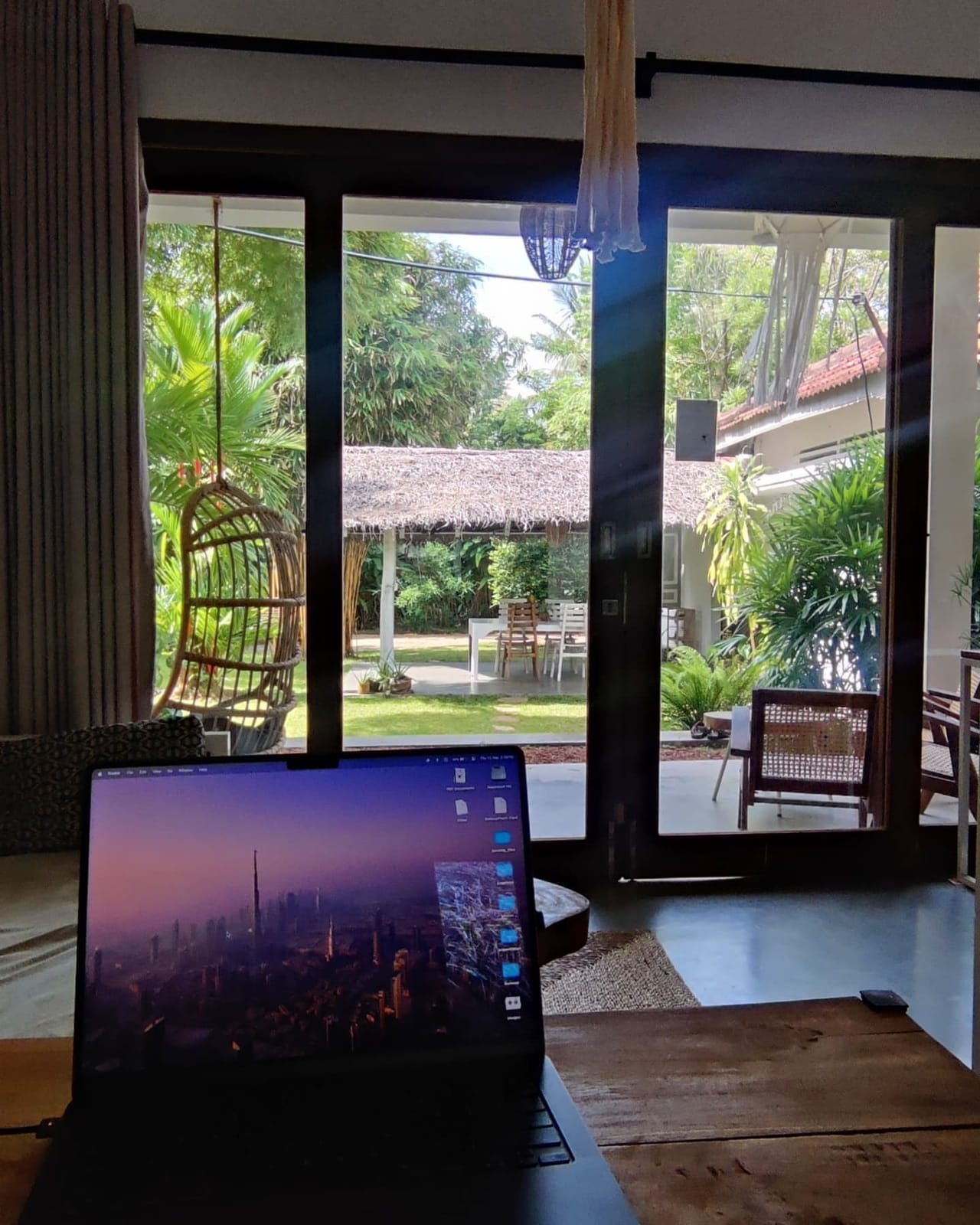
A few things made the remote part actually work, in order of how much they saved me:
- Pick one base, not ten. The first week I moved every day or two and got nothing done. Once I parked in Hiriketiya, I finally had a routine.
- Pay for the good co-working spot. Real desks, a second monitor, and a backup connection beat a hostel common room every time.
- Zero time difference is a gift. Indian hours, beach afternoons. If you work with an Indian or European team, Sri Lanka is one of the easiest places to do it from.
The money, the SIM, and the ATM that hated me
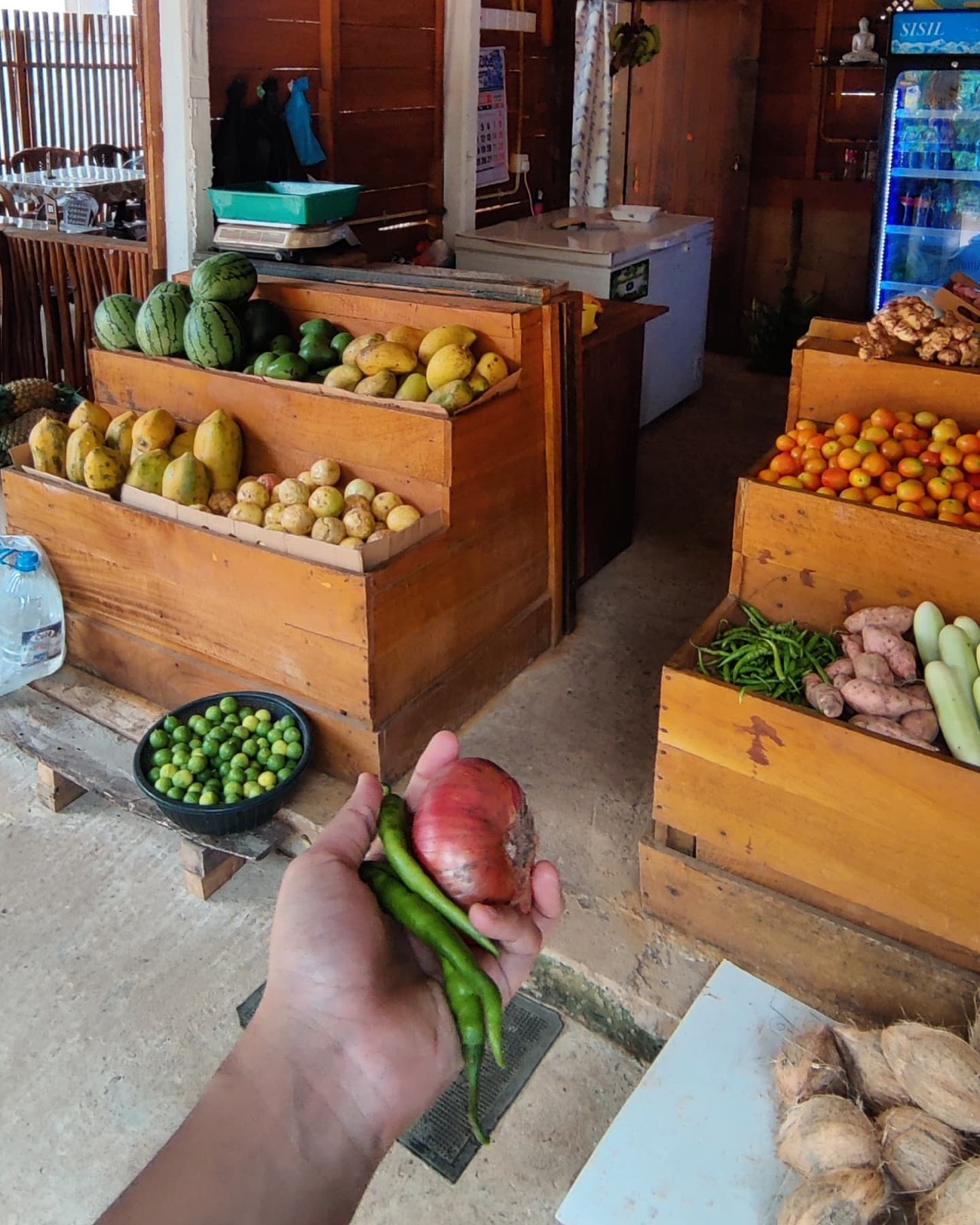
Sri Lanka runs on cash the moment you leave the cities. Tuk-tuks, hostels, rice and curry shacks, bus conductors, all of it. Cards work at the nicer cafes and dive shops, but the village economy wants LKR in hand.
The catch is the ATMs. They cap a single withdrawal low, and then charge a fee of around 800 LKR on top. So every cash run costs you before you’ve spent a thing. I learned to pull the maximum the machine would allow each time, and to befriend anyone with foreign cash to swap. At the end of the trip I handed my friend Sanjam 30,000 LKR for 140 Canadian dollars, and we both felt like we’d won.
My first ATM in the country set the tone. At the airport, on a brand-new Niyo debit card, I tried to pull 100,000 LKR from a Bank of Ceylon machine. The money left my account. No cash came out. I tried a second bank: same thing.
At the third, a Commercial Bank ATM, I tried a tiny amount first, then a big one, and it finally worked. Thankfully the money was only blocked, not lost.
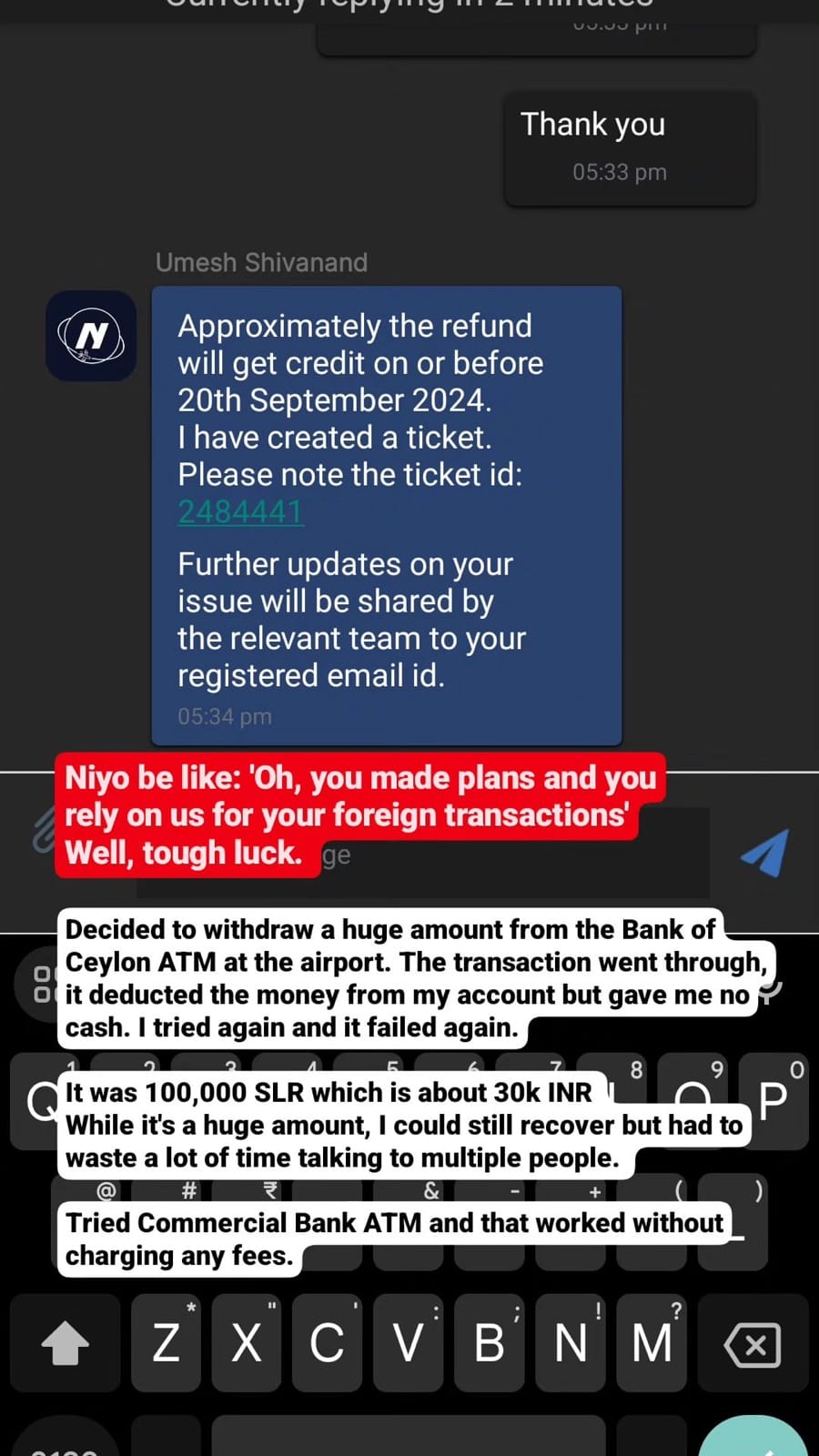
The receipts: Niyo’s support ticket promised the refund “on or before 20th September 2024”.
It landed in about a week. The ATM fee on every failed attempt never came back.
- Cash strategy: withdraw the per-transaction maximum every time to dilute the ATM fee, and keep small notes for tuk-tuks and buses. Commercial Bank ATMs worked for me without the drama.
- SIM: grab a Dialog tourist plan at Colombo airport for 1,399 LKR. Plenty of data, sorted before you’ve found the taxi rank.
- Transport: long-distance buses are cheap and frequent, the trains are the experience, and tuk-tuks fill in the last mile. Agree the tuk-tuk fare before you sit down.
- Where to sleep: hostels everywhere, most of them social, many with a desk you can work from. (Here’s my method for picking a good hostel.)
Day 1-2: Hi Colombo. Bye Colombo 👋🏼
The plan was to land in Colombo in the afternoon and go straight to Sigiriya. Waste no time at all.
The plan did not survive contact with Air India. A delayed flight, and gate 14A at the literal far end of Terminal 3. By the time I landed, got through immigration, fought the ATMs and got a SIM, it was 6 pm, getting dark, and the direct bus to Dambulla was long gone. So yes, Sri Lanka didn’t get off to a great start.
So I did what backpackers do. Somewhere between the SIM counter and my third ATM, I got talking to an Indian trader, from Jaipur, I think, in Colombo for business. He was properly empathetic about the ATM mess, and we split a cab into the city. That’s how I ended up crashing a night at Ceylon StayZ instead of in Sigiriya.
The owner of Ceylon StayZ is the reason this trip worked. I told him I had nothing planned. He walked me to the massive map of Sri Lanka on his wall, explained the route he gives every traveller, and then drew me a better one: take the early train from Colombo straight to Trincomalee, arrive by the afternoon, win back the day I’d just lost, and loop back through the Dambulla hills from there. The next morning he woke up with me at 5 am and flagged down an auto to the station, because I was running late and would have missed that train without him.
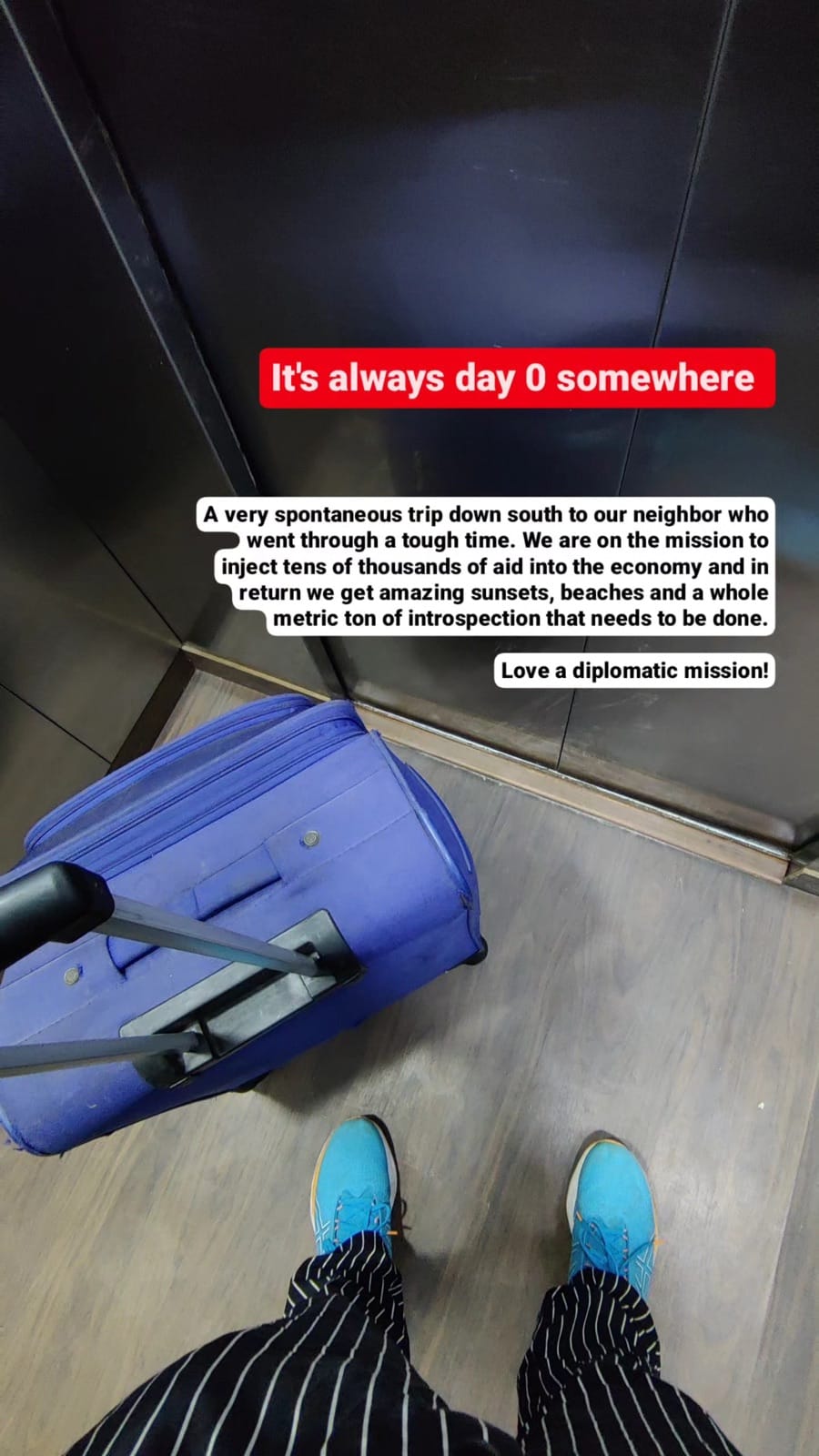
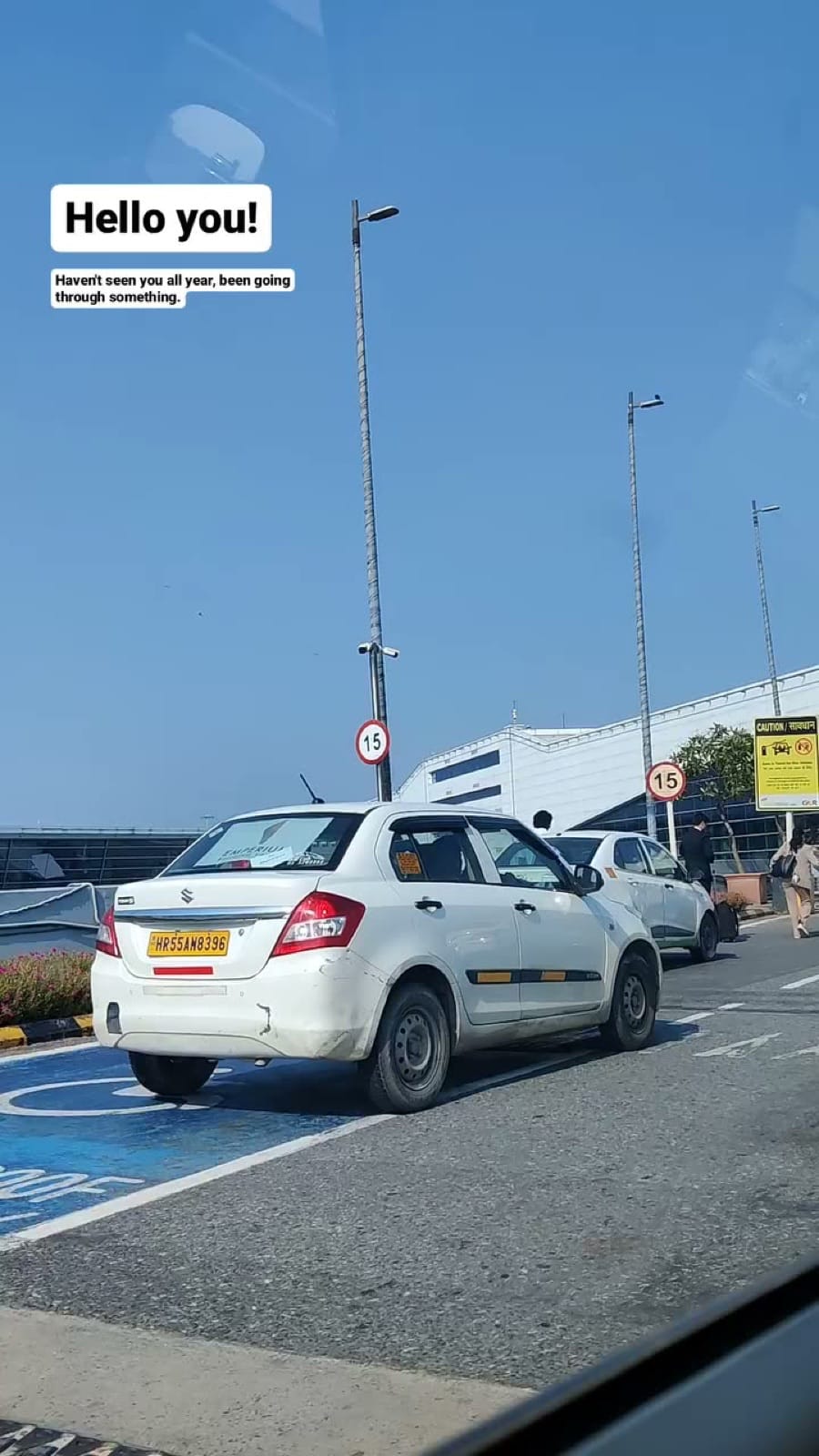

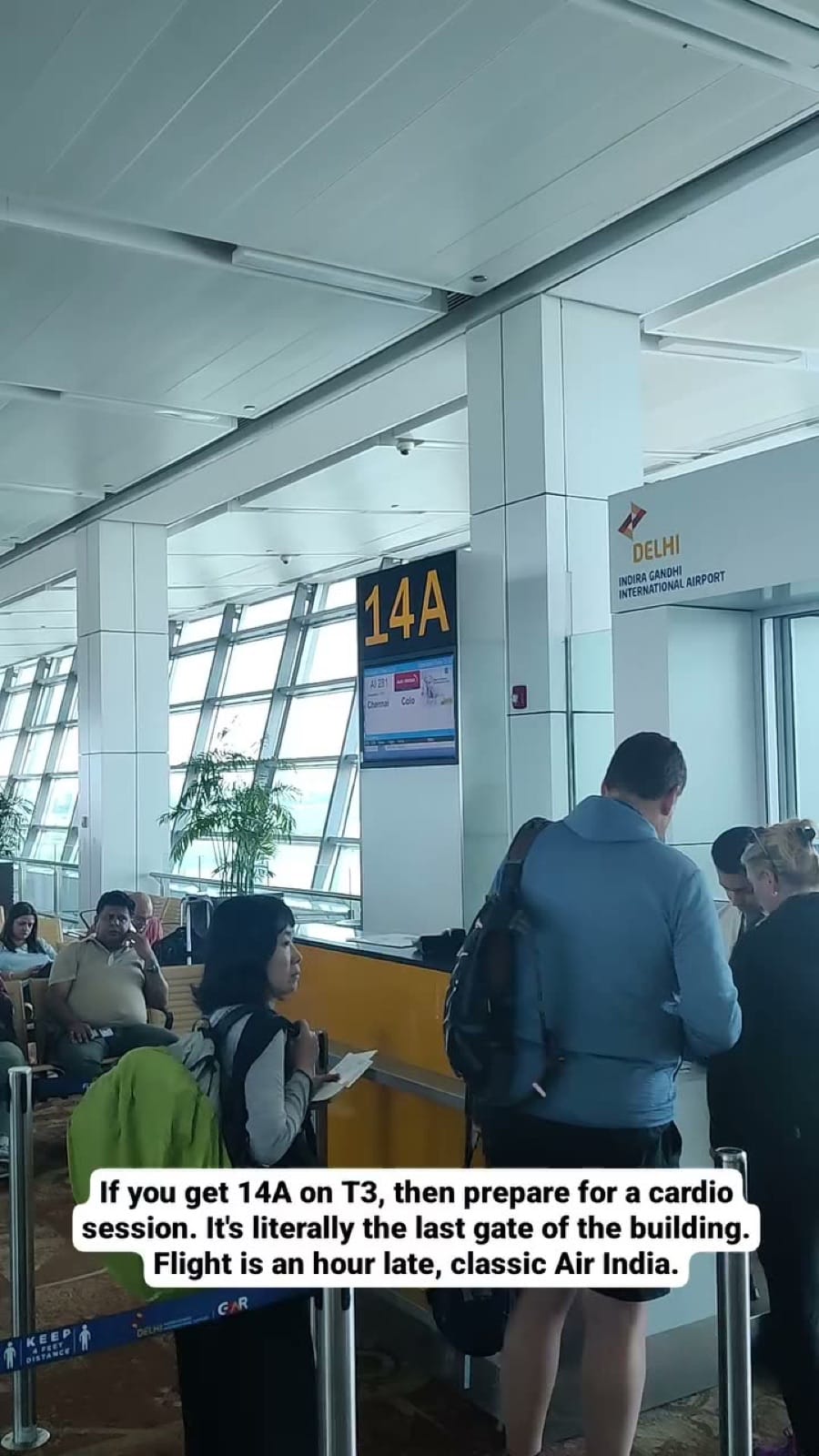
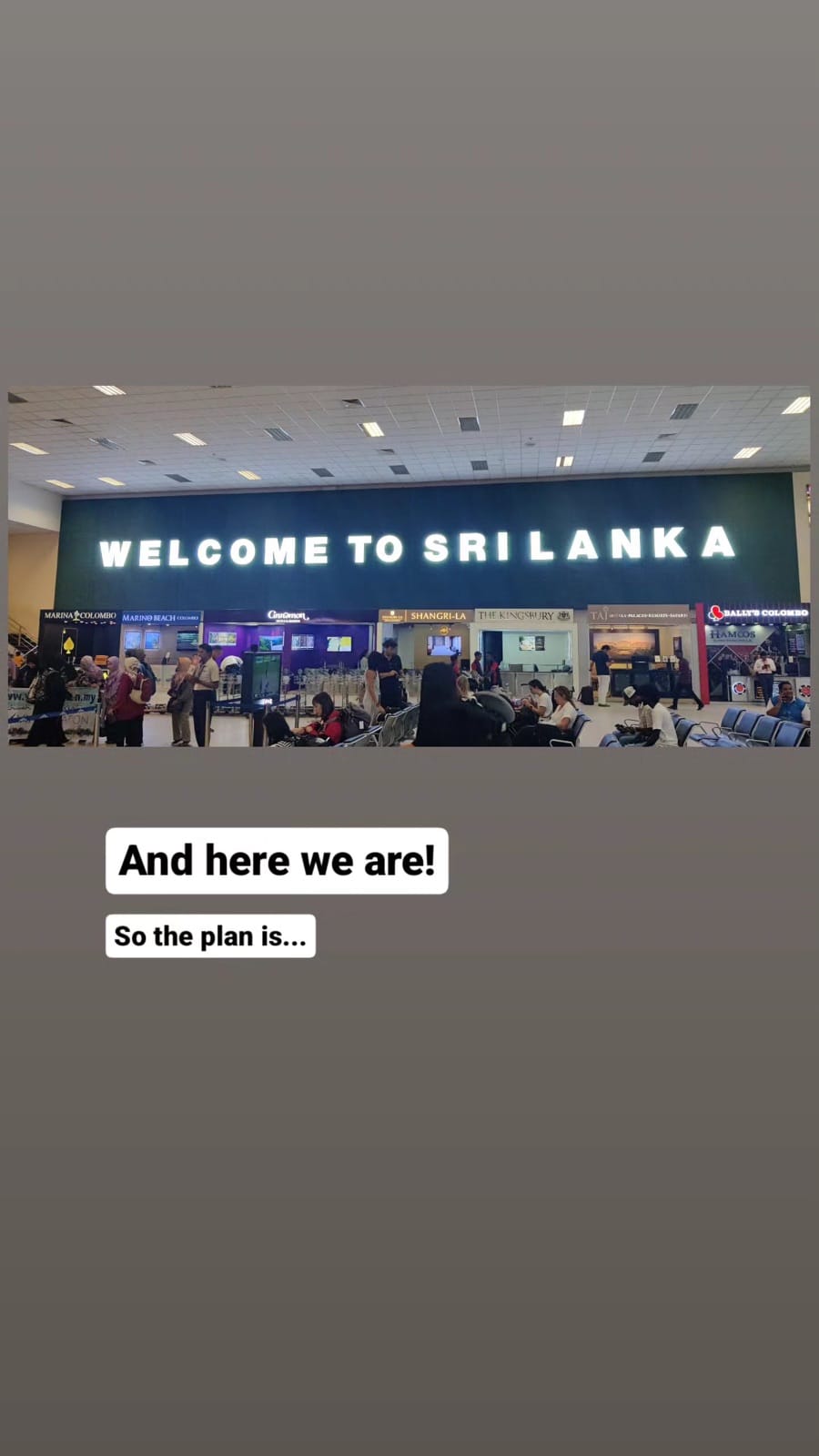


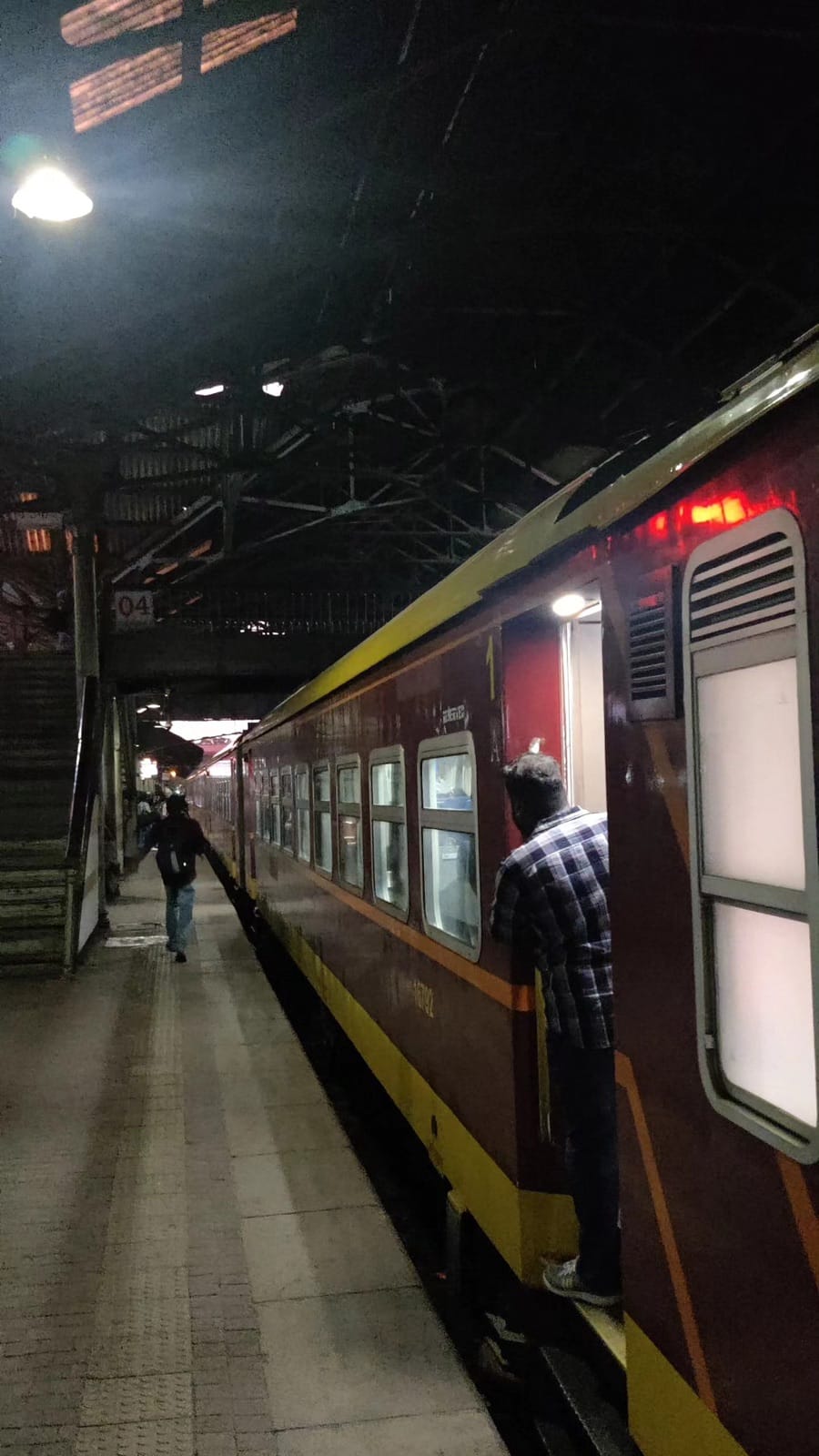
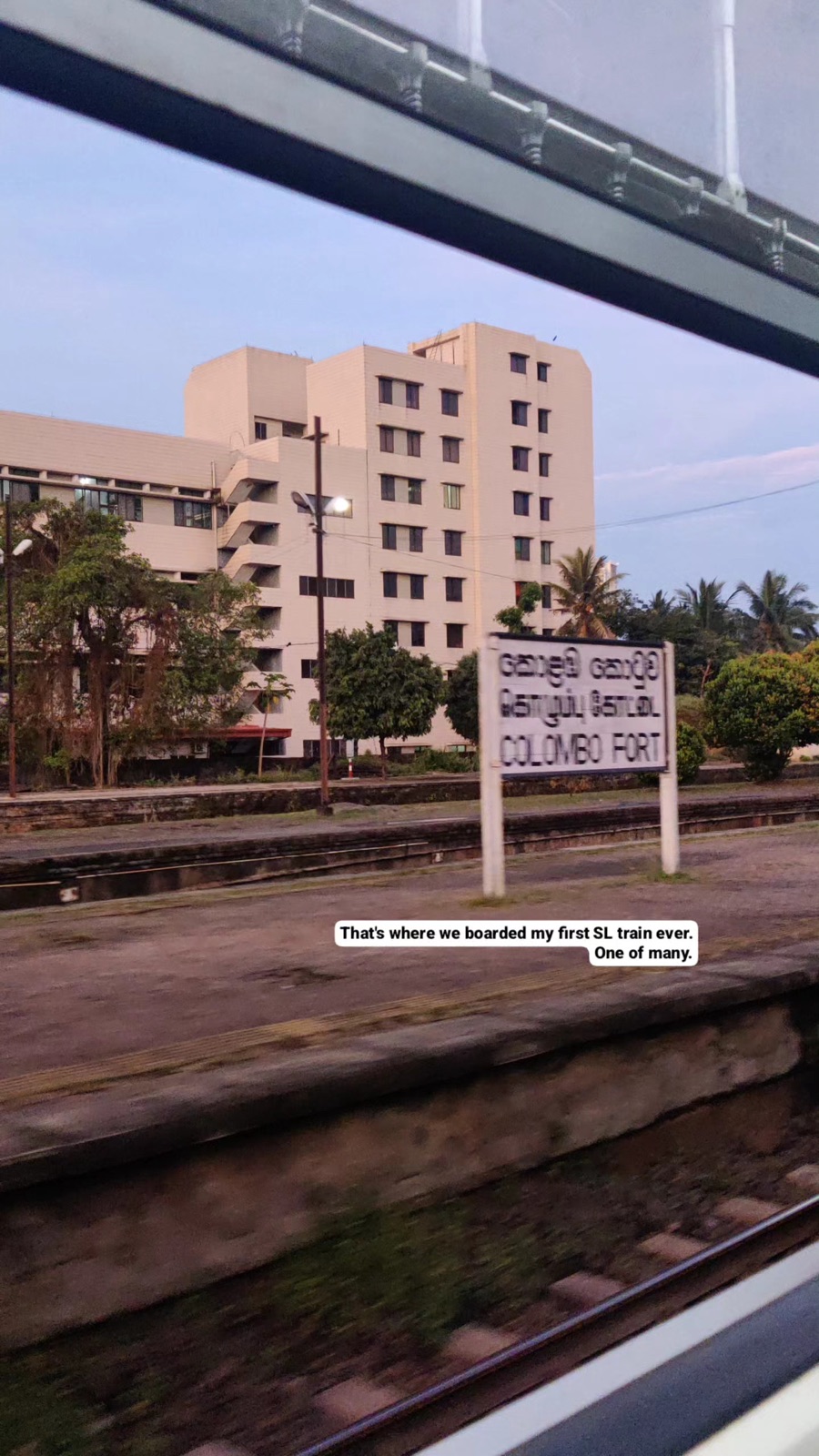
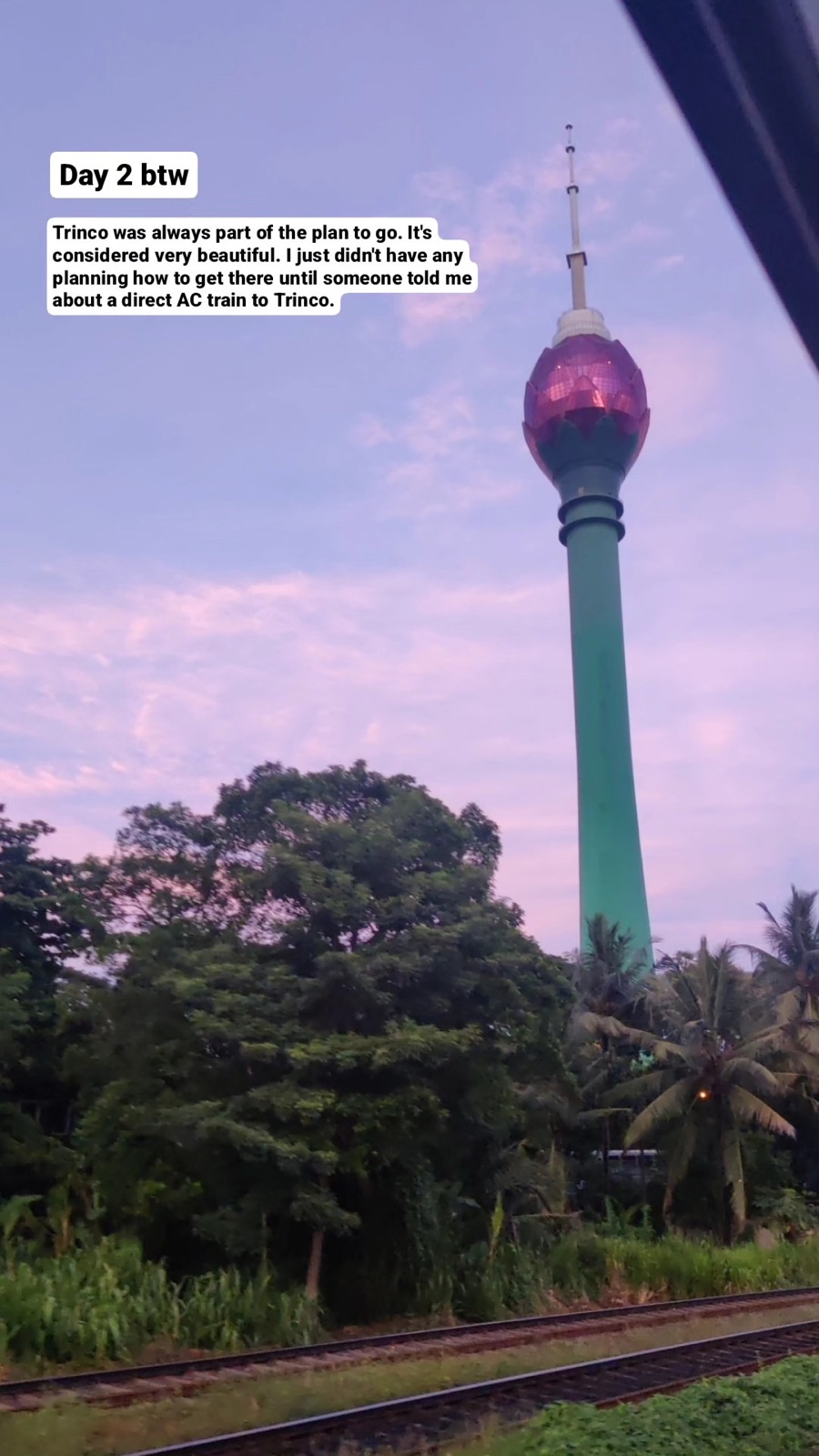



Colombo airport to the Trincomalee coast: one swallowed card, one map in red pen, one 5 am train, 26 hours awake.
That 5 am train was one of the best calls of the trip. It ran right across the island through stop after stop of the countryside, ran a couple of hours late, and was hot. Unlike Indian trains, there are no chai or snack vendors walking through second class. Nothing passed by the whole way. Thankfully, I’d packed food, snacks, and water. Twenty-six hours awake by the time the tuk-tuk rolled into Trincomalee, and I spent that first afternoon flat on my back filming clouds. Here’s the whole saga, exactly as it went.
So the plan … sort of.
Colombo is your only real way in or out, and most travellers do one of two loops. Both swing around the south coast, which has 50 or so beach towns to pick from.
- Hills first: Colombo → Trincomalee or Sigiriya → Kandy, Nuwara Eliya and Ella → the south coast beaches, clockwise → back to Colombo for your flight.
- Beaches first: Colombo → down the south coast, anti-clockwise → up into Ella, Nuwara Eliya and Kandy → Sigiriya last → Colombo.
- Bonus: a few people add the north, around Jaffna, as well.
My Ceylon StayZ host gave me this numbered route. Here’s what I actually did with it over the next 24 days:
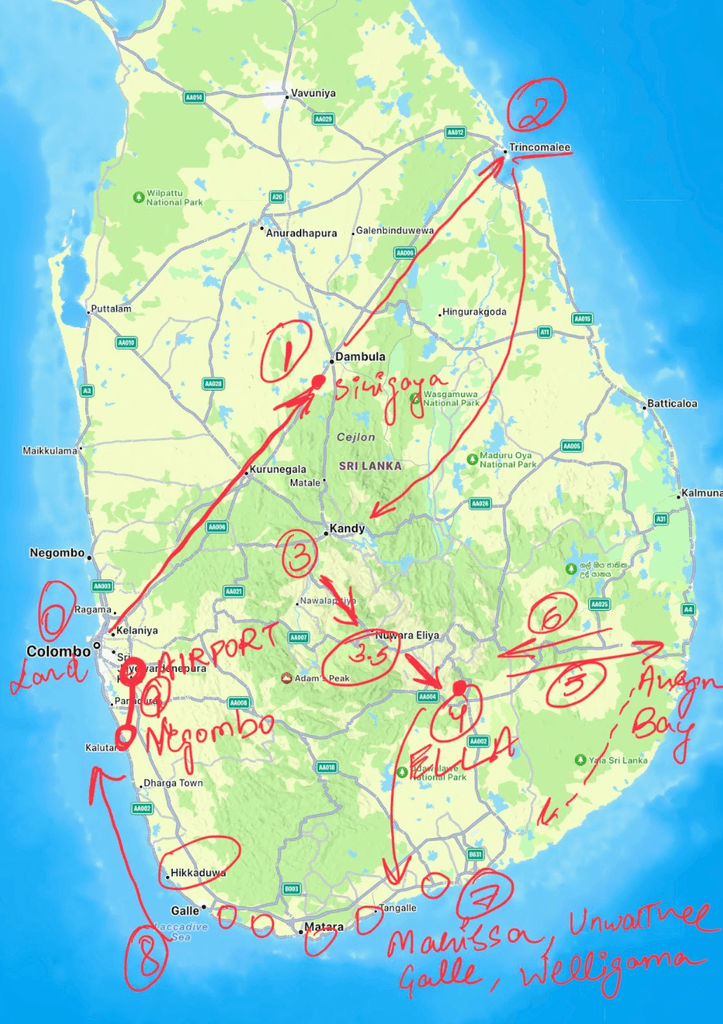
| The leg | Where I stayed, and how it went |
| Land in Colombo | Ceylon StayZ. Missed the direct bus to Dambulla, gained a whole route. |
| 5 am train to Trincomalee | Laughing Leopard, 200 metres behind the beach |
| Bus from Trincomalee to Sigiriya (via Dambulla) | Treehouse Hostel. An actual nightmare. |
| Hostel pickup to Habarana, bus to Kandy | No stay. Saw Kandy, saw just a city, left it the same day. |
| Train from Kandy to Nuwara Eliya | Laughing Leopard, Nuwara Eliya |
| Train from Nuwara Eliya to Ella, the famous one | Rock View Ella Hostel. One day. Ella wasn’t my vibe. |
| Long bus from Ella to Hiriketiya | Chill Vibes and Barefoot. Great party hostels, but I finally settled on… |
| Hiriketiya | Clics Coliving. I stopped my trip and just lived my remaining days. |
| Colombo | Hilton Colombo, for the early flight home |
Trincomalee: My first dive in two years
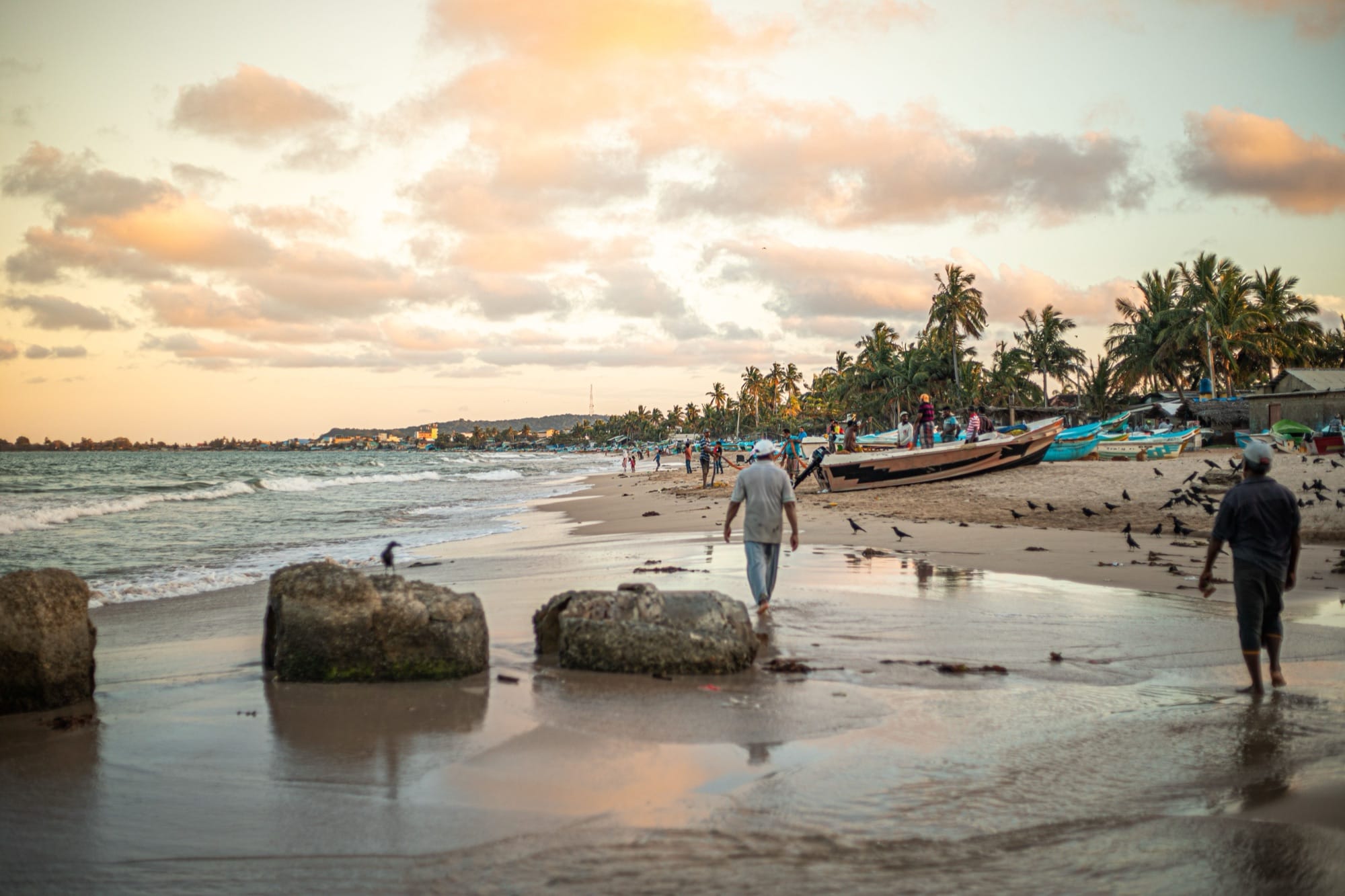
The quiet side of the island.
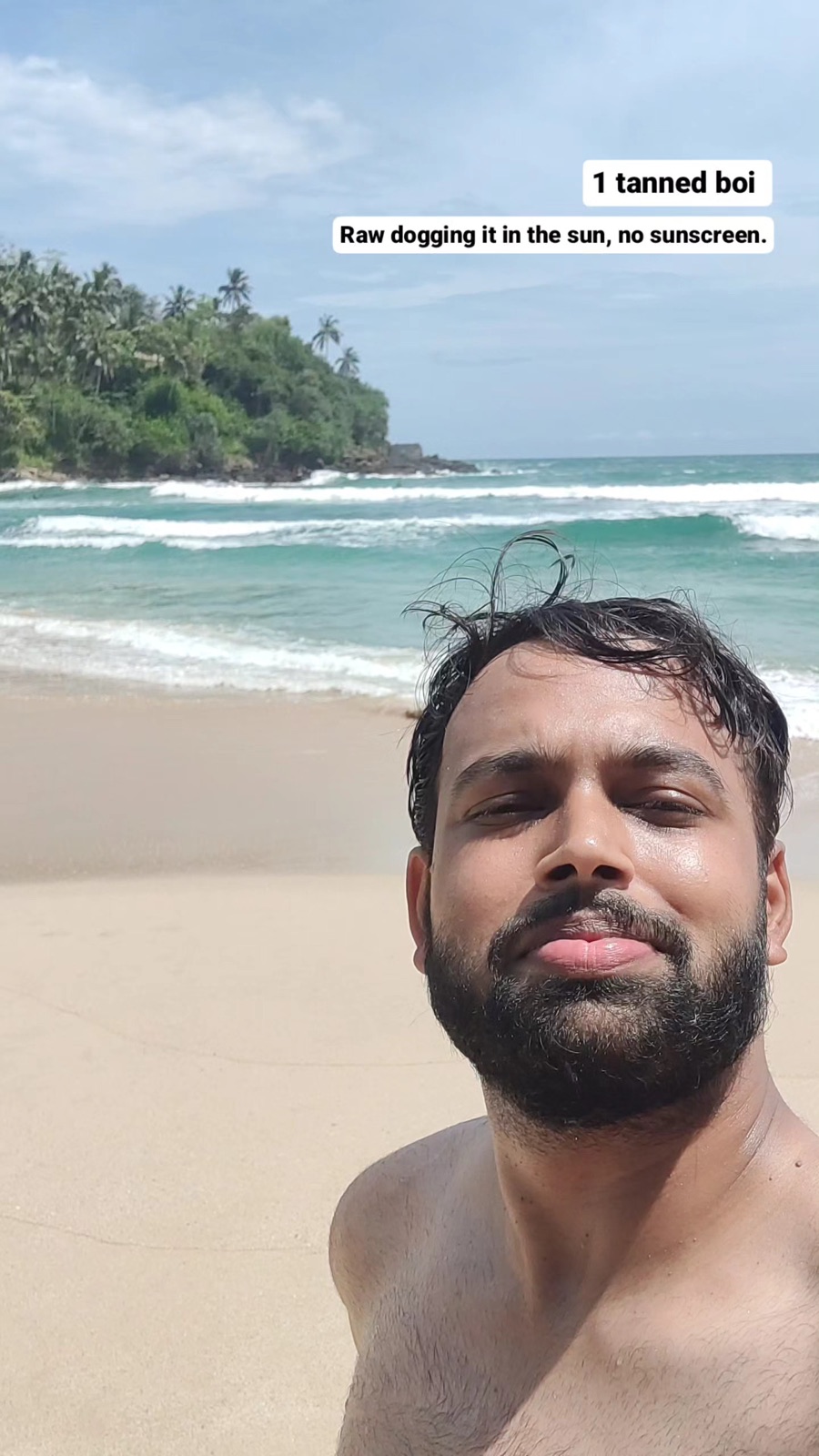
Trincomalee became my first destination to experience Sri Lanka. It’s one of the two big beach towns on the east coast (Arugam Bay is the other), and I caught it at the tail end of its season: big skies, warm flat water, and a stretch of sand at Uppuveli where the only morning traffic was fishermen dragging their boats in.
Home was the Laughing Leopard, a very Sri Lankan hostel, all open and airy, about a 200-metre walk behind the beach. On the first night I got introduced to a couple of people and ended up at a proper sit-down dinner with them.
The next morning I found a spider living in my luggage as I walked to the beach to capture a slow, steady sunrise. All kinds of experiences, as promised.

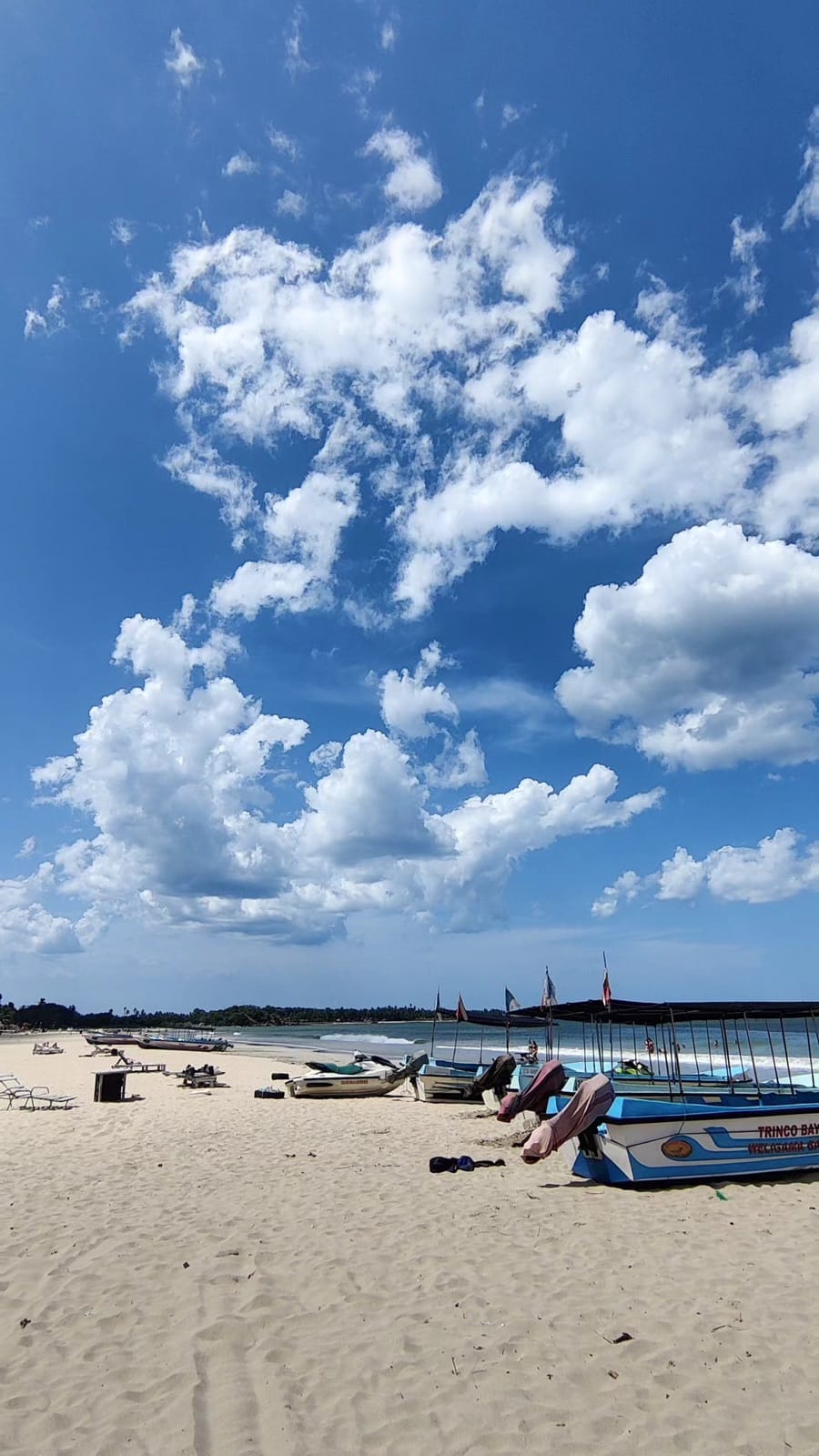
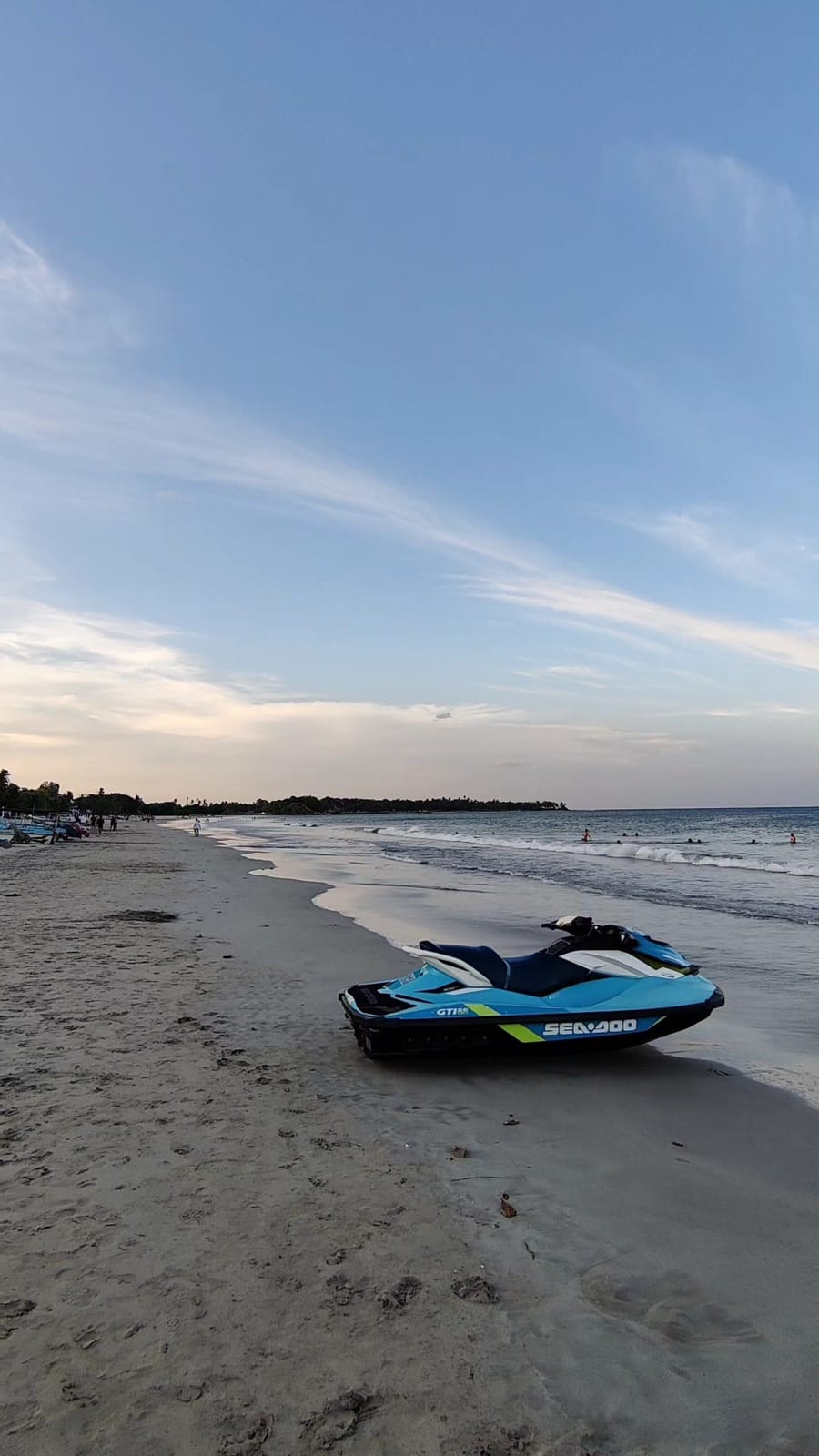
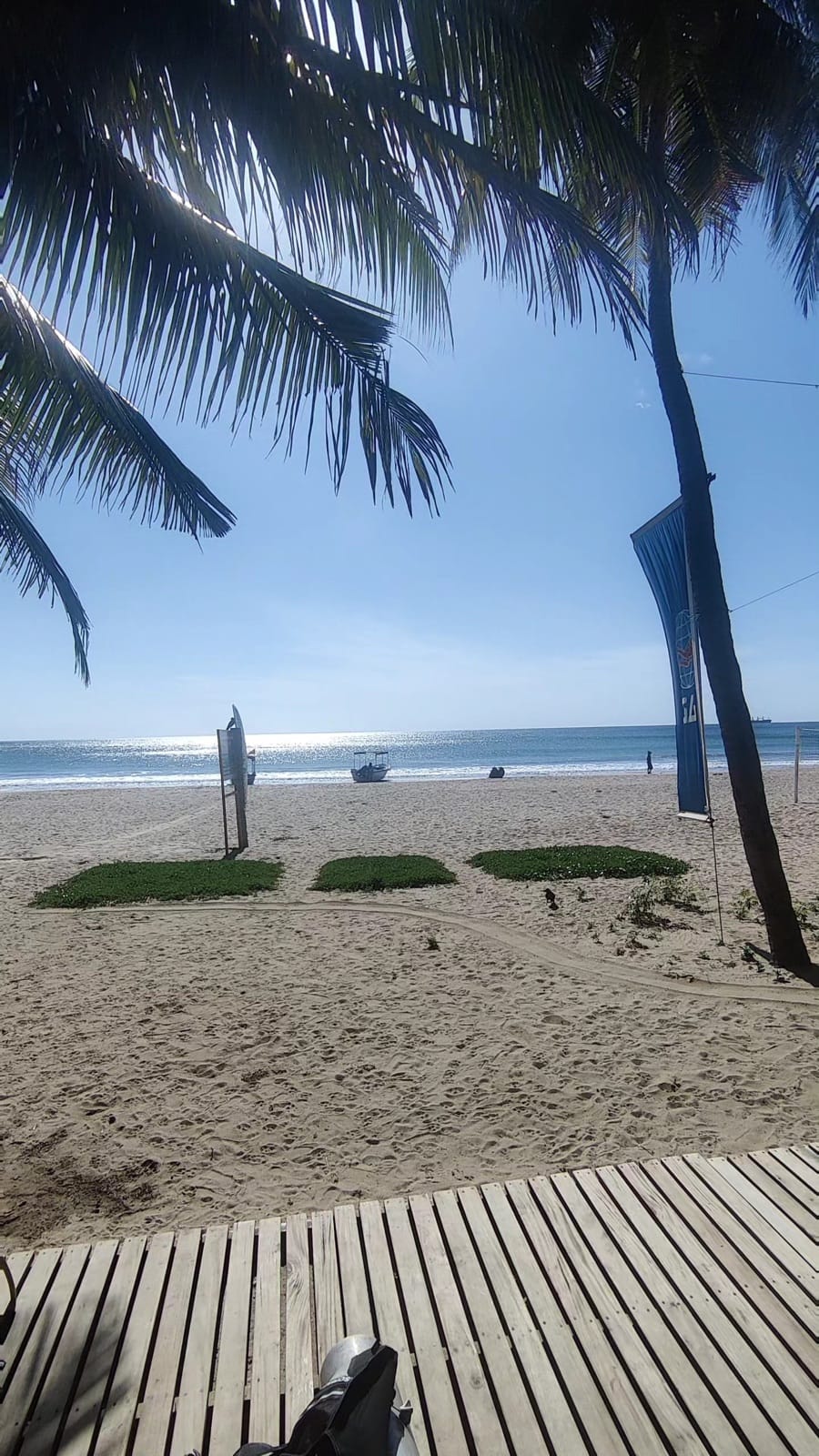
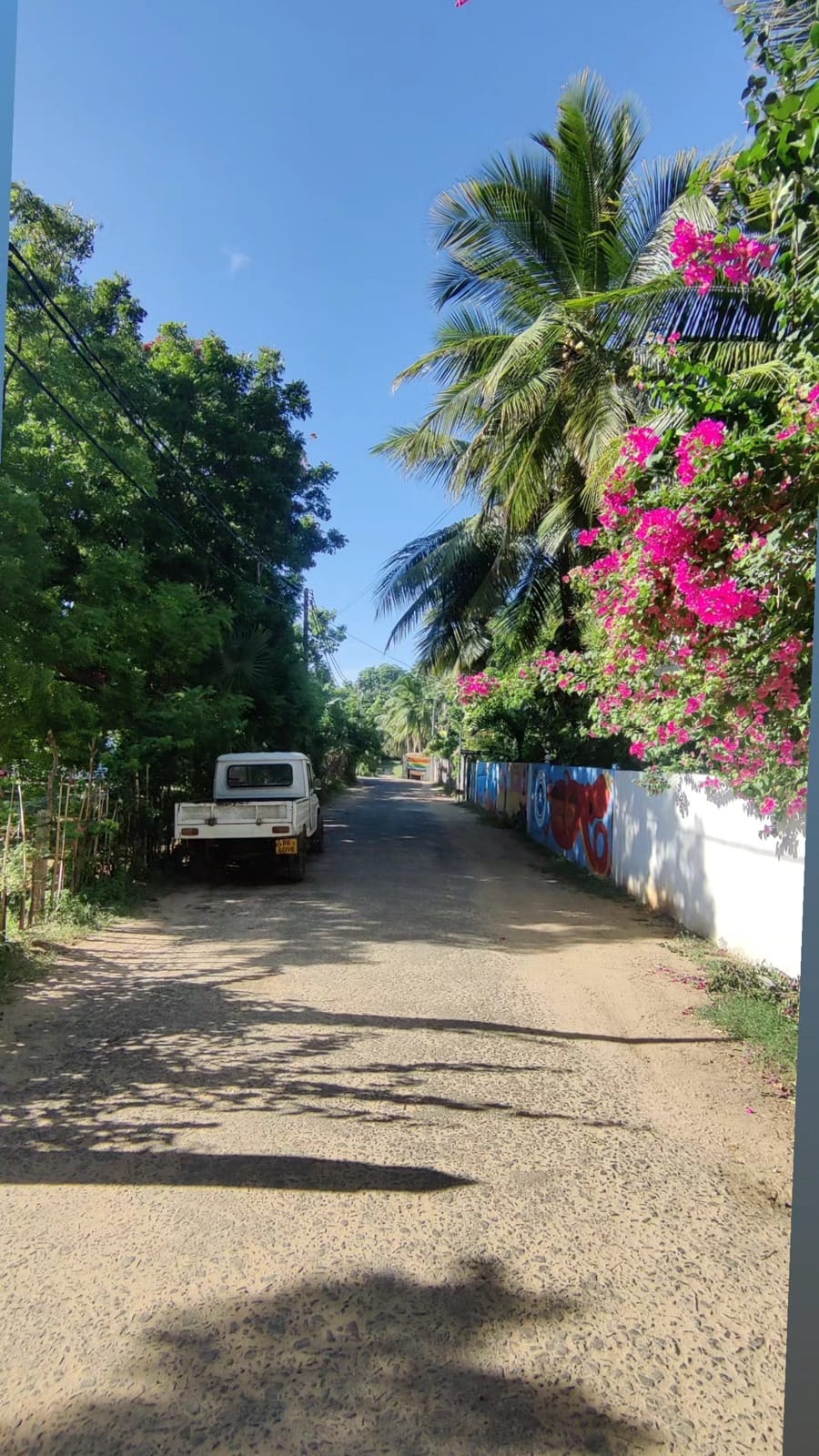
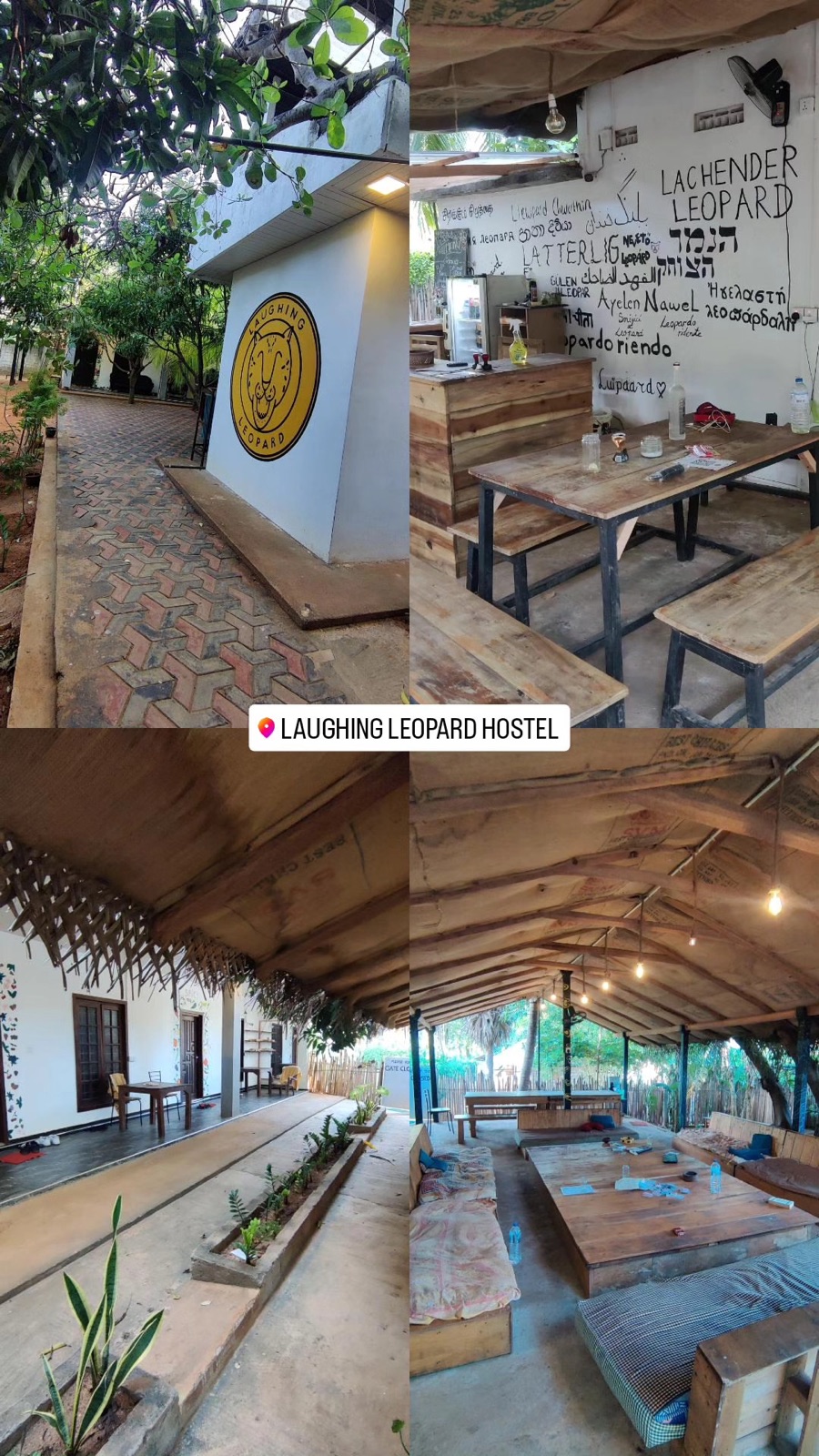
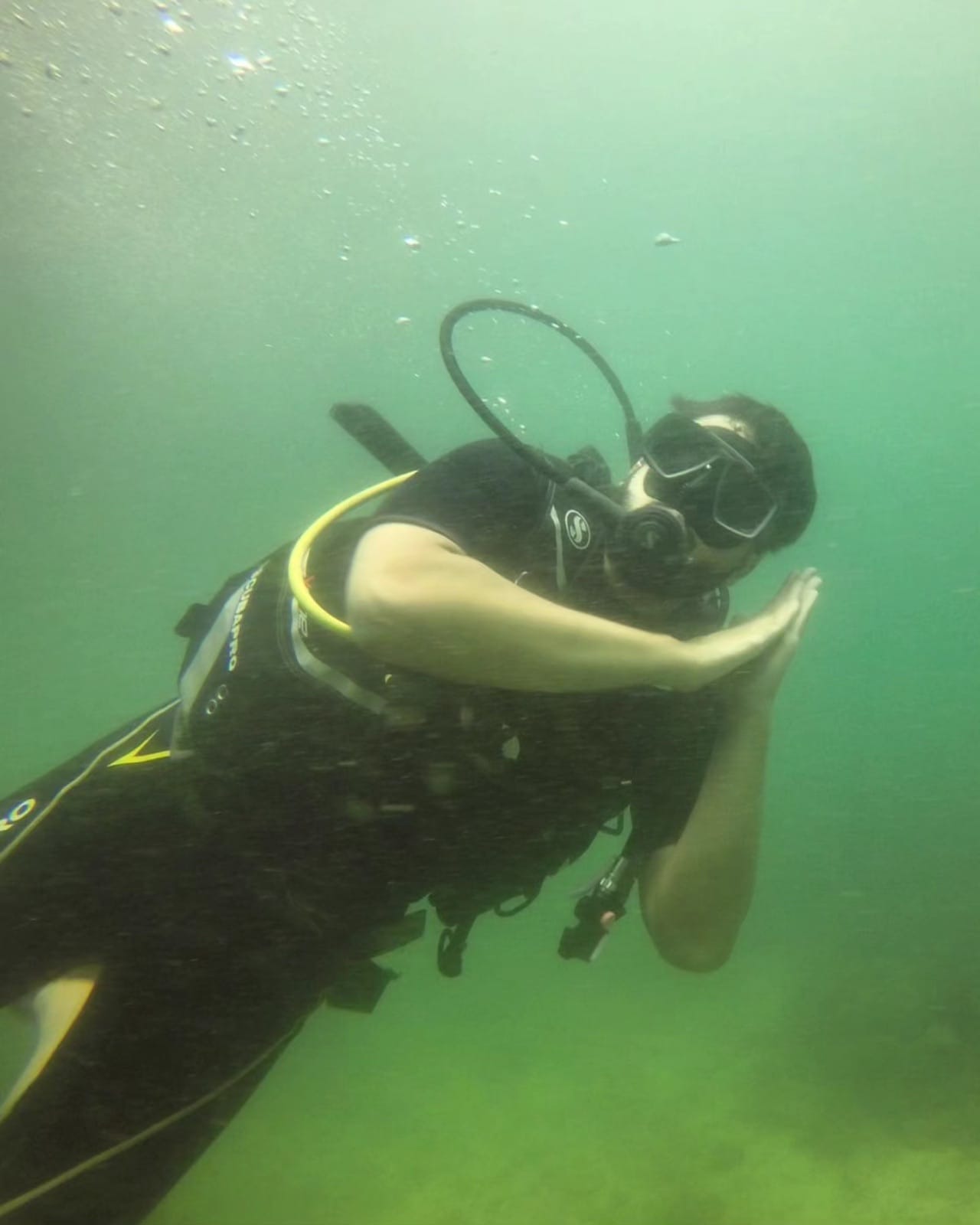
Trinco was spectacular. Touristy. But, since it was the shoulder reason, quite empty. The reason most people come to Trinco is the diving. The east coast gets its calm, clear water while the southwest monsoon is battering the other side of the island, so this is Sri Lanka’s summer dive spot. My last dive was two years and a month earlier, the week I got my Open Water certification in Koh Tao when I learned to dive in Thailand.
Nervous about how that went, I booked a refresher course with my two fun dives. Two and a half dives for 75 dollars, about 26,000 LKR on the card, which made it the single biggest line in the scuba, surfing, sunsets slice of my budget.
The plan was Navy Island first, then an underwater museum, at 12 and 22 meters. The weather had other ideas, so visibility was only about 7 metres. There were still a lot of fish down there. I also have an annoying problem with my left ear: it never equalizes properly, so every descent is a slow negotiation. I won it, logged both dives in the PADI app, and came up grinning.


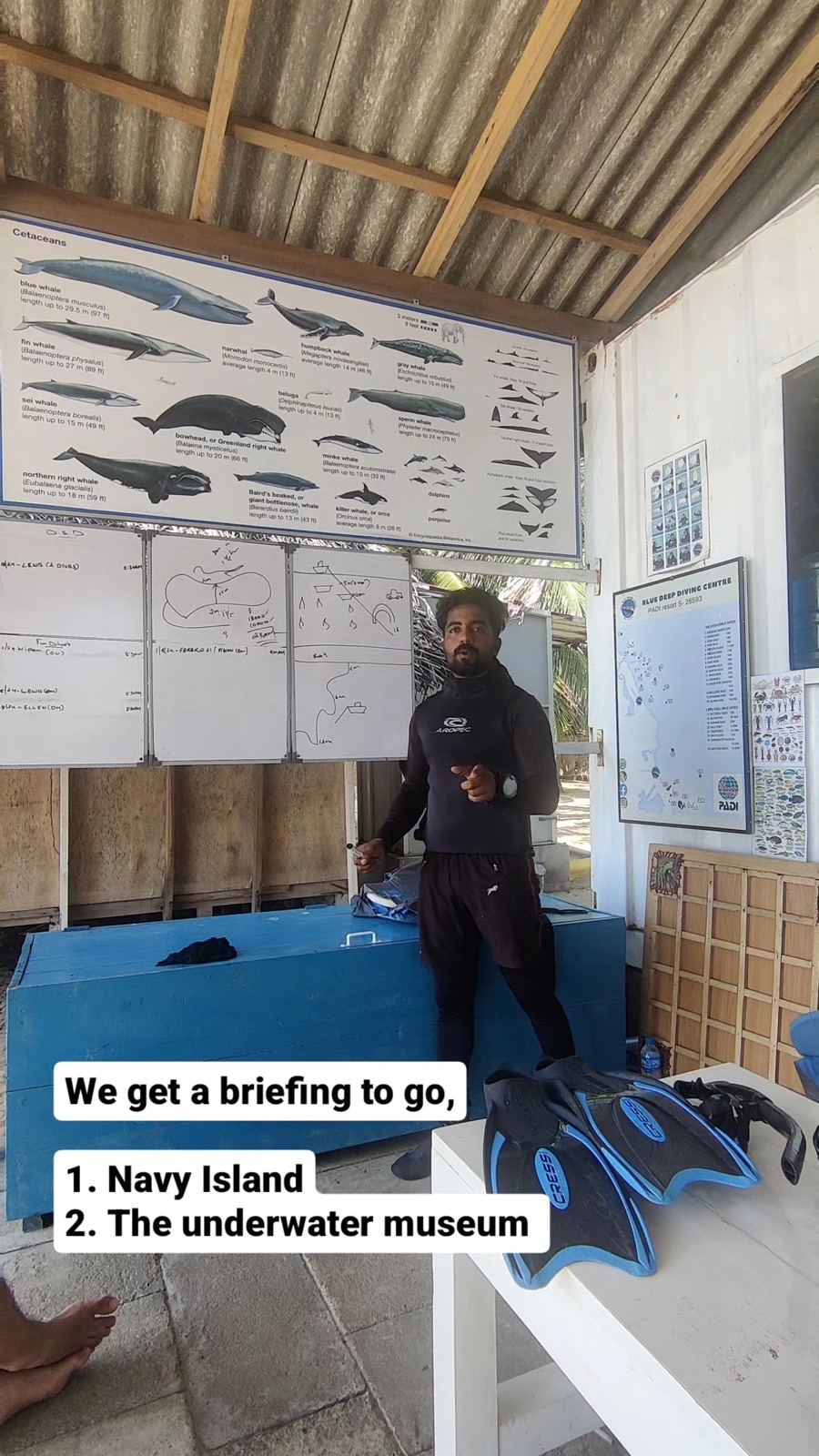
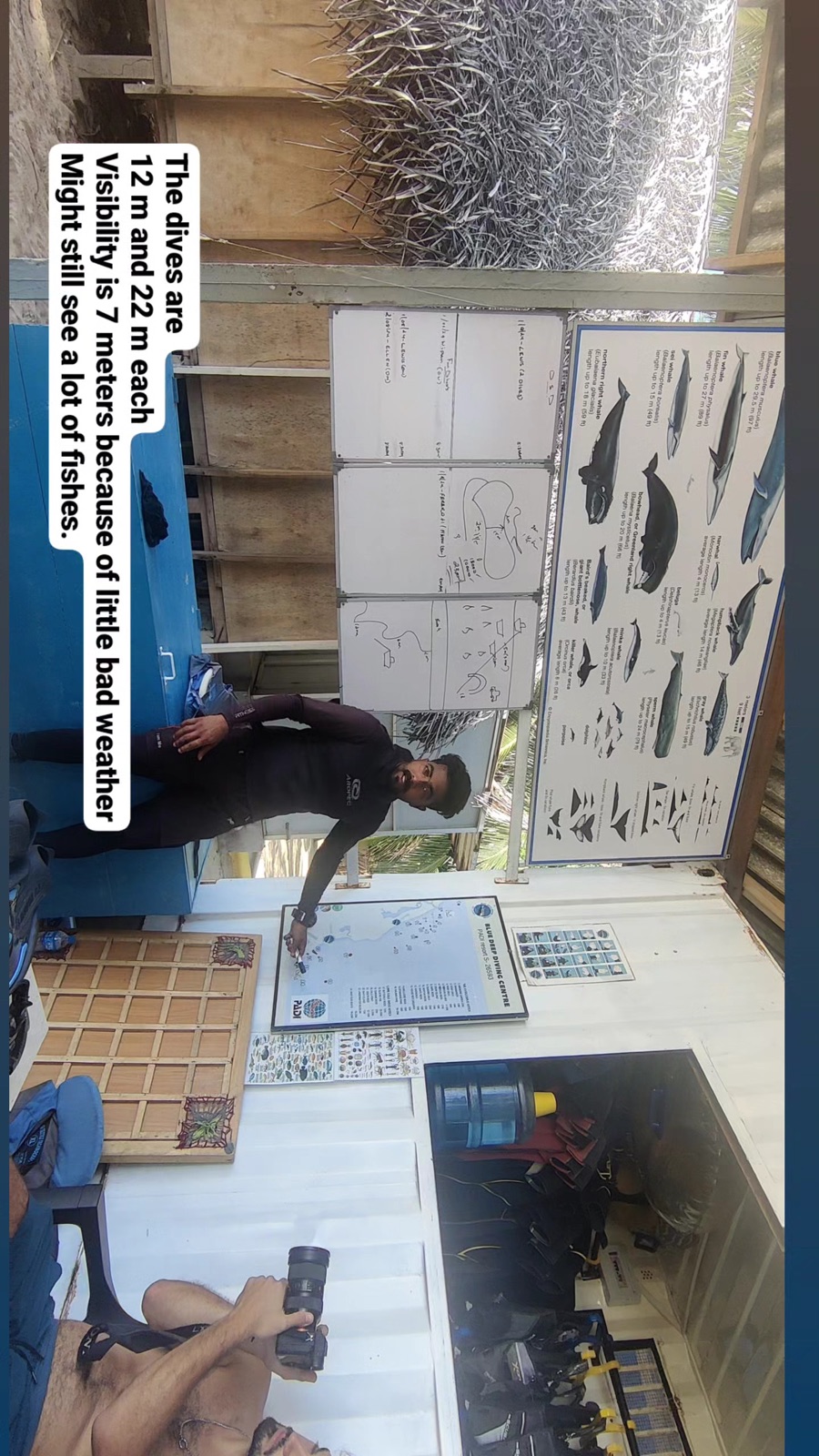
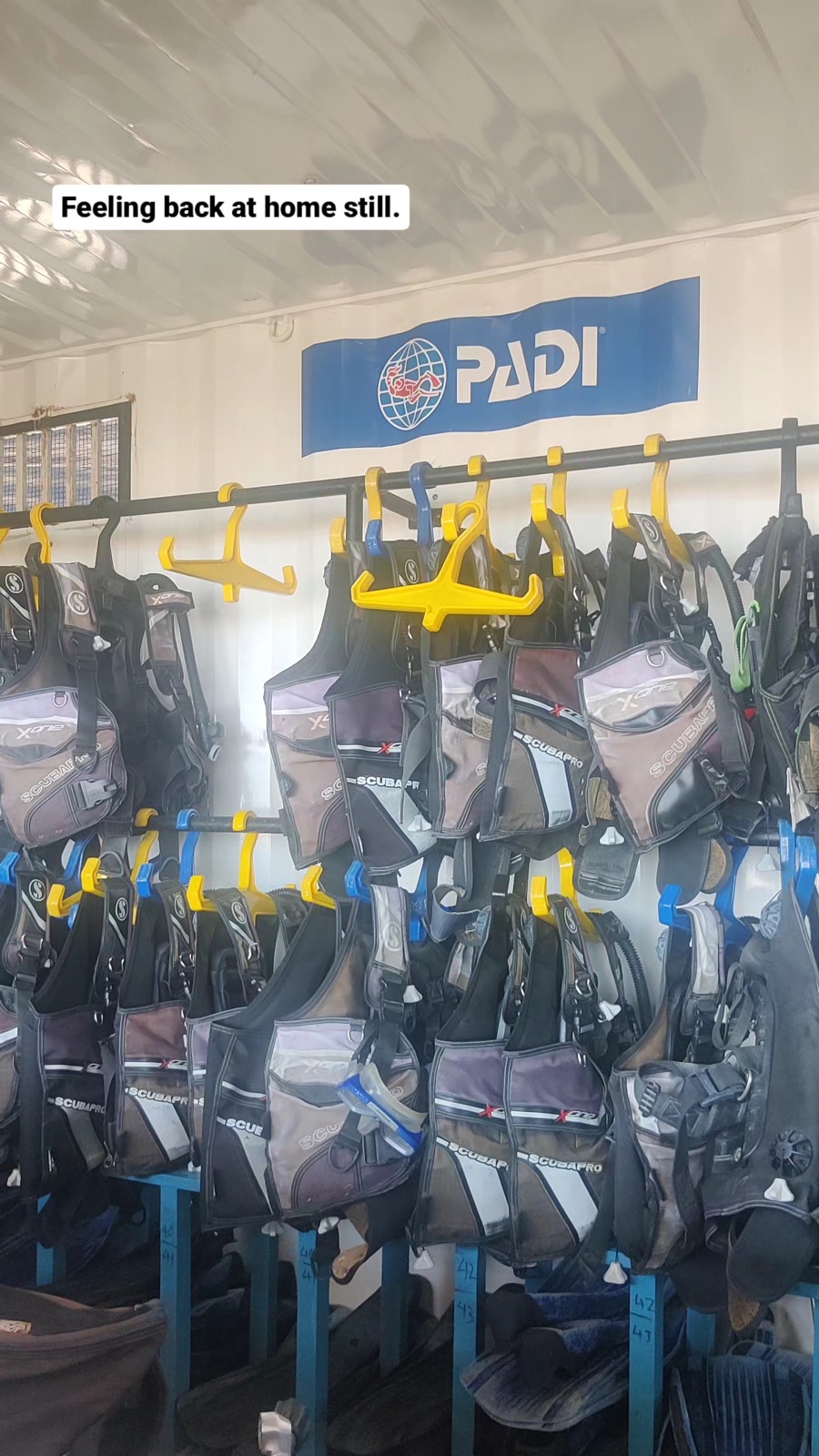
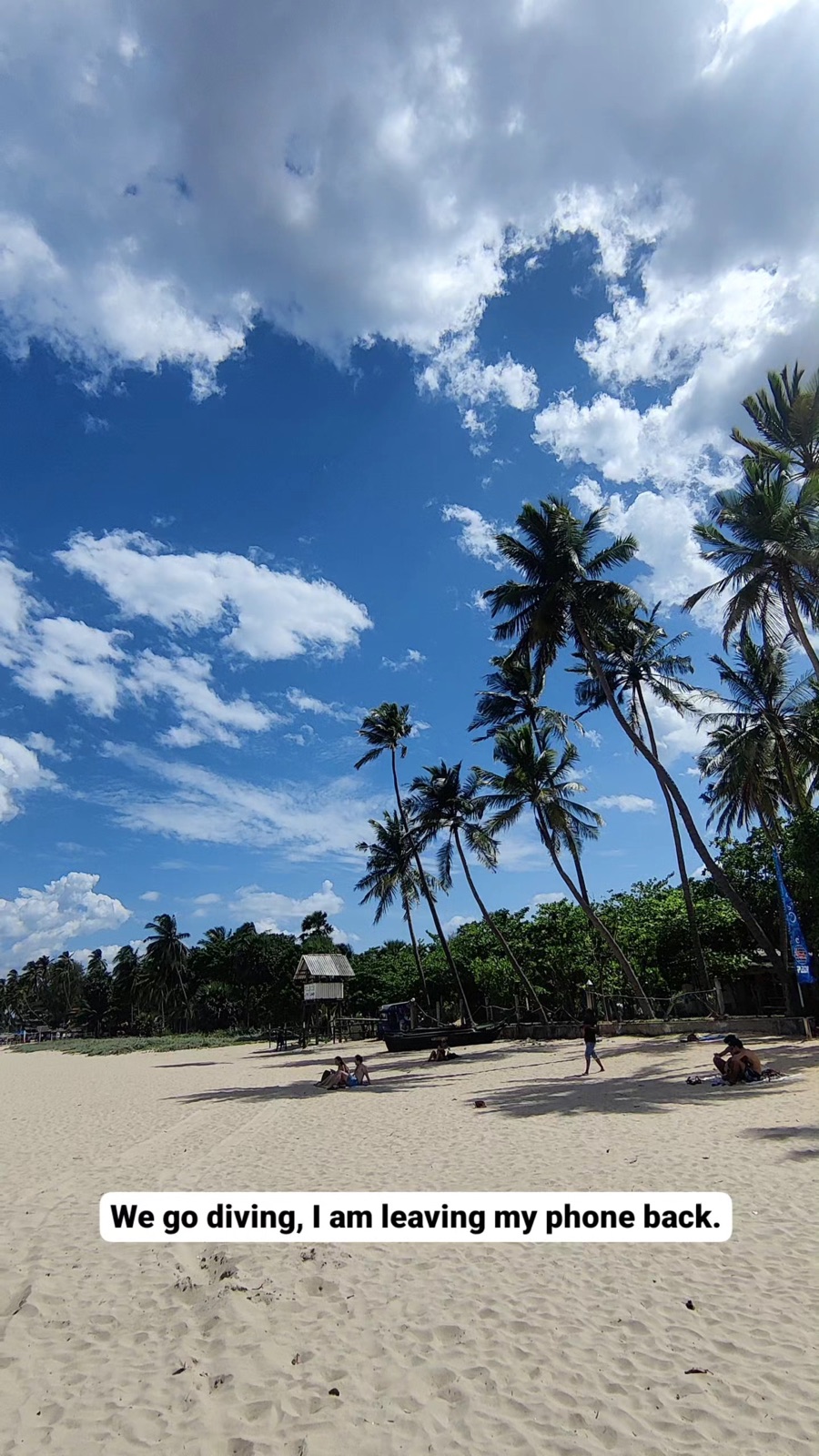
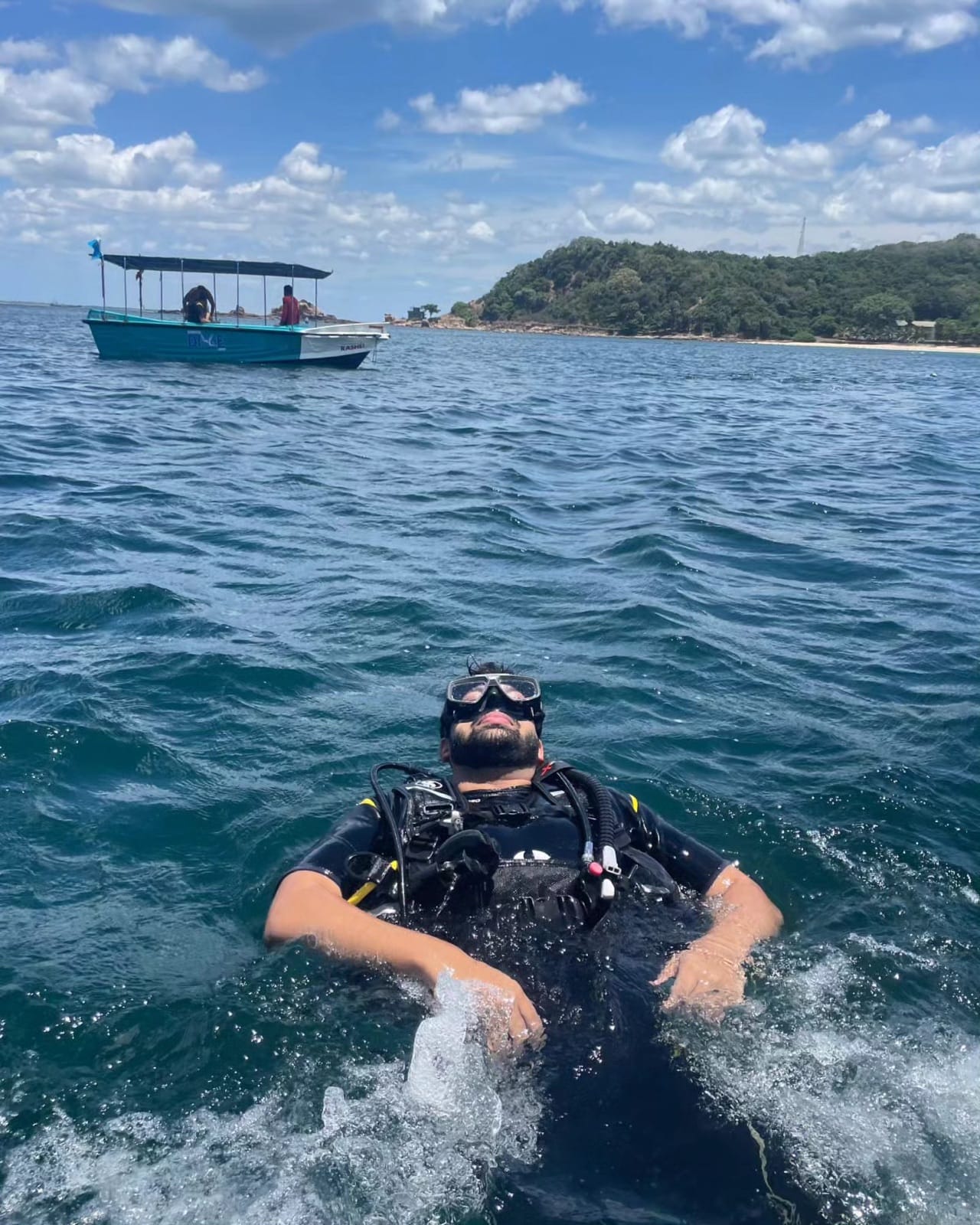
Dive day in Trinco, from the sandy lane to the drop.
Sigiriya and Dambulla: cave temples, a sunset safari, and the night I ran
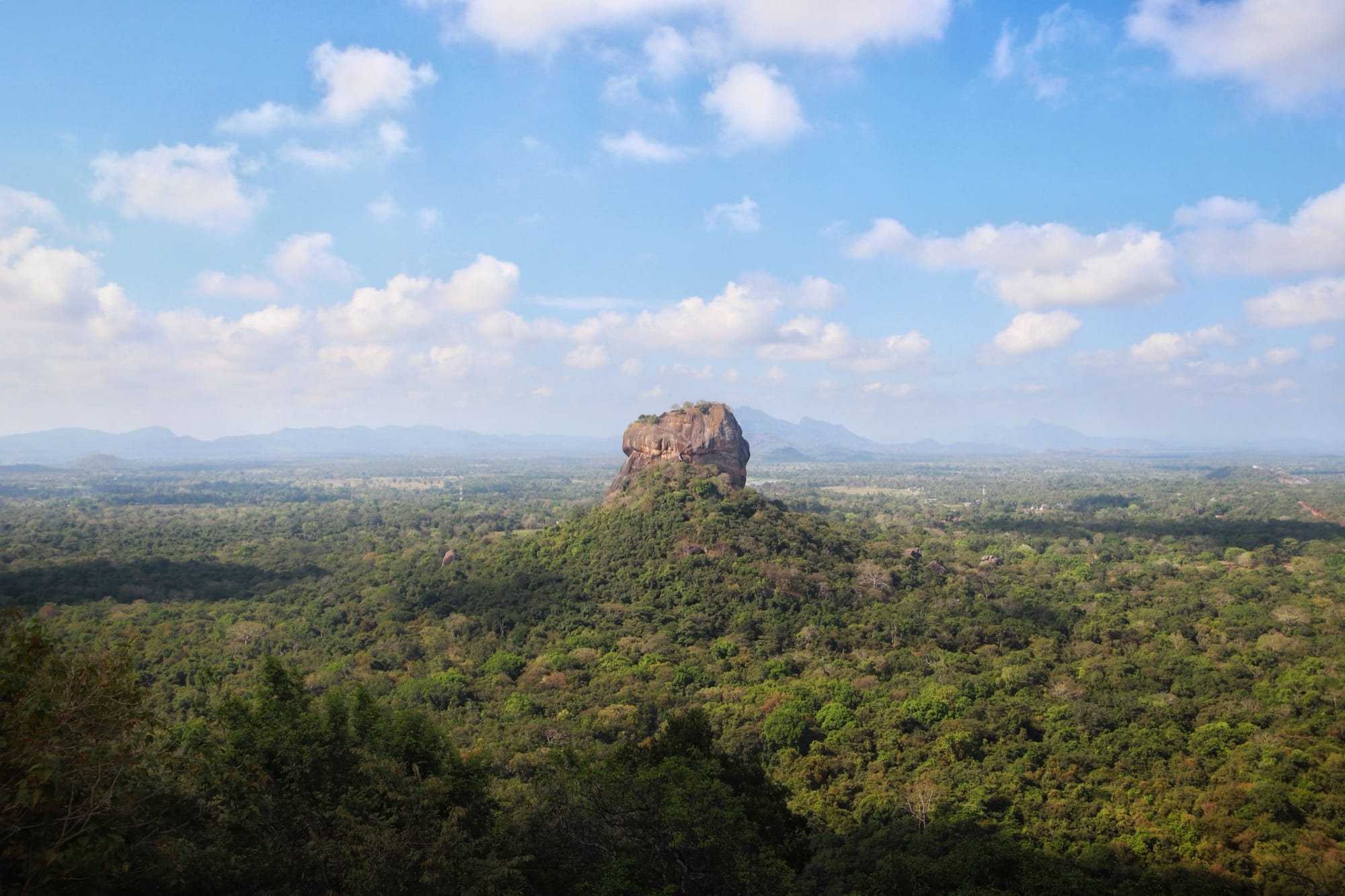
The rock I didn’t climb.
Sigiriya is the postcard of Sri Lanka: Lion’s Rock, an ancient fortress rising straight out of flat jungle. Climbing this Lion costs 30 USD entry fee, and for that price there wasn’t anything special in it for me. India has plenty of ancient forts, and I’d rather spend 30 USD on things I can’t get at home.
What I didn’t skip was Dambulla, a short local bus ride away. The bus came with its own shrine above the windshield, and for 2,000 LKR you get into the Dambulla cave temple, another UNESCO site. Five caves carved into one giant rock overhang, painted ceilings that follow the curve of the stone, rows of Buddhas, and a reclining Buddha that fills its cave end to end. The monkeys run the steps up and pay no attention to you at all.
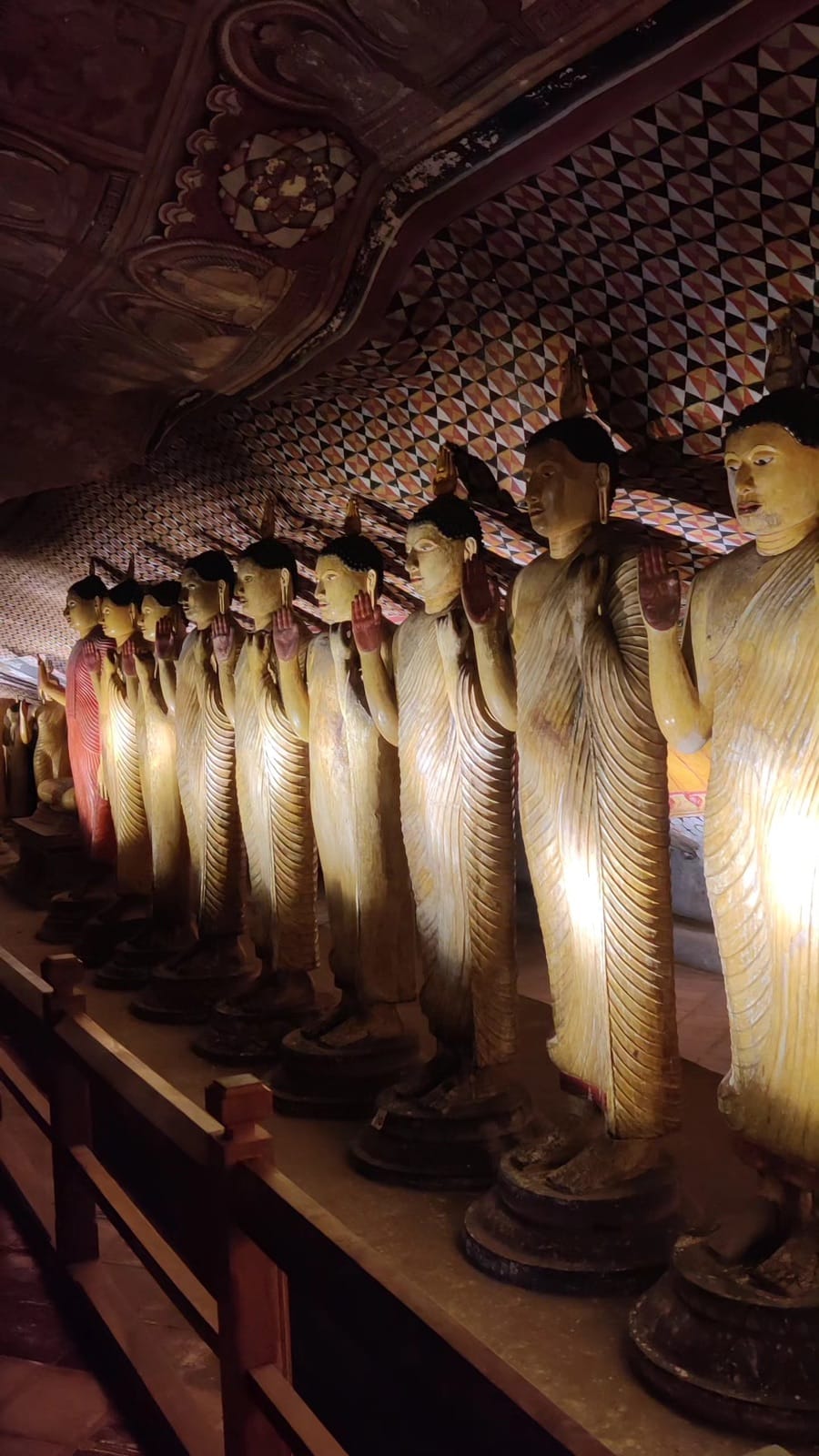
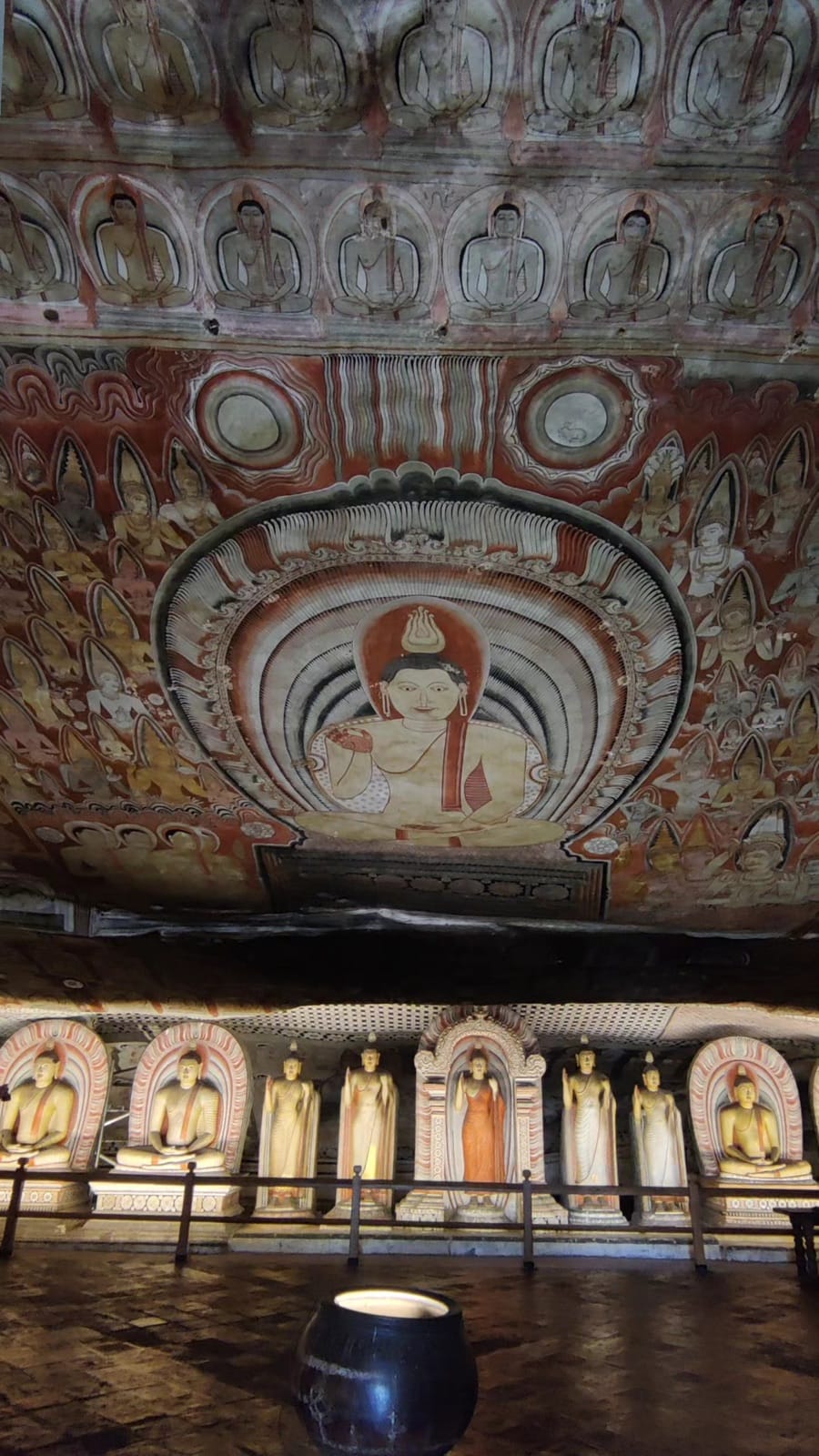
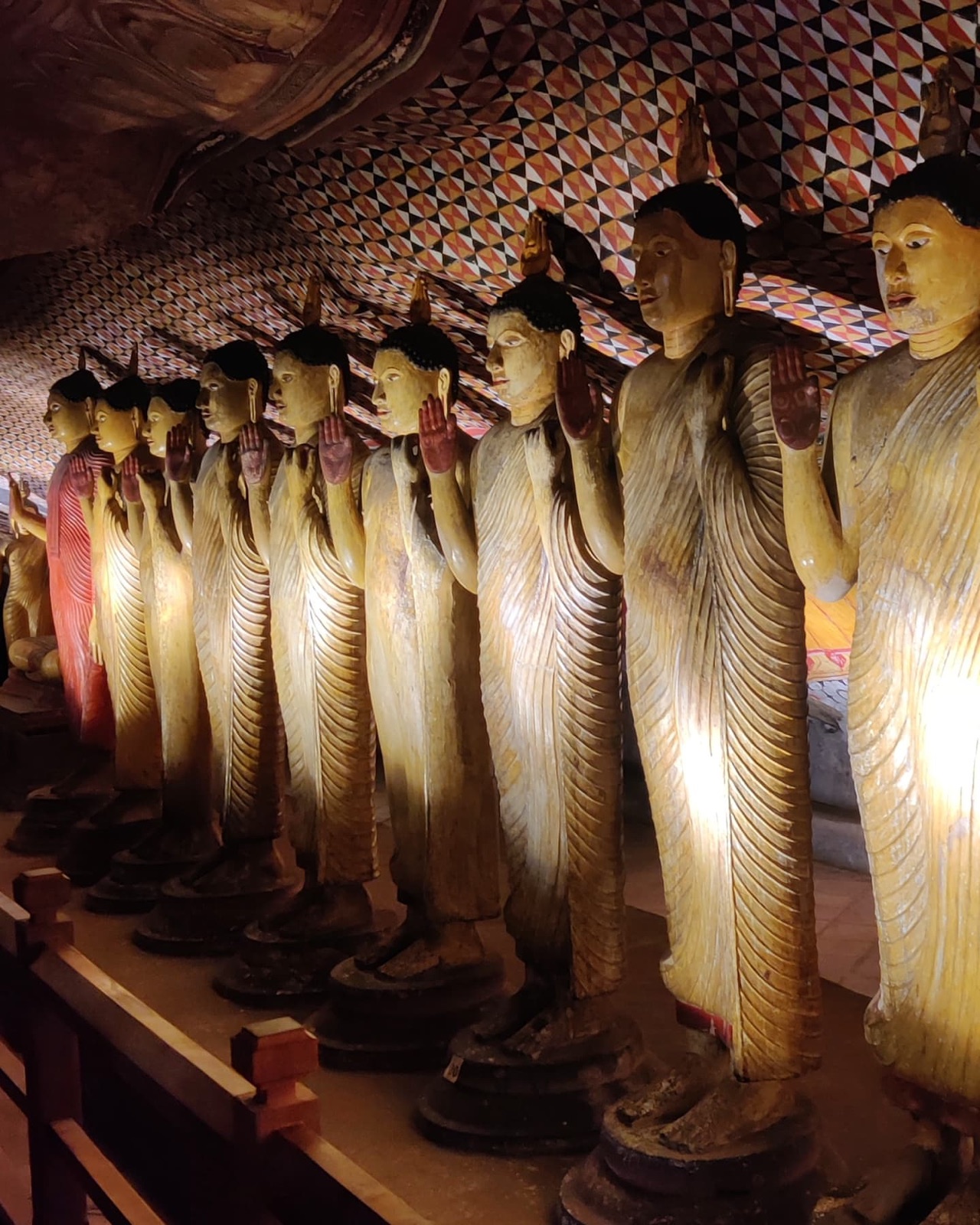
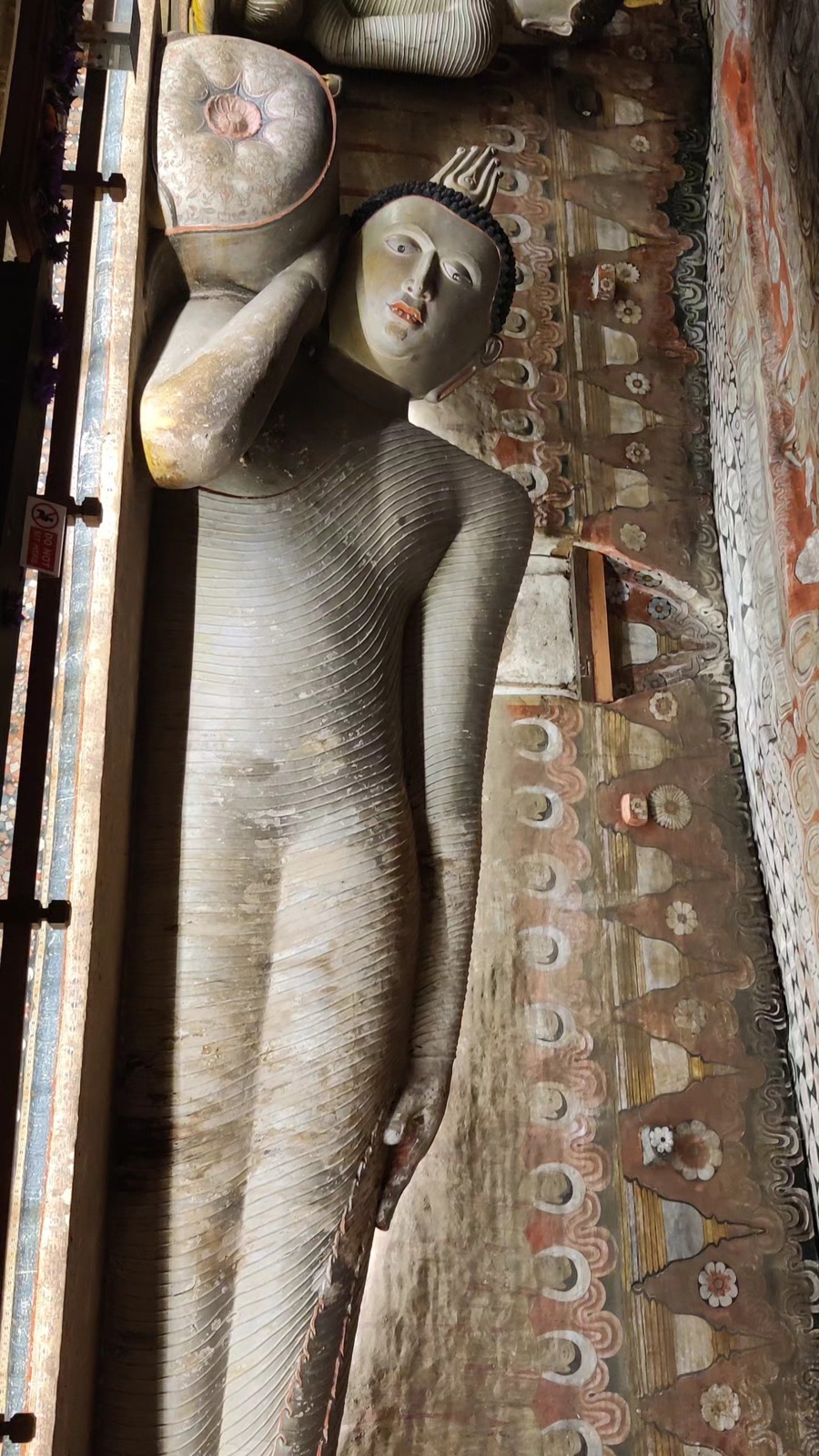

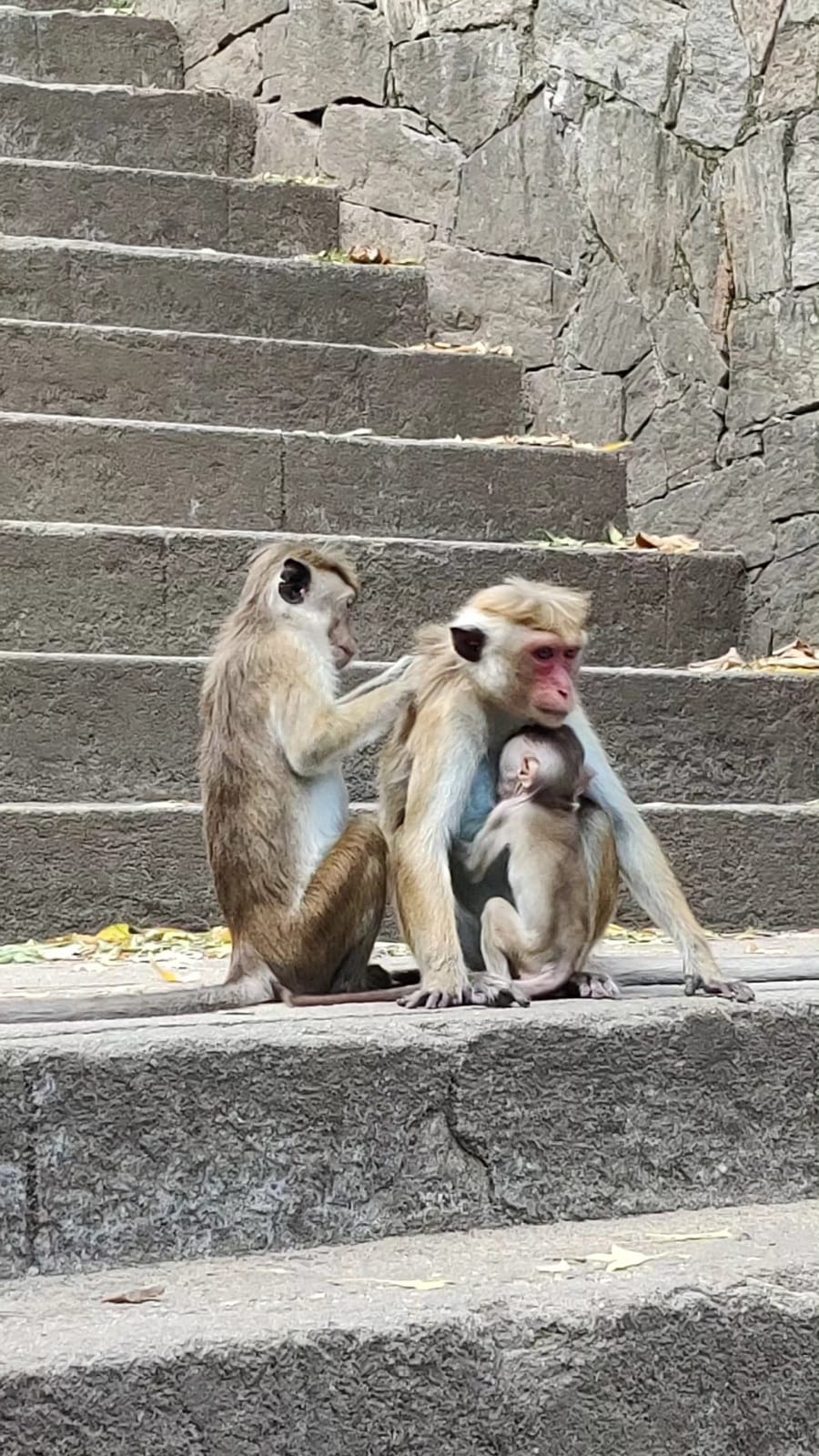

Buddhist temples don’t allow shorts on men either, which nobody tells you. The temple staff rented me a sarong at the gate, and it matched my fun socks.
Slaying like it’s my full time job.
Back in Sigiriya, the Treehouse hostel ran a sunset hike, and that’s where I met Timo and her fiancé. Our guide skipped Pidurangala as well and just had us scramble up a random rock near the market, which honestly was perfect. Lion’s Rock glowing across the jungle, the sky going full feathers, and me butchering Coldplay’s “Yellow” to an audience of trees.
From there the whole group walked into the small market in Sigiriya for dinner at a family-run kitchen. Twenty-five backpackers at one table, a rice and curry spread, watermelon for dessert, and a hundred conversations at once. Timo and her fiancé were heading to India next, so naturally we planned their whole trip at the table before heading back to the hostel for an extremely competitive round of drinking games.


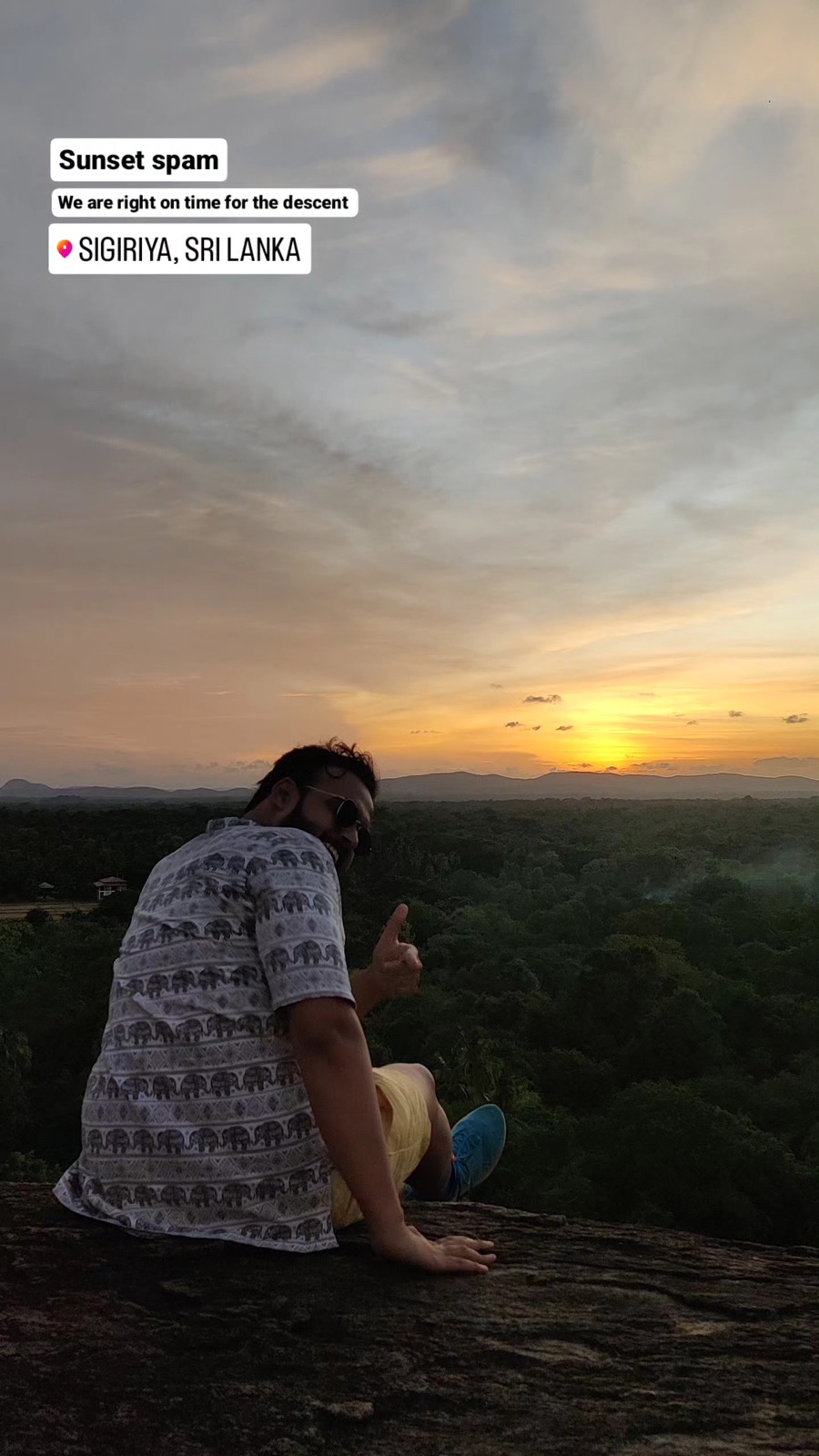
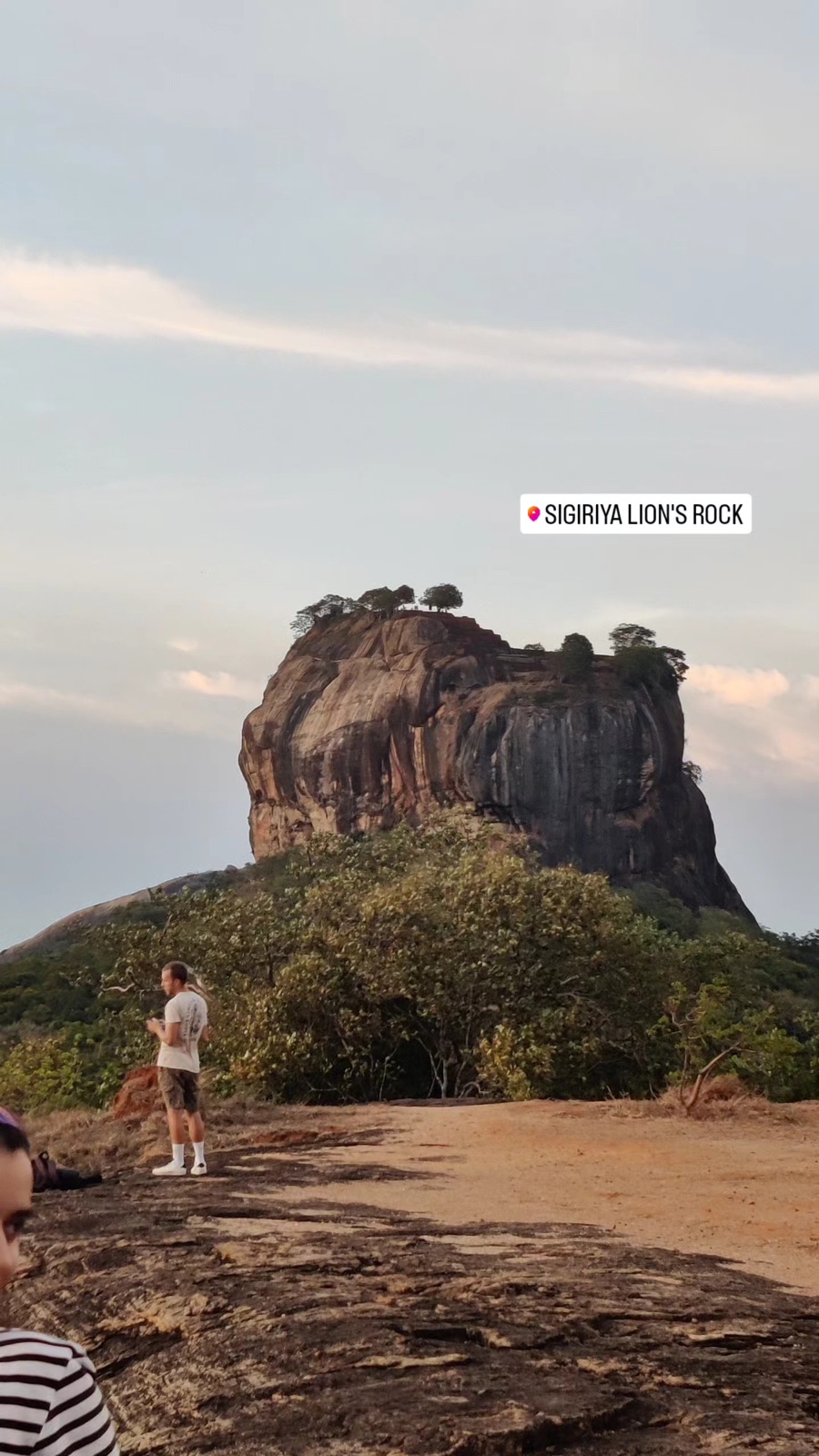

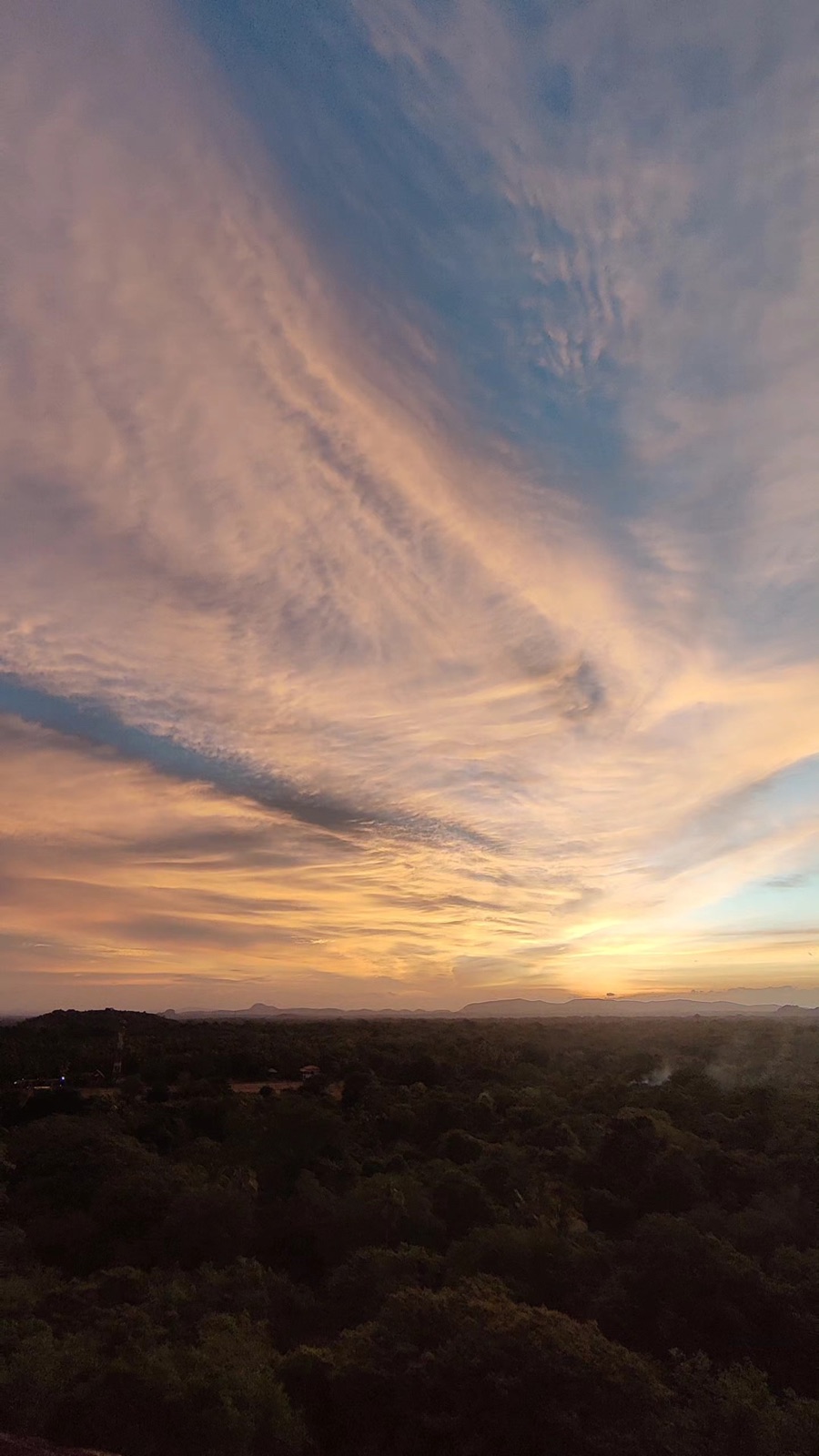
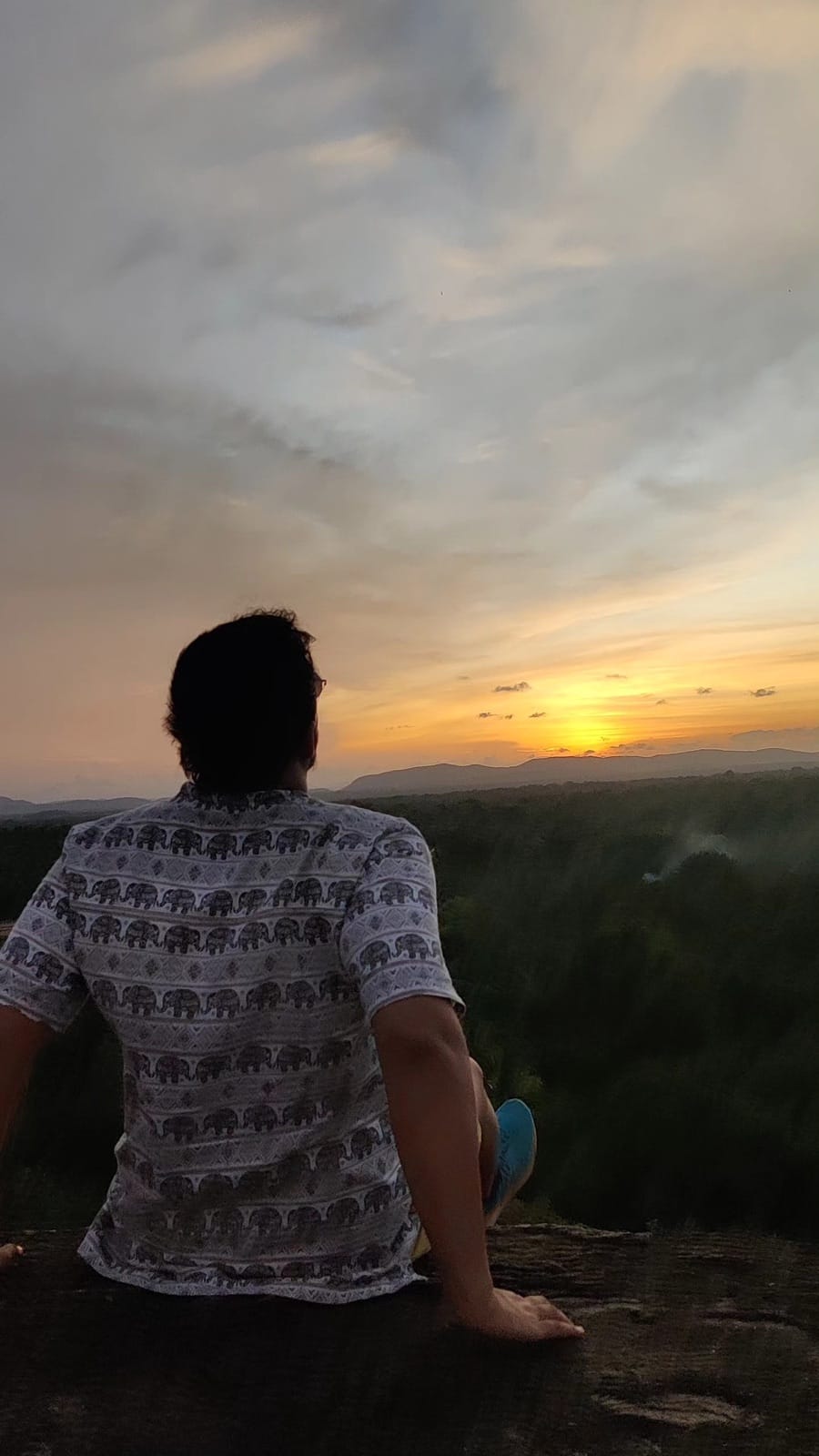


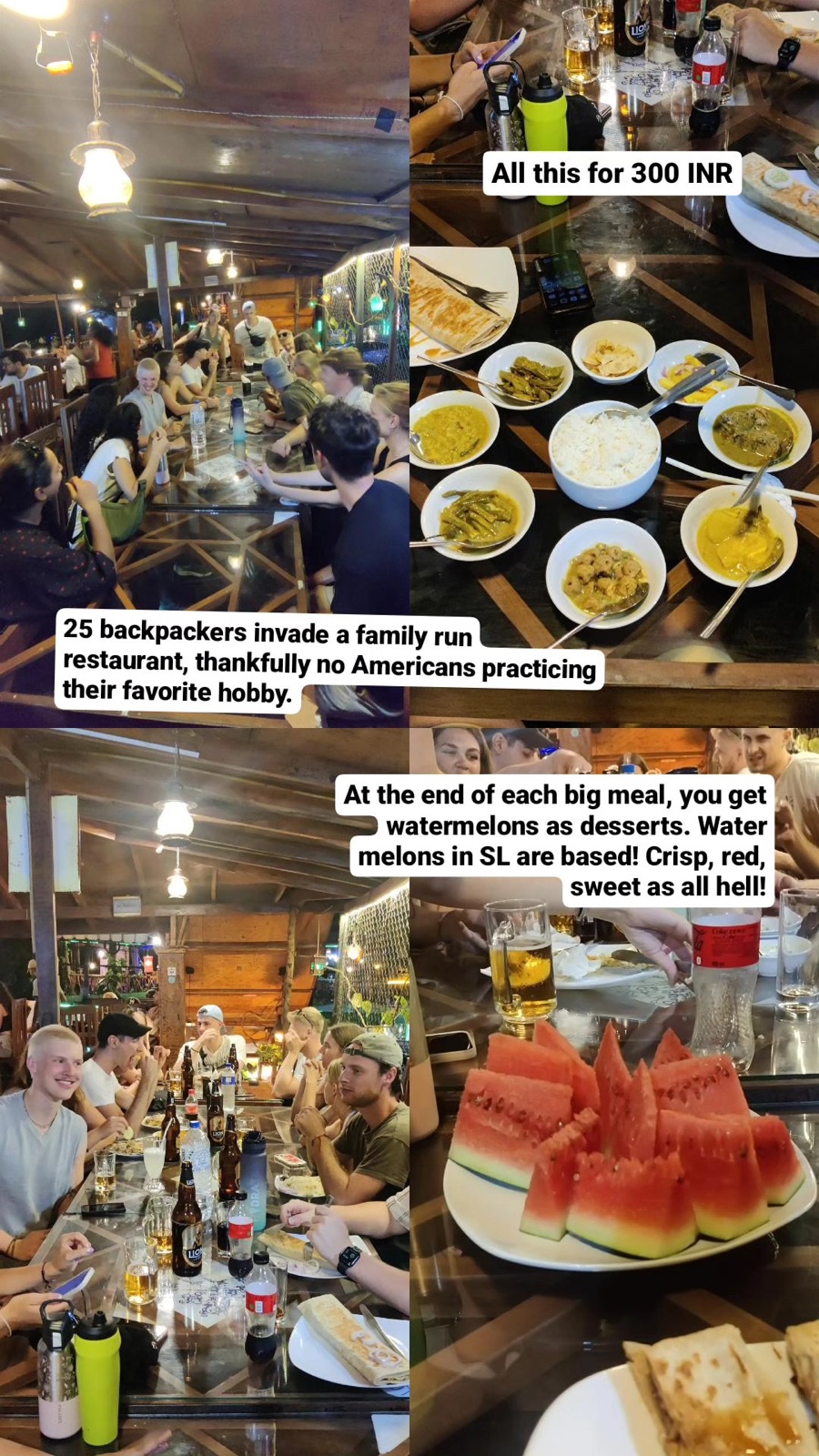
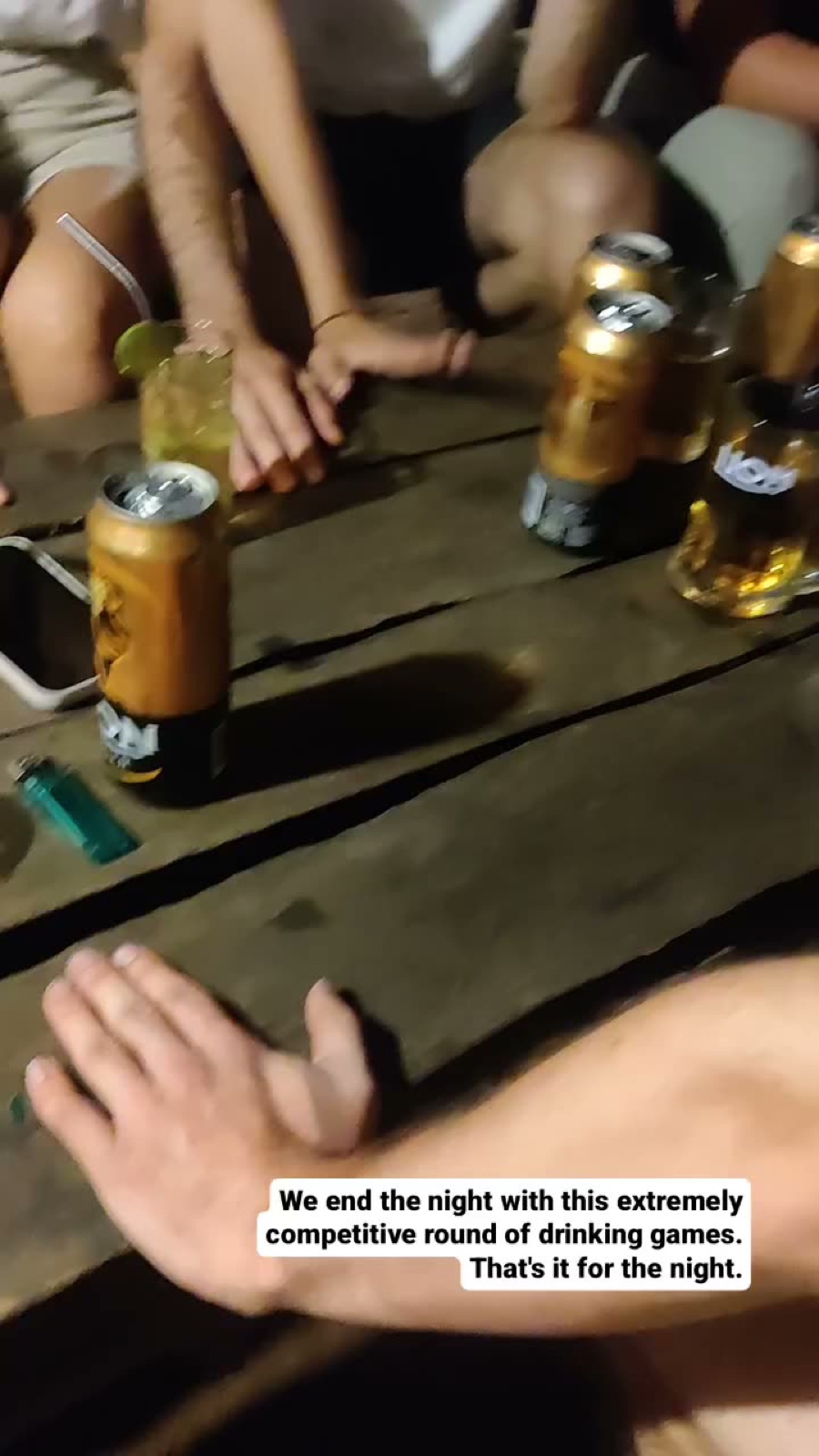
A random rock, a sunset safari, 25 strangers at one family table, and drinking games. Then the night went sideways.
Then came the night. I won’t describe it beyond this: I spent the whole thing awake, in hot white terror, at the Treehouse. A lot happened that night. Nothing earthly or dangerous, but as I am writing this I am getting goosebumps and cold chills. It’s the one place on this trip I’d tell you to avoid. There’s something about Sigriya that didn’t sit well with me.
The escape and six hours to Nuwara Eliya
At first light I left Sigiriya on the very first thing going, which happened to be the hostel’s own car doing a pickup run to Habarana. It was a slow morning drive, with fresh air in my lungs for the first time in hours and the sounds of the forest fading behind me. It gave me time to recentre. The driver was gracious enough to drop me at the side of the road where the Kandy buses stop, and after a while of standing there with my luggage, one came. Only once I was on that bus did I actually feel safe, and I slept for a couple of hours straight.
Sri Lankan buses deserve a paragraph of their own. They run route to route, stop anywhere to pick someone up, and you pay the conductor on board. Very Indian like. People are usually nice, they look out for you. They’re also usually late, ridiculously cheap, and treat your suitcase fine.

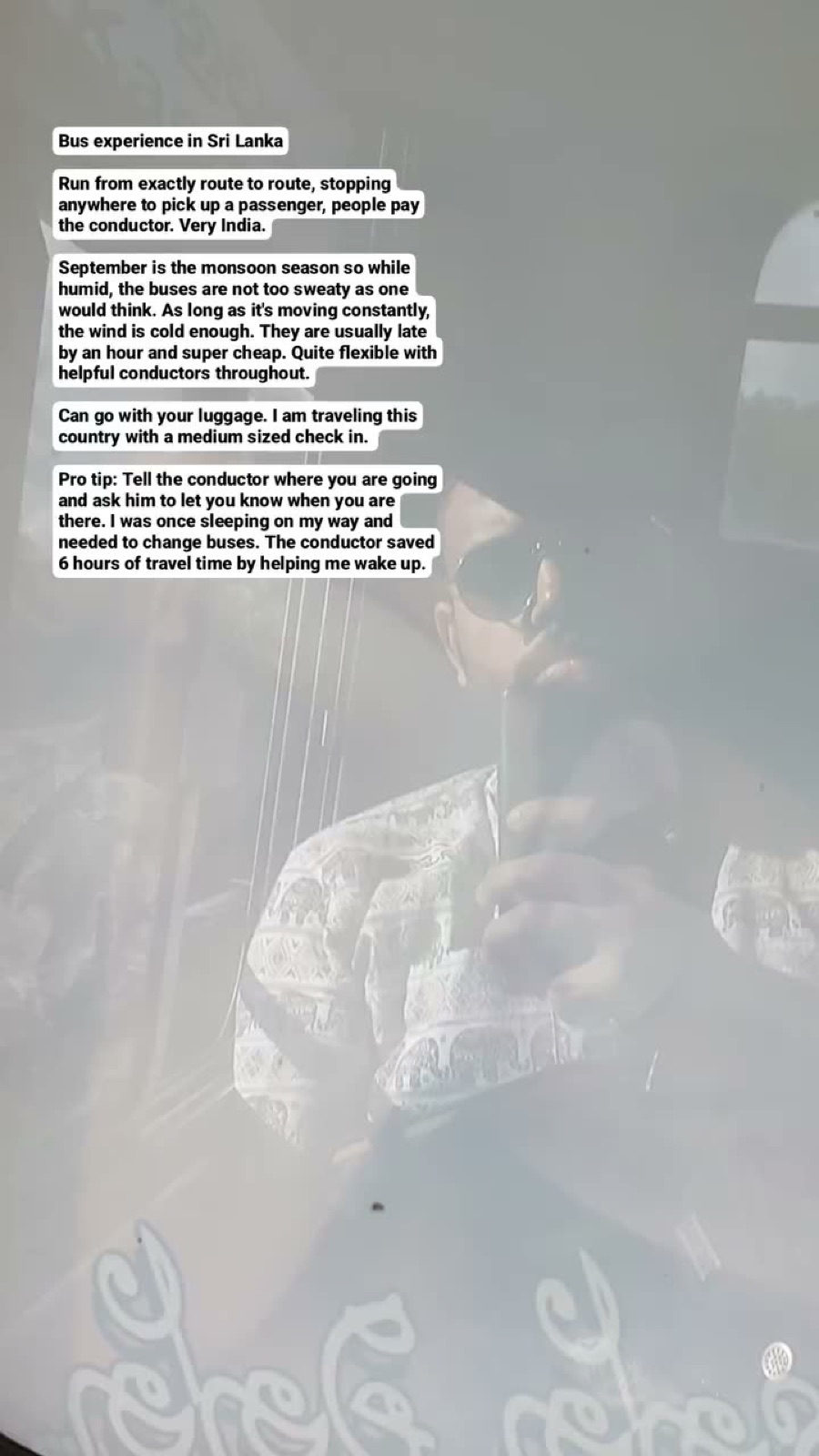

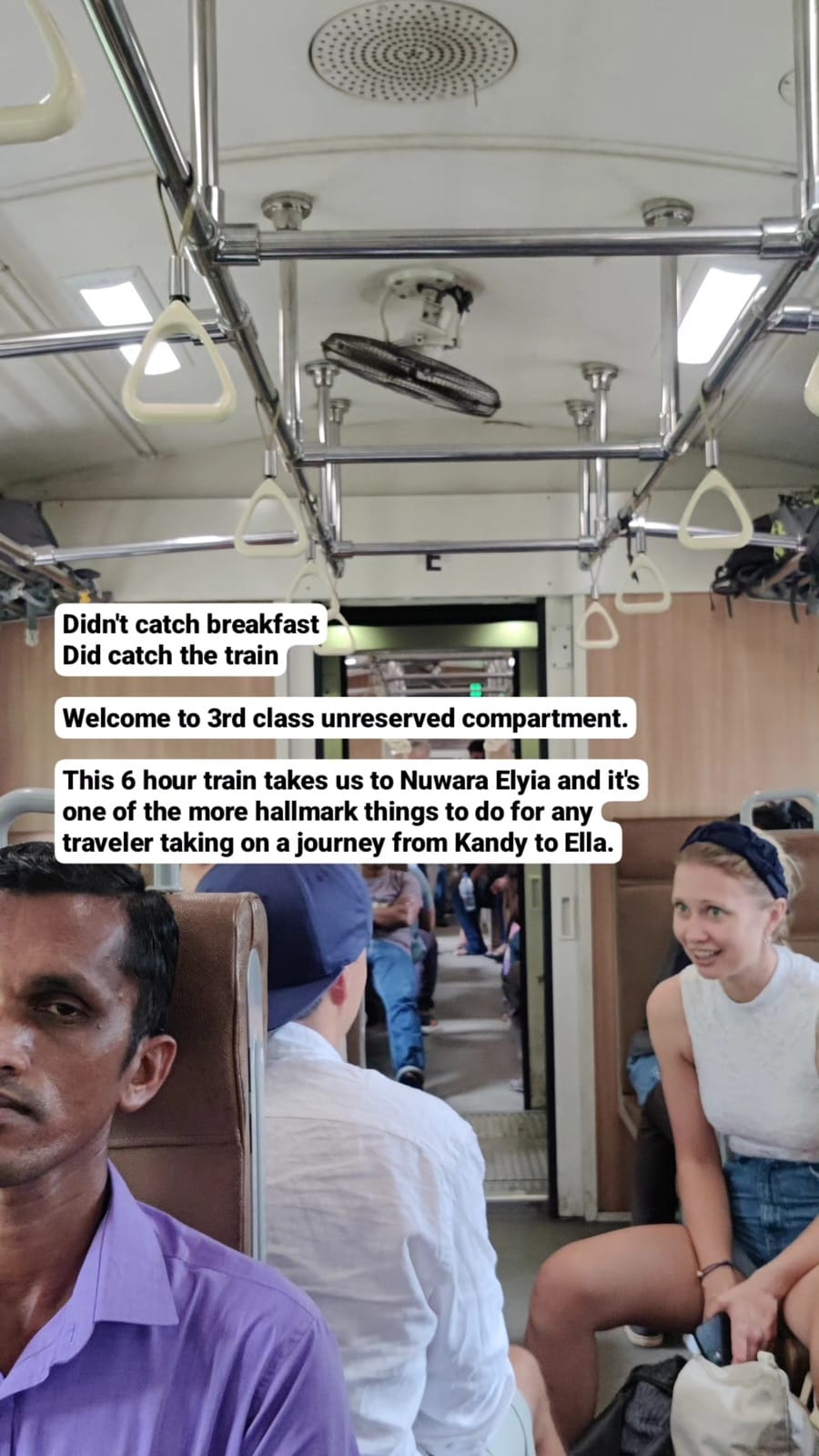
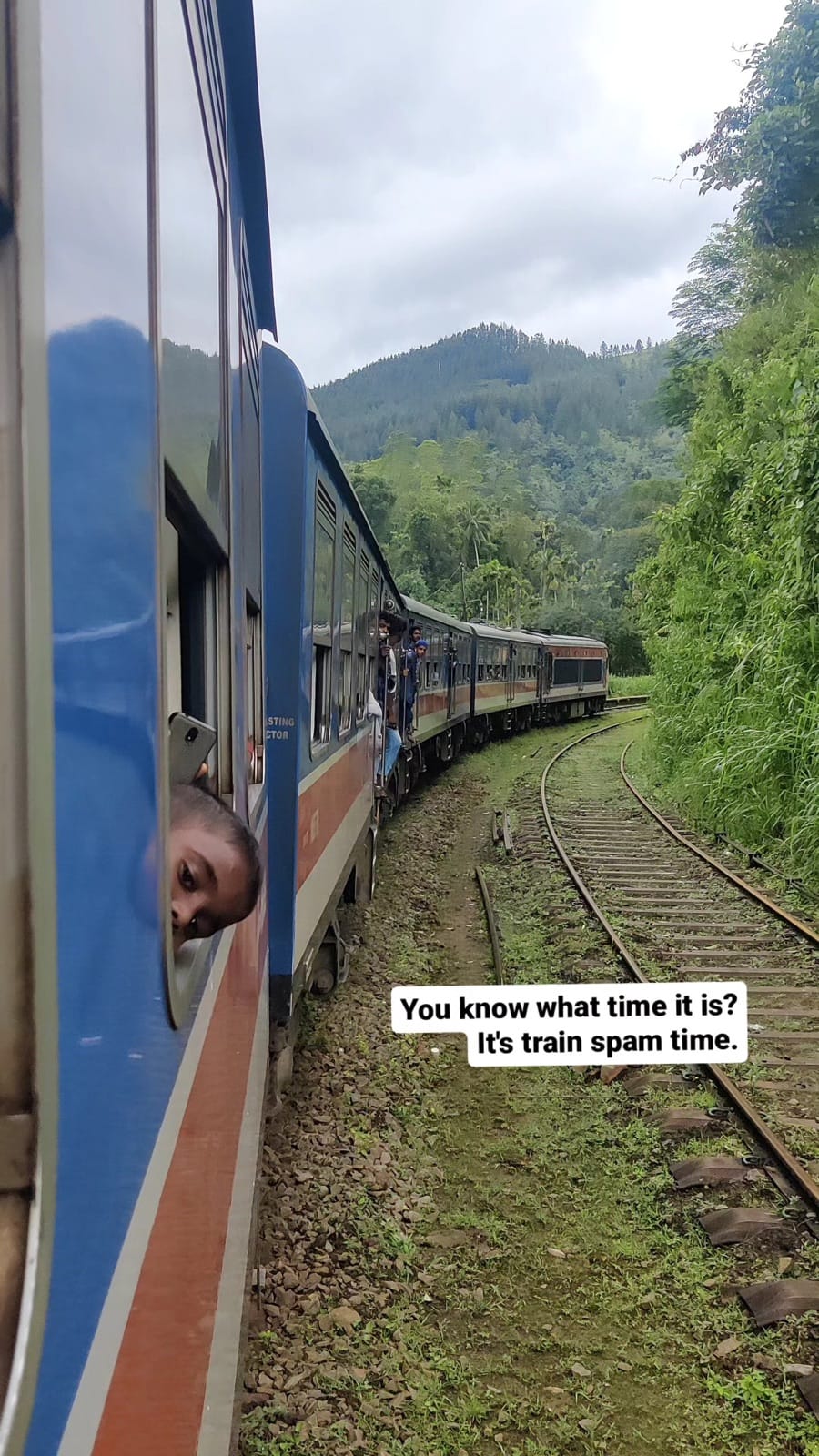


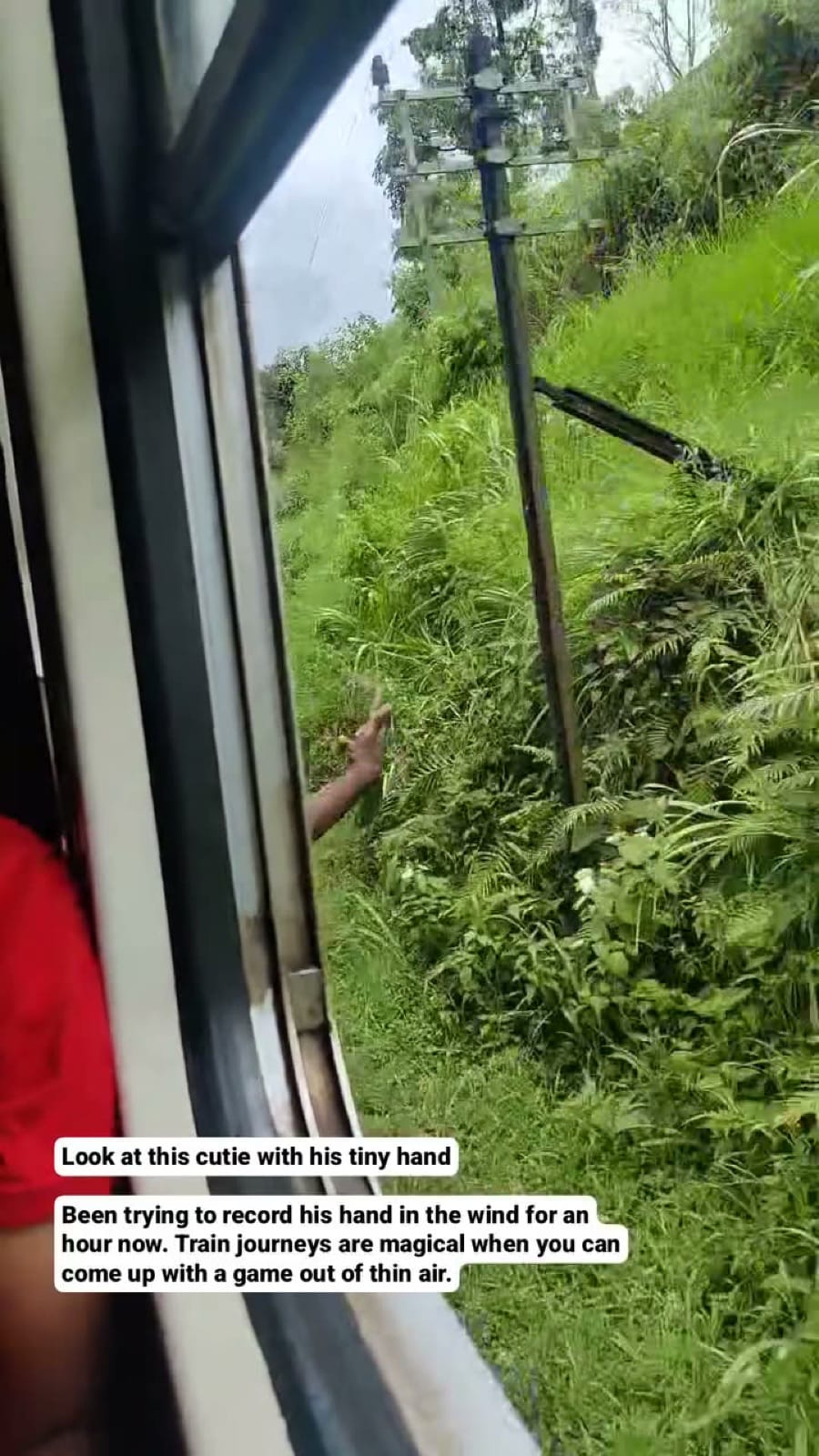
Pro tip: tell the conductor where you’re going and ask him to tell you when you’re there. Once, when I’d fallen asleep before a change, the conductor woke me up and saved me about six hours of travel.
Reached Kandy.
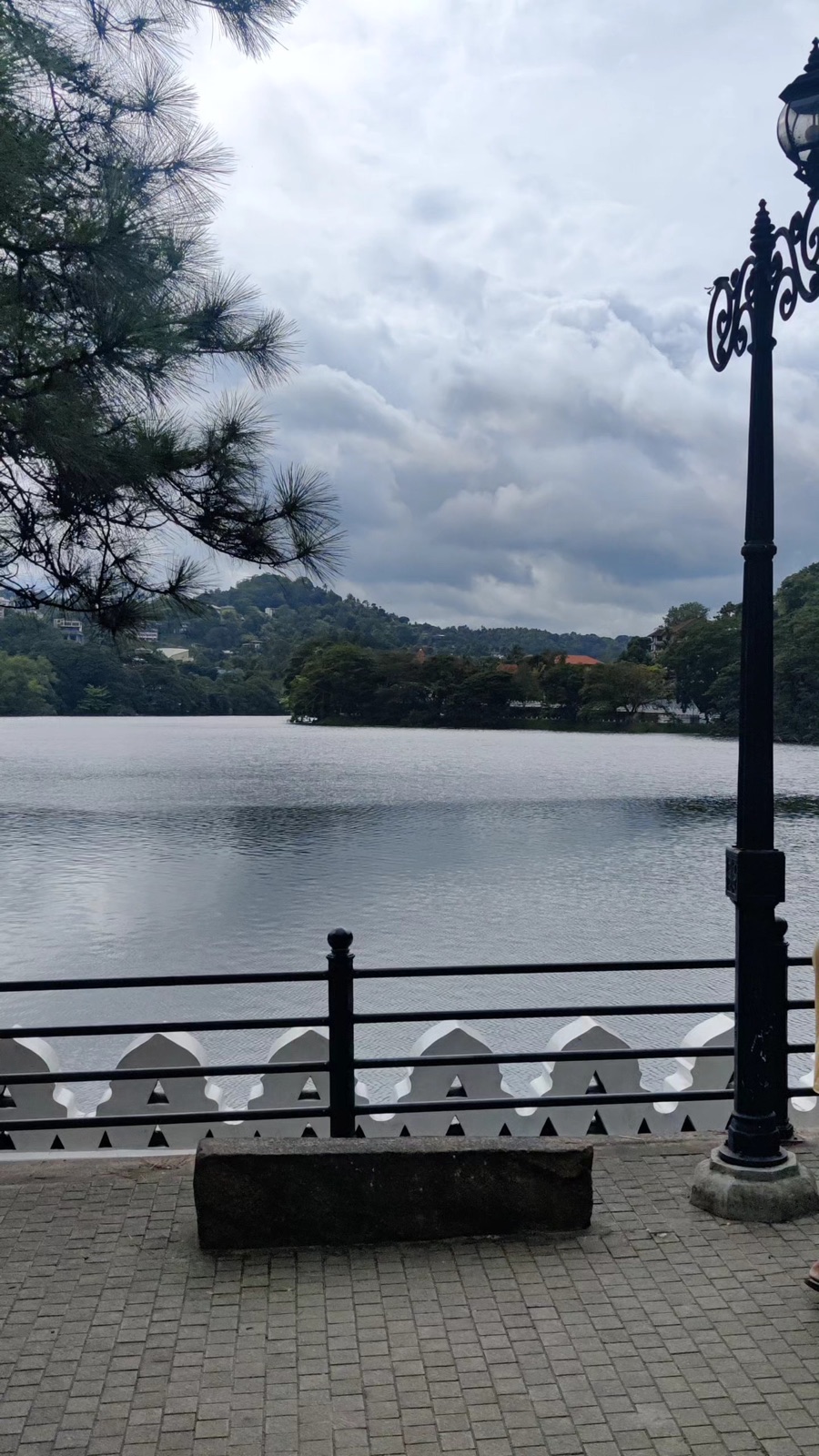
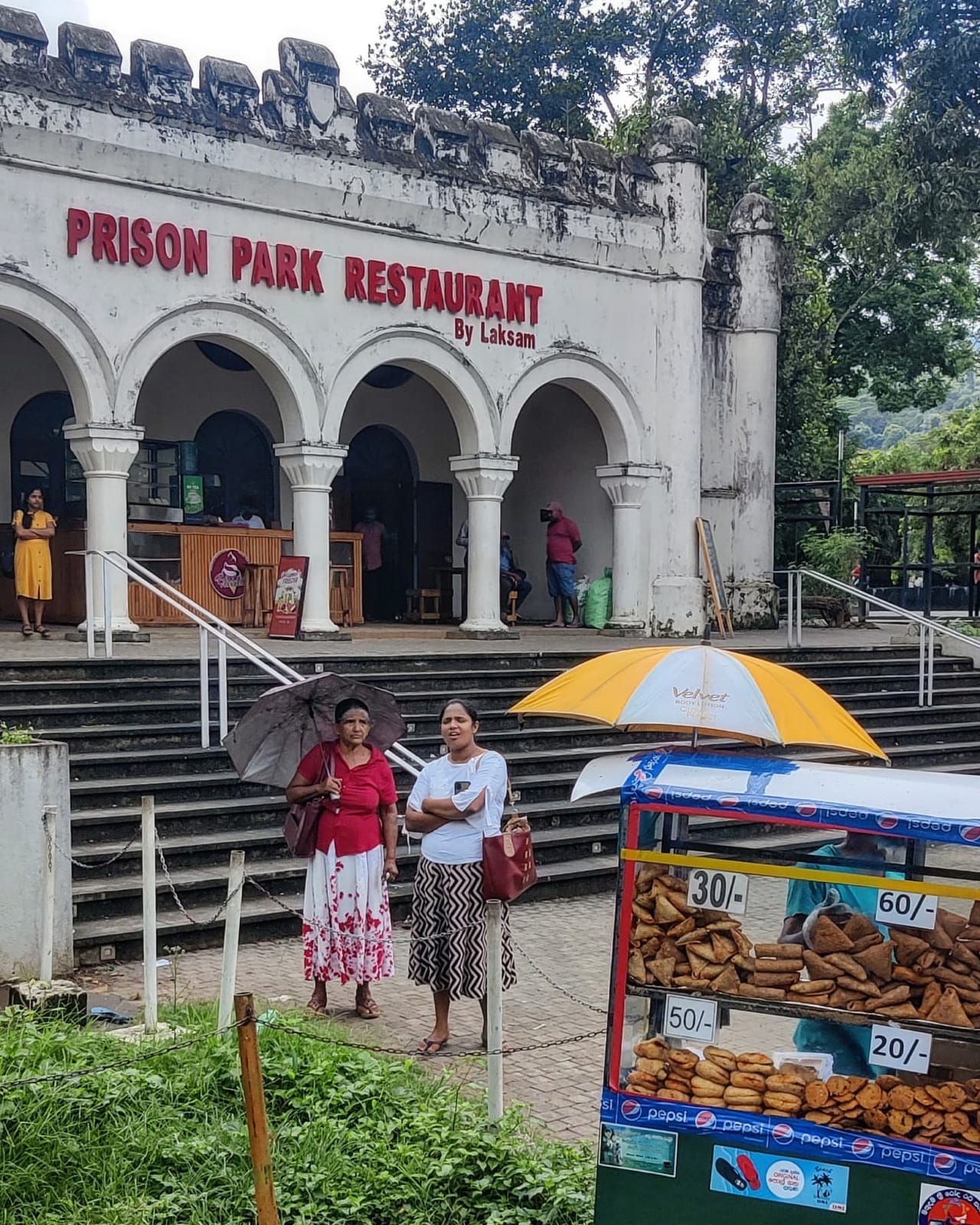
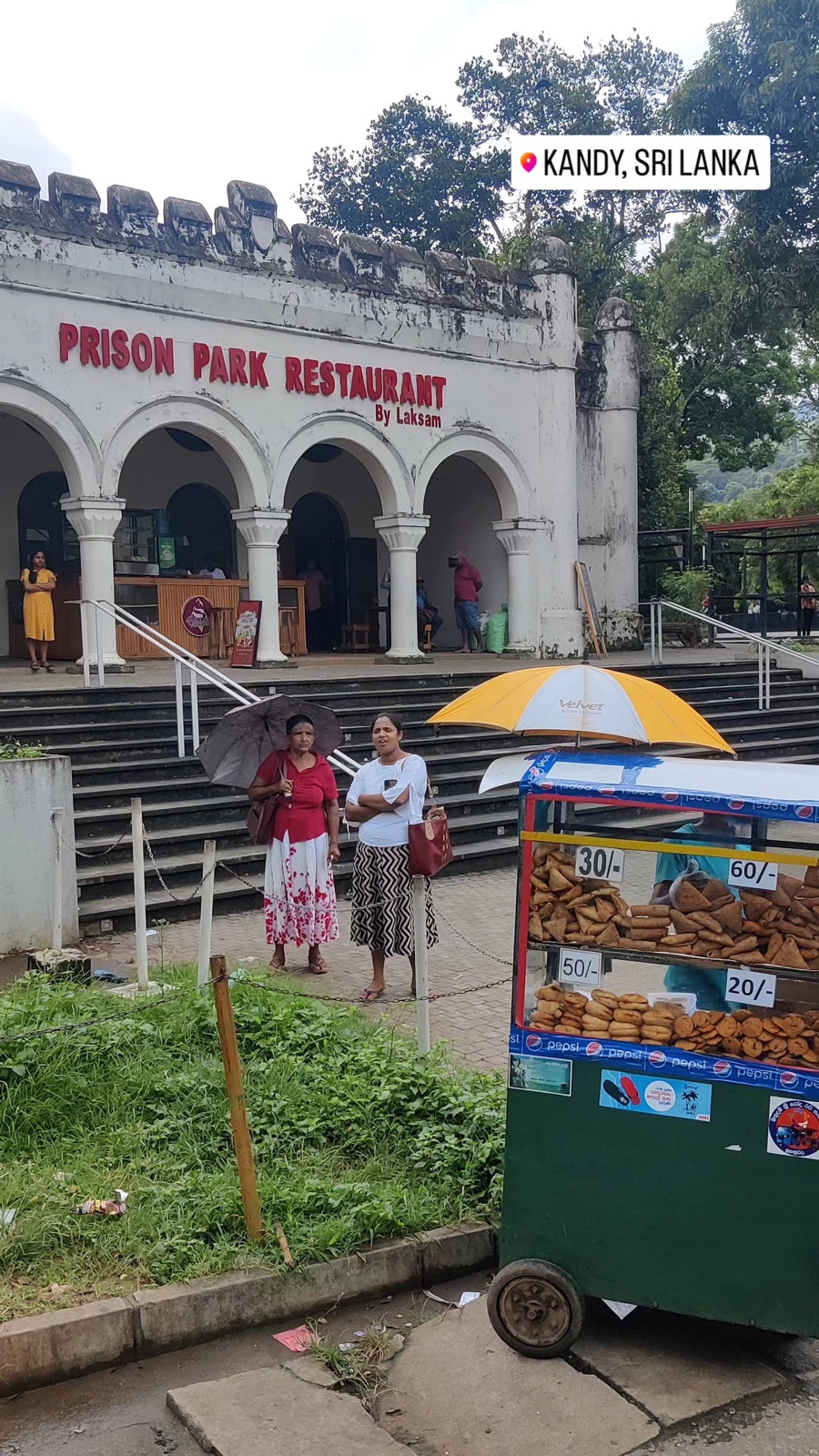
I reached Kandy just after its biggest moment of the year. The Esala Perahera, ten nights of torch-lit processions with dancers, drummers and dressed-up elephants honouring the Sacred Tooth Relic, had wrapped up a couple of weeks before I rolled in. With that gone, there wasn’t much point staying. The goal was lunch, a quick look at the lake, and the first thing out to Nuwara Eliya.
I found a train leaving in 20 minutes, and that was the end of Kandy. Something I love about Sri Lanka is how easy it is to buy a ticket right there on the platform. Six hours of third class, unreserved, the first tea estates rolling past the window, and a kid in the next window whose tiny hand I spent an hour trying to film surfing the wind.
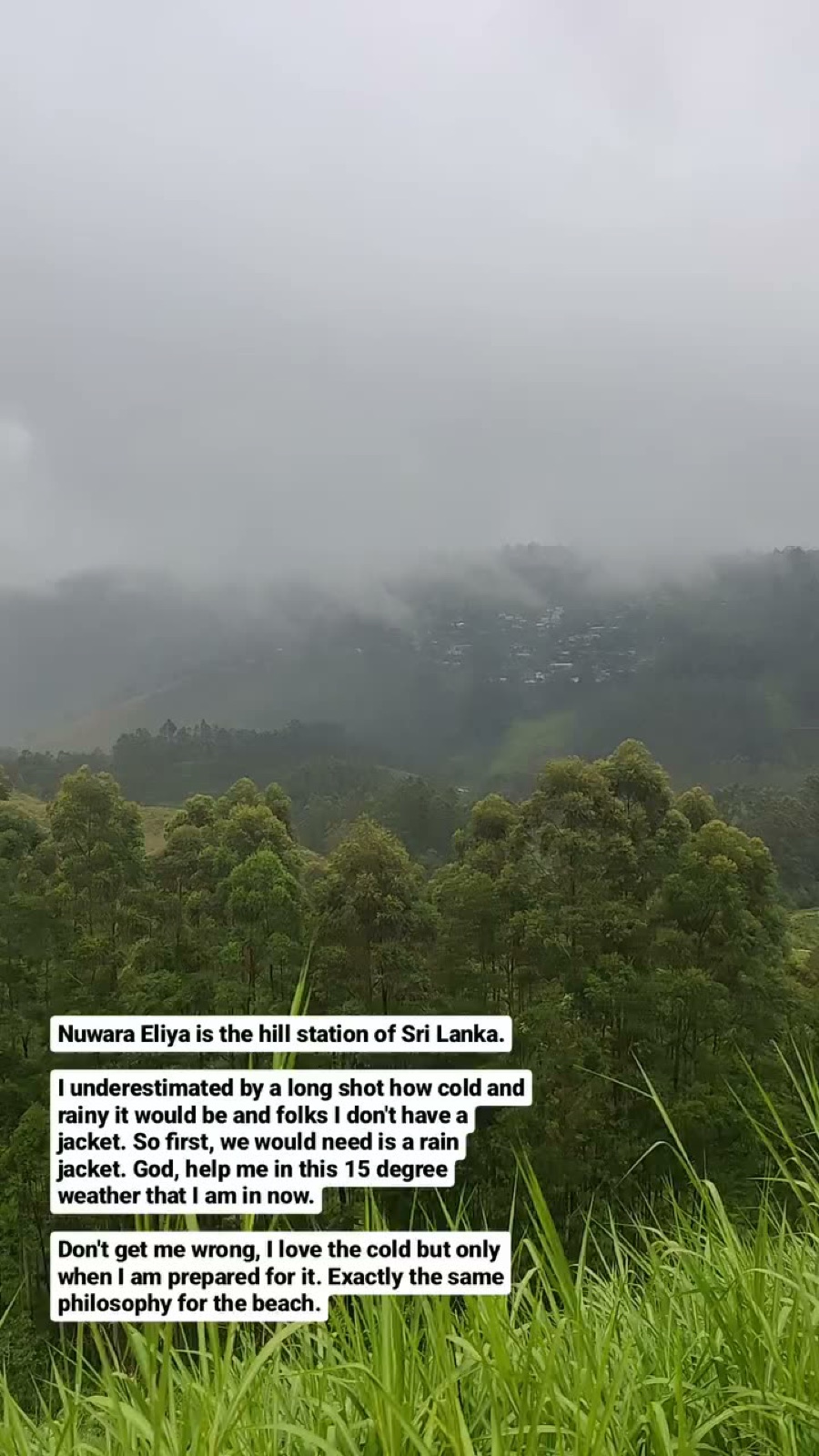
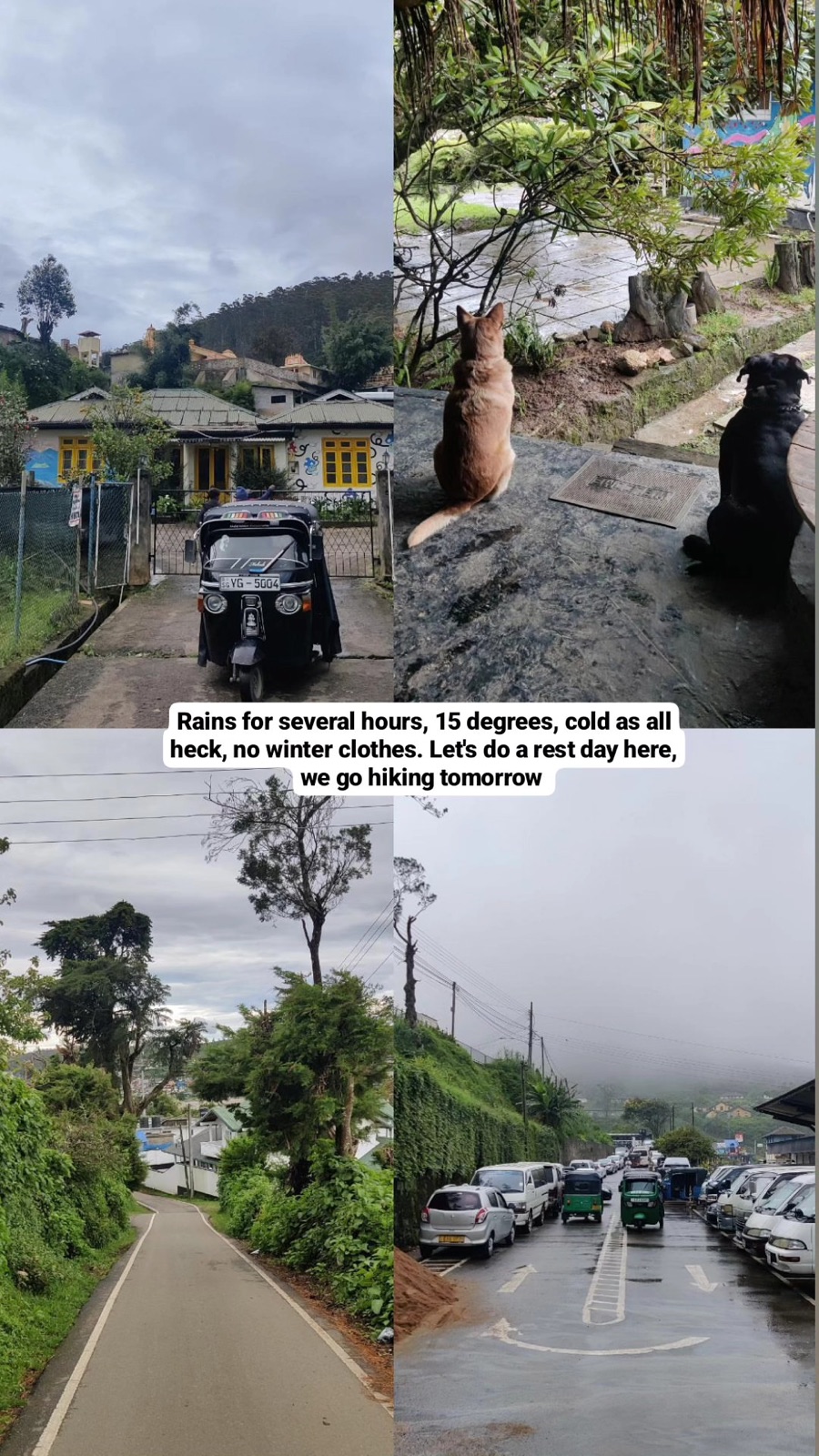
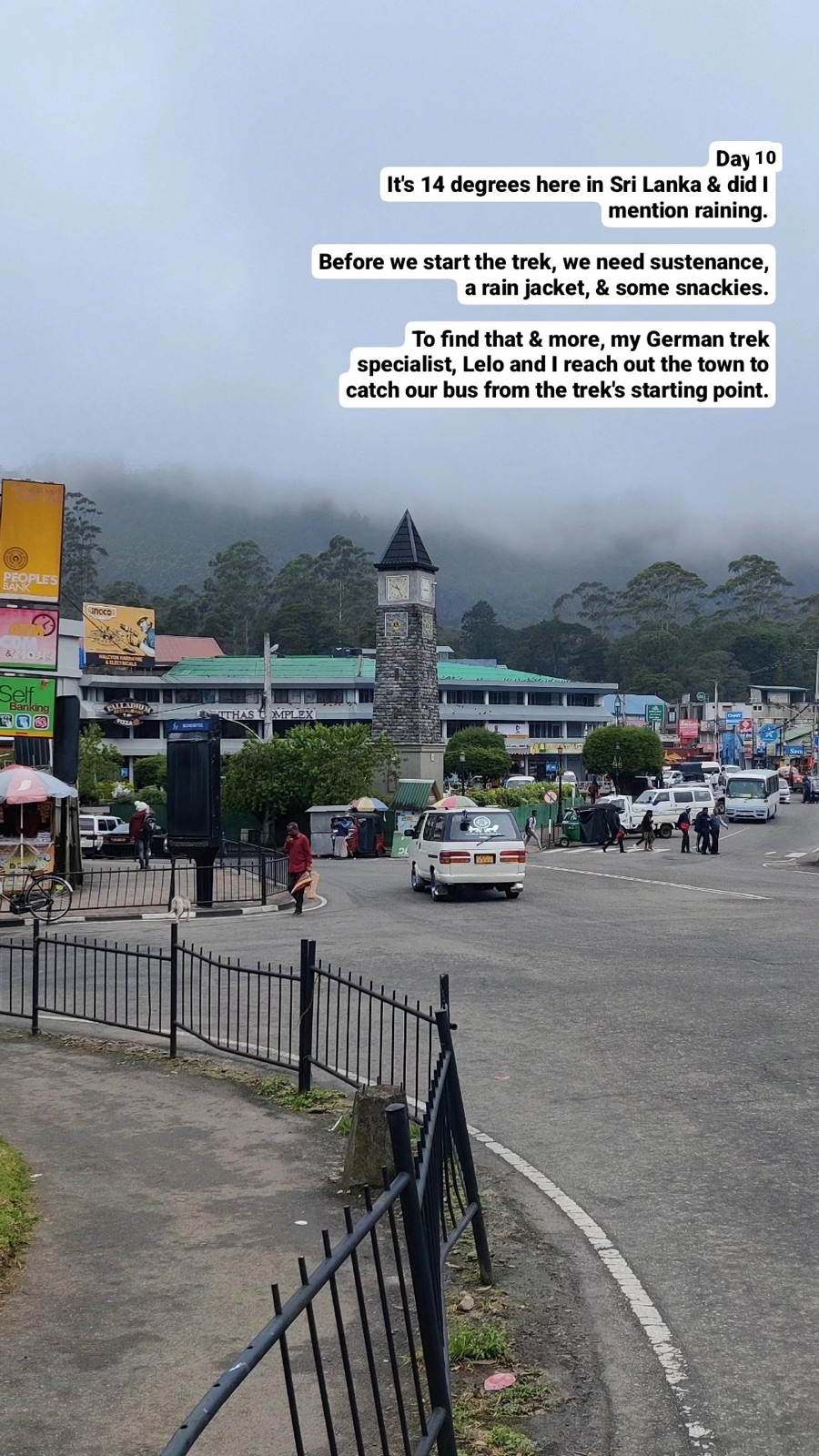
Then Nuwara Eliya. It rained like cats and dogs. It was 15 degrees. I’m in a tropical country, and I’d prepared for neither the cold nor the rain. I took the city bus to the hostel, and that first evening was honestly hard.
Nuwara Eliya: 14 degrees, a borrowed trek, and I loved this place!

Little England. It rains like it too.
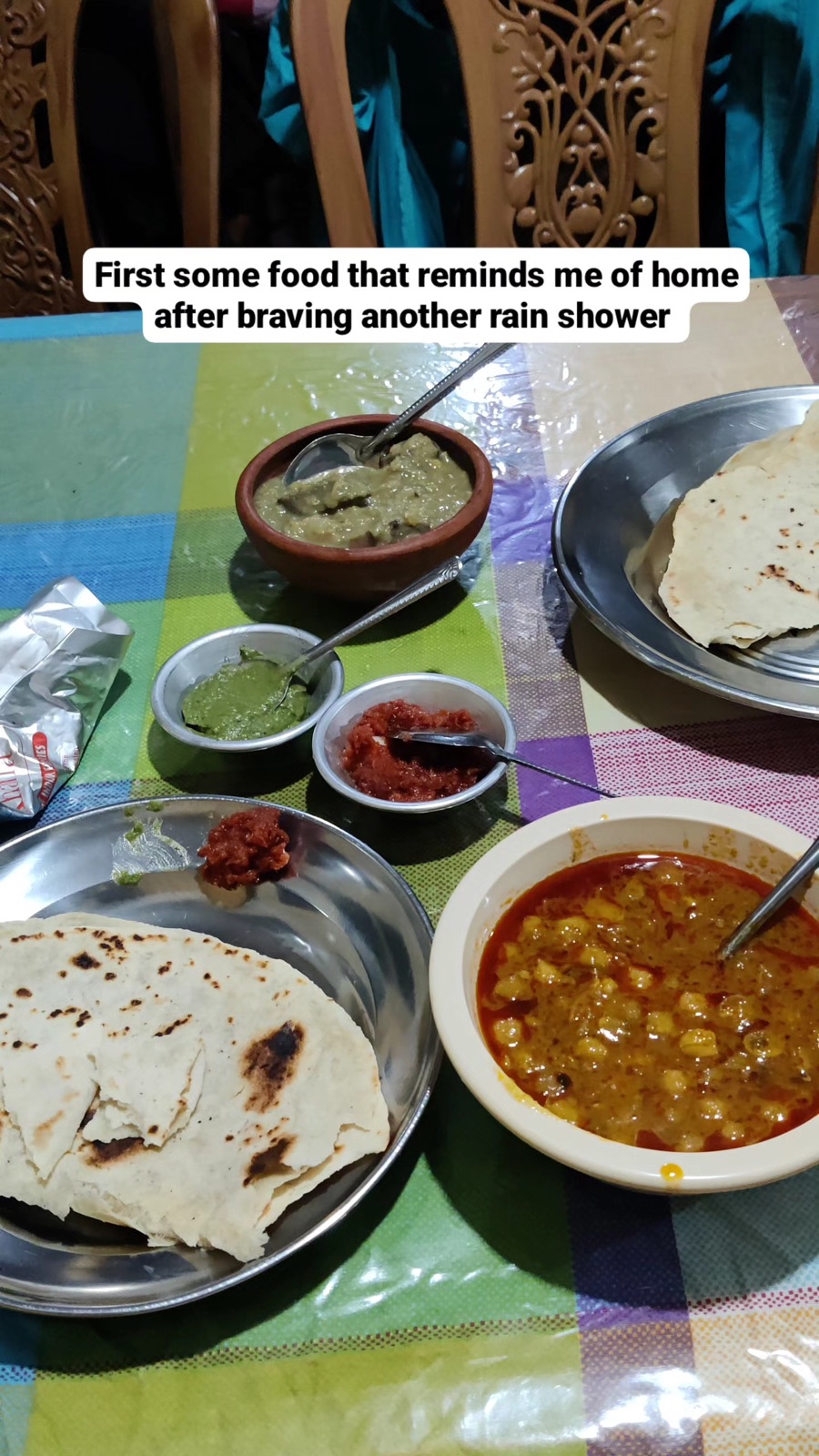
Nuwara Eliya sits up around 1,900 metres, and it doesn’t let you forget it. The British built it as a hill station to feel at home, and it still leans into the act: a red-brick Tudor post office, a racecourse, cold rain that turns up on schedule. People call it Little England. The first day was a write-off, so I made it a rest day: hot chole and rotis that tasted like home, and a new card game with strangers at the hostel.
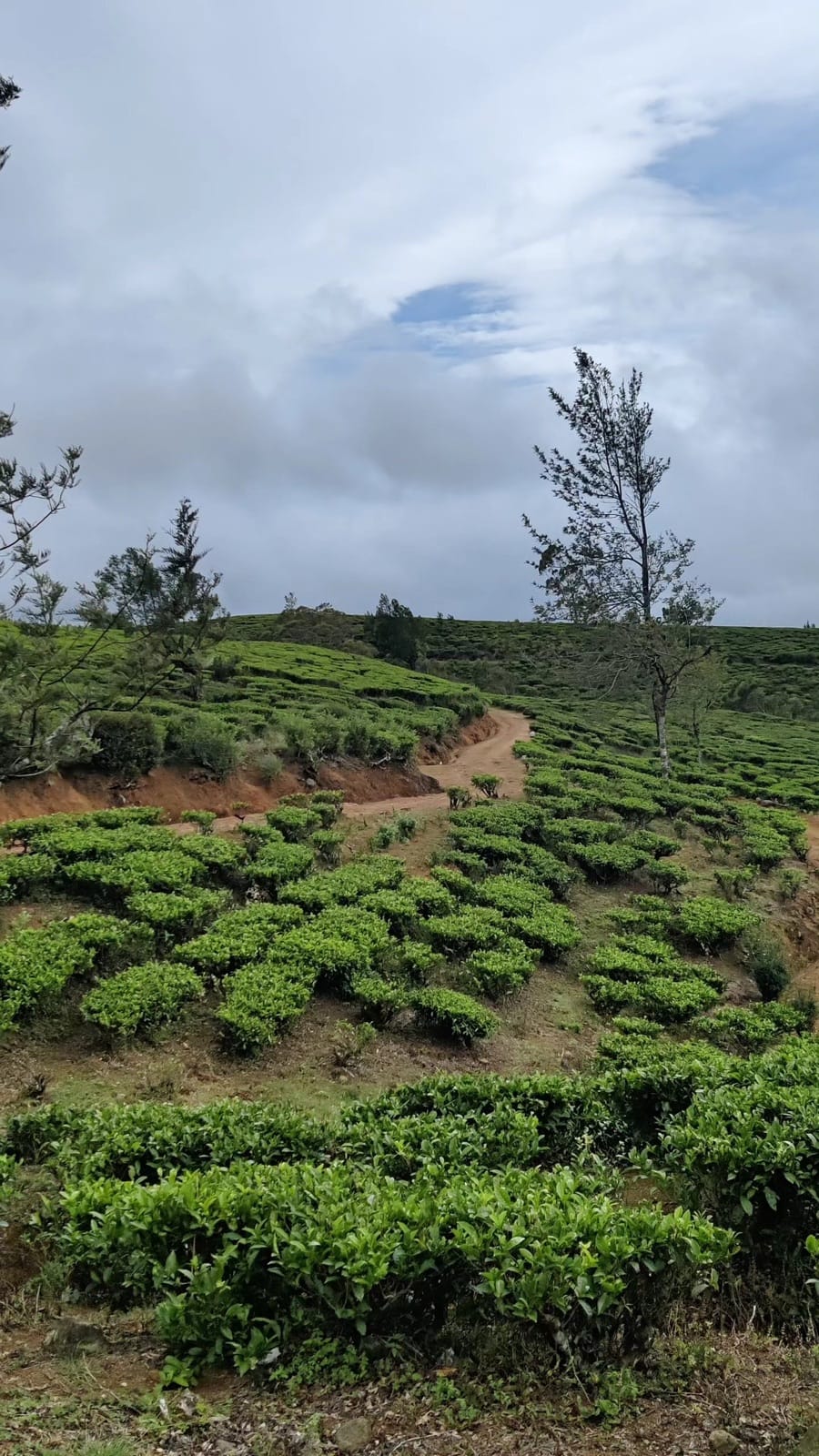
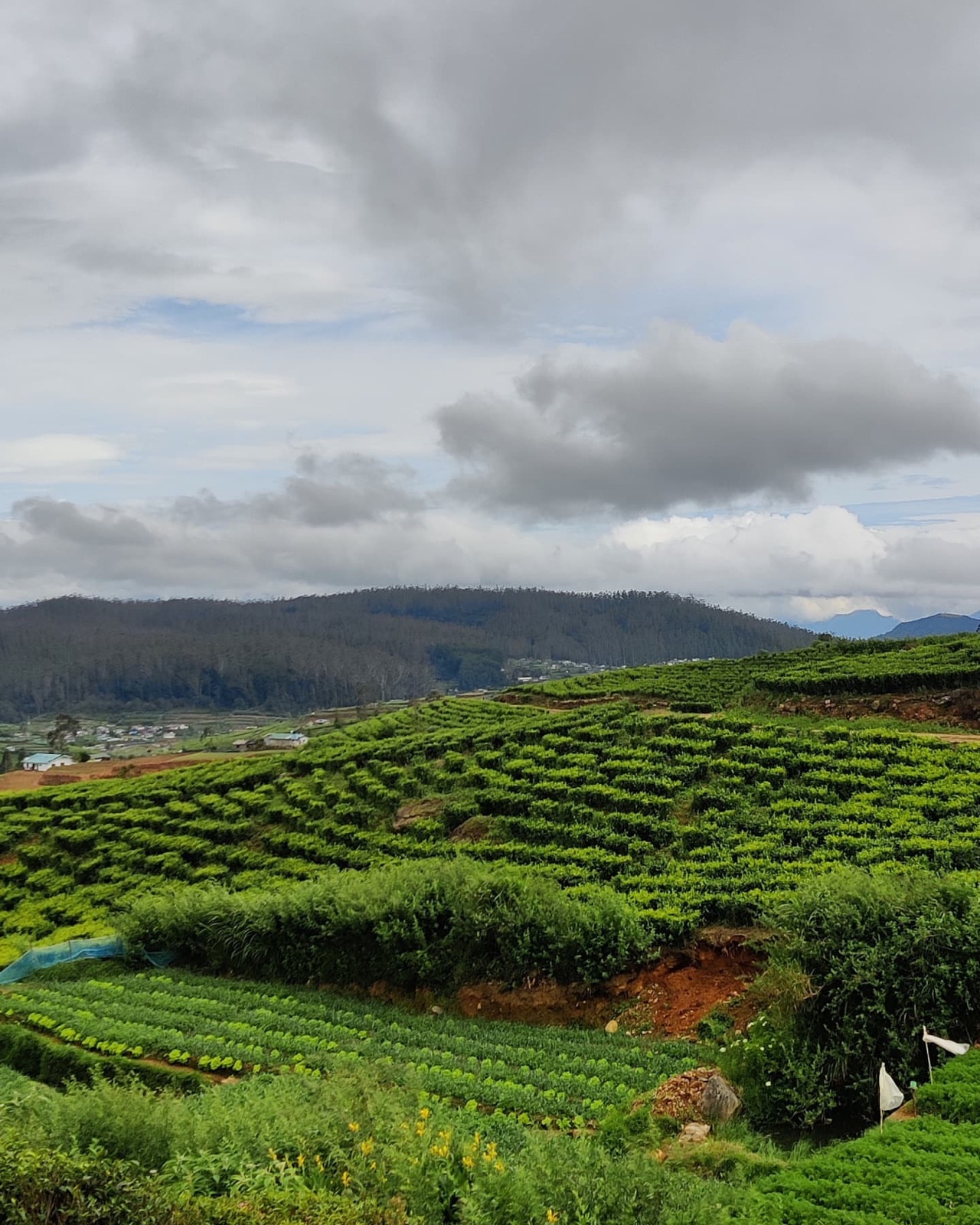

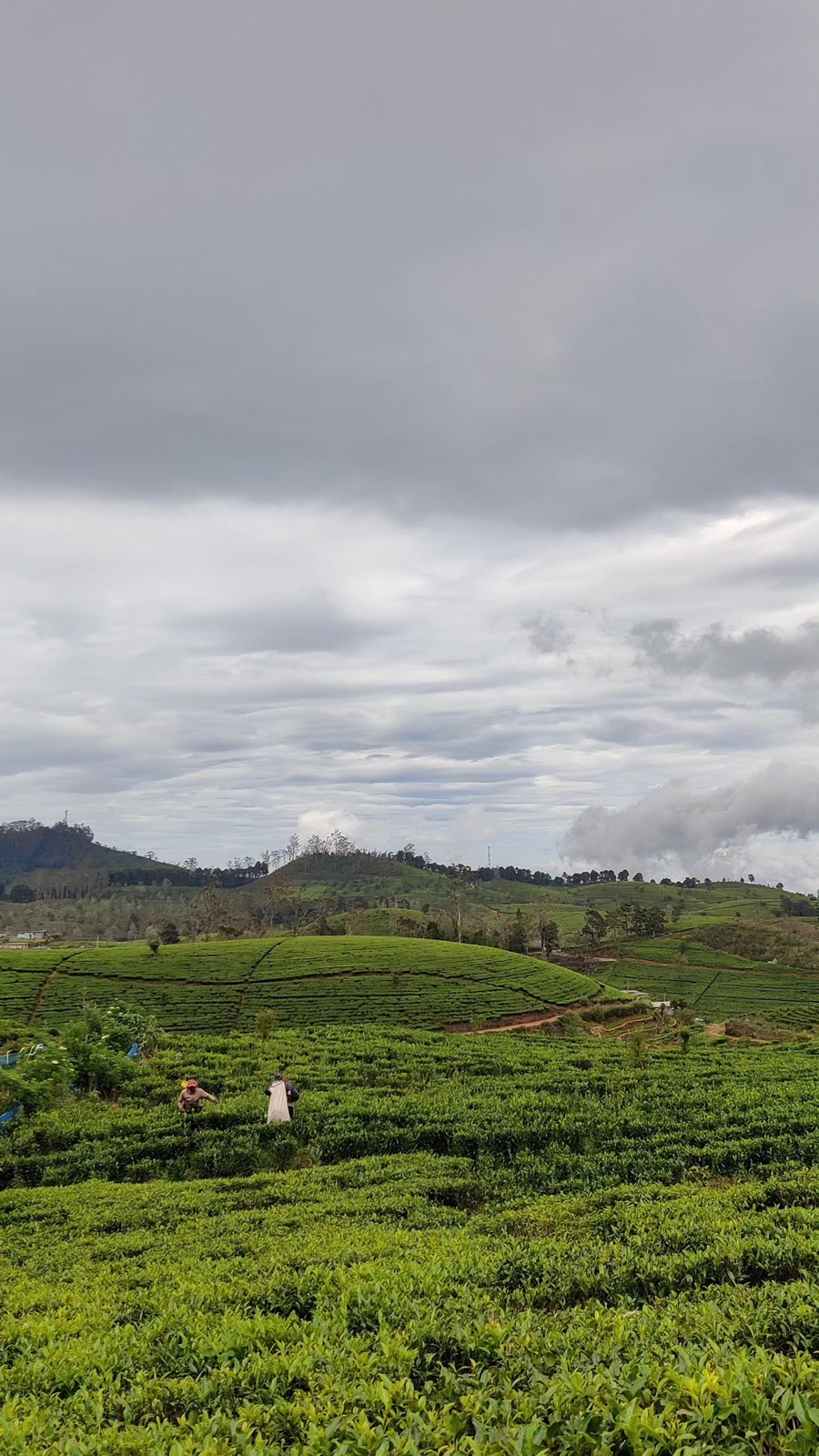
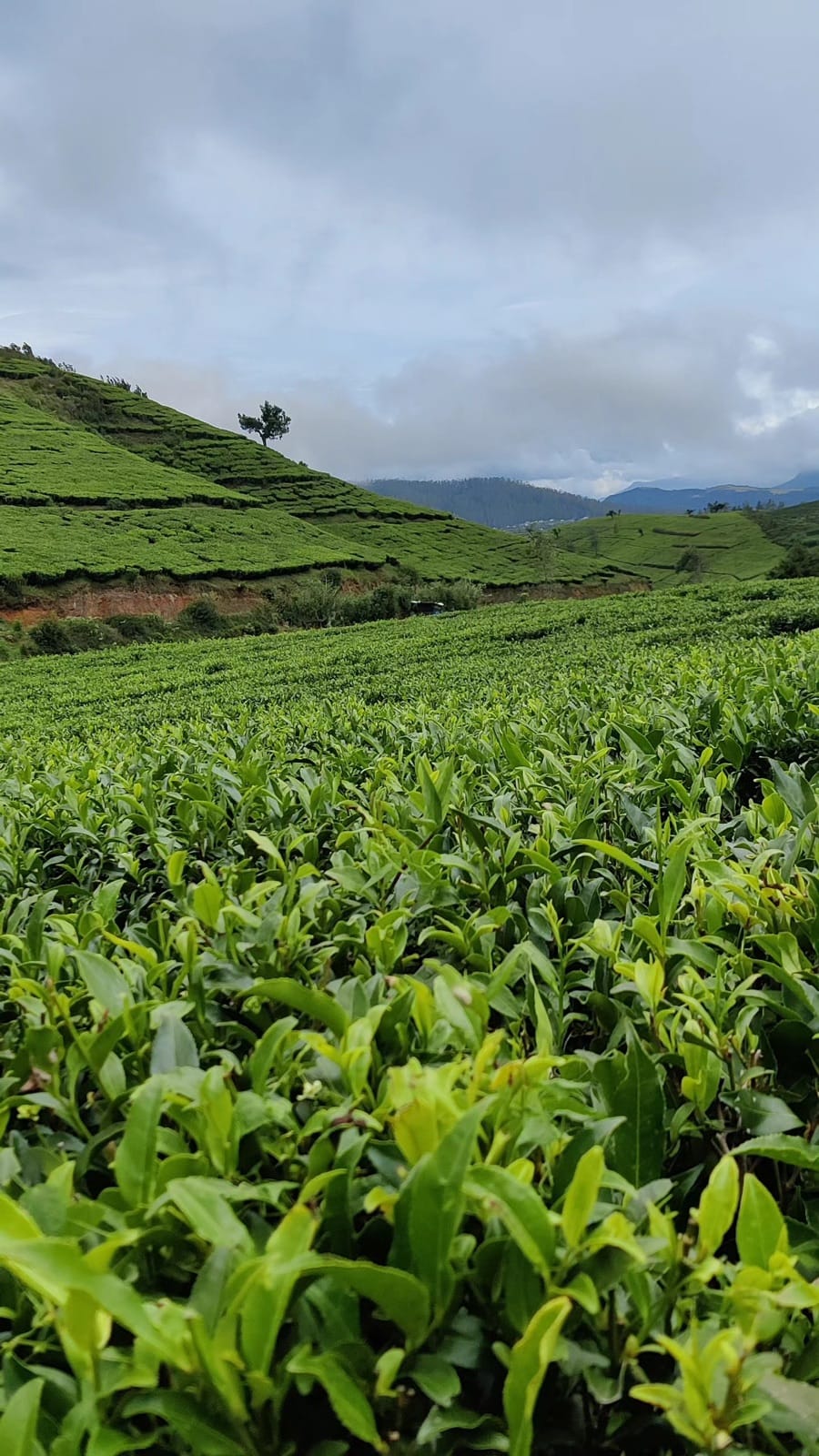

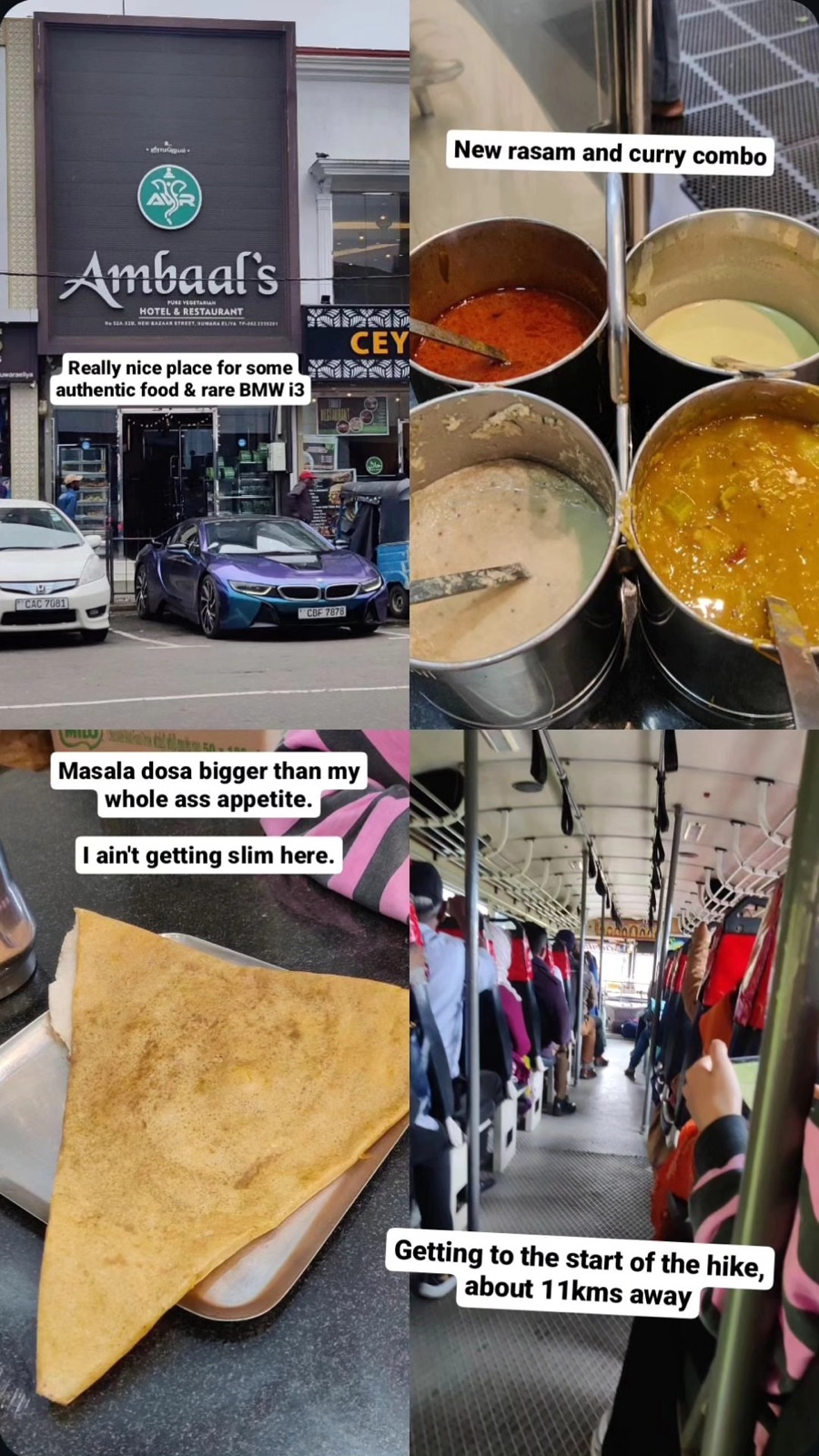
What you actually come up here for is the tea. Day two, 14 degrees, I said exactly this on camera: I don’t do treks. Lilo disagreed. I’d met her at the hostel, she’s German, she’s done a lot of treks, and she talked me onto a stretch of the Pekoe Trail, the long-distance walking route that strings together the old tea estate roads. Breakfast in the market first (masala dosa at Ambaal’s), then a bus out to the trailhead about 11 km away.
I’ve seen a ton of tea in Munnar, but walking through a working estate is a different thing. The pluckers each harvest 10 kg or more of leaf a day, and then carry it by hand from the slopes to the estate factory to get paid. We passed a painted kovil rising out of the terraces, and then invented our own ending to the route (blue on AllTrails was us, green was the recommended path).
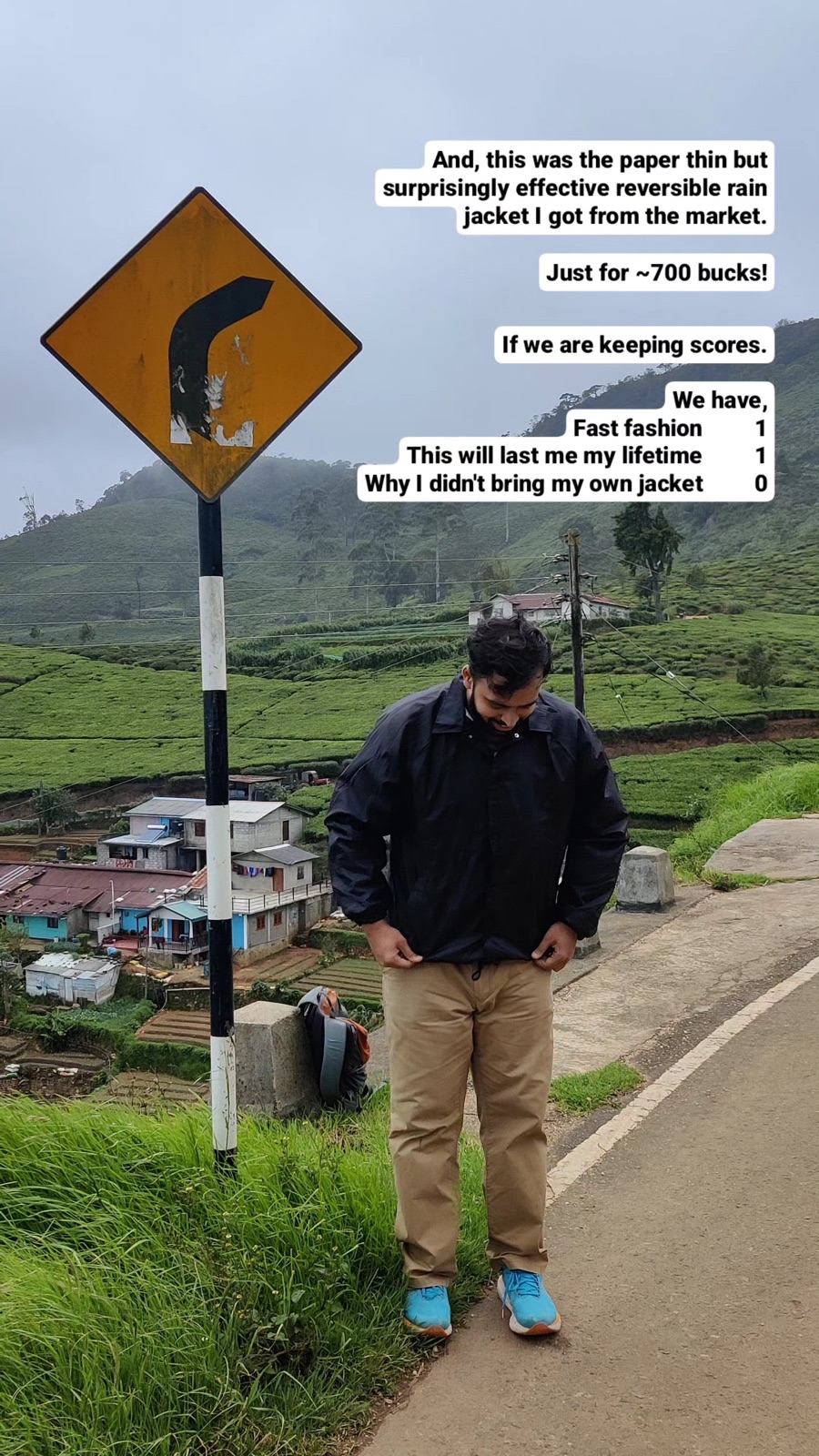
Lilo kept a good pace the whole way, through a light drizzle, tea gardens and some of the best views I had on the island. AllTrails logged 12 kilometres, 2 hours 56 minutes moving and 13 minutes of rest. My legs swear it was closer to 15 to 18. Legs jelly, ego boosted.
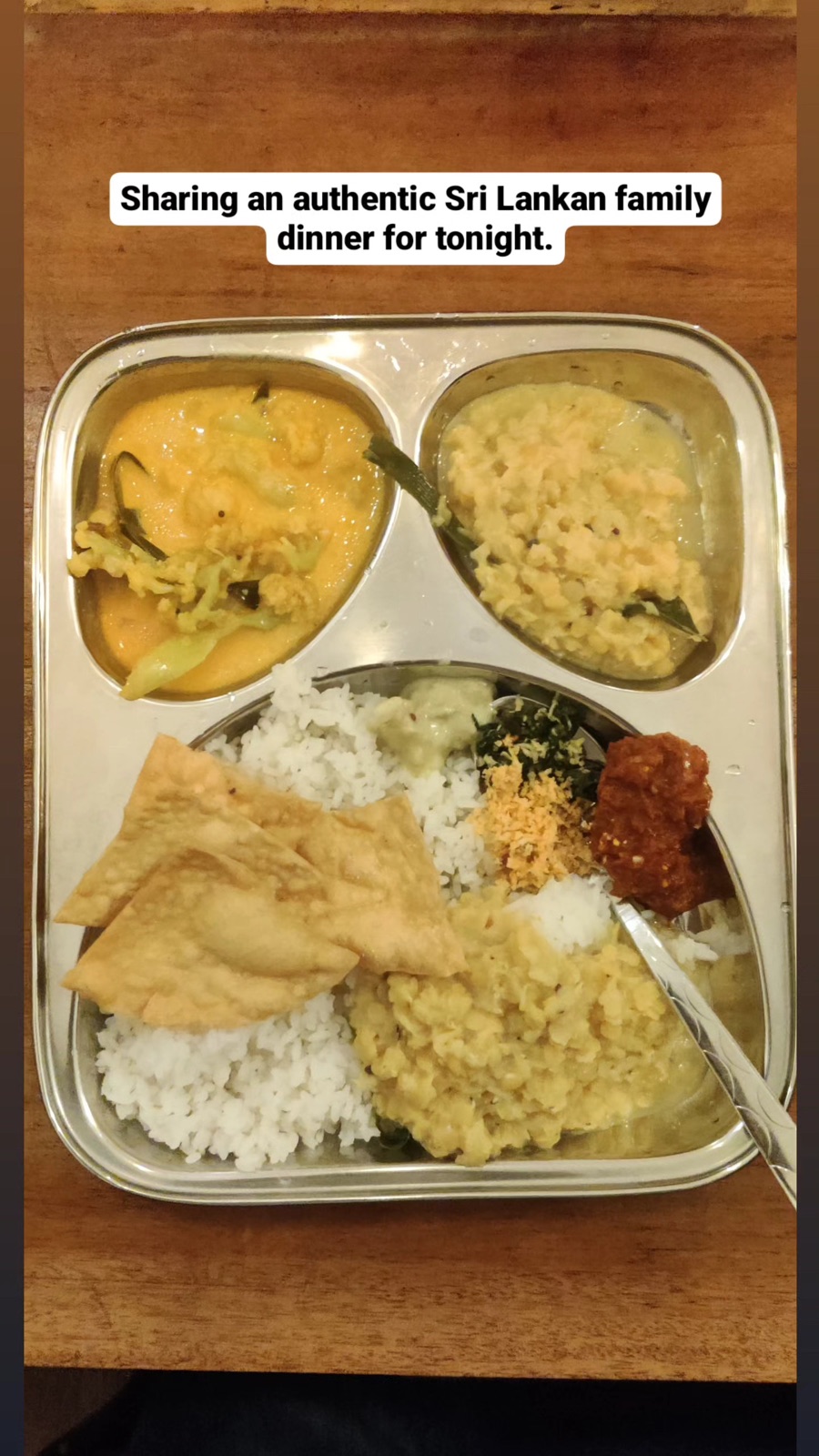
A bus back into town, a damp walk to the hostel just as the clouds opened again, noodles for lunch, and that night a proper Sri Lankan family dinner: rice, dhal, curries and pol sambol. Lilo, that was extremely kind of you. Thank you for getting me out there.


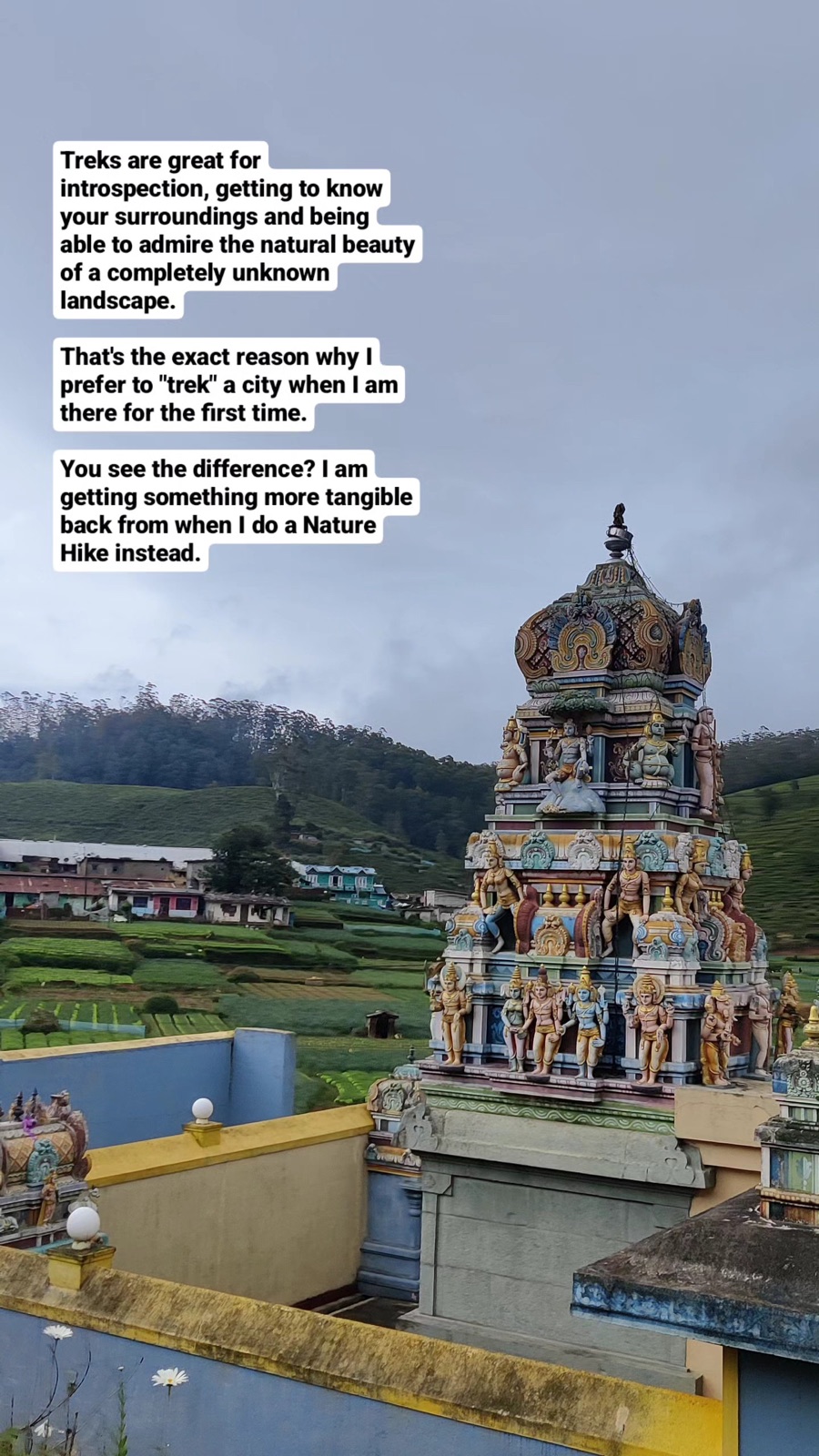
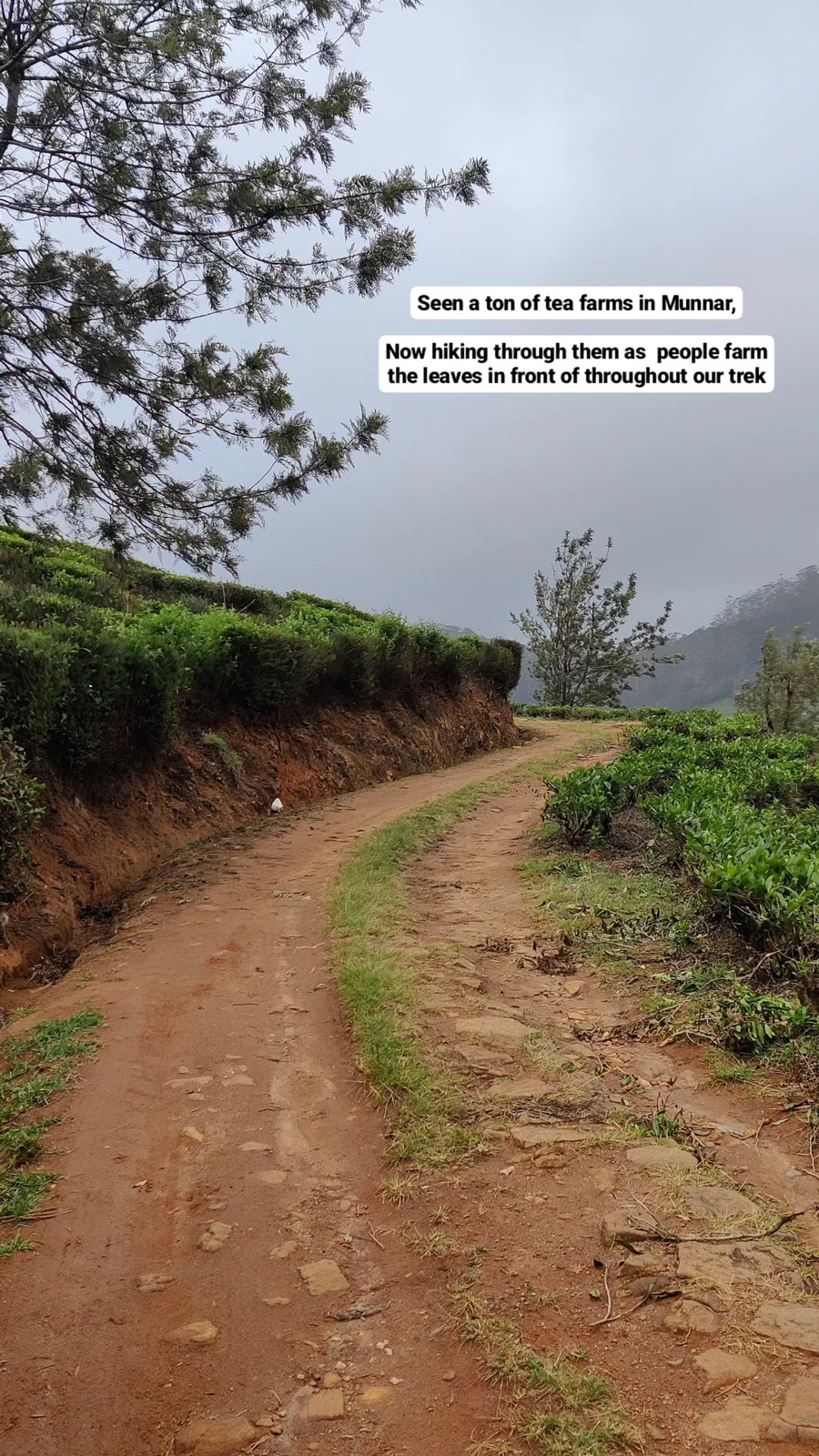

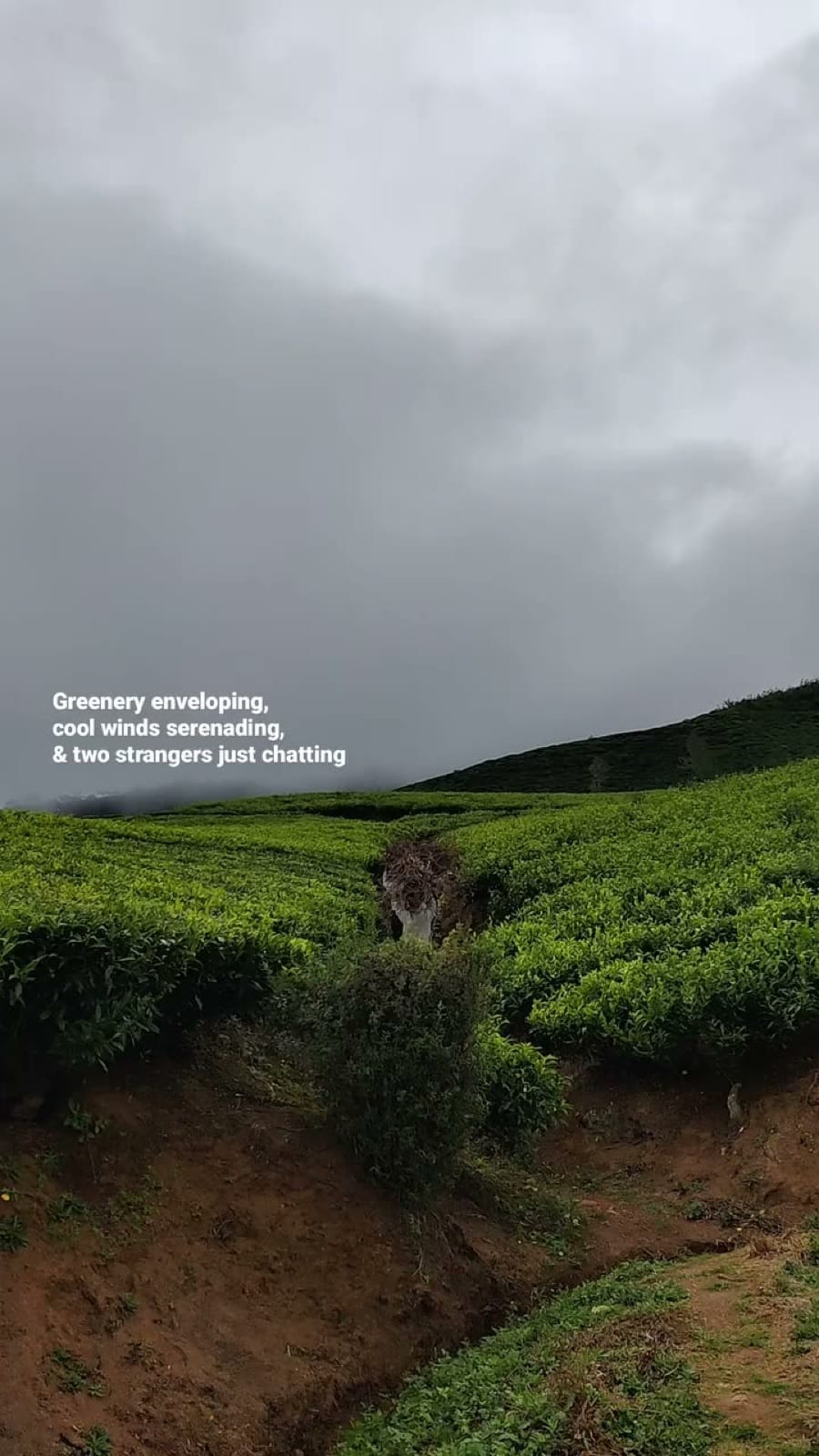

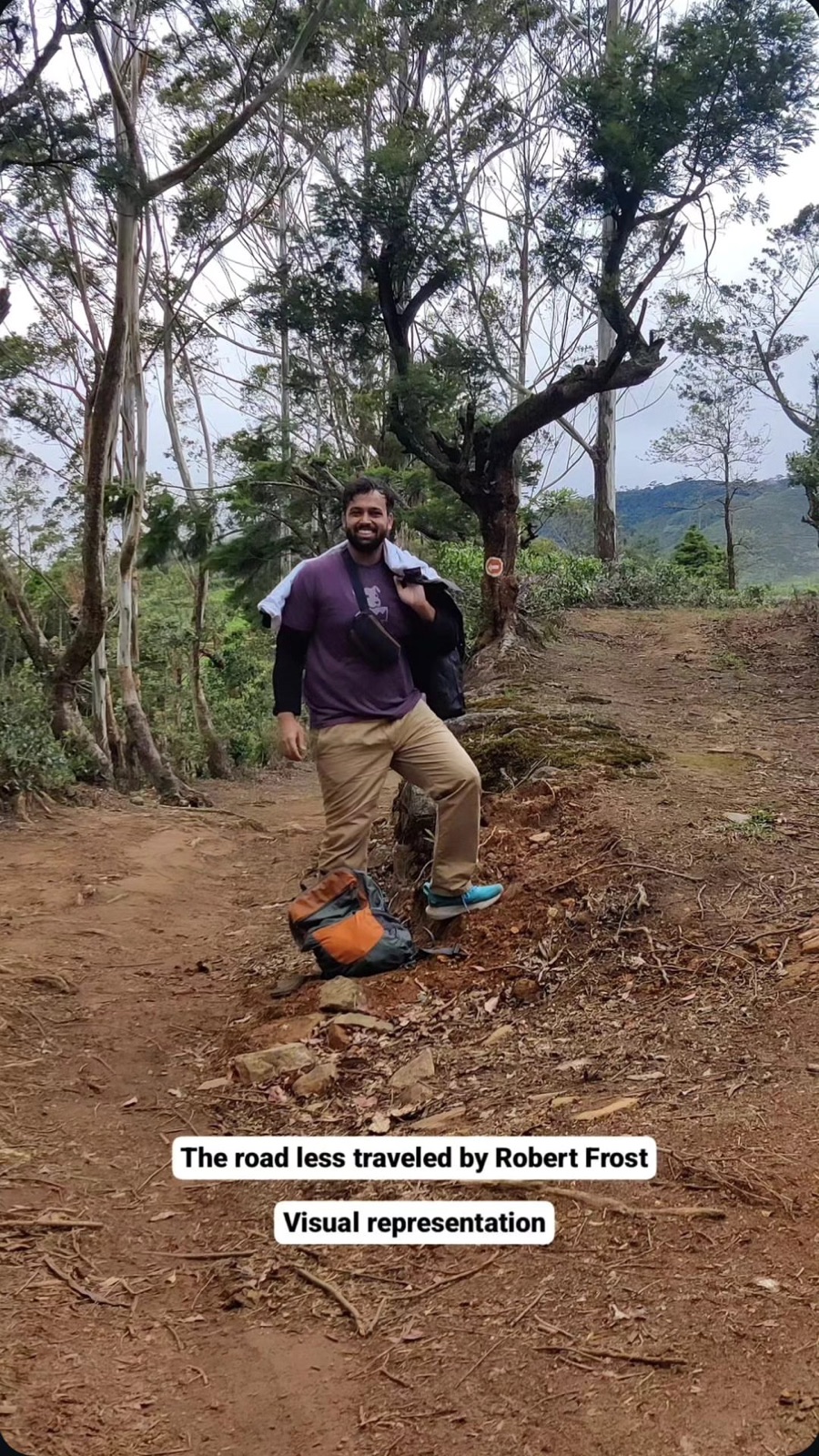
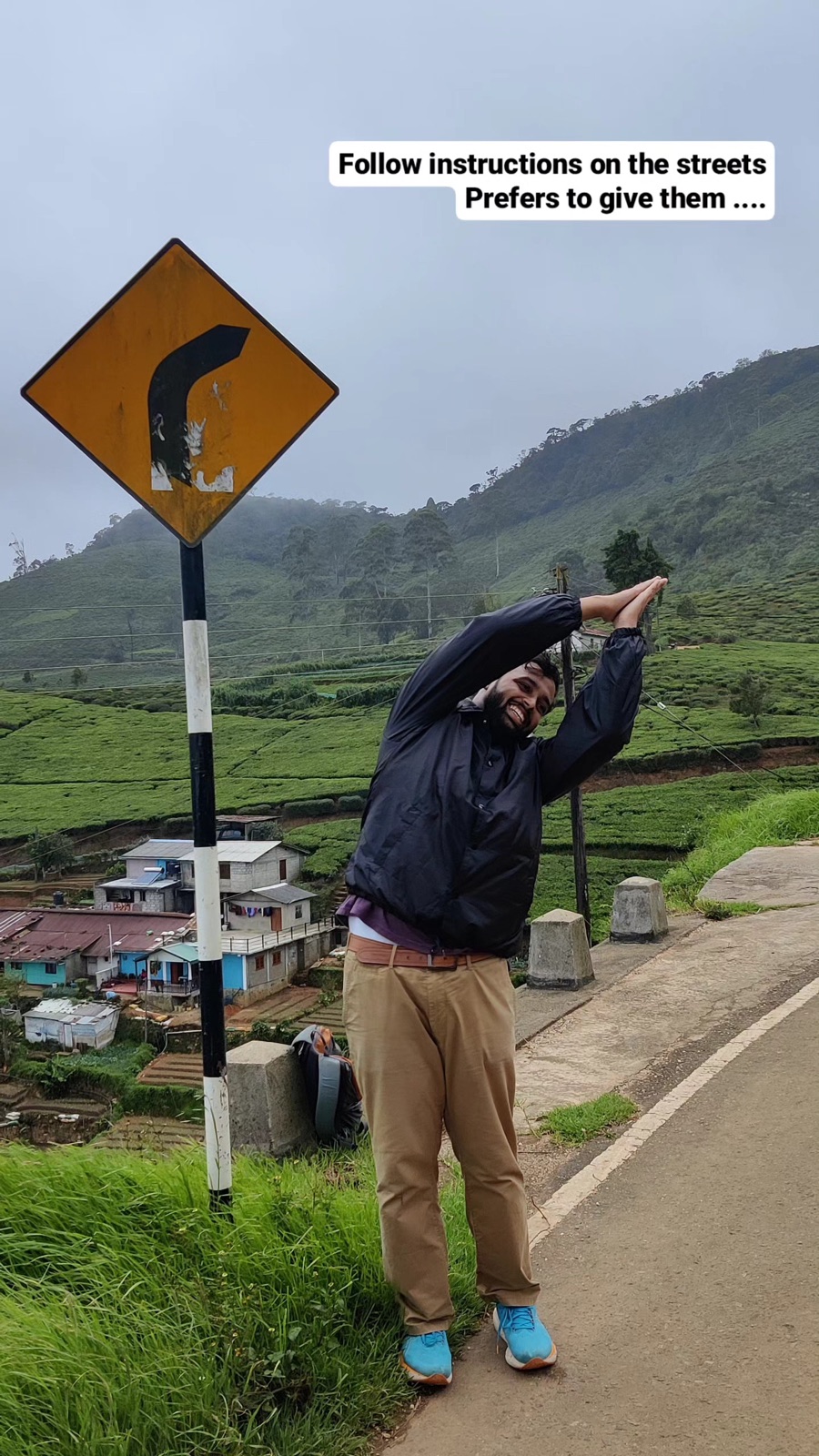
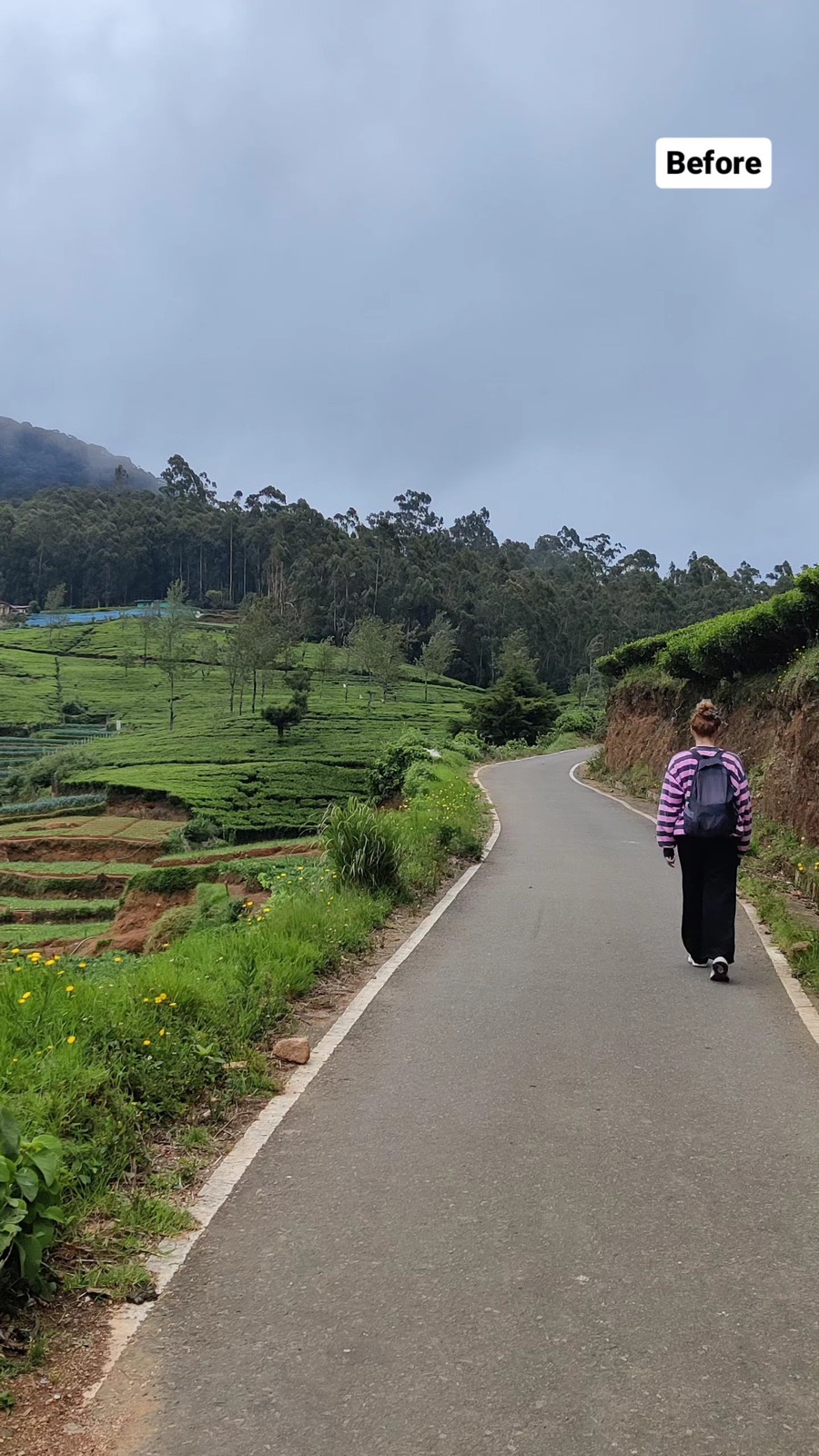
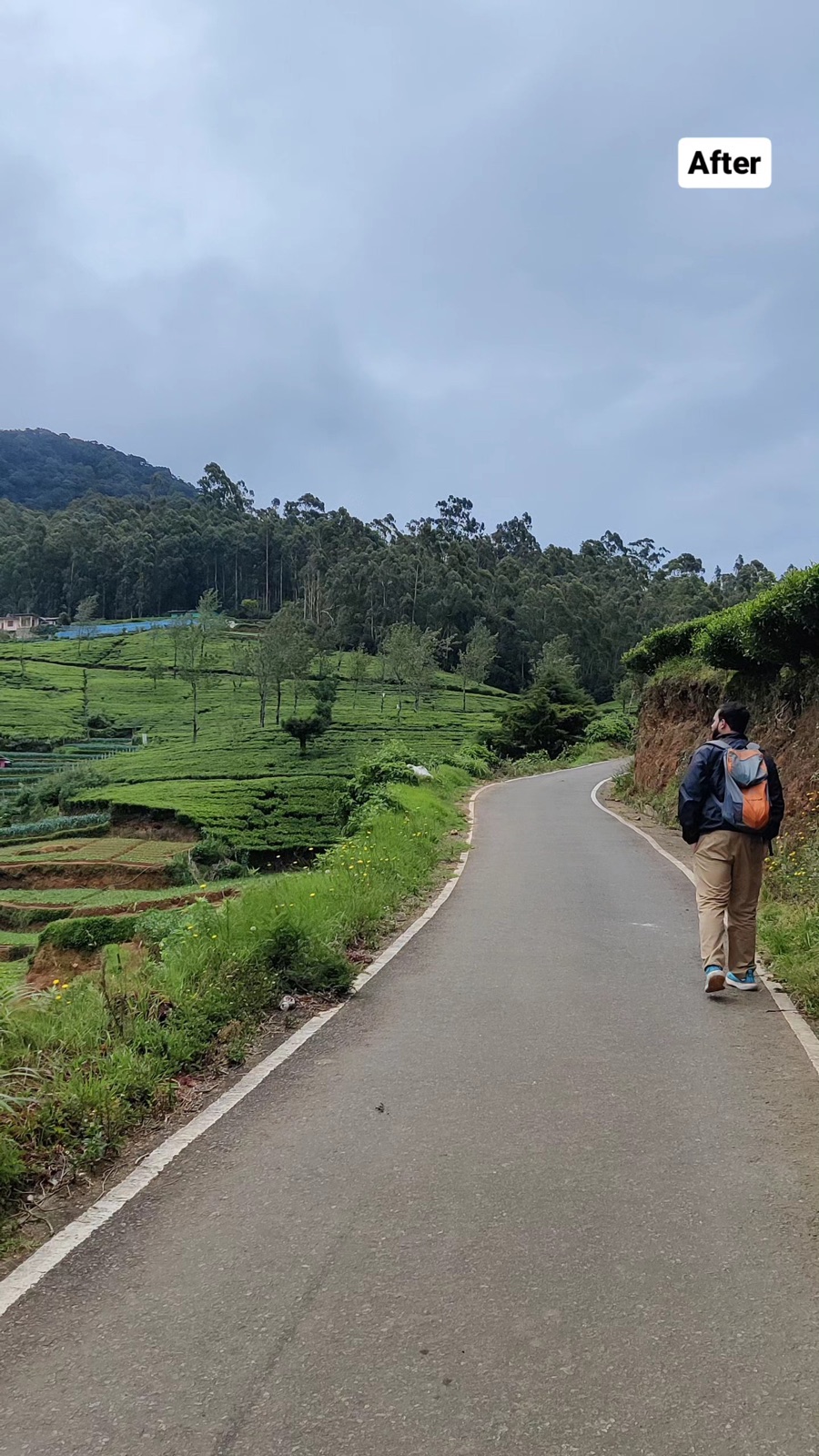
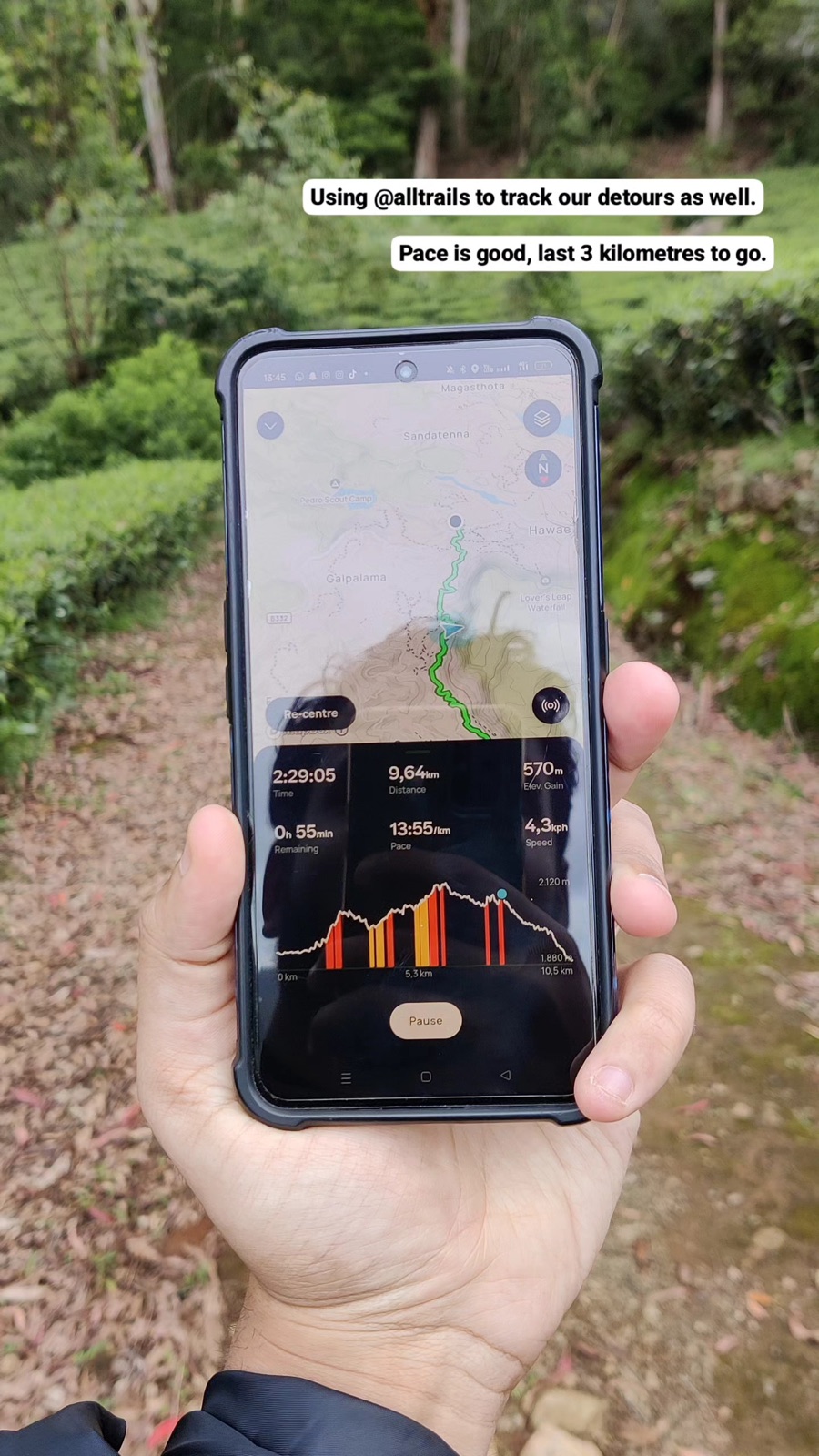
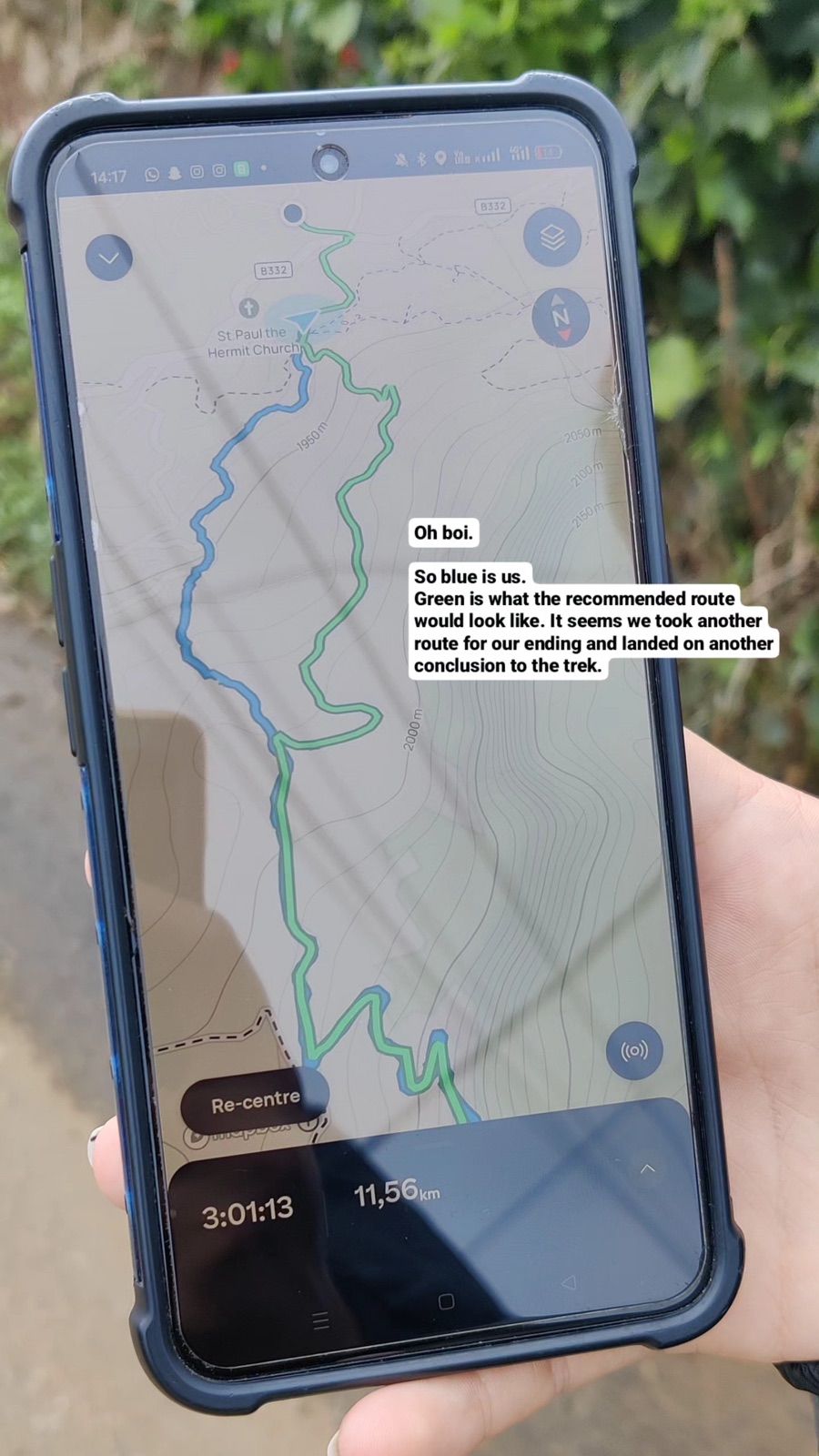
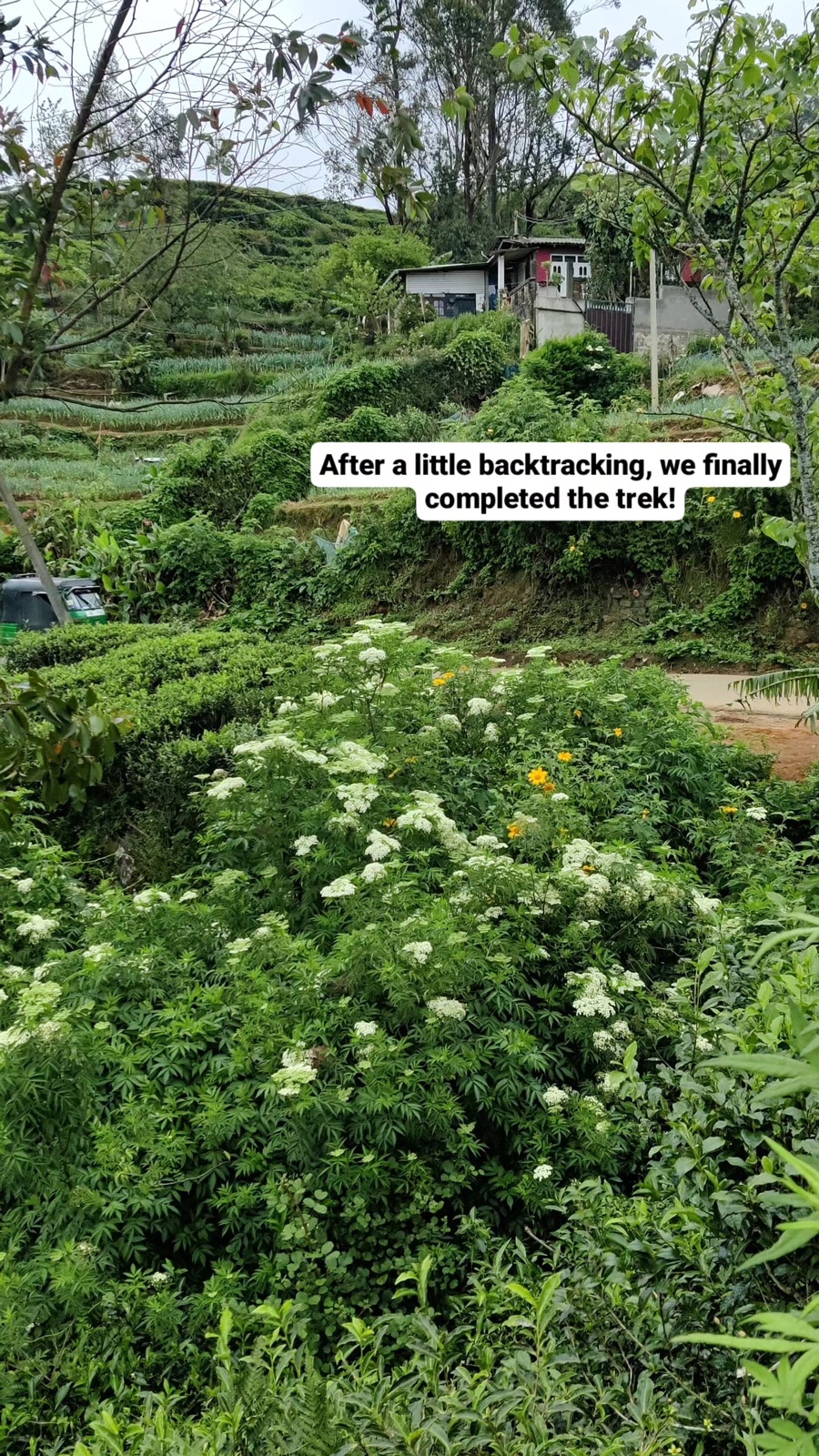

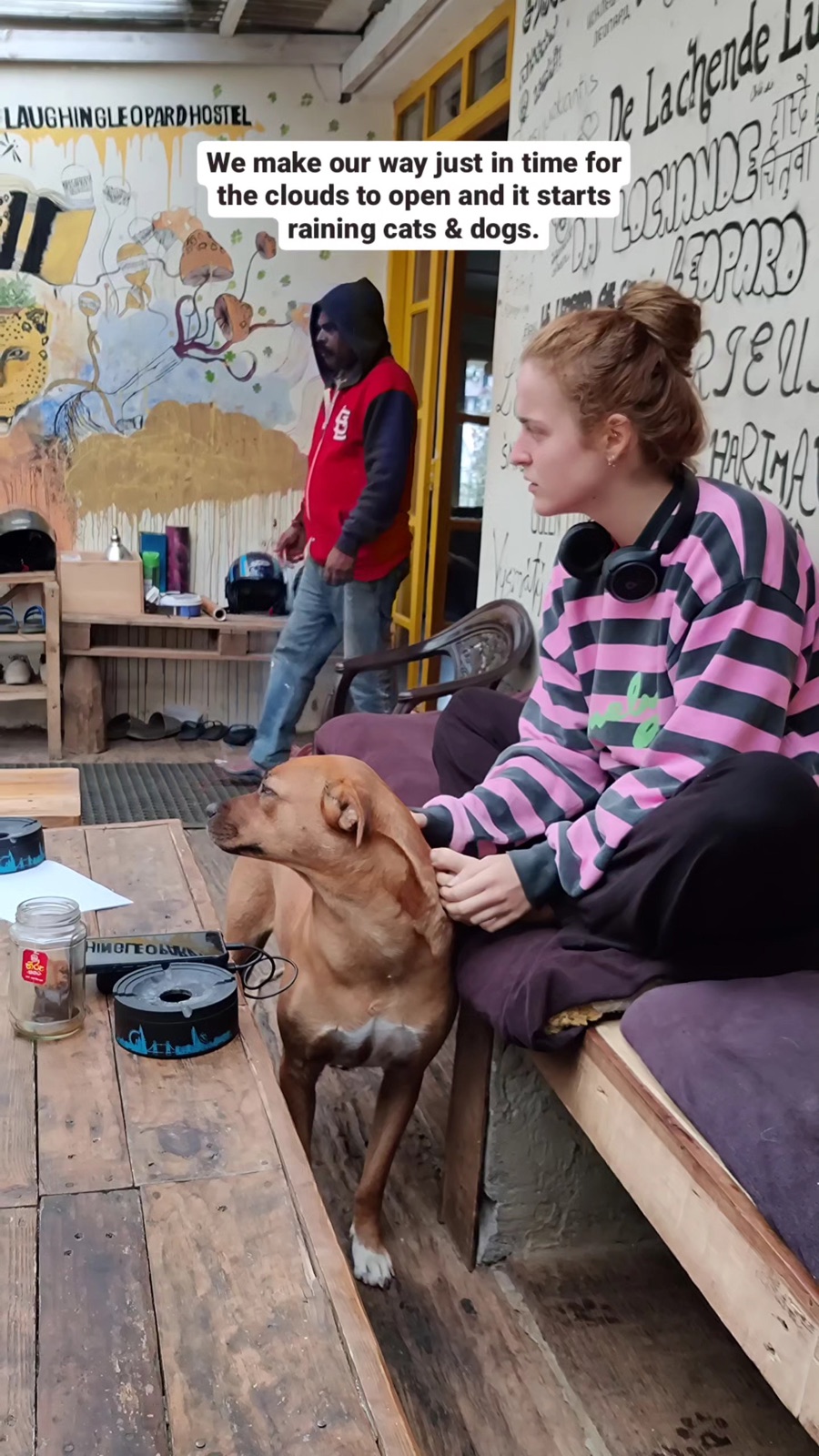
I said I don’t do treks. 12 km, 2 hours 56 minutes, 13 minutes of rest. I take it all back.
The blue train to Ella: fog, samosas, and the open door
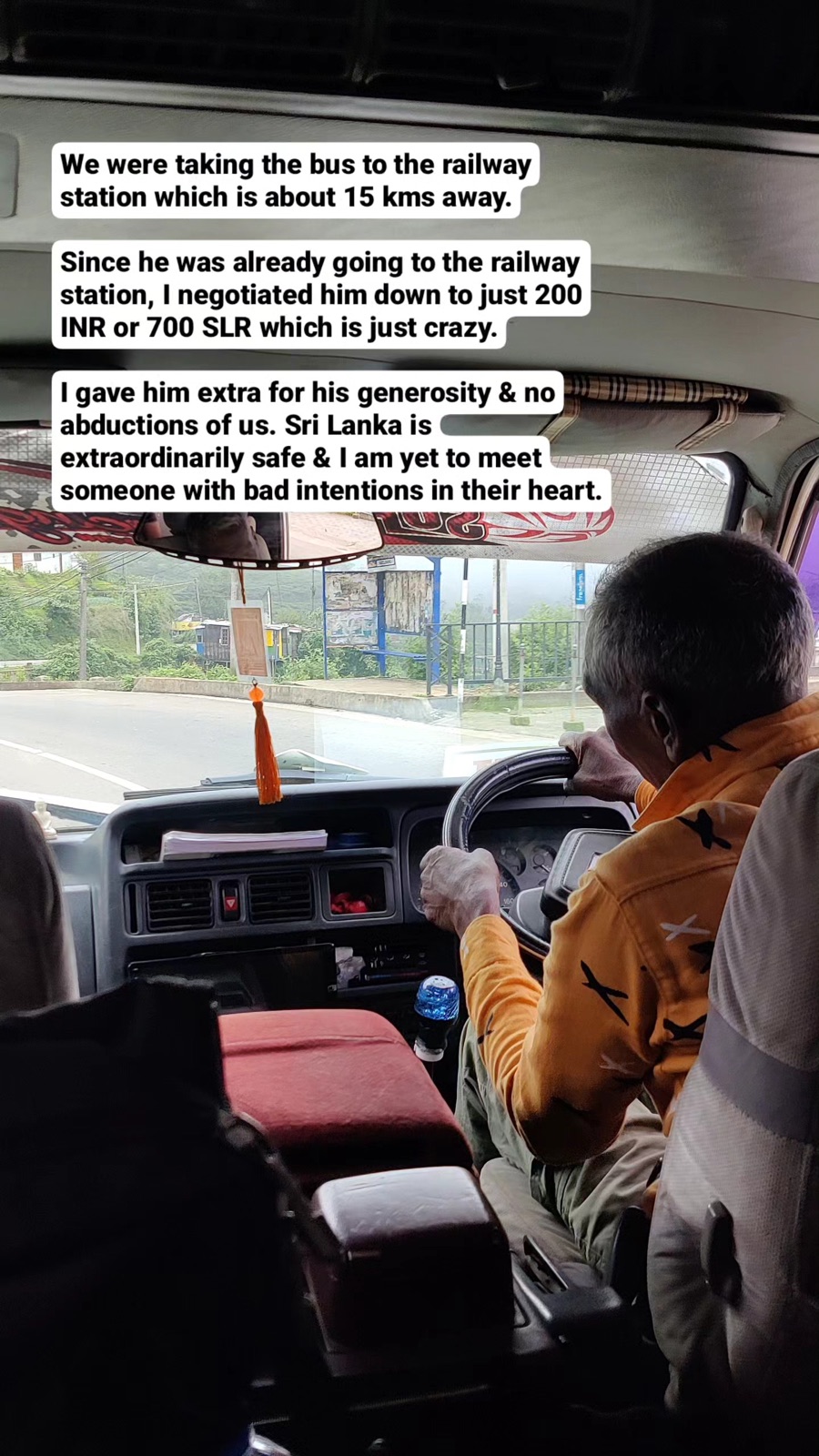
The train from Nuwara Eliya to Ella is the one thing in Sri Lanka that lives up to the hype. Nuwara Eliya’s station is actually Nanu Oya, about 15 km out of town, so I bargained for a lift there for 700 LKR. I like my train bookings spontaneous, and that’s how it’s done best in Sri Lanka: rotti roll in one hand, second-class tickets bought at the counter, 1,200 LKR all the way to Ella.
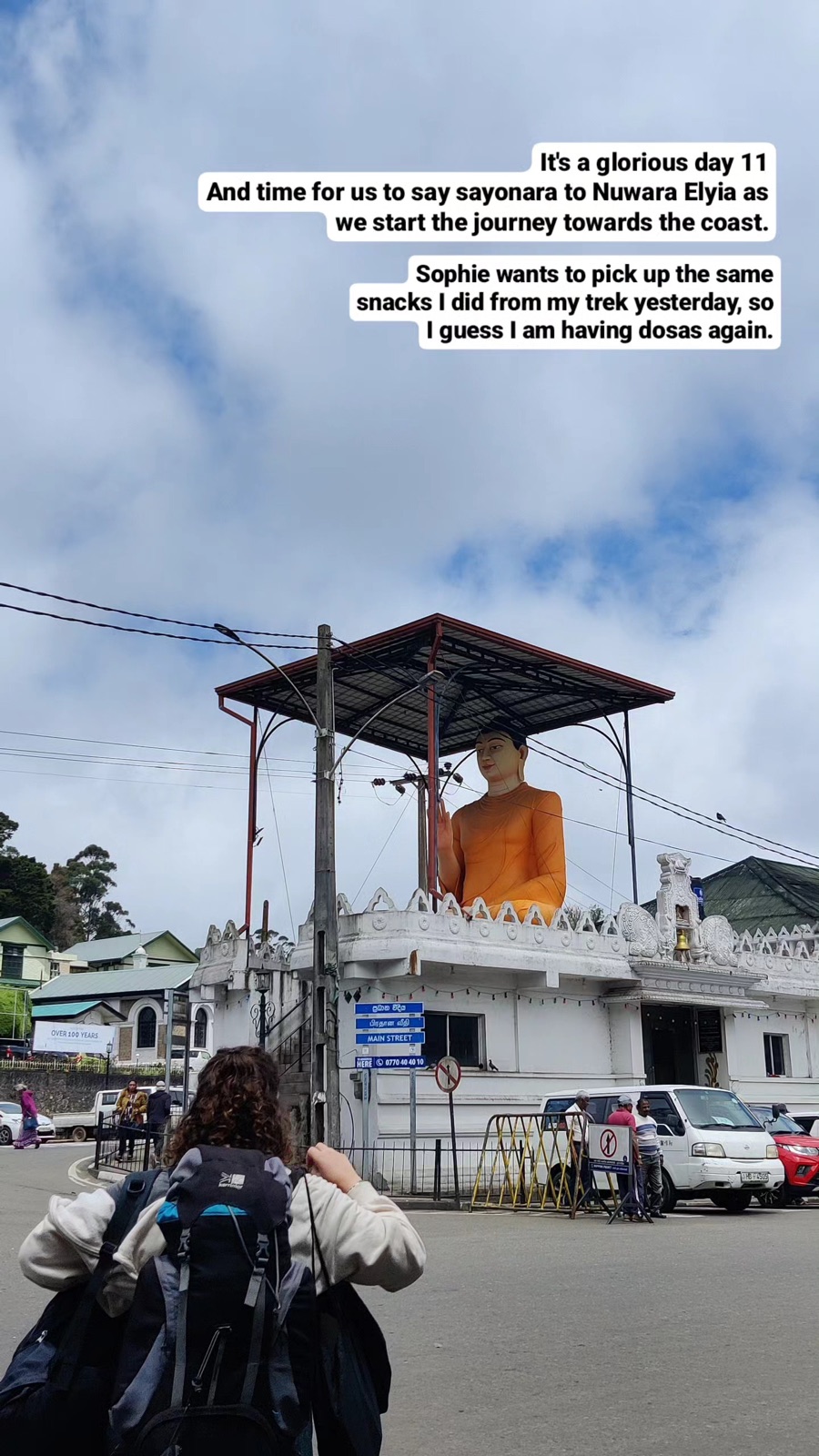
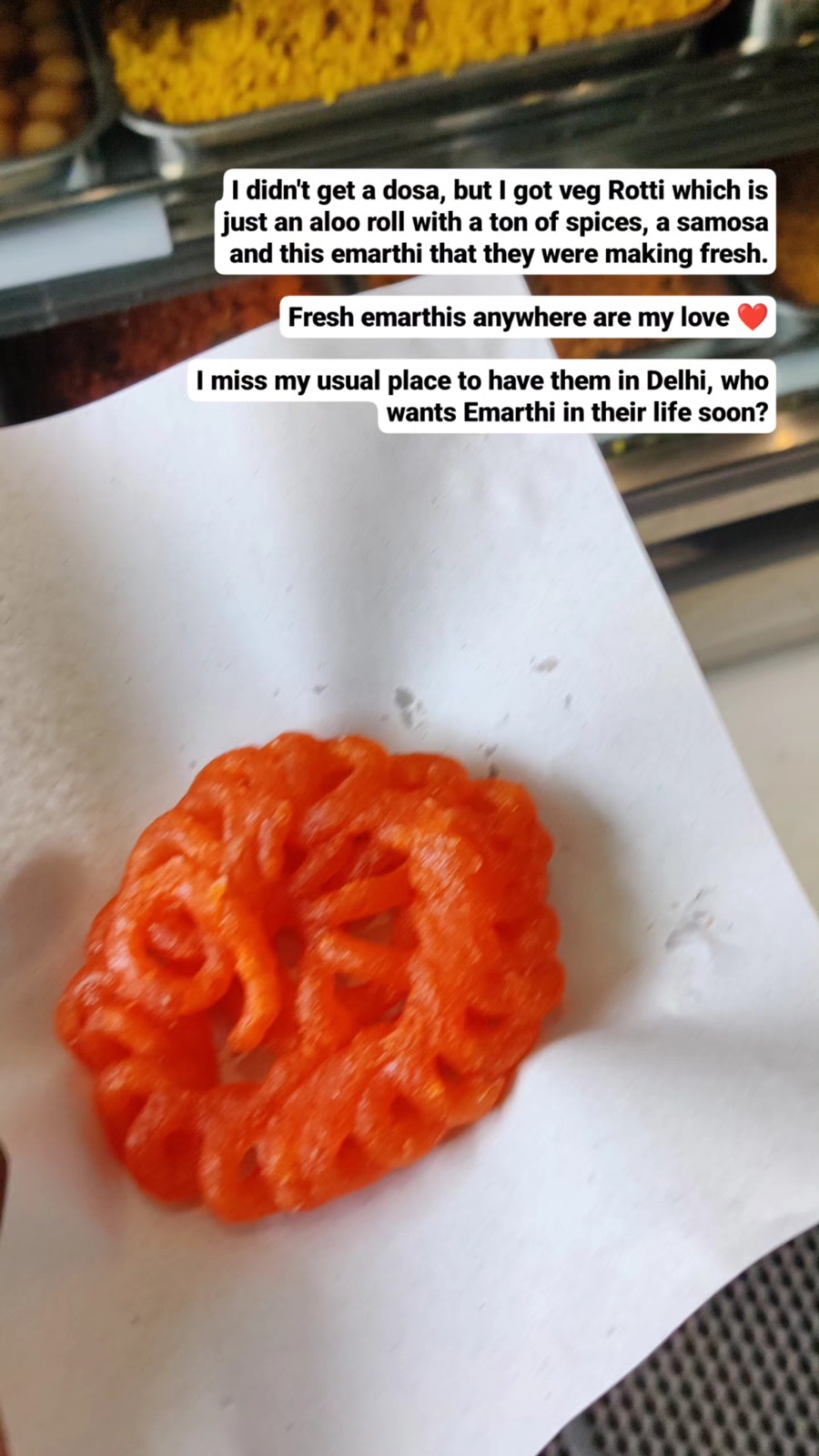
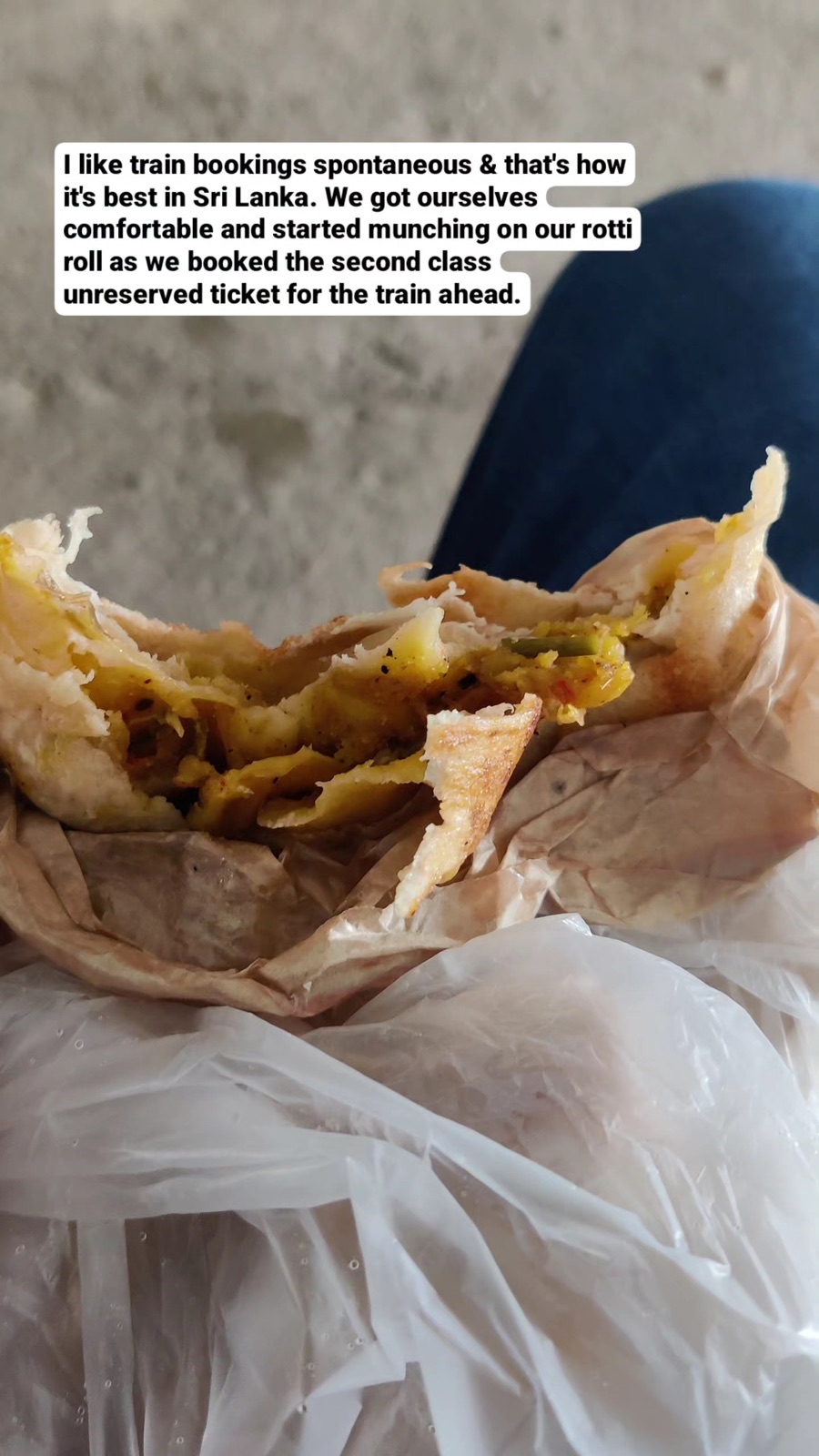
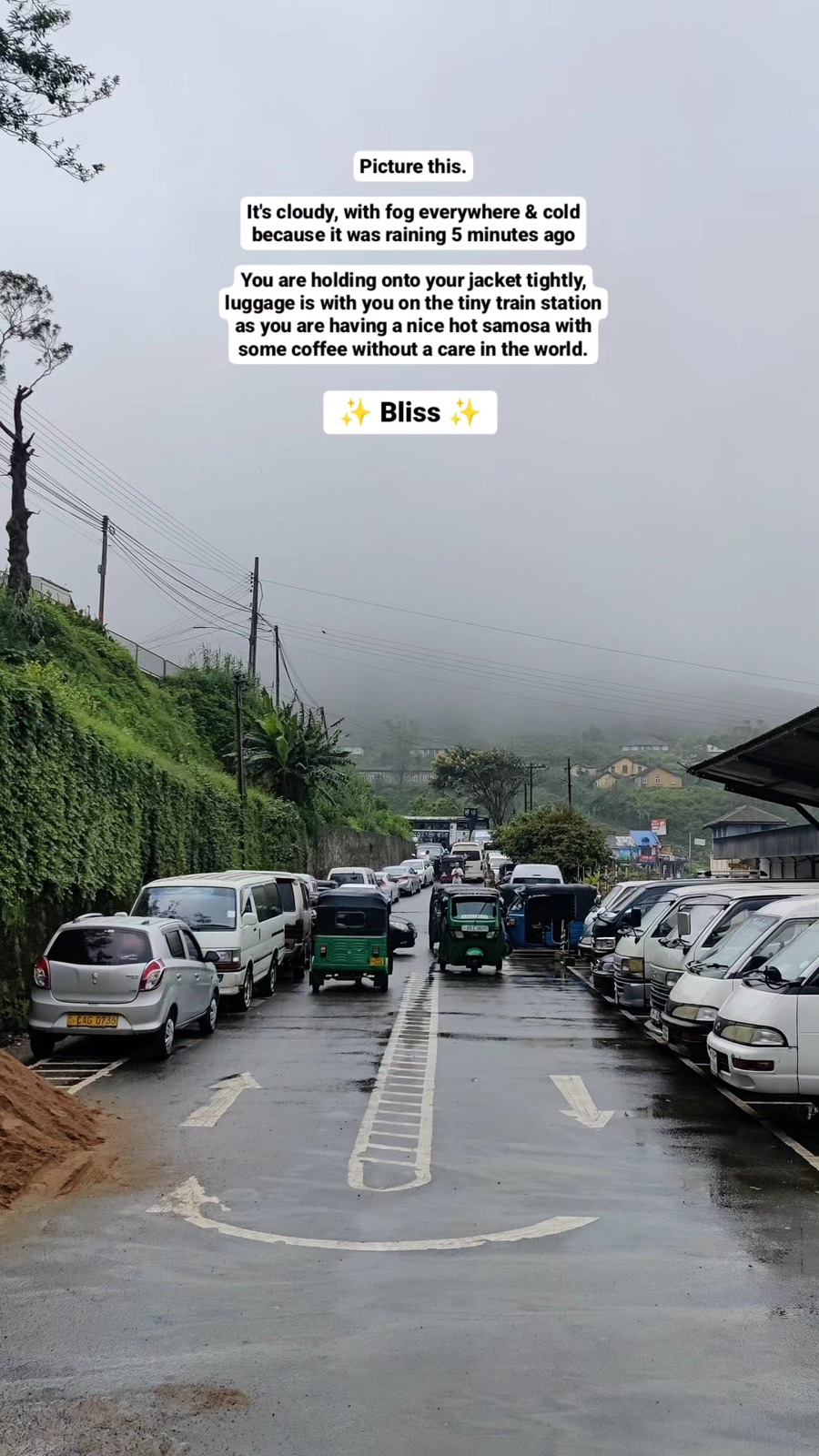
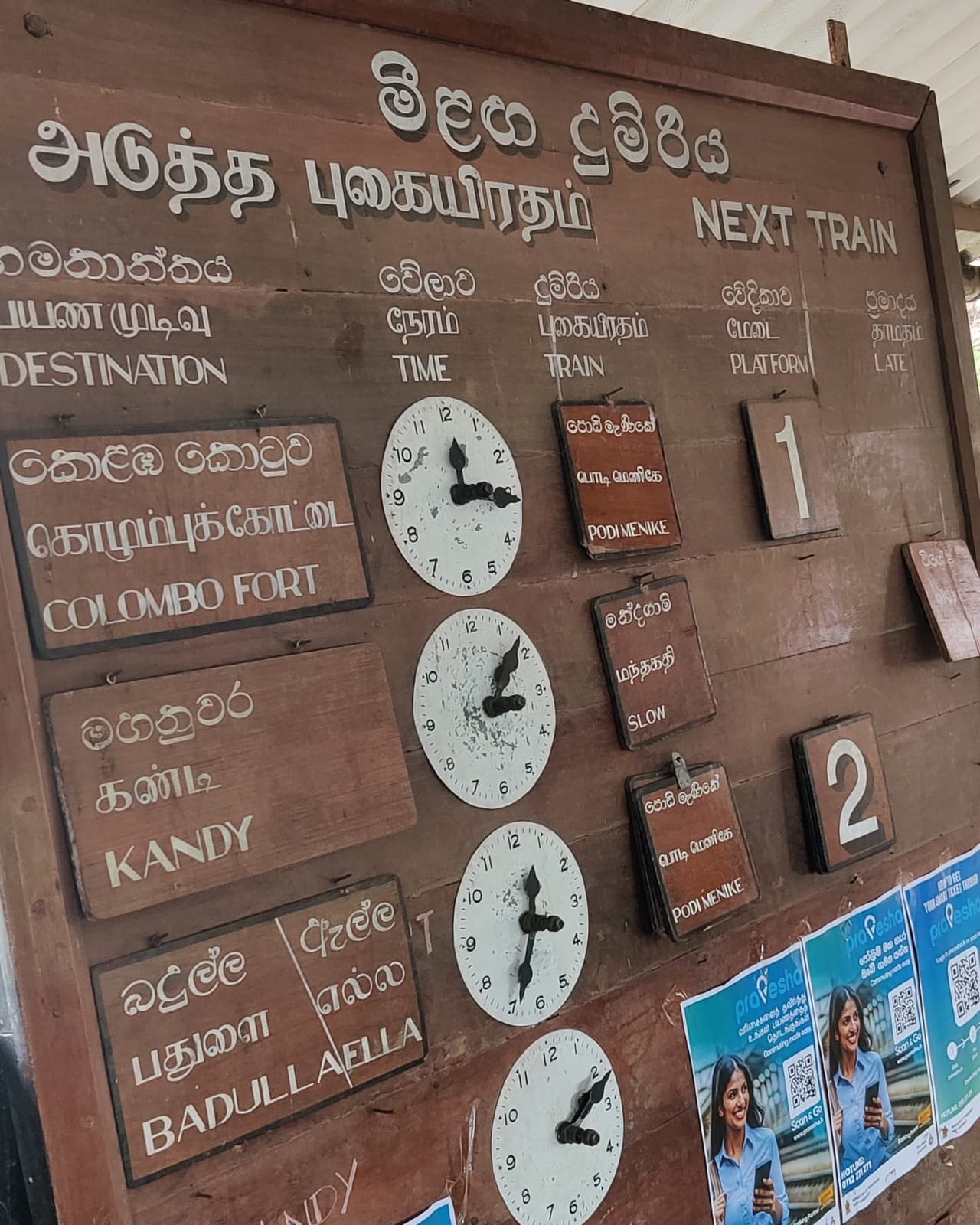
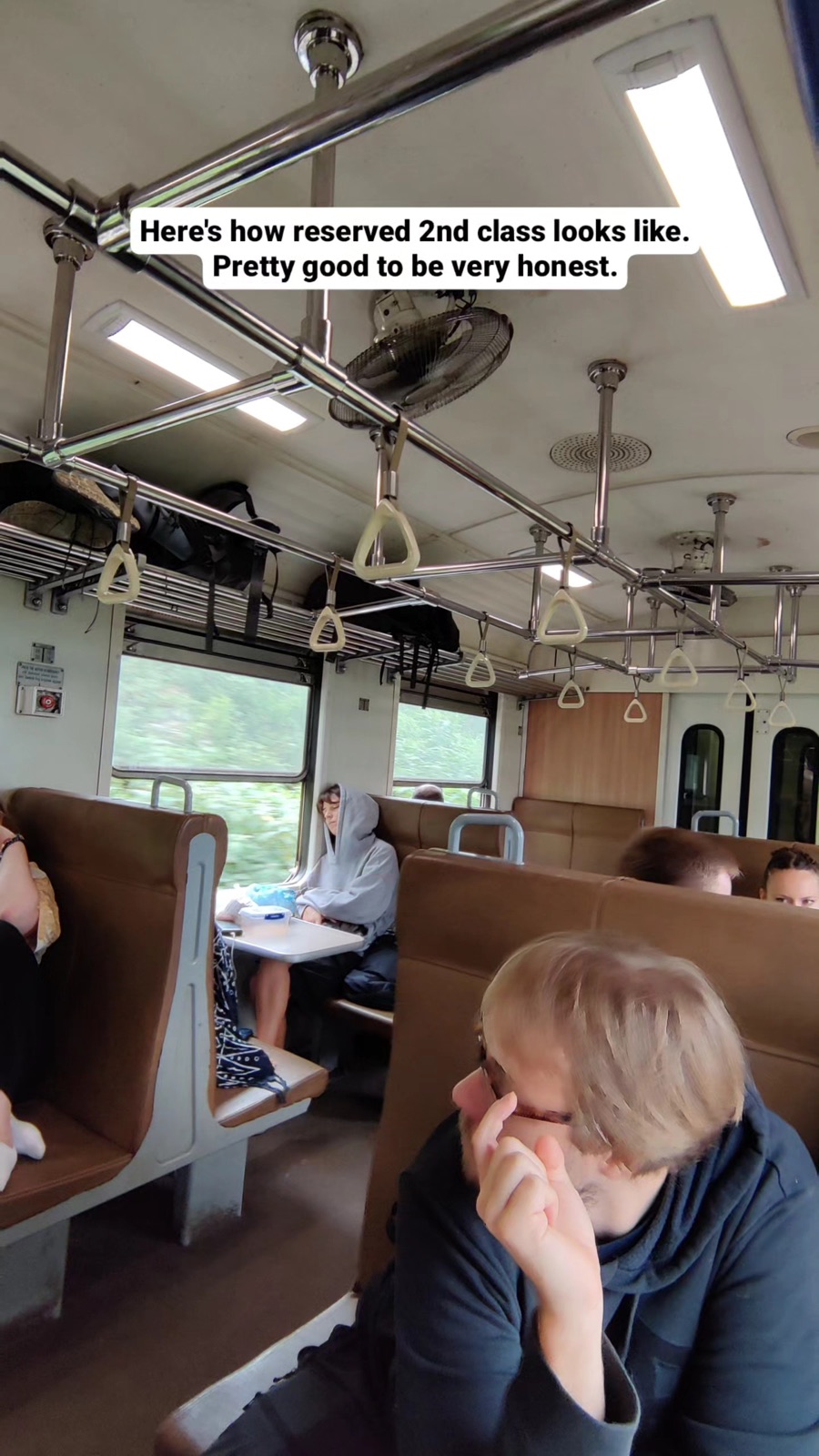
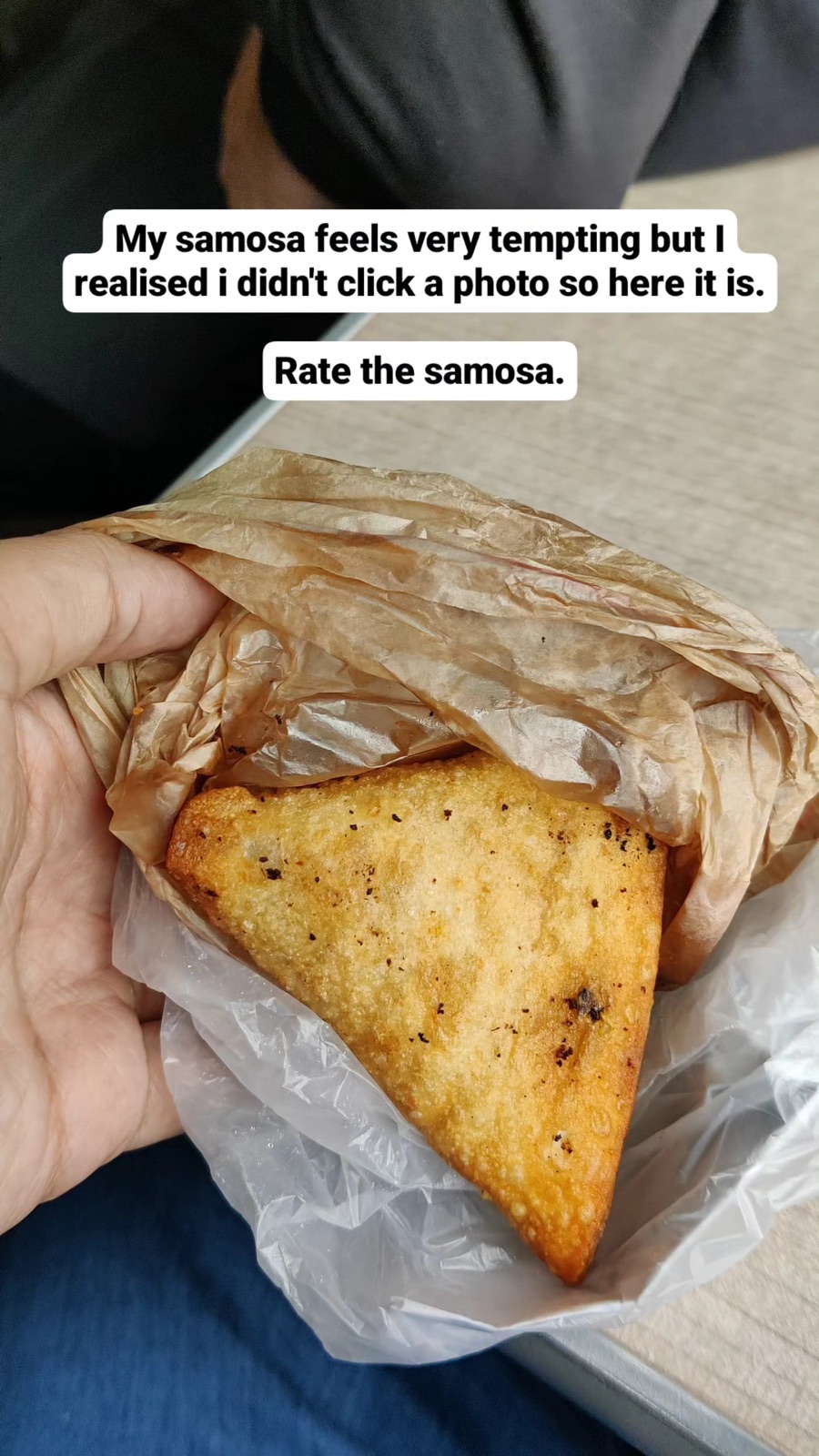
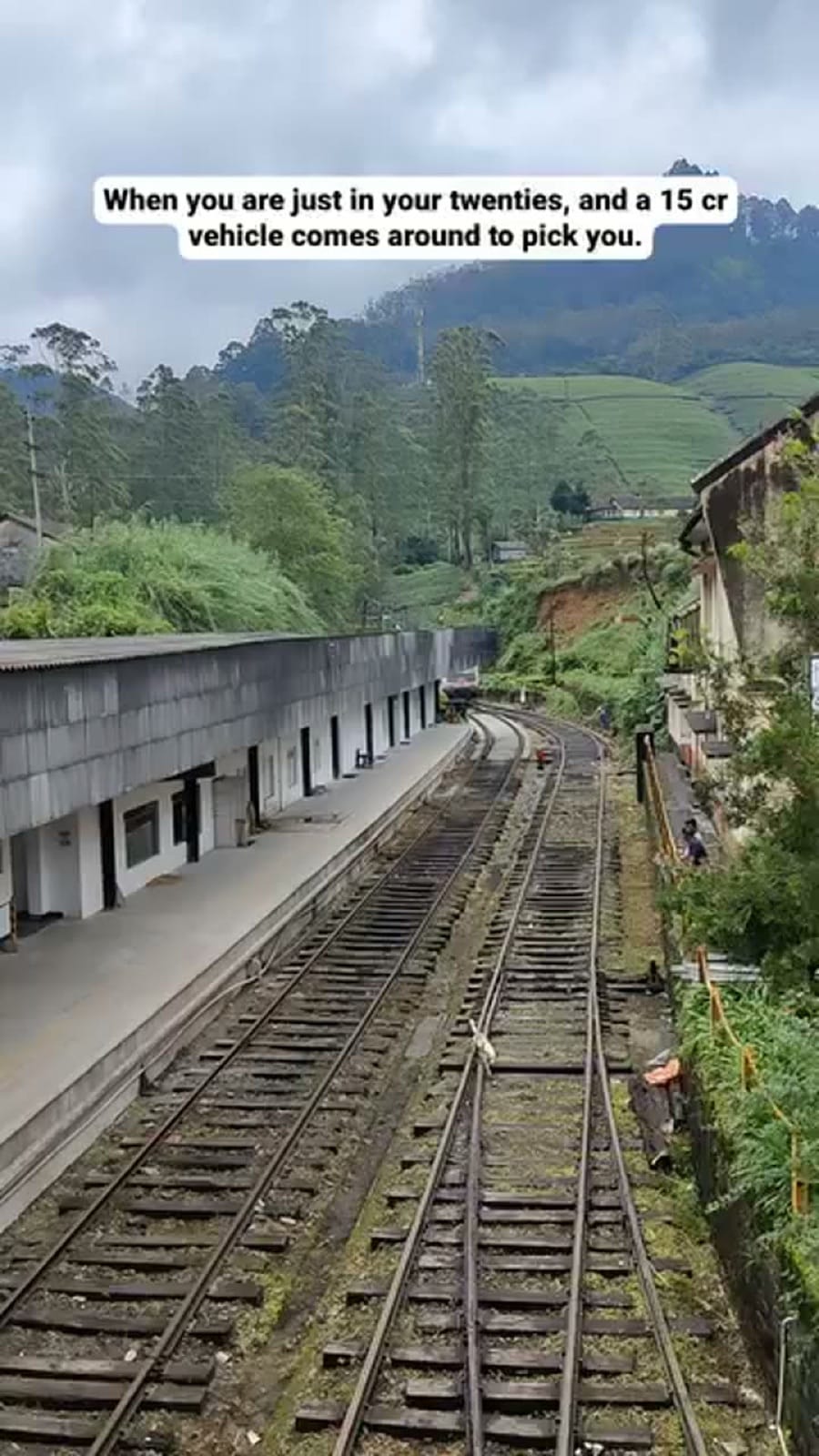
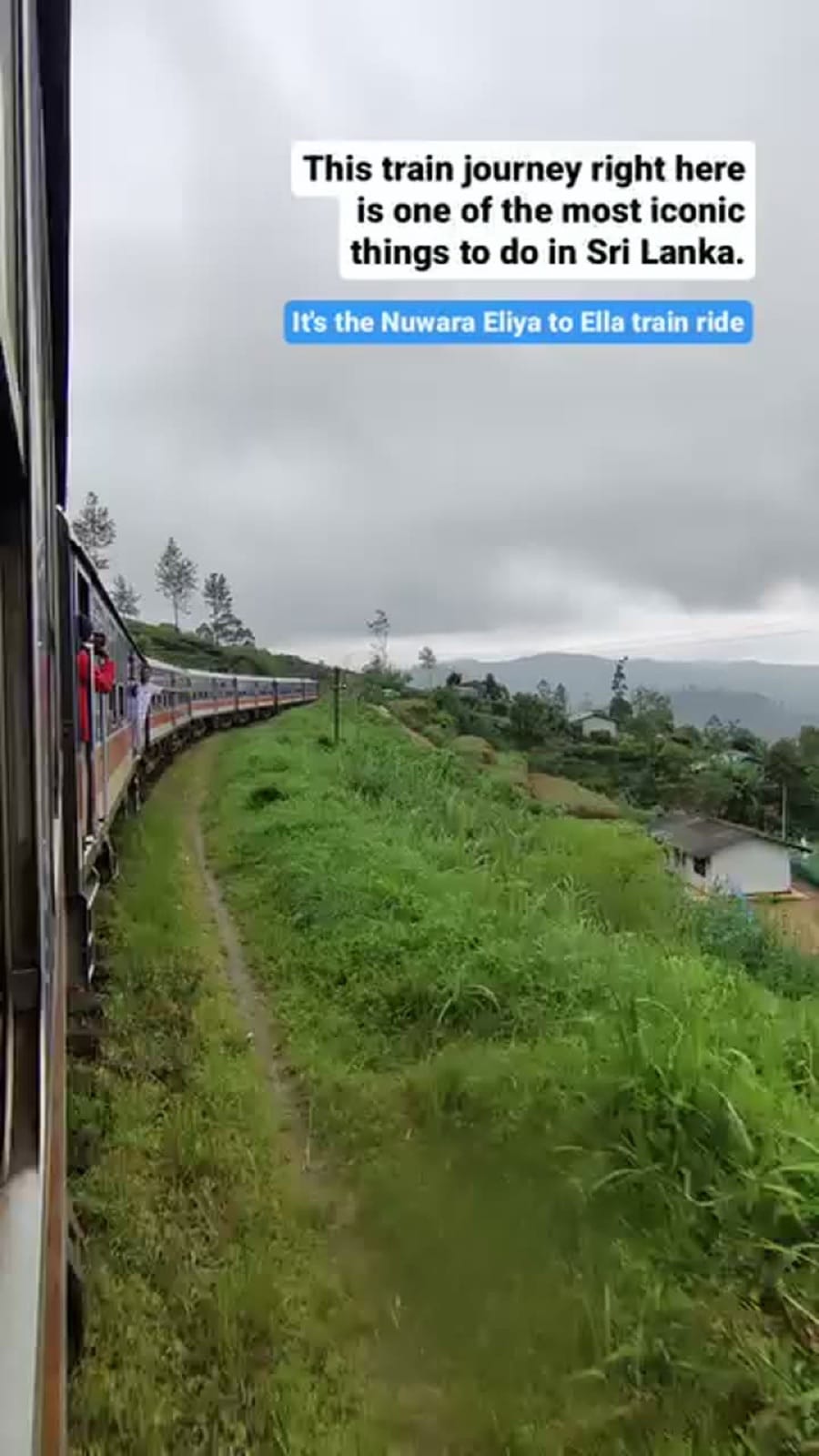
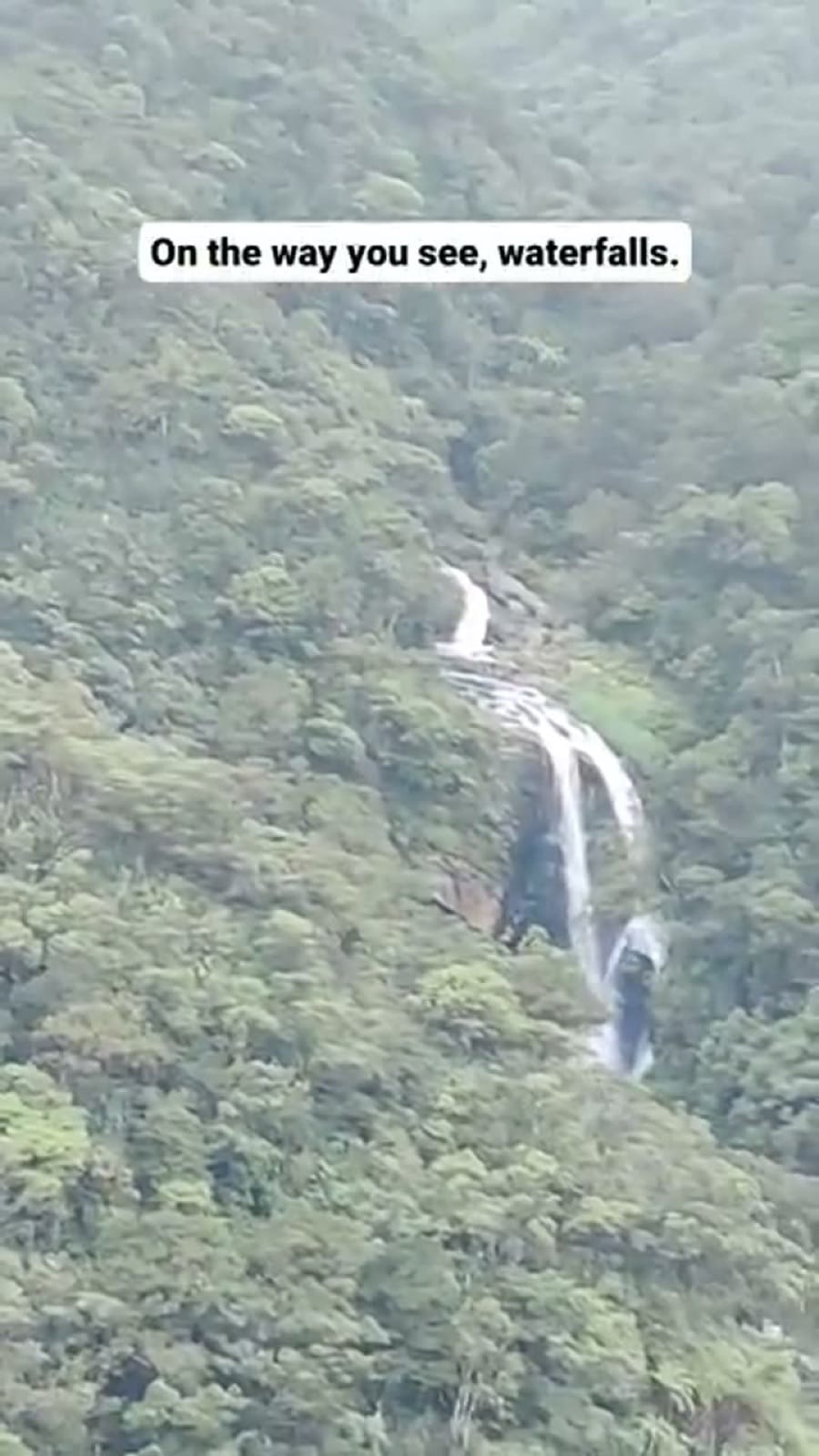
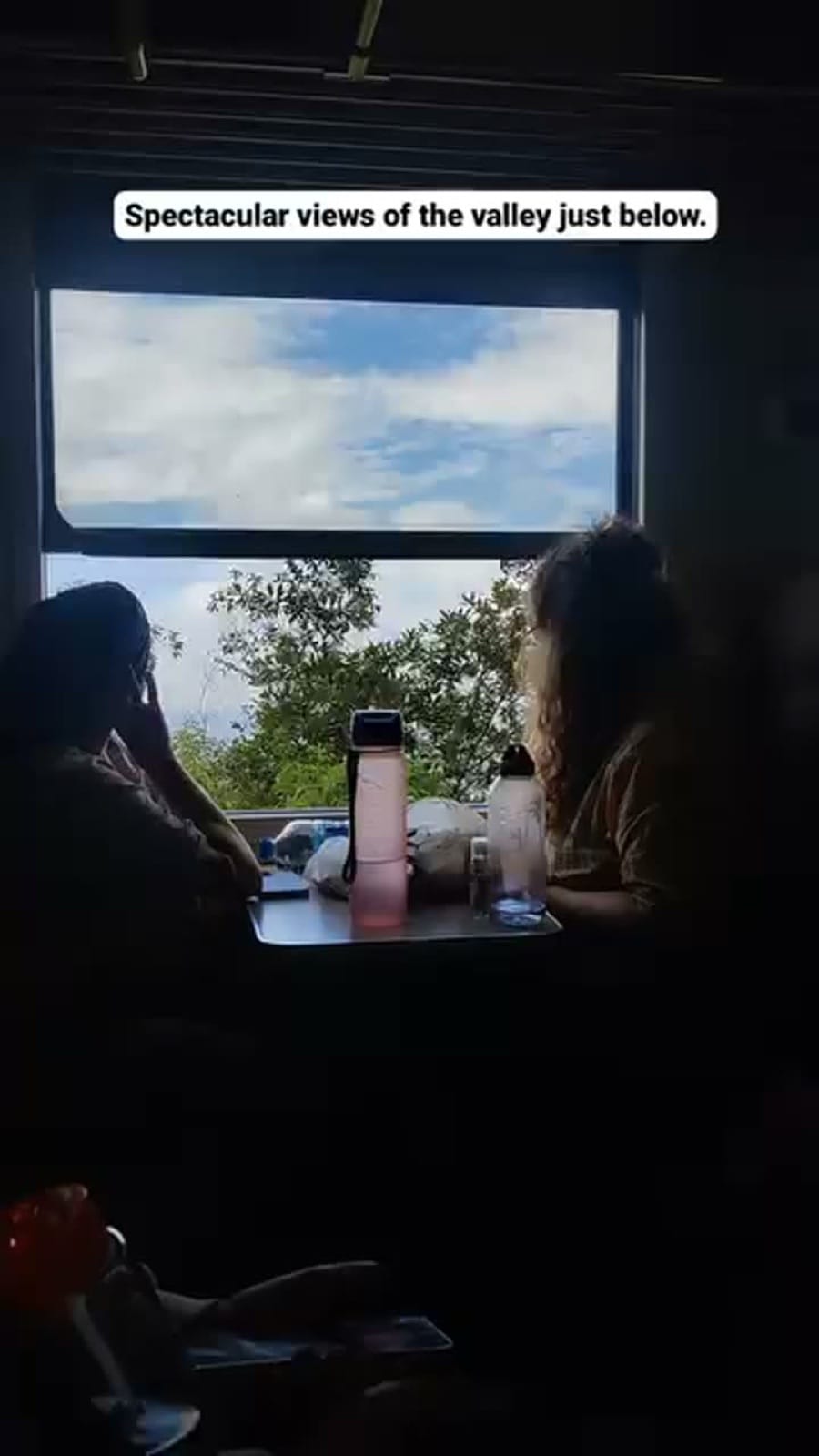
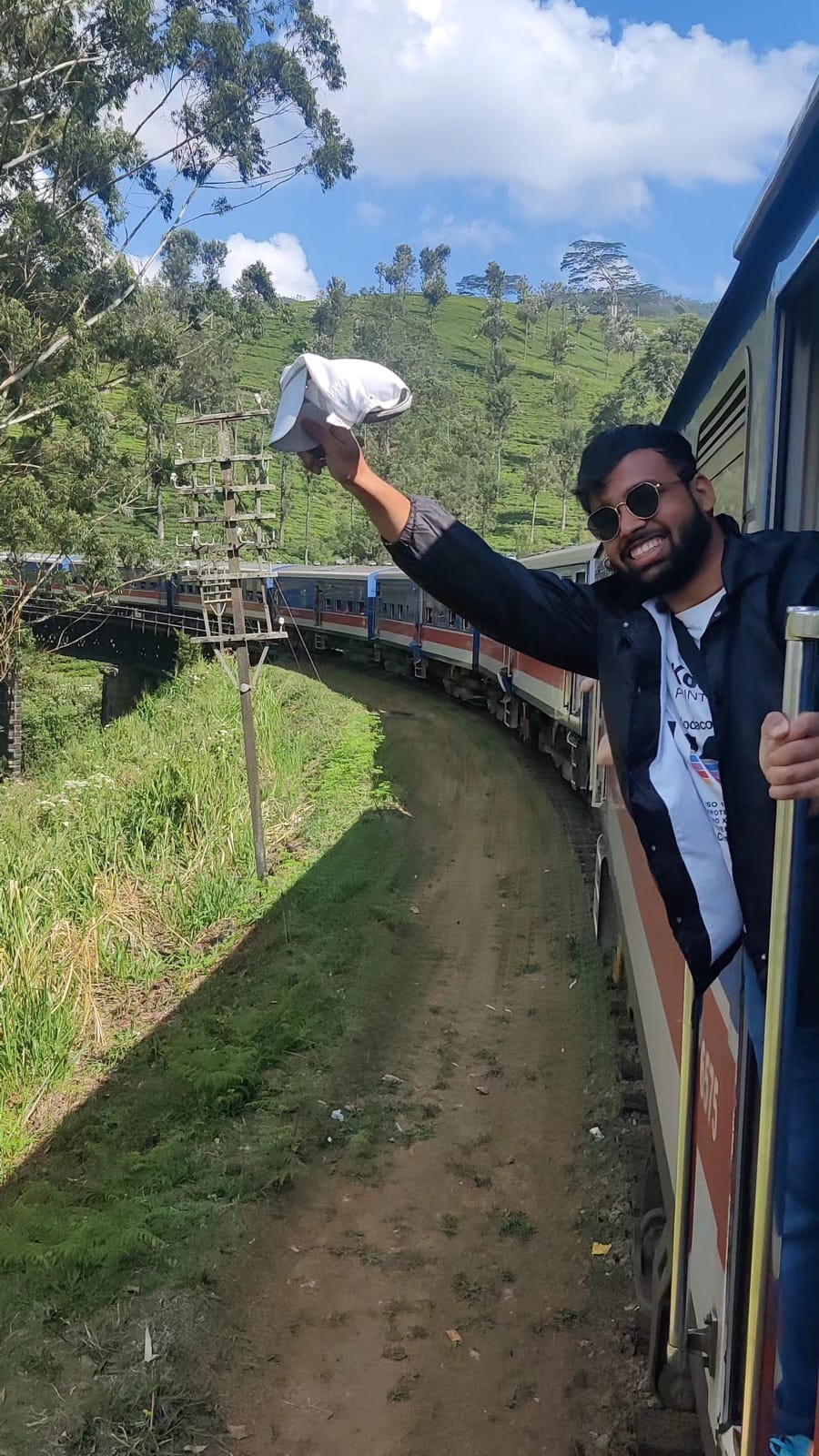
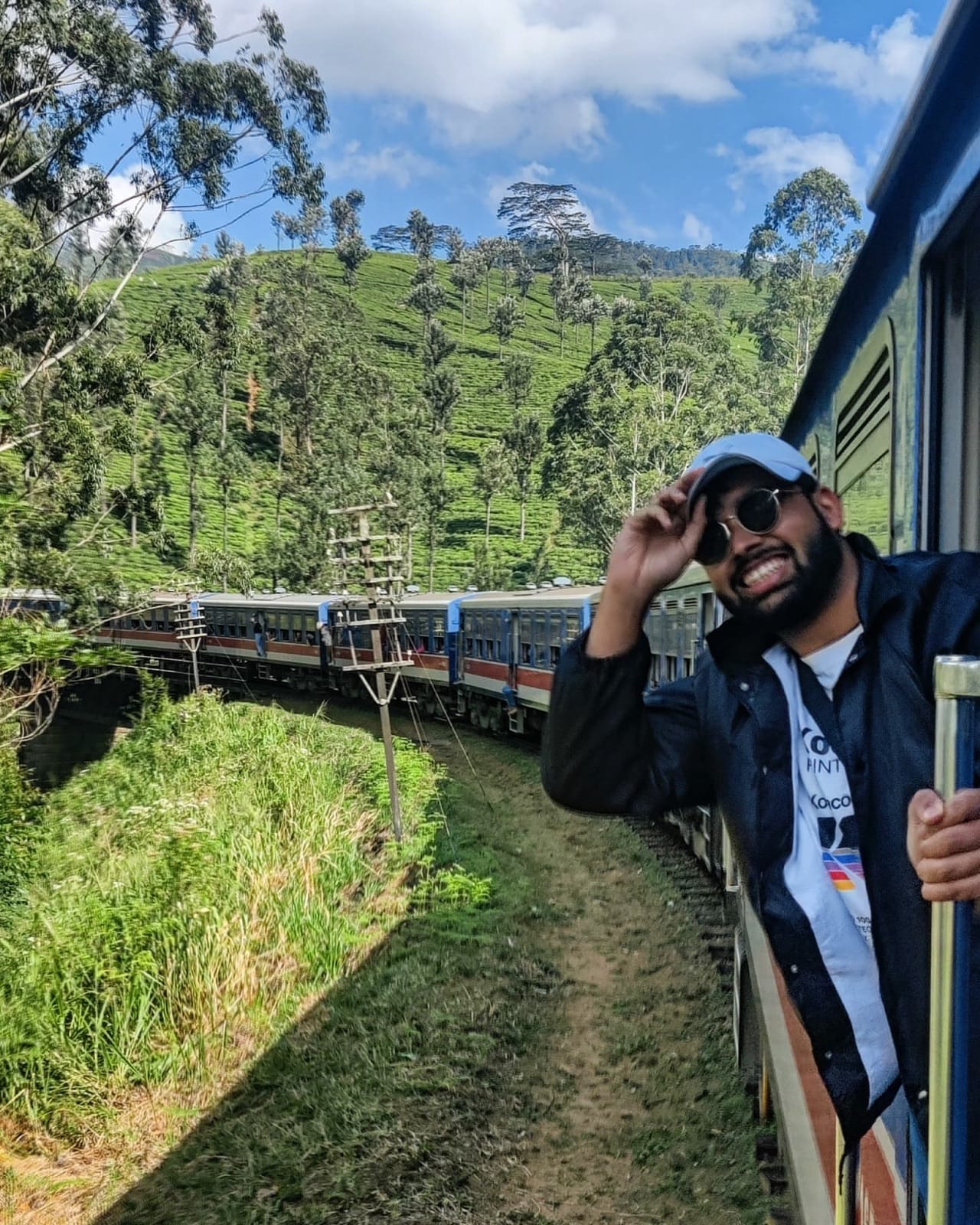
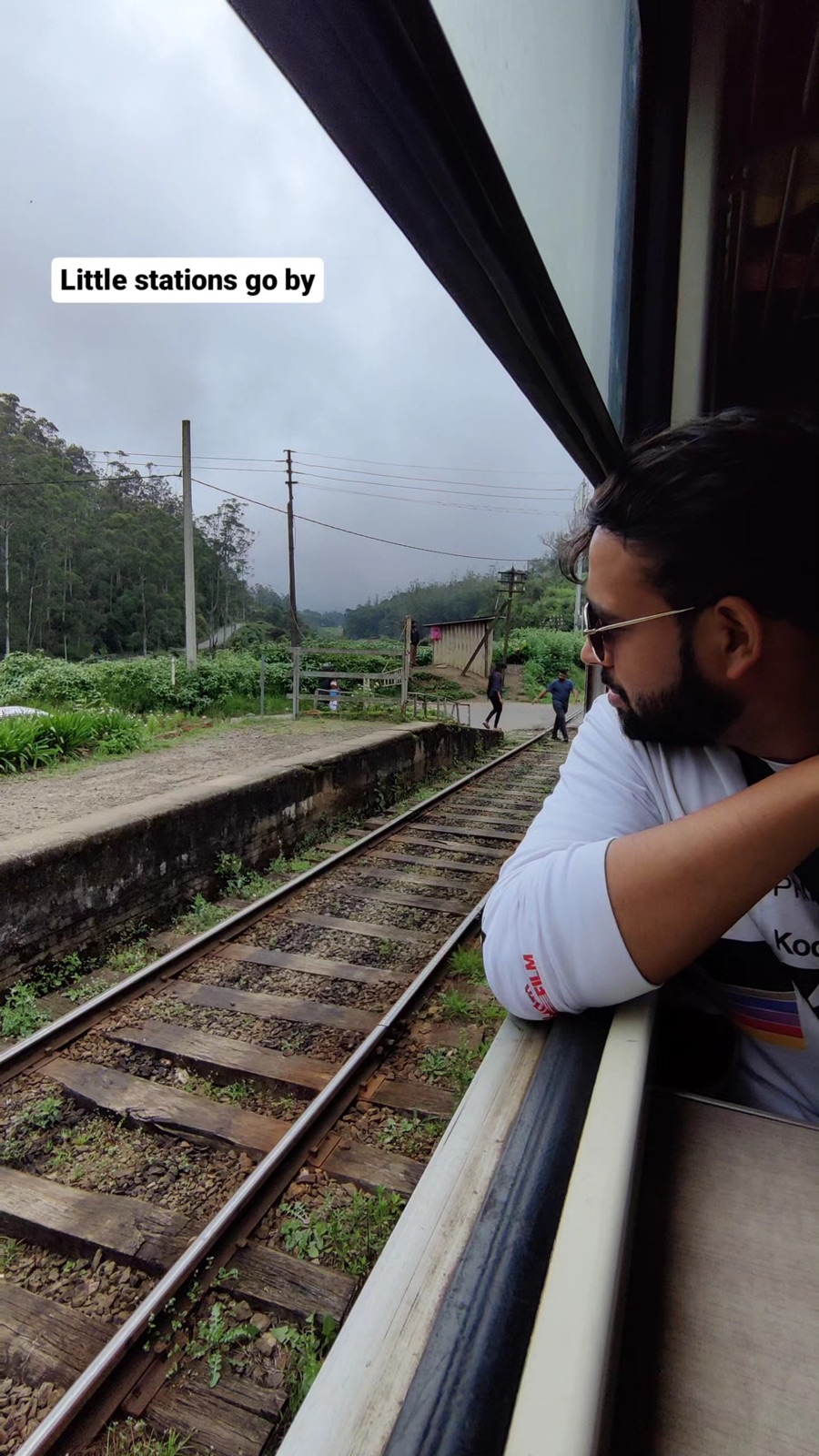
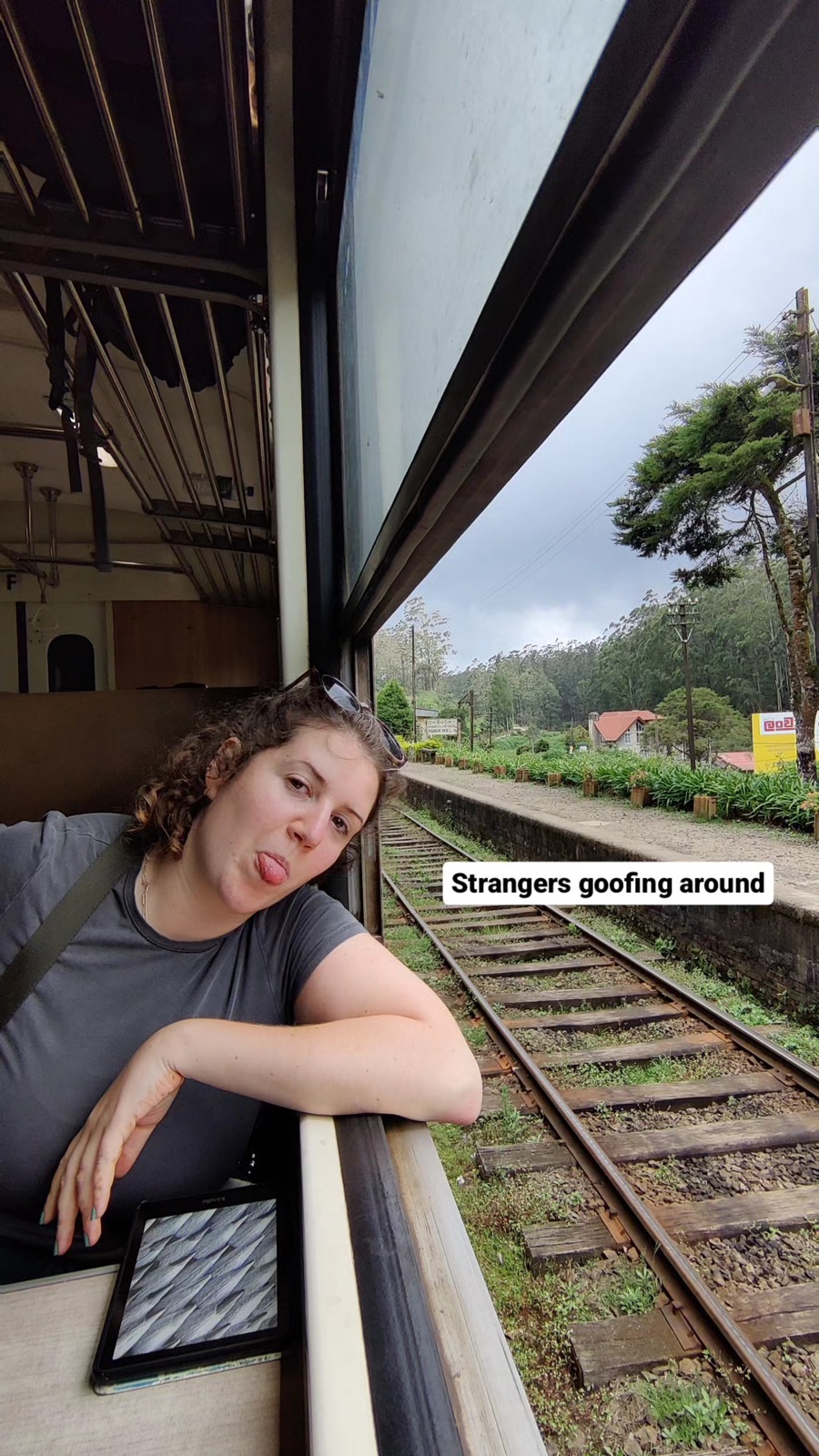
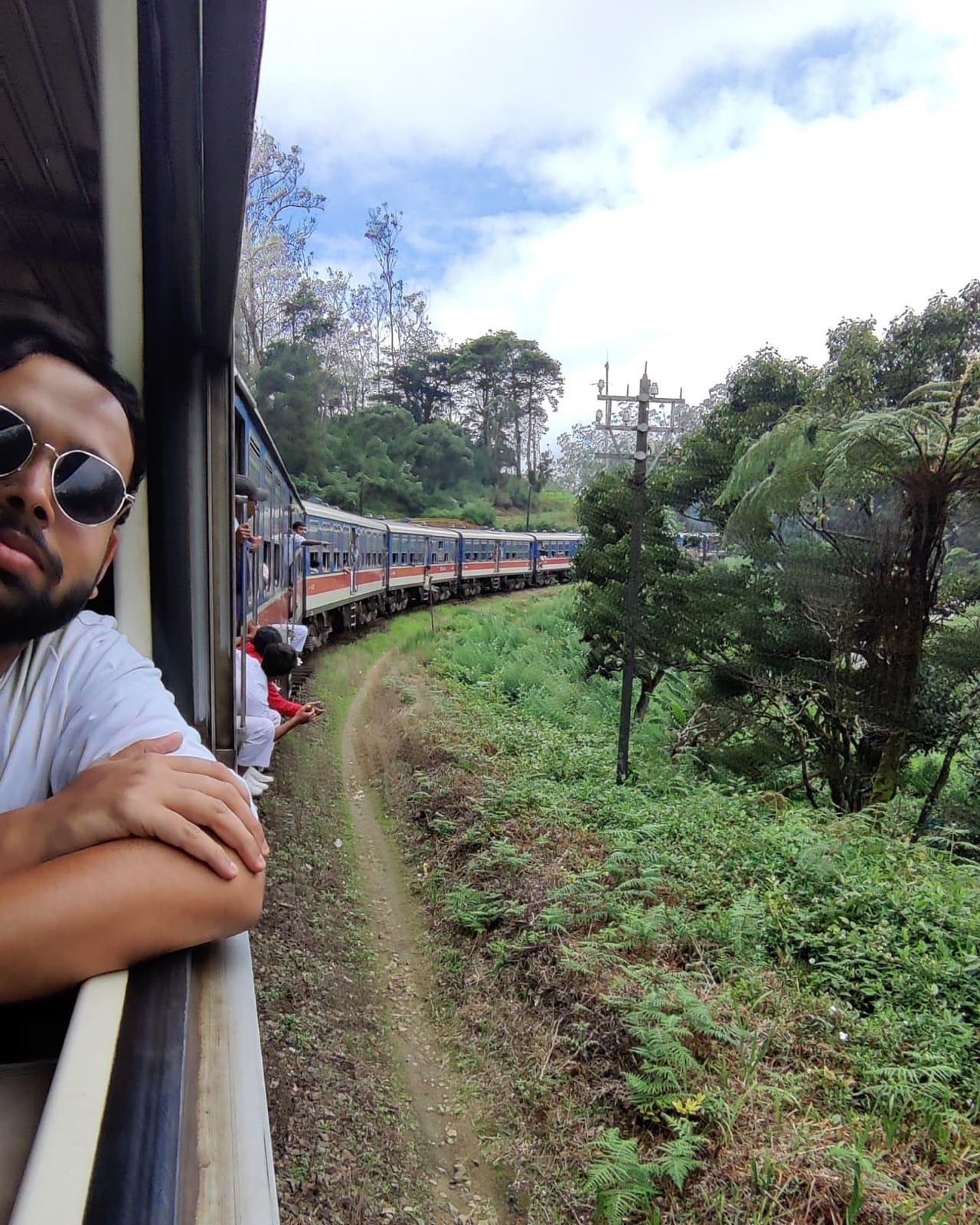
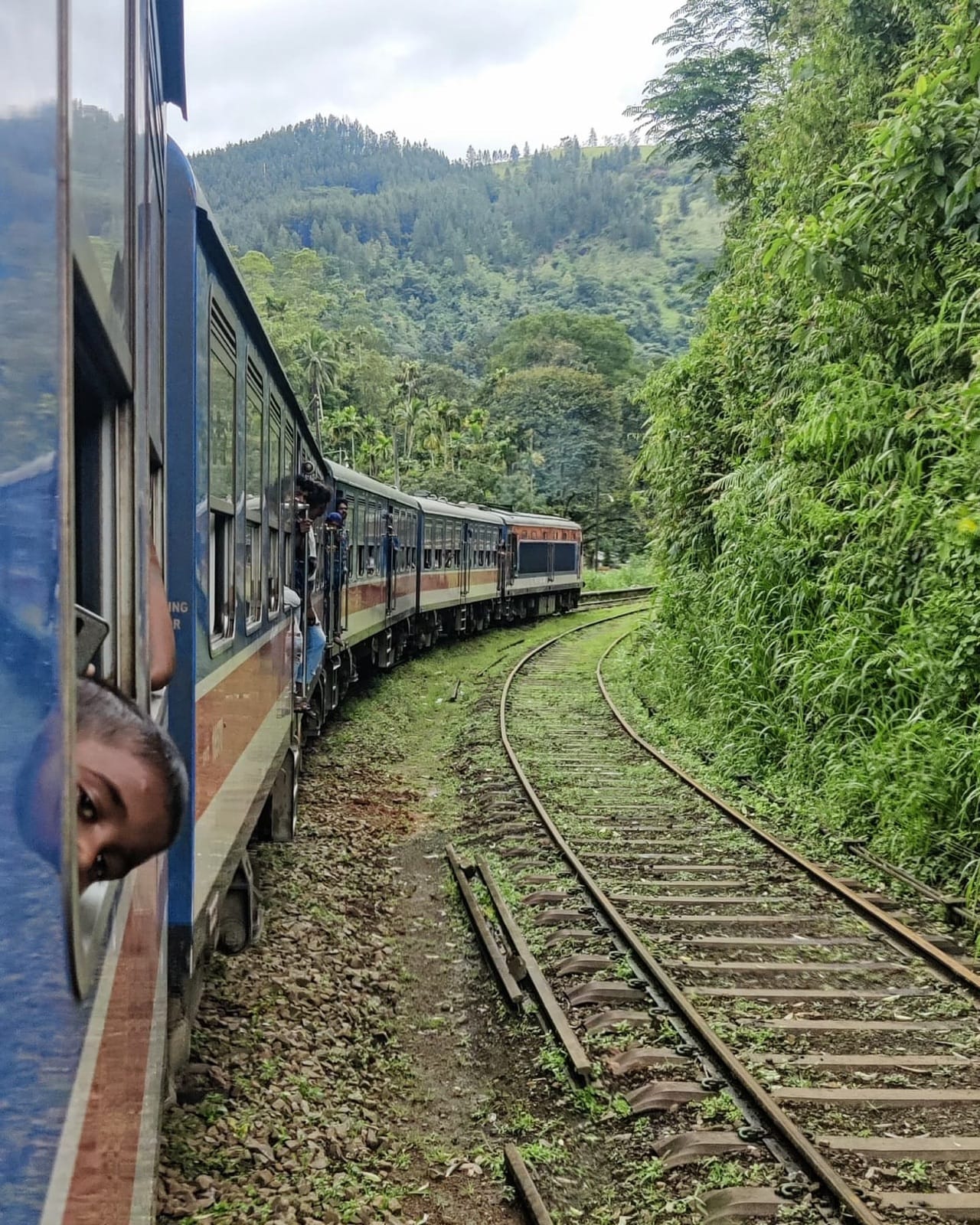
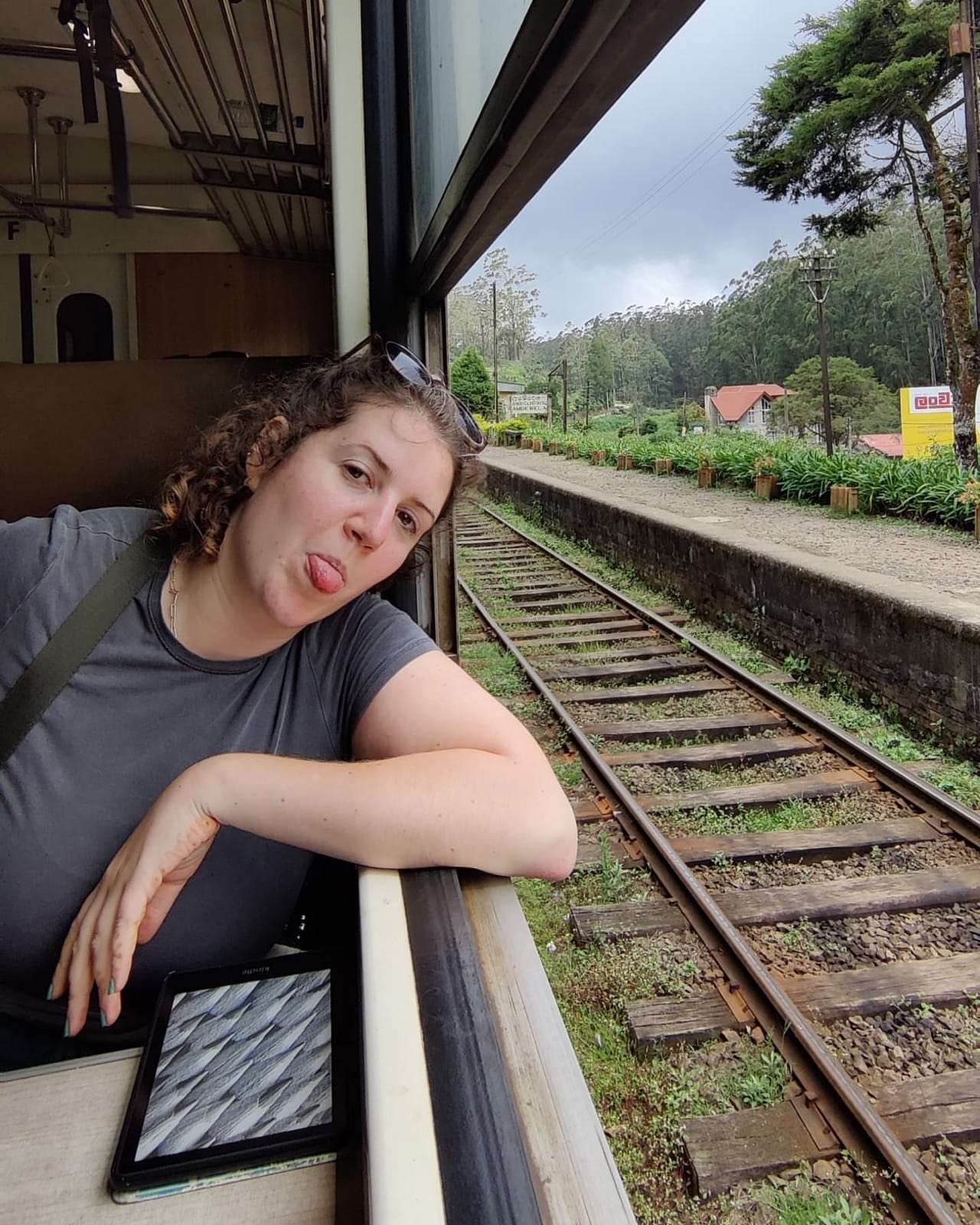
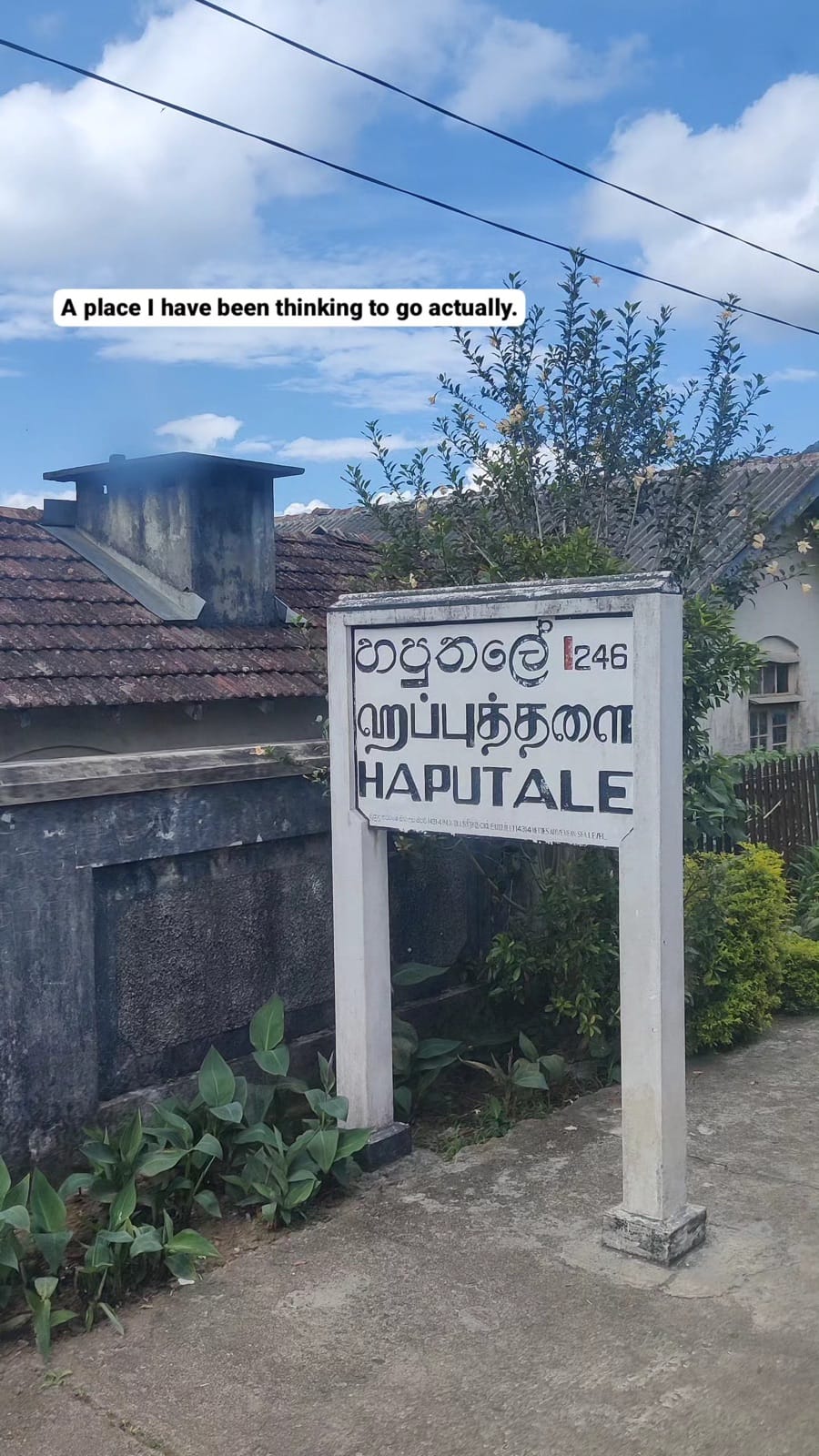
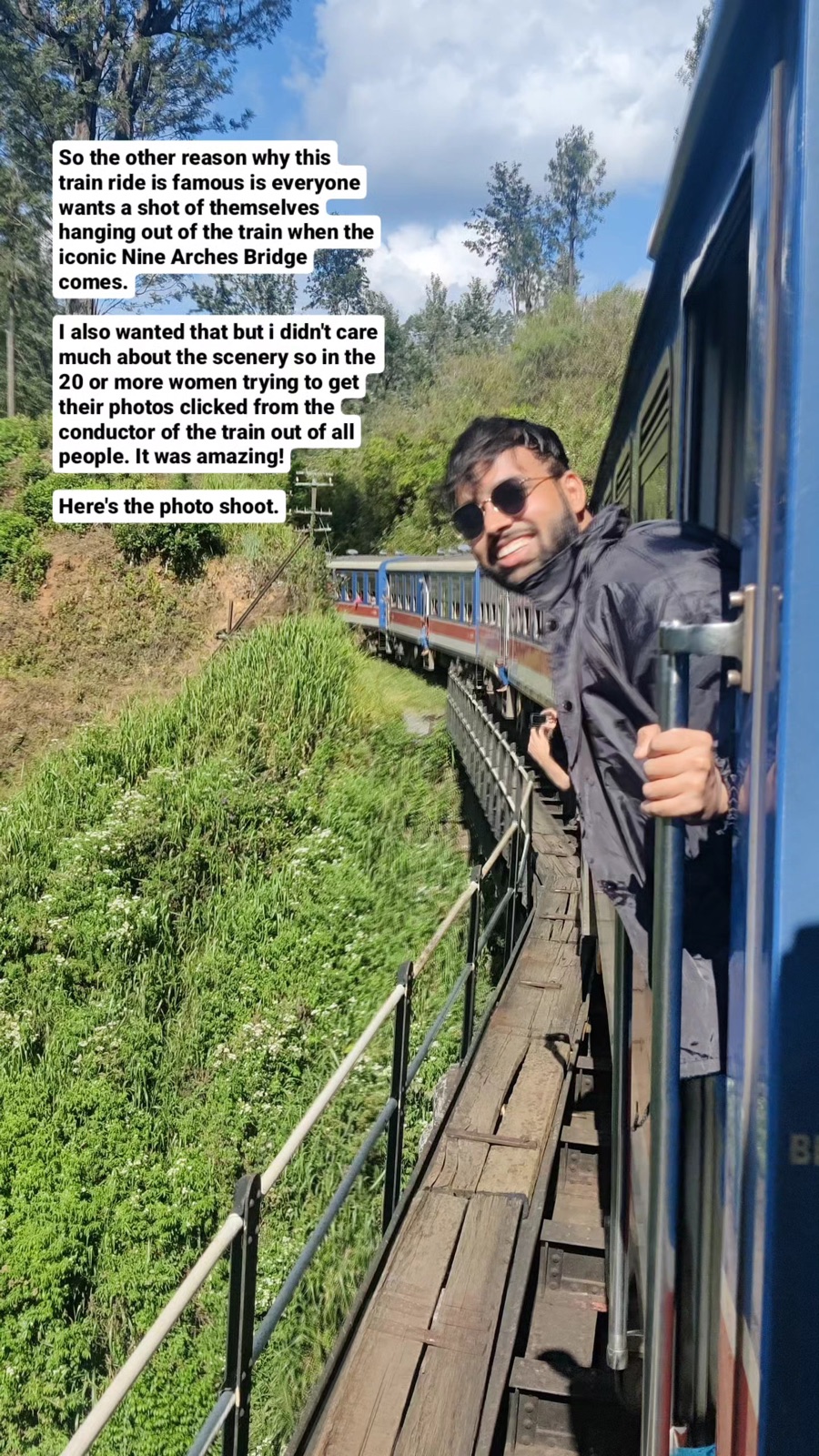
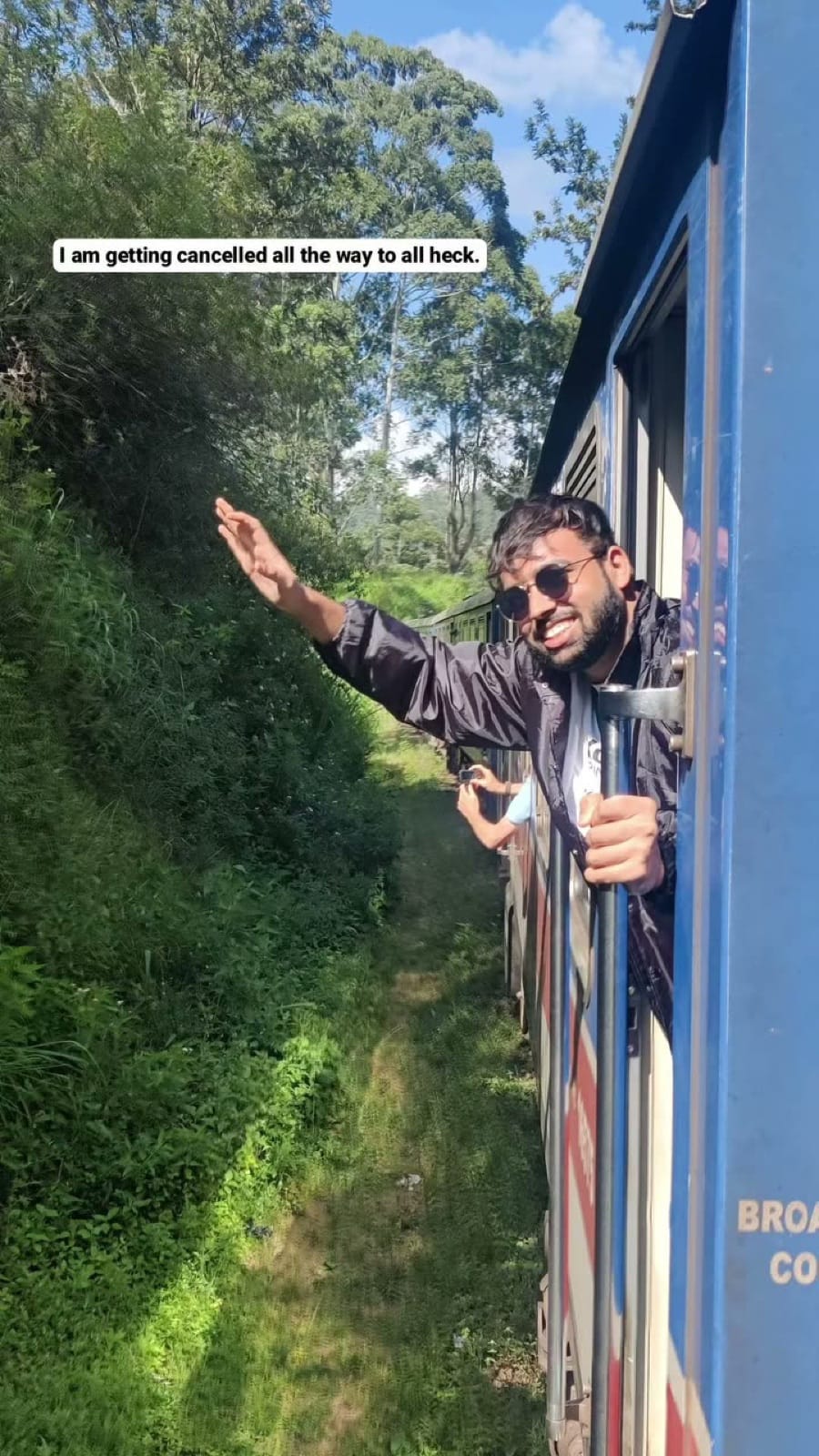
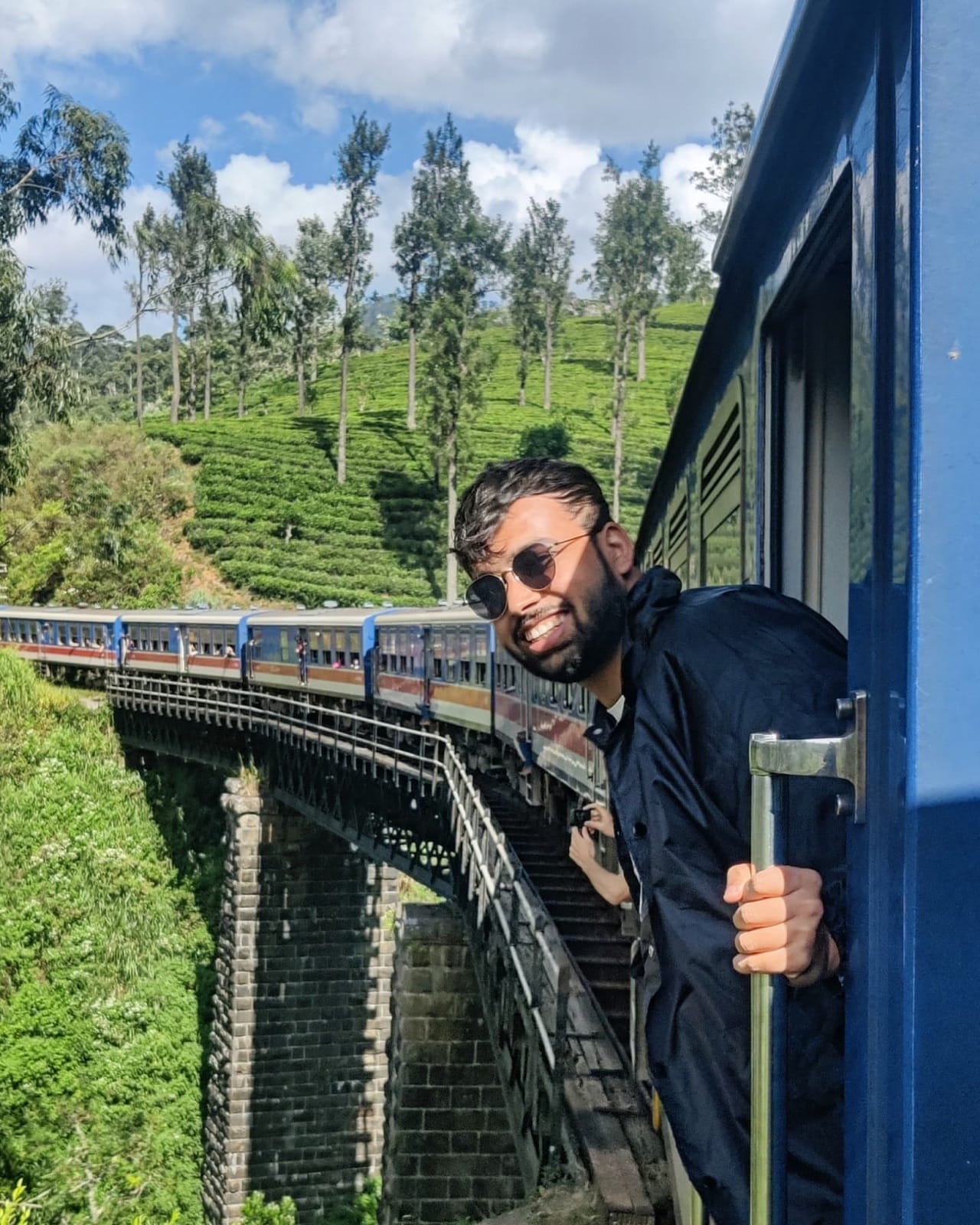

Nanu Oya to Ella: fog, samosas, a chalkboard timetable, and the open doorway.
Then fog, a samosa, and hot coffee on a tiny platform while a man updated the wooden timetable board with a stick of chalk. Bliss. The blue carriages crawl through tea estates, waterfalls, and tunnels, and the whole point is to hang out of the open door with your head in the wind.
The best part was the conductor. Everyone on this train wants that one shot of themselves hanging out of the door, and somehow the conductor, of all people, ended up running a full photoshoot for twenty-plus of us, one door at a time.
Ella: an Italian, too many steps, and pizza with strangers
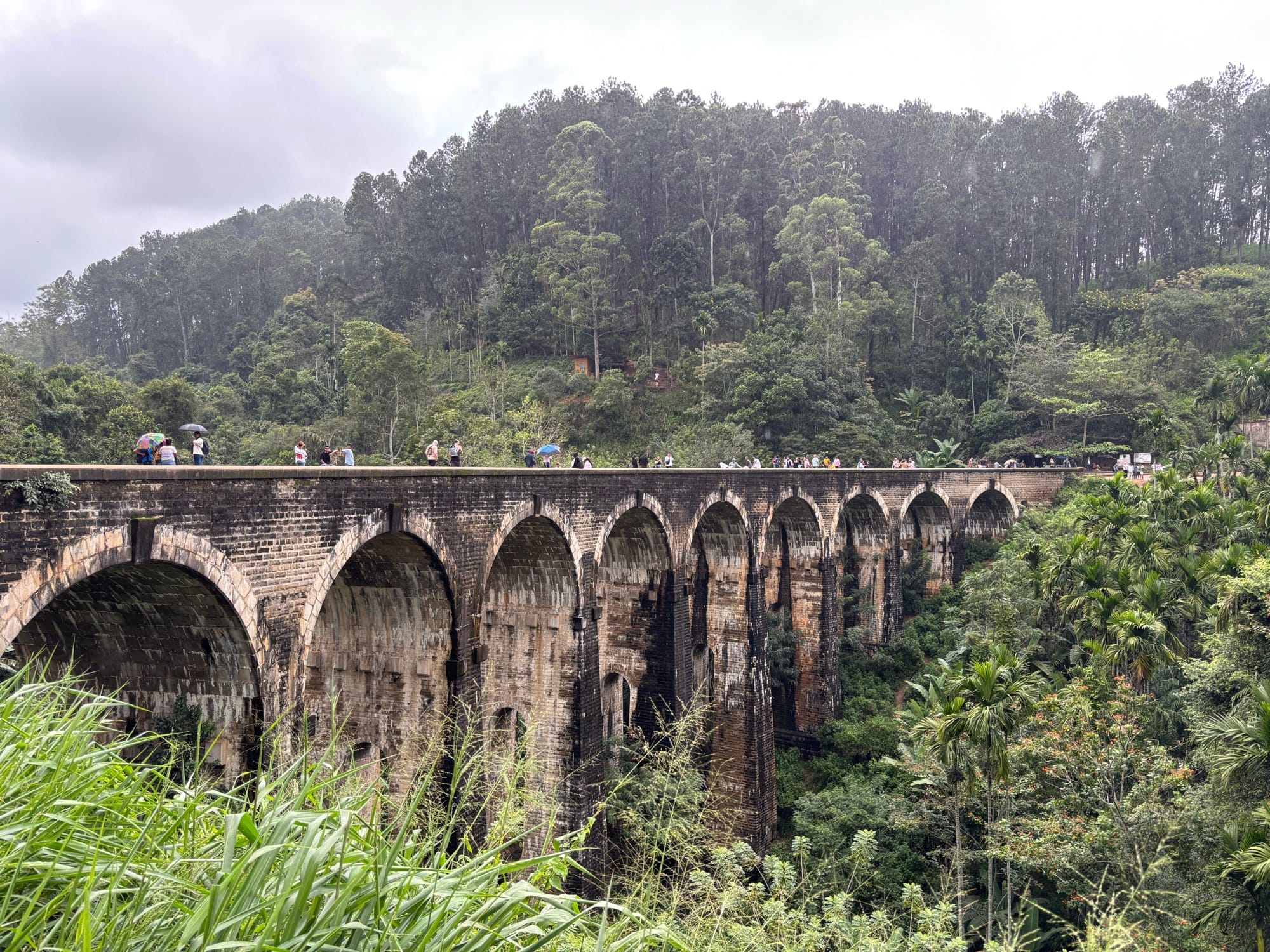
Ella, for one very good evening.
Ella is a small hill town that has become the backpacker headquarters of the country. The Nine Arch Bridge is a short walk from the cafes, Little Adam’s Peak is an easy climb for sunset, Ella Rock is the harder one, and there’s a giant Bali-style swing on every other ridgeline.
Honestly, Ella was just okay. It’s a hill station between the mountains, and I’ve seen plenty of those back home in India. So I gave it a day and headed out, because I wanted more beaches. But it did give me one very good evening. I’d barely dropped my bags at Rock View and splashed some water on my face when an Italian I’d just met recruited me for a sunset climb up Little Adam’s Peak. Way too many steps, cutting it very close, a drone face-off at the top, and a valley full of little lights as the sun went.

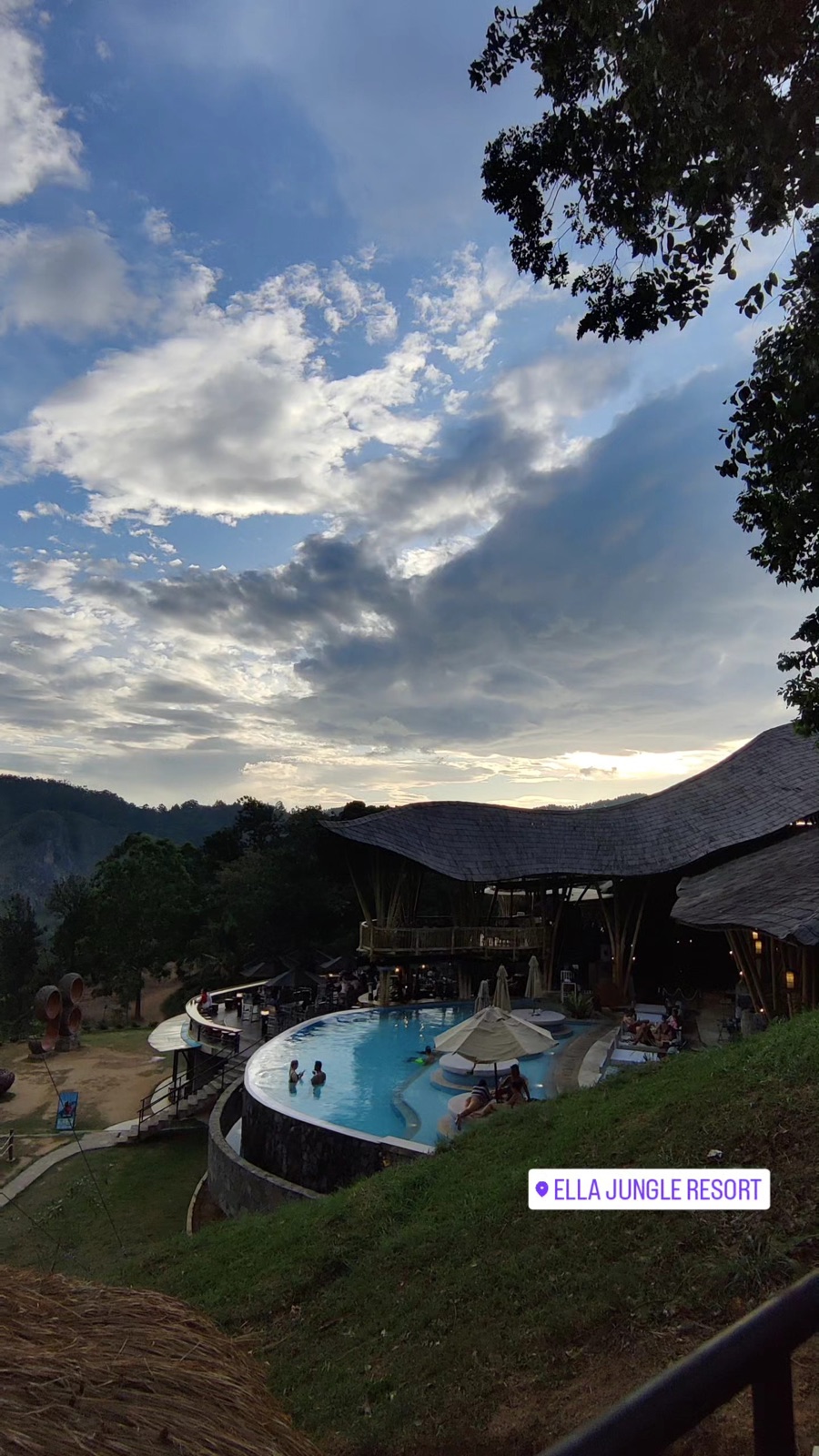
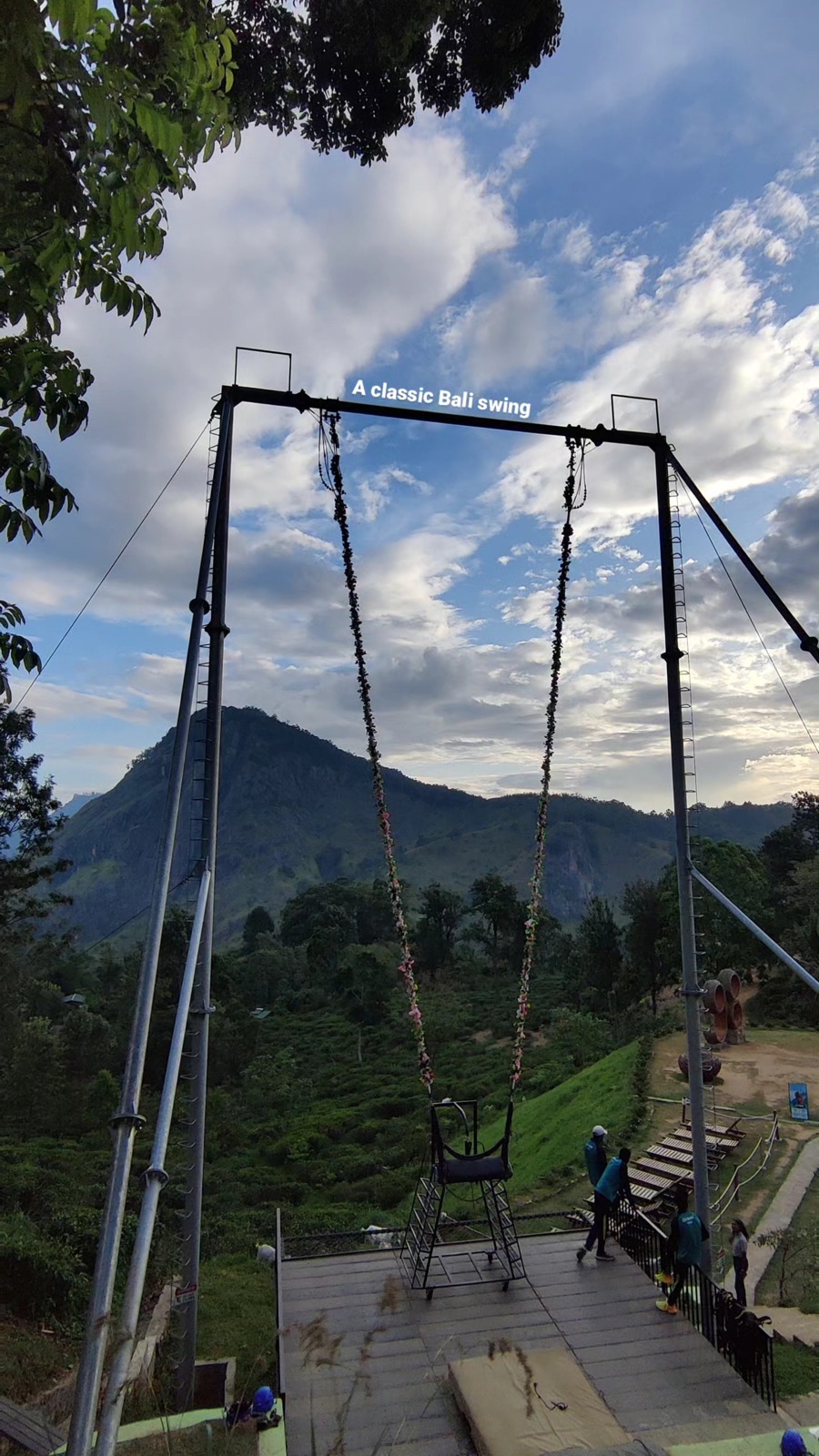

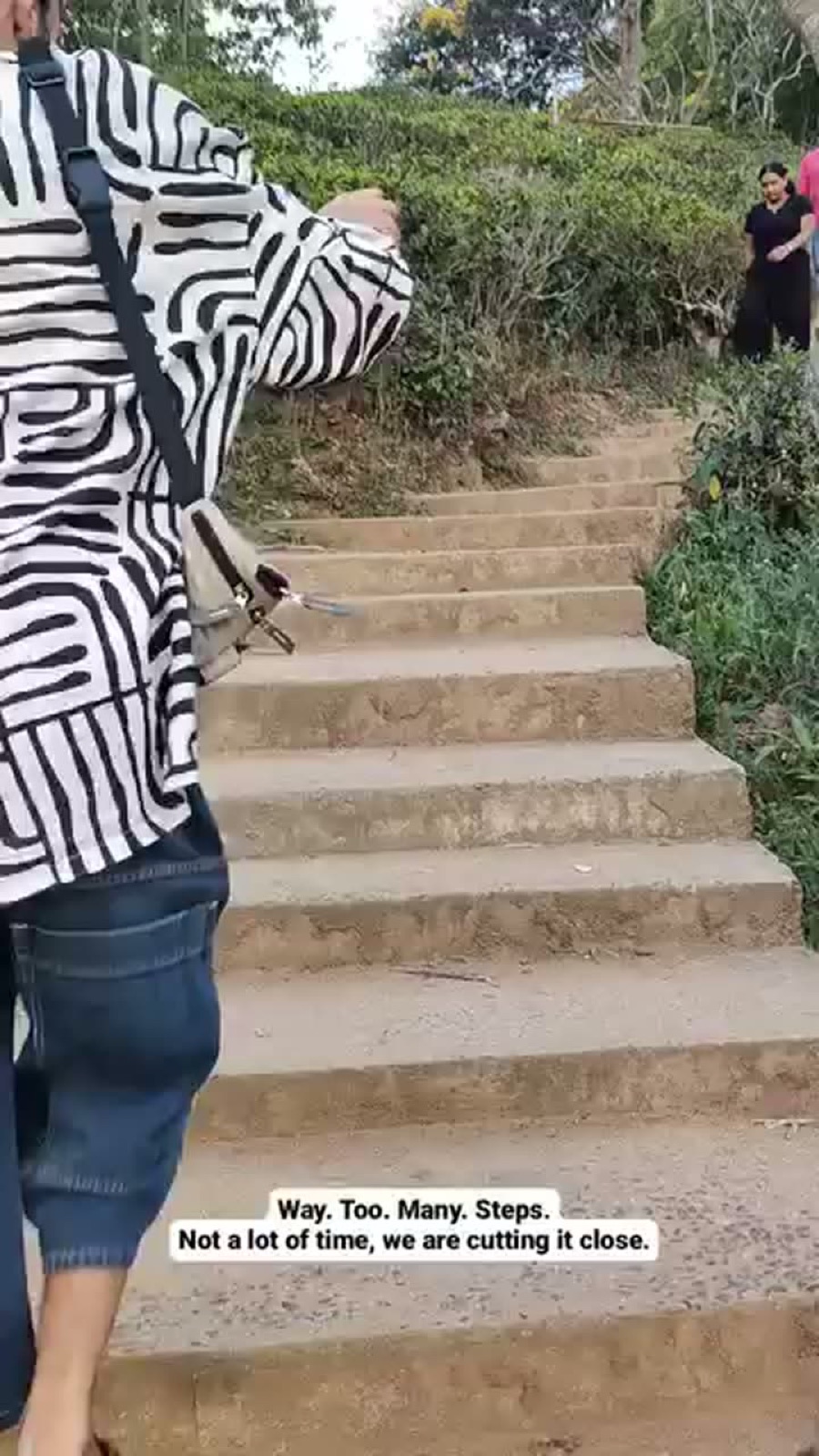

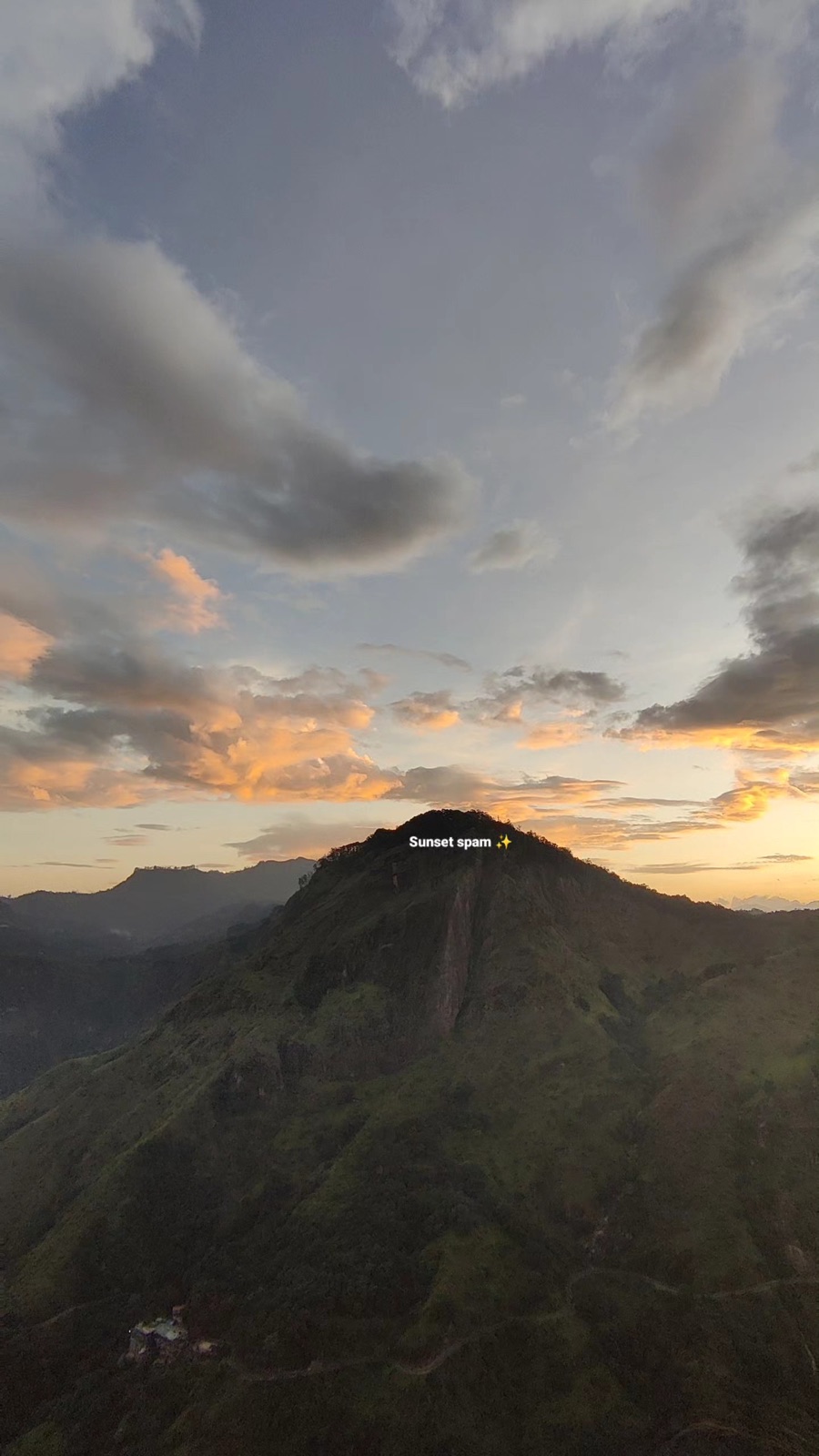
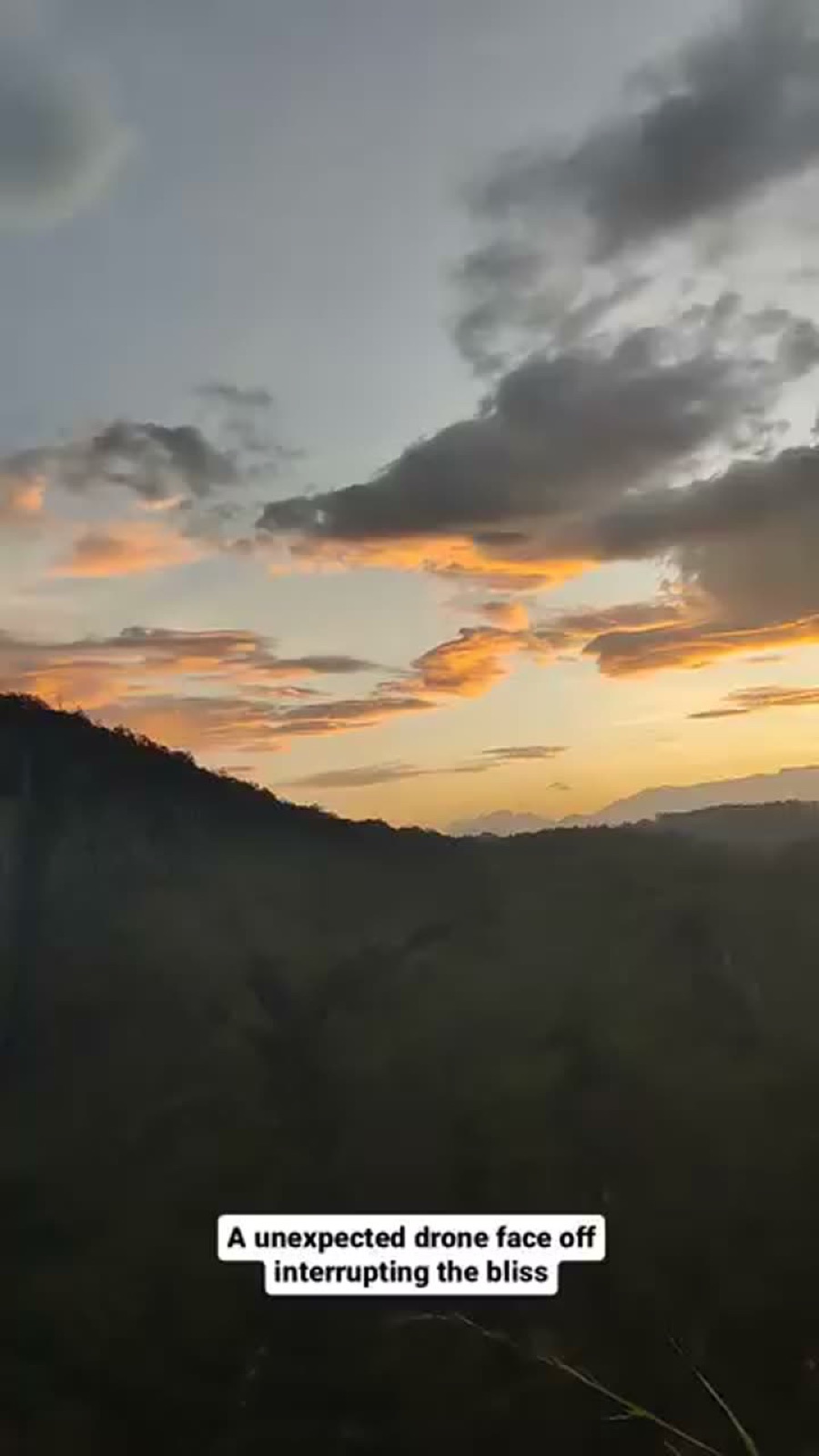
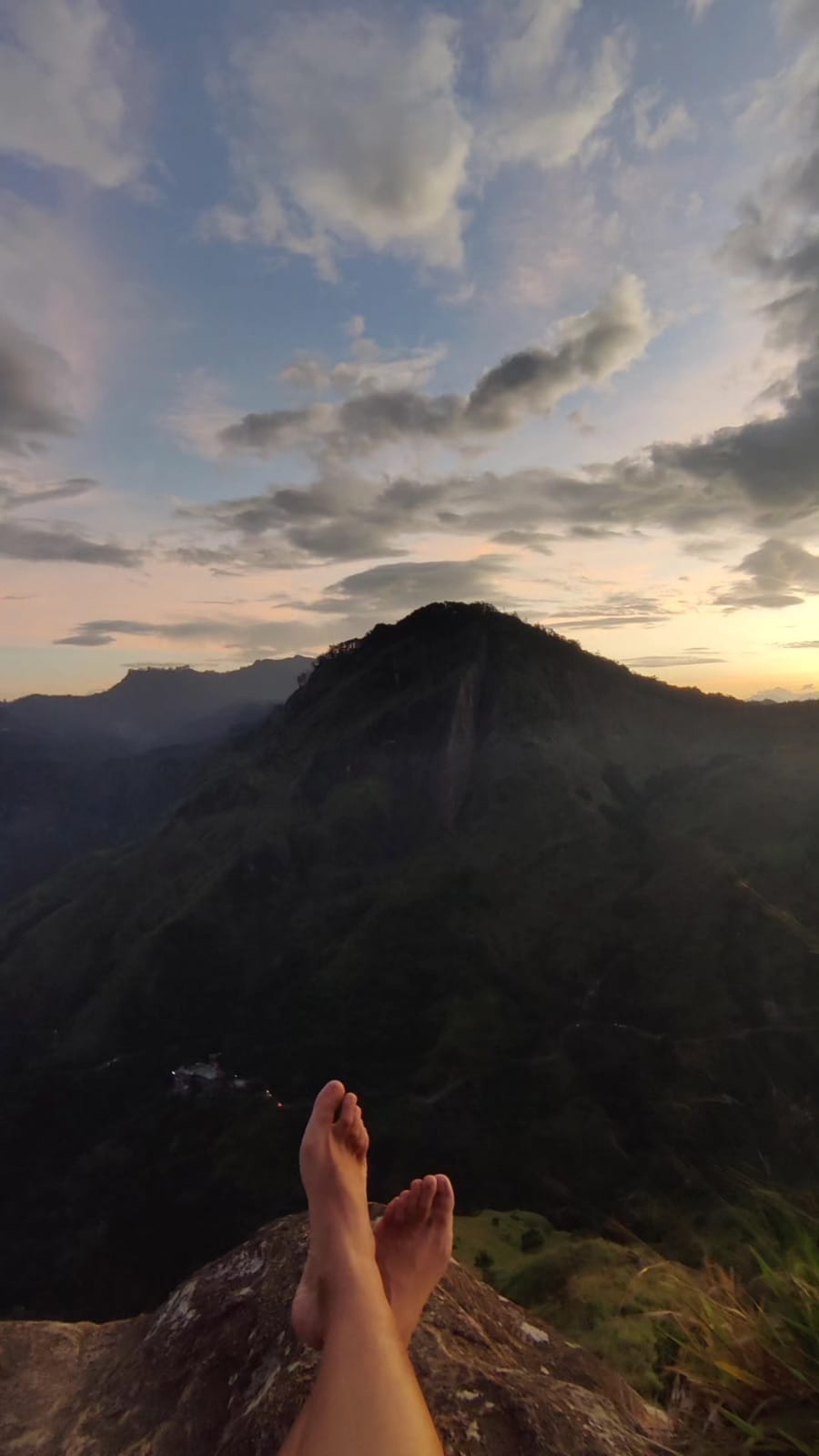
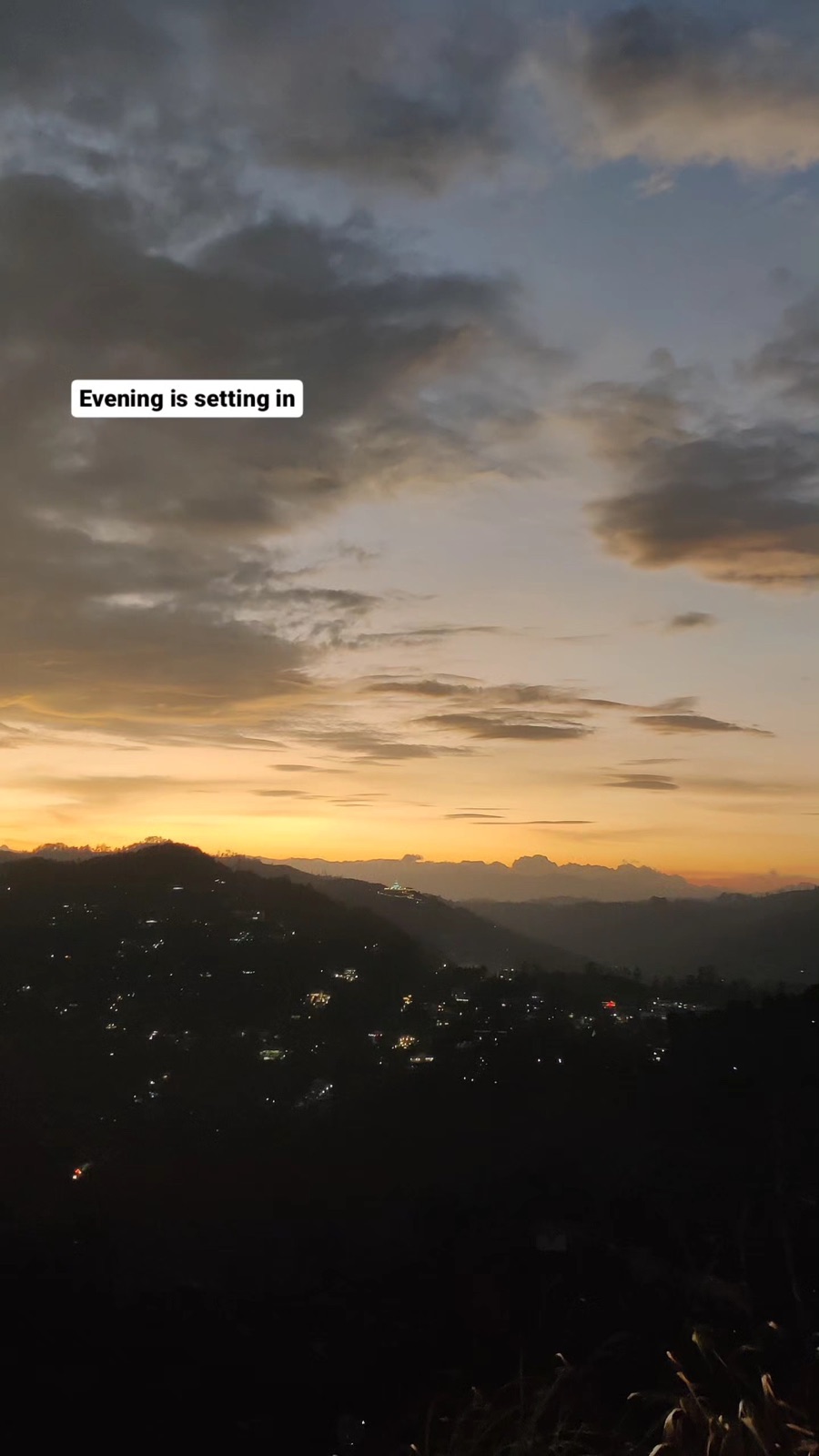
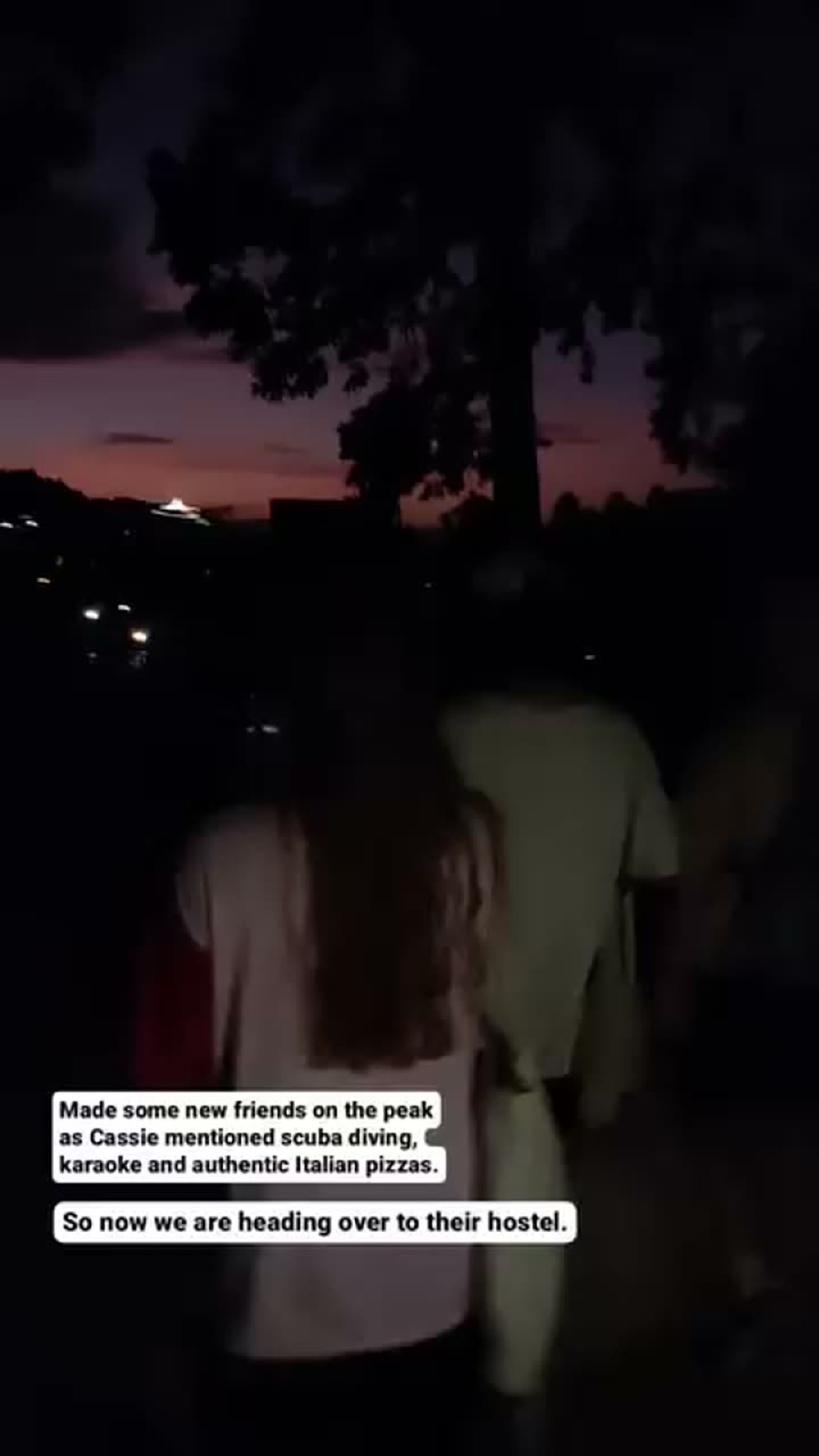
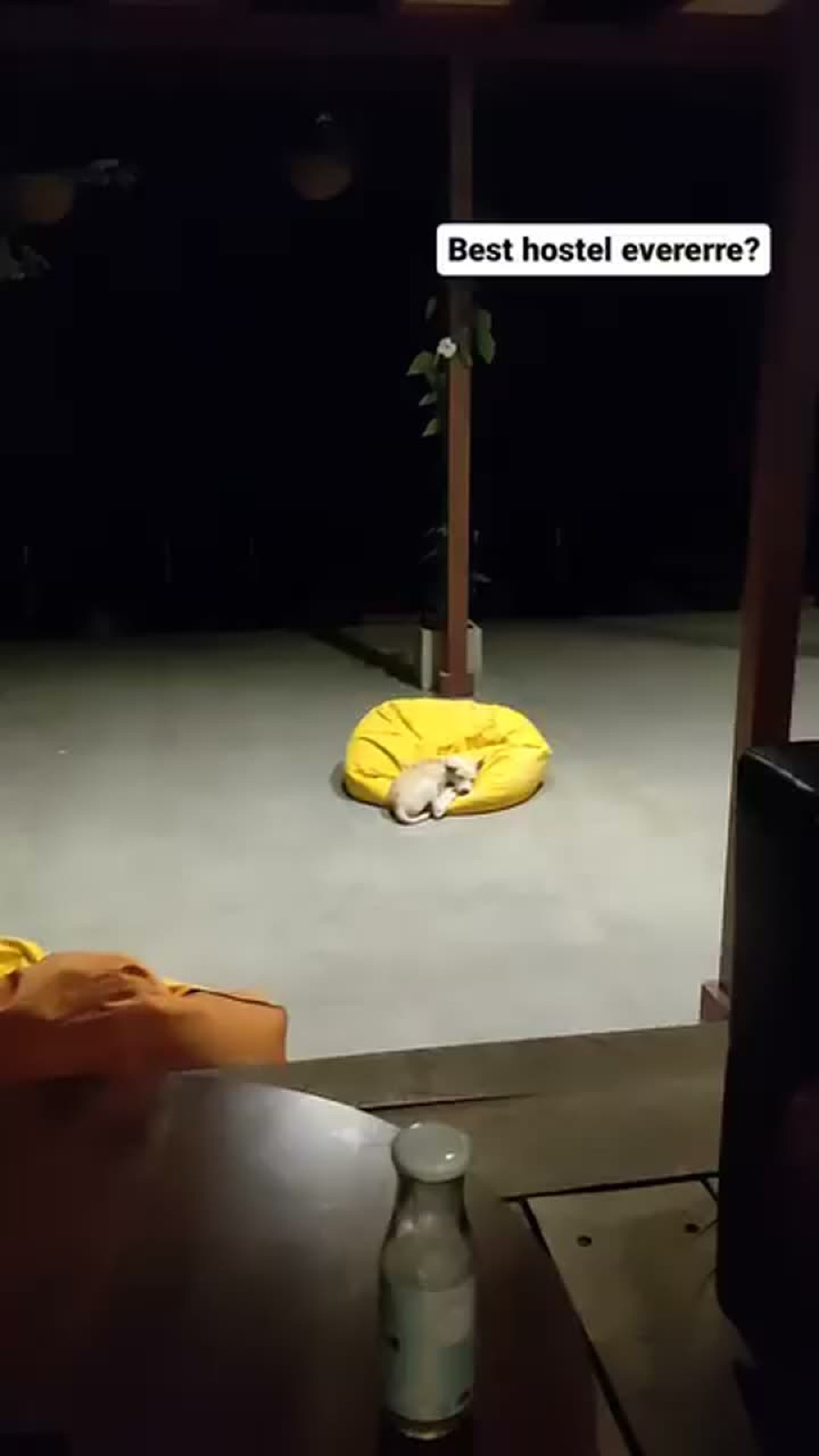


Ella in one evening: an Italian, too many steps, a drone face-off, pizza with strangers, a dog, and then a party.
On the way down we got talking to Cassie, who mentioned scuba diving, karaoke and authentic Italian pizza. That was enough for me, so we followed them back to their hostel, one of the top-rated in Ella, with a restaurant downstairs that makes seriously good pizza. We ordered a round (2,900 LKR, worth it), cracked open cold beers, and got adopted by a cute little white dog who found us there and then claimed a yellow beanbag for the rest of the evening. From pizza we went straight on to a party, and the night slipped away exactly like that.
Hiriketiya: where I stopped travelling
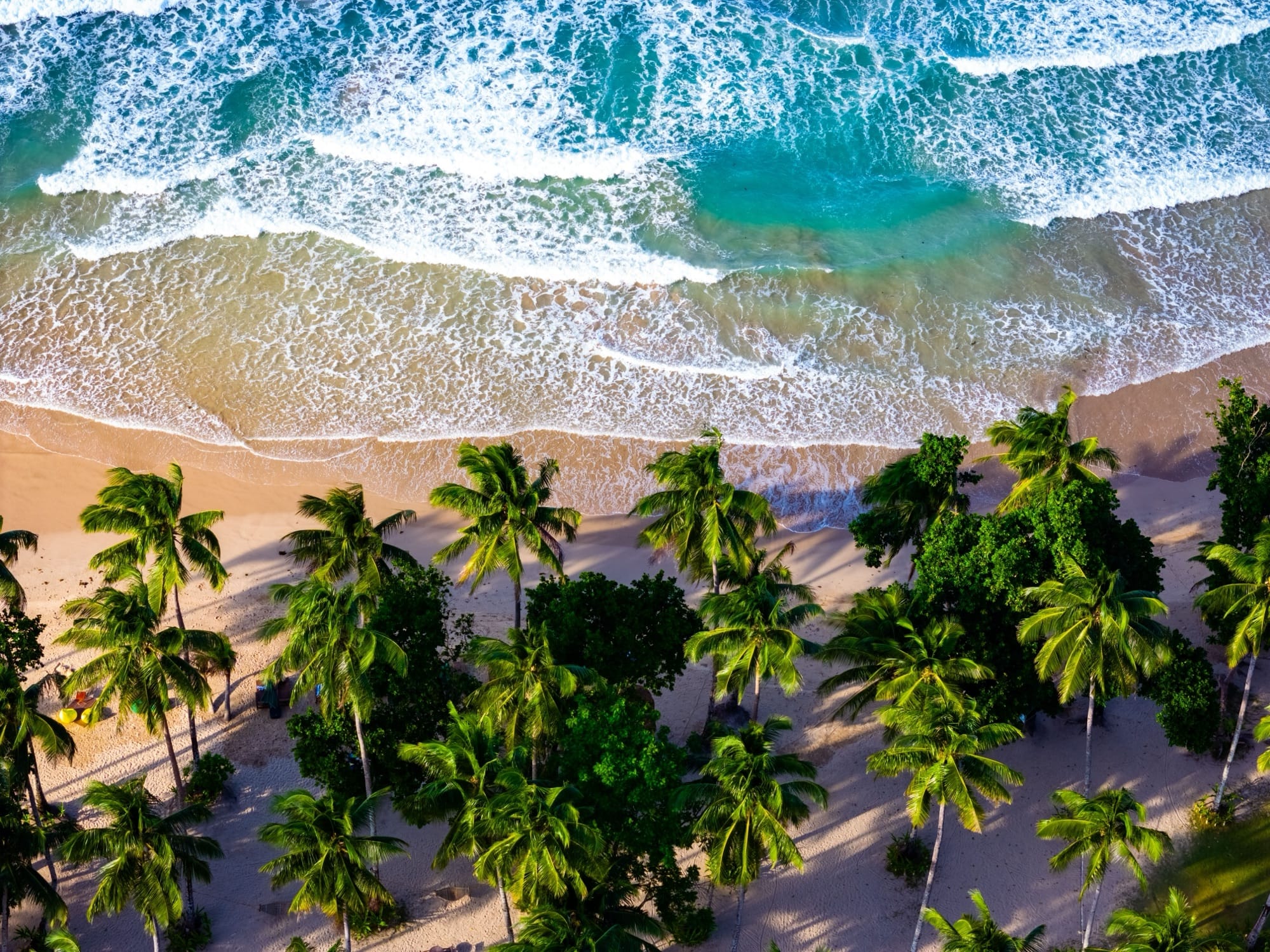
The bay that ate my itinerary.
Hiriketiya is a small horseshoe of a bay on the south coast near Dickwella. There’s one lane of cafes and surf shops, a gentle beginner wave on one side and a punchier one for the show-offs on the other, and jungle running right down to the sand. It became my favourite place in Sri Lanka, and I turned up knowing almost nothing about it. Plenty of people had told me to go to Hiriketiya. Nobody told me why.
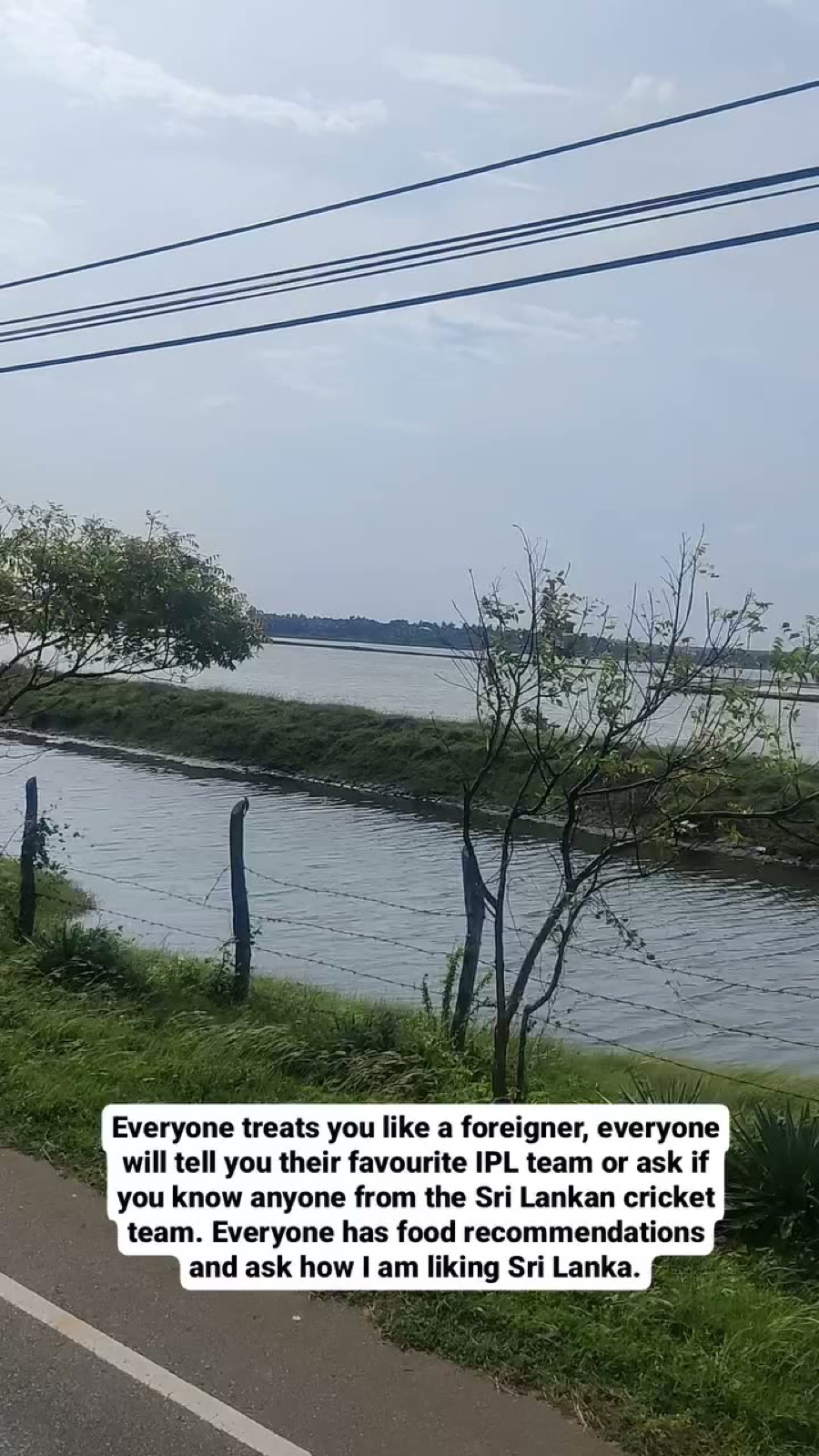
I left Ella lazily, missed the first bus, and caught another one that dropped me halfway. A second bus did the rest (150 LKR and 520 LKR, with a cold Mirinda in between). That’s normal here. Buses don’t really run to a schedule, so you take whatever’s in front of you that closes the distance, and finish with a tuk-tuk or whatever turns up. Everyone on the way down treated me like a foreigner, in the nicest way. They told me their favourite IPL team, asked if I knew anyone on the Sri Lankan cricket team, had a food recommendation, and wanted to know how I was liking Sri Lanka.
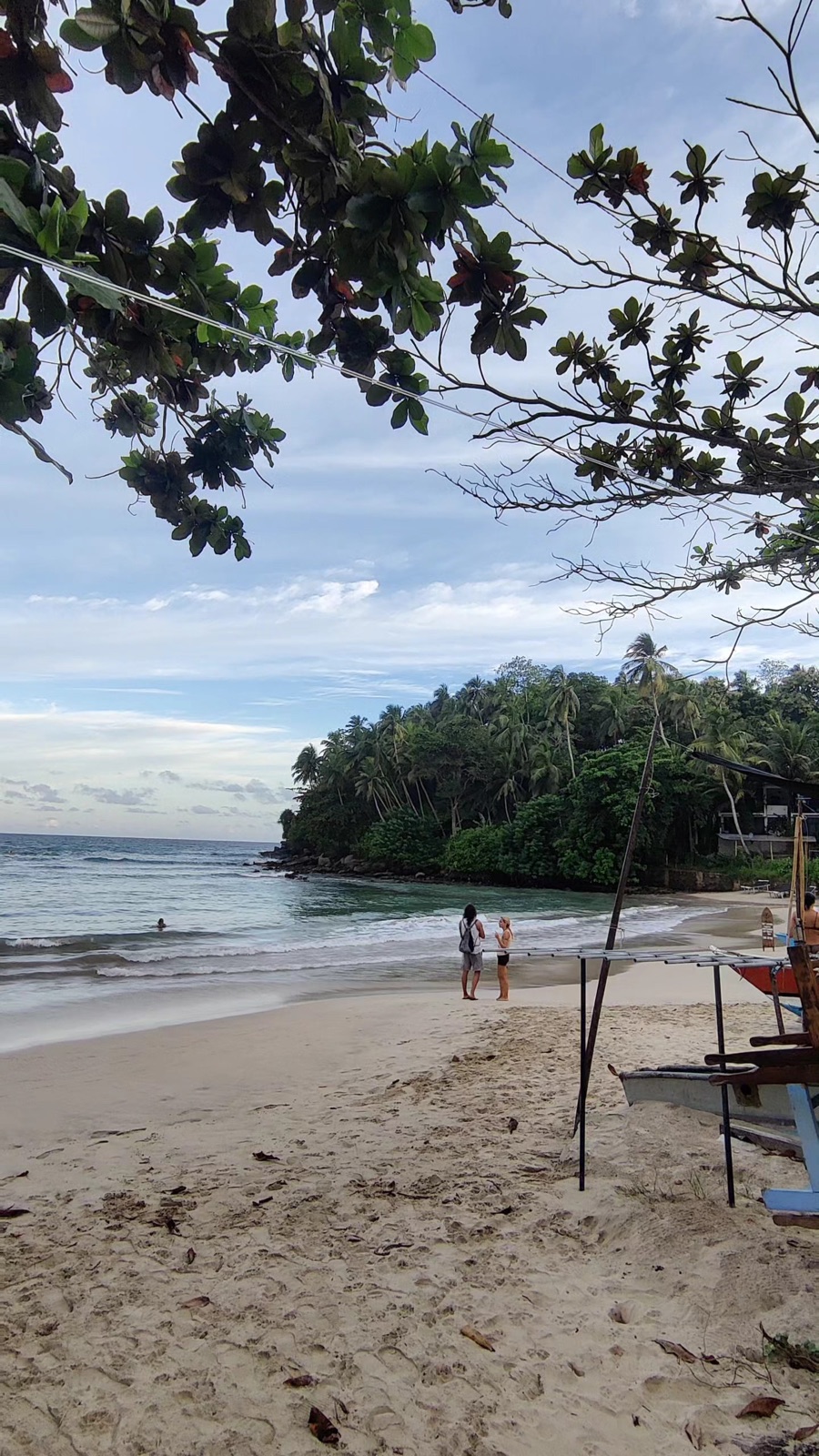
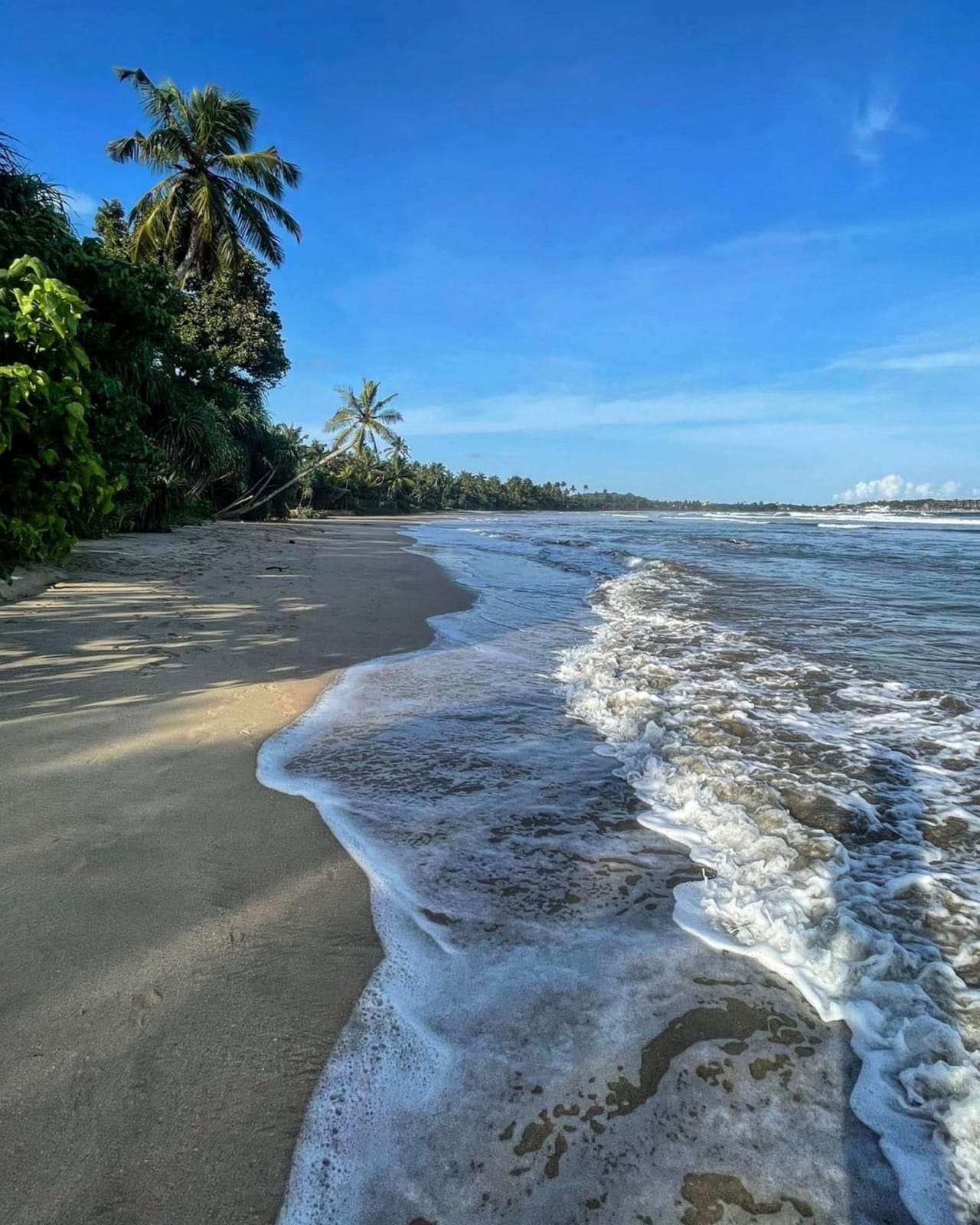
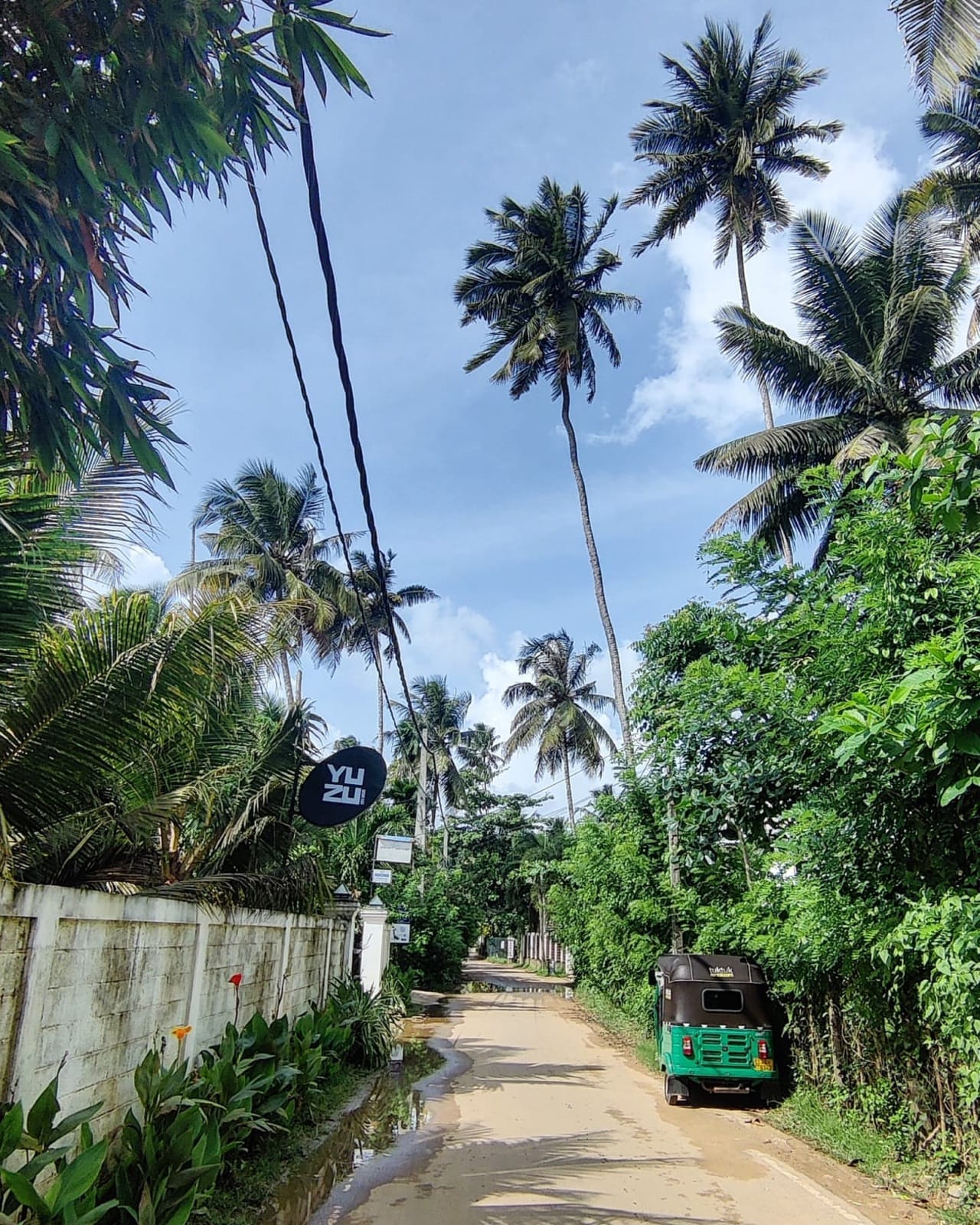
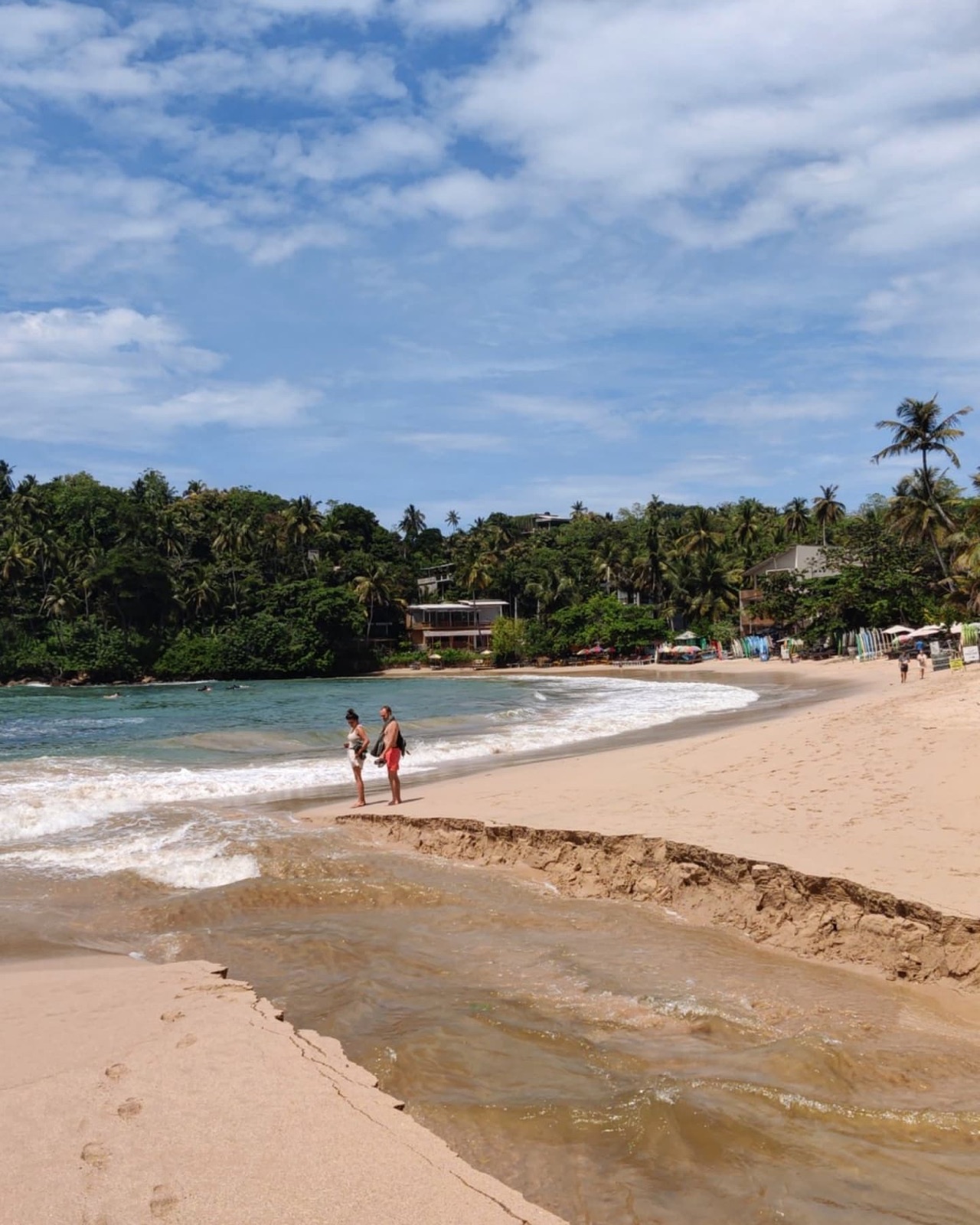
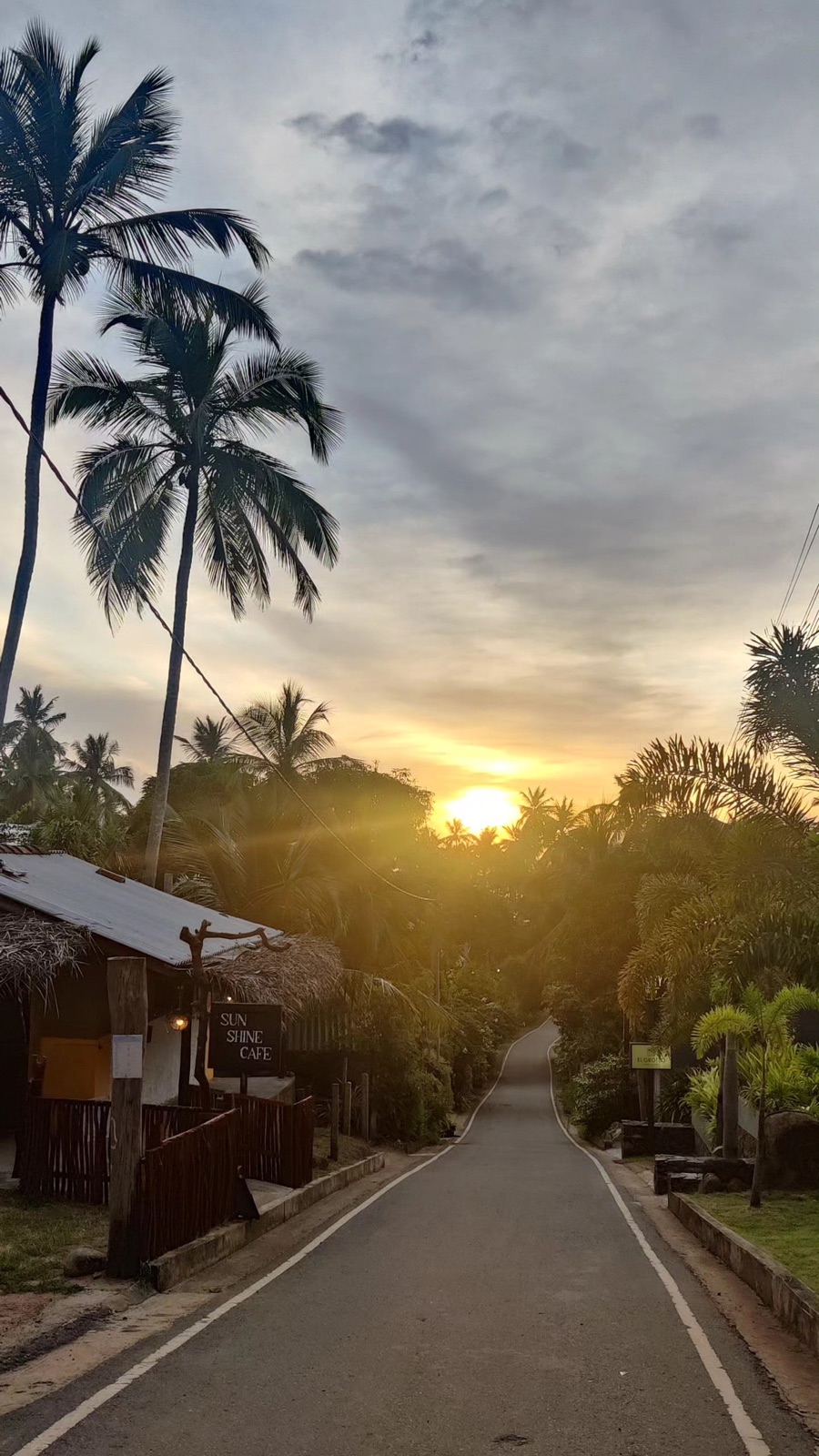

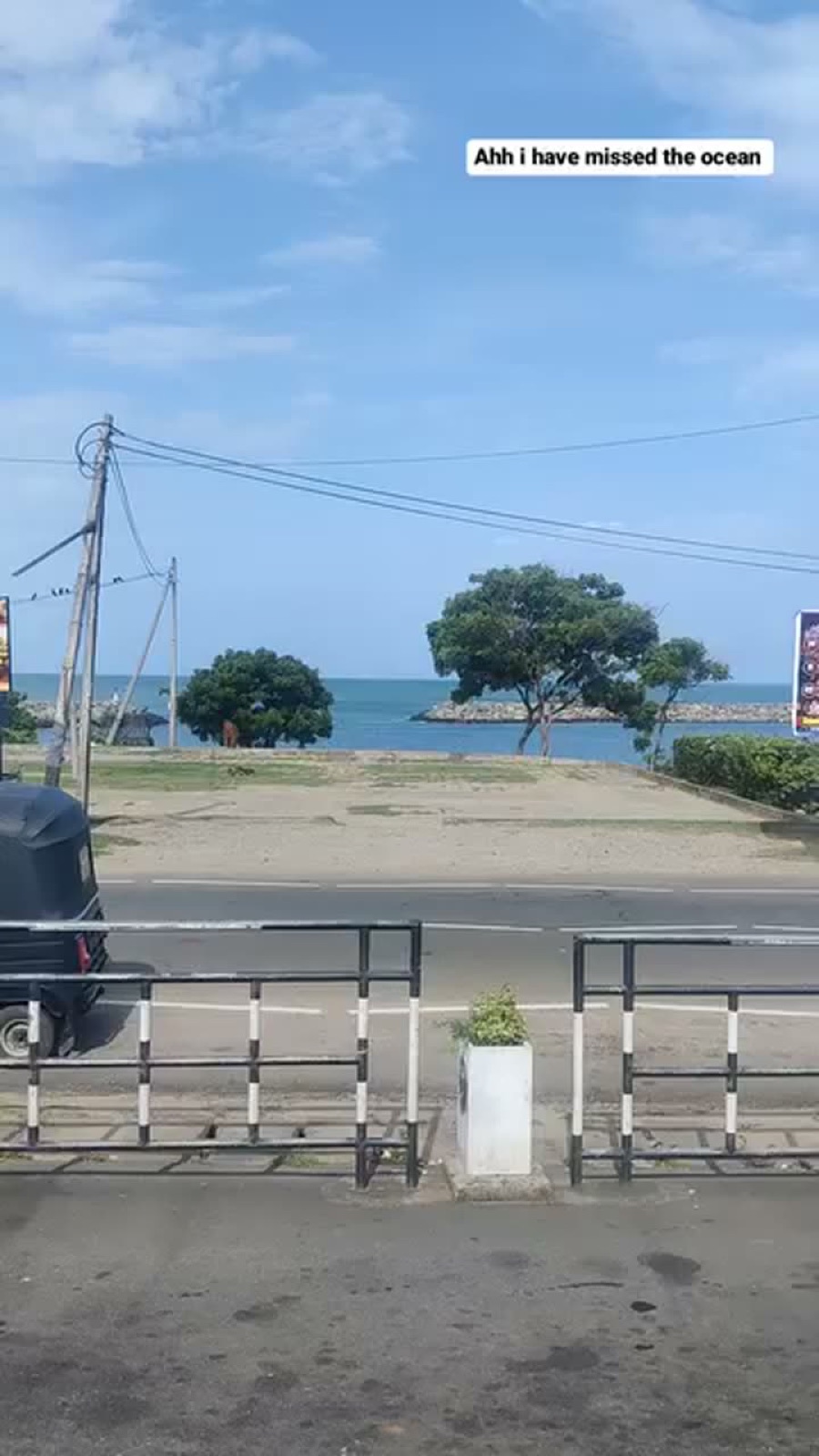
I reached the town without even seeing the beach. Then I woke up, went for a walk, and that was it. A small beach town, small food shacks, a beach right there, coffee places with good Wi-Fi where I could actually work, and really good people. Every trip, I eventually find a place that lets me slow down and catch my breath, and I stop. It’s how I center myself on a long trip. Hiriketiya felt right, and I wanted to chase that feeling, so I stayed.
Three hostels and a surf lesson
It took me three hostels to find home. Two nights at Chill Vibes, then one night at Barefoot, the big-name hostel in town, which was too crowded and too much of a party for me. The whole time I’d had my eye on Clics Coliving, a tiny co-working hostel I’d spotted the day I arrived. More on that in a bit.
The first 48 hours set the pattern. Work in the morning, then the weather swings from sunshine to a full downpour and back in the time it took my Americano to arrive. After work, I took my first-ever surf lesson (5,000 LKR). Before: big plans. After: absolutely wrecked.
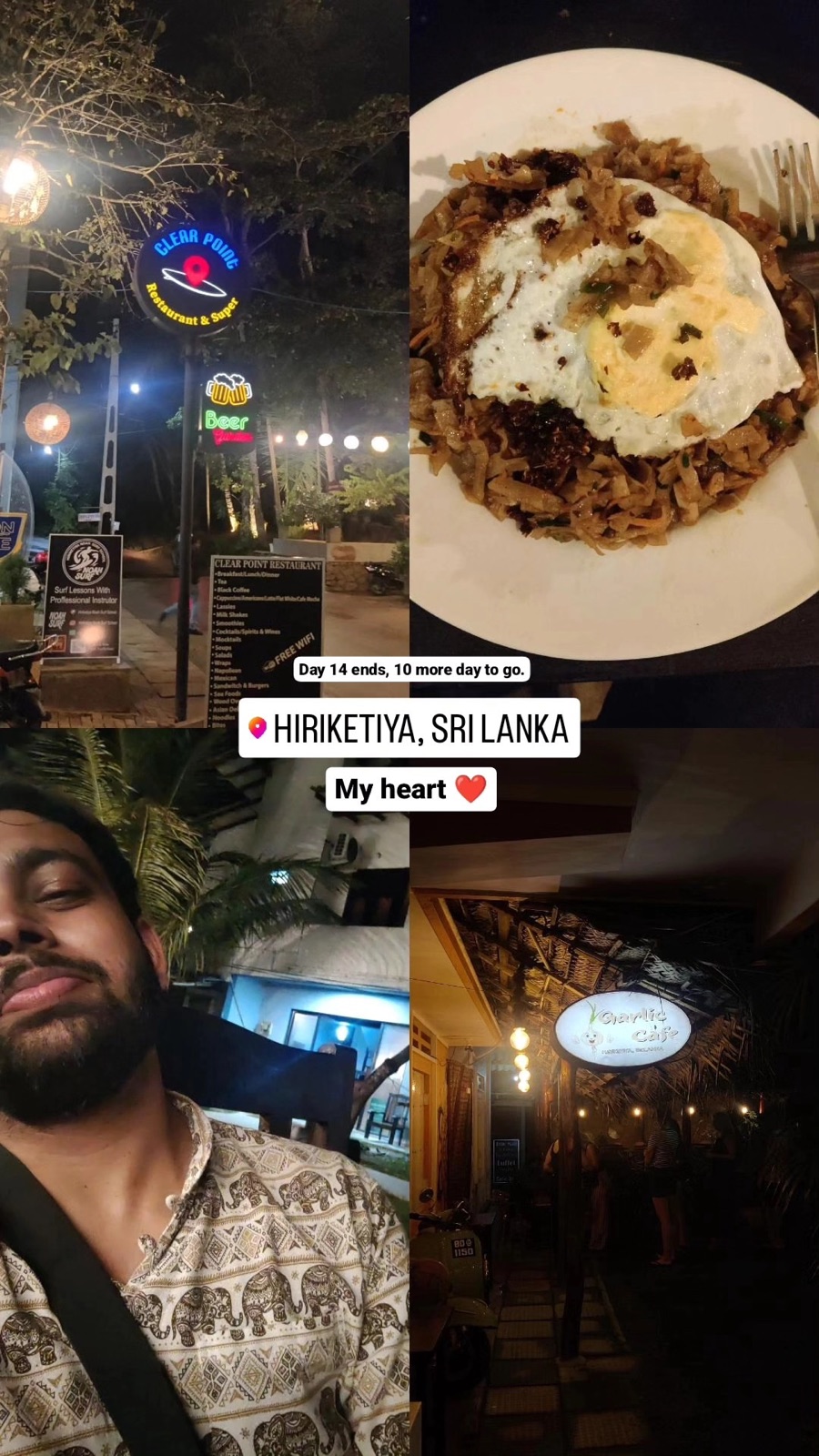

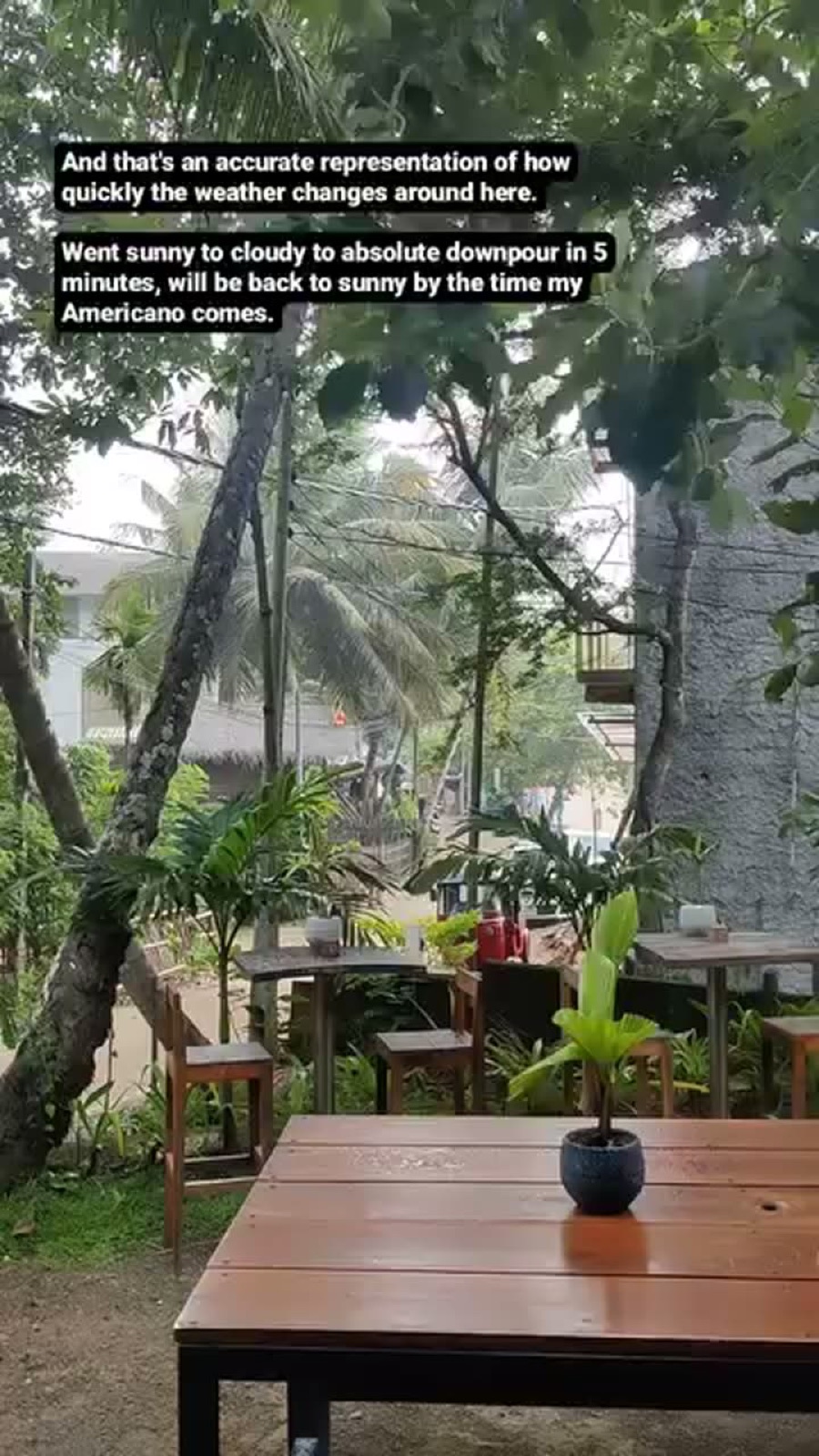

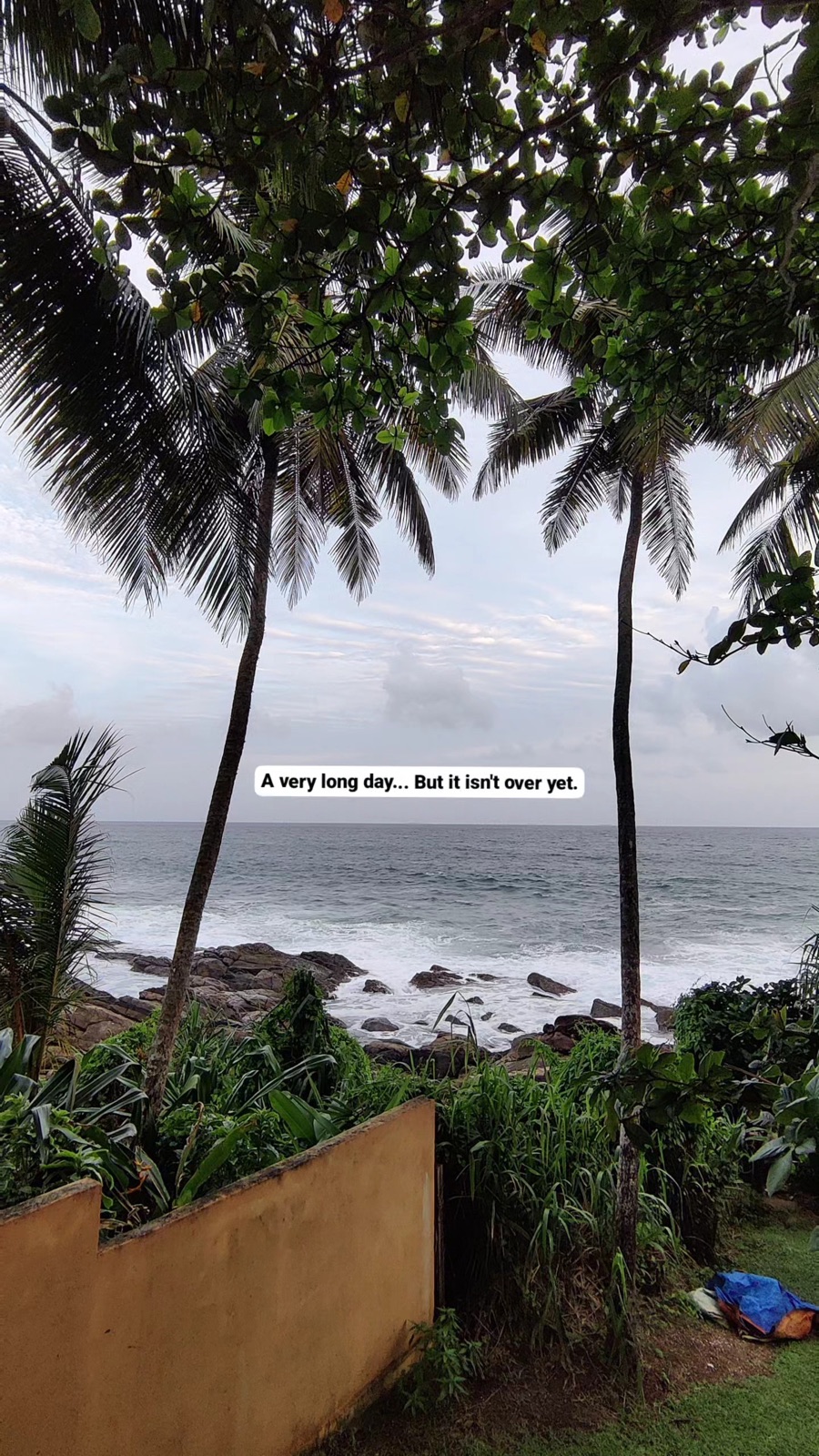
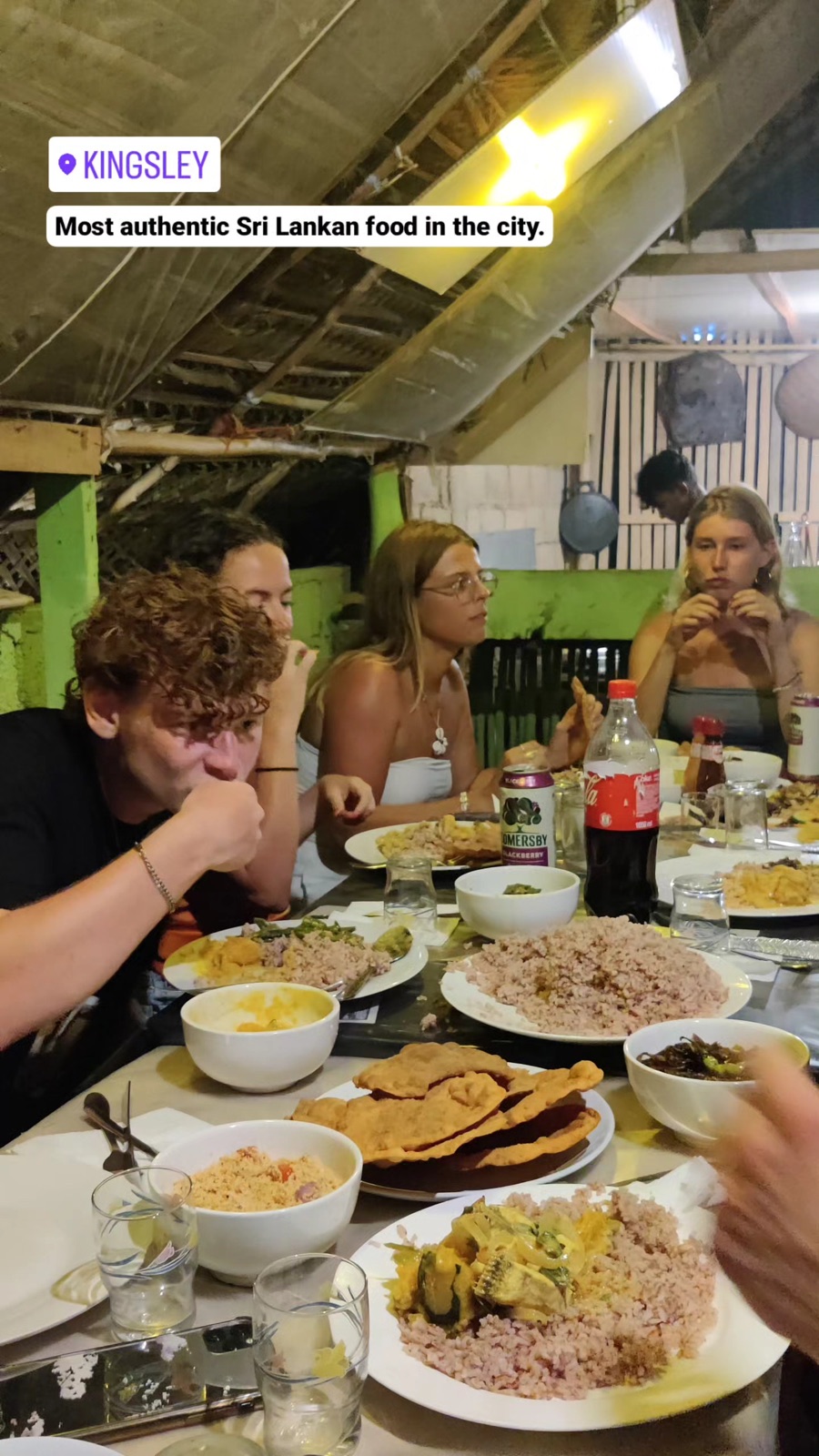

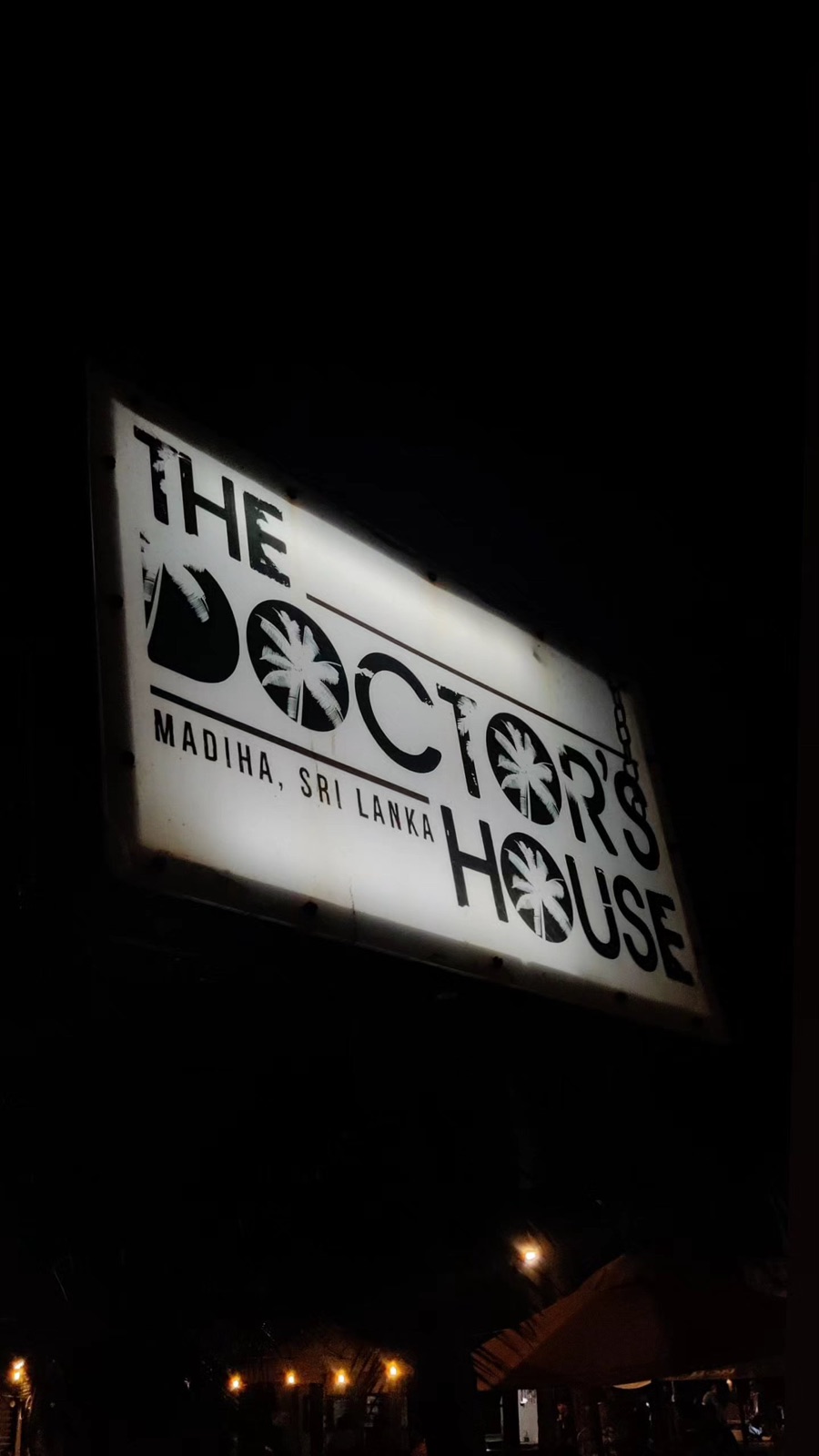

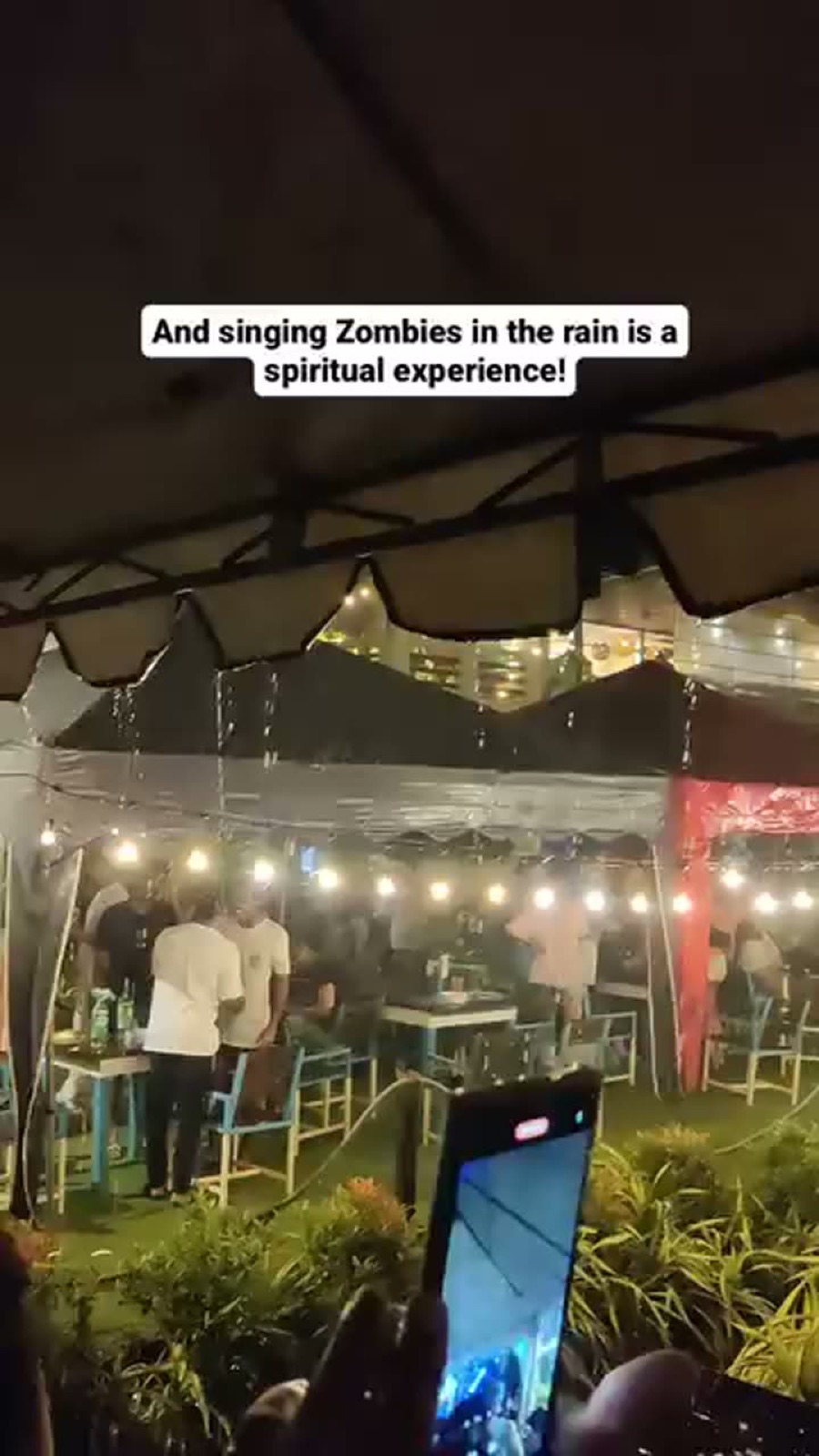
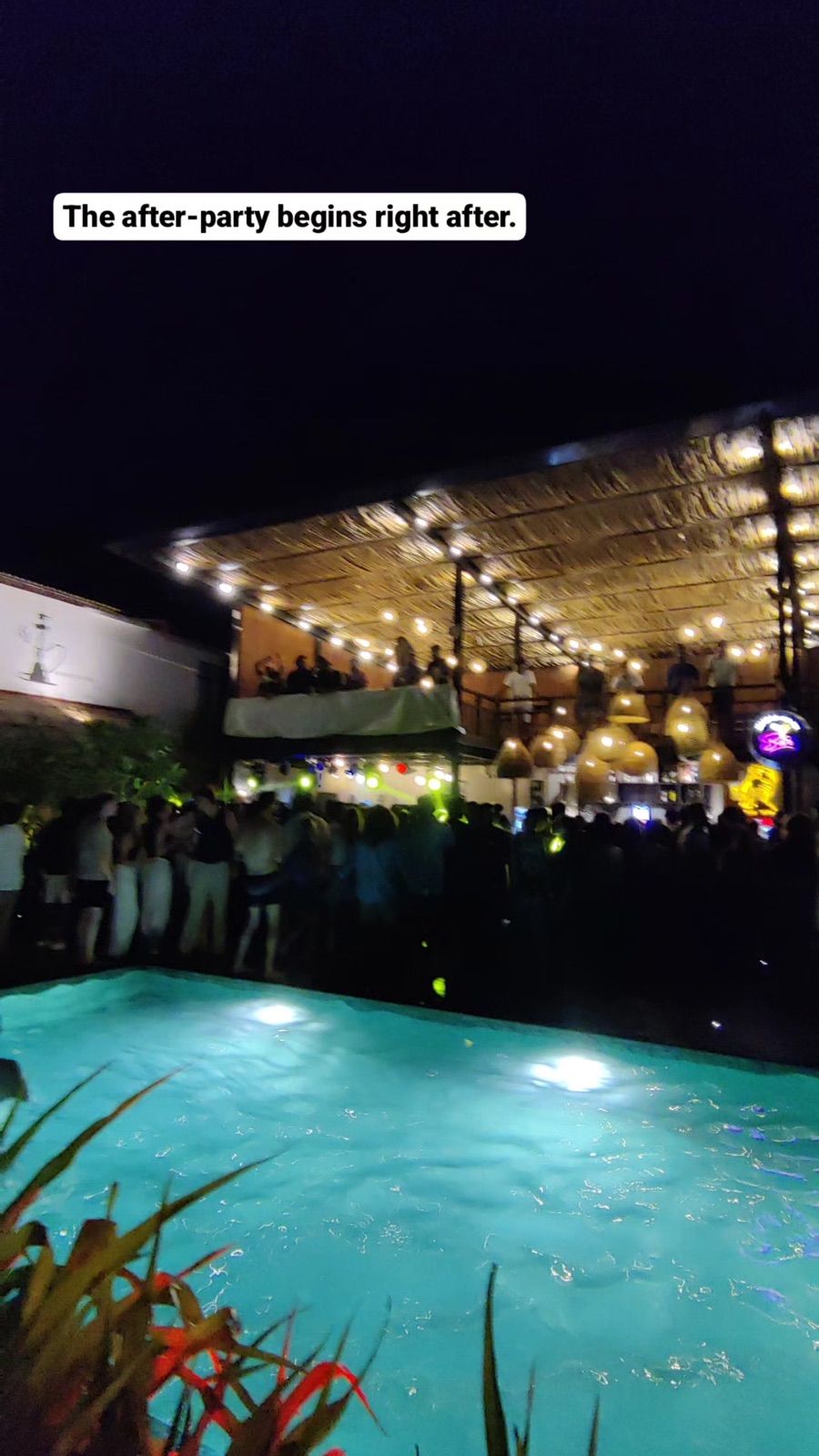
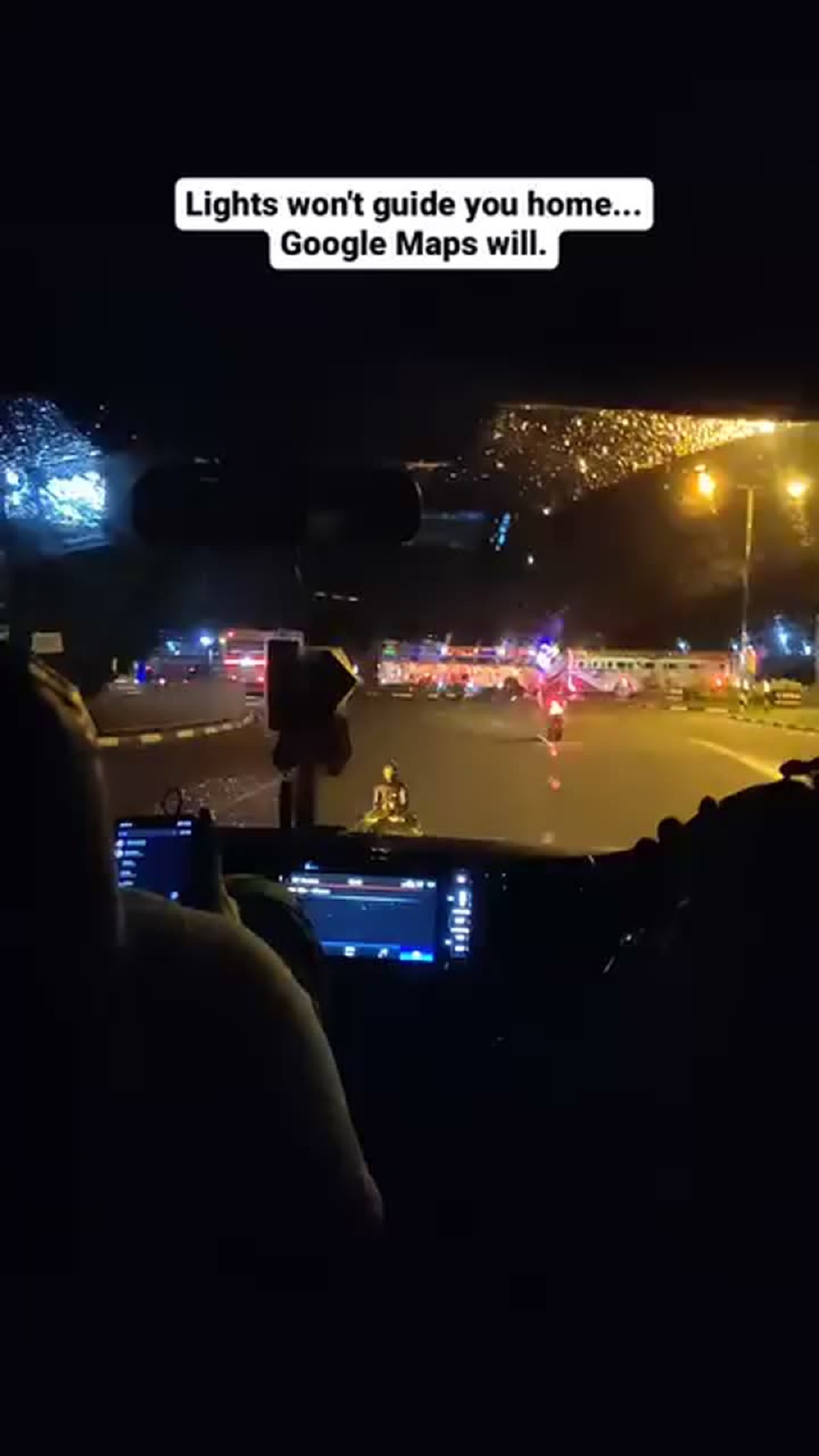
My first 48 hours in Hiriketiya: kottu, a surf lesson I lost, and Zombie in the rain at the Doctor’s House.
I’ll say it politely: I don’t think I’m athletic enough for surfing, yet. You need a lot of balance and a lot of speed to pop up on that board, and then you need to not wobble when the wave hits you. I managed none of the three with any consistency, picked up a few knocks for my trouble, and walked out with a lot of respect for everyone who makes it look easy. Next time, I’m showing up fitter.
That night we ate at Kingsley’s, the most authentic rice and curry in town, and then dinner turned into a party at the Doctor’s House in Madiha. It’s a legendary bar in an old colonial house, with string lights and a lawn and a crowd that shows up around sunset and forgets to leave. It poured, and the whole place sang “Zombie” in the rain. A spiritual experience. Google Maps guided me home.
The Clics, Kreemy, and my sacred routine
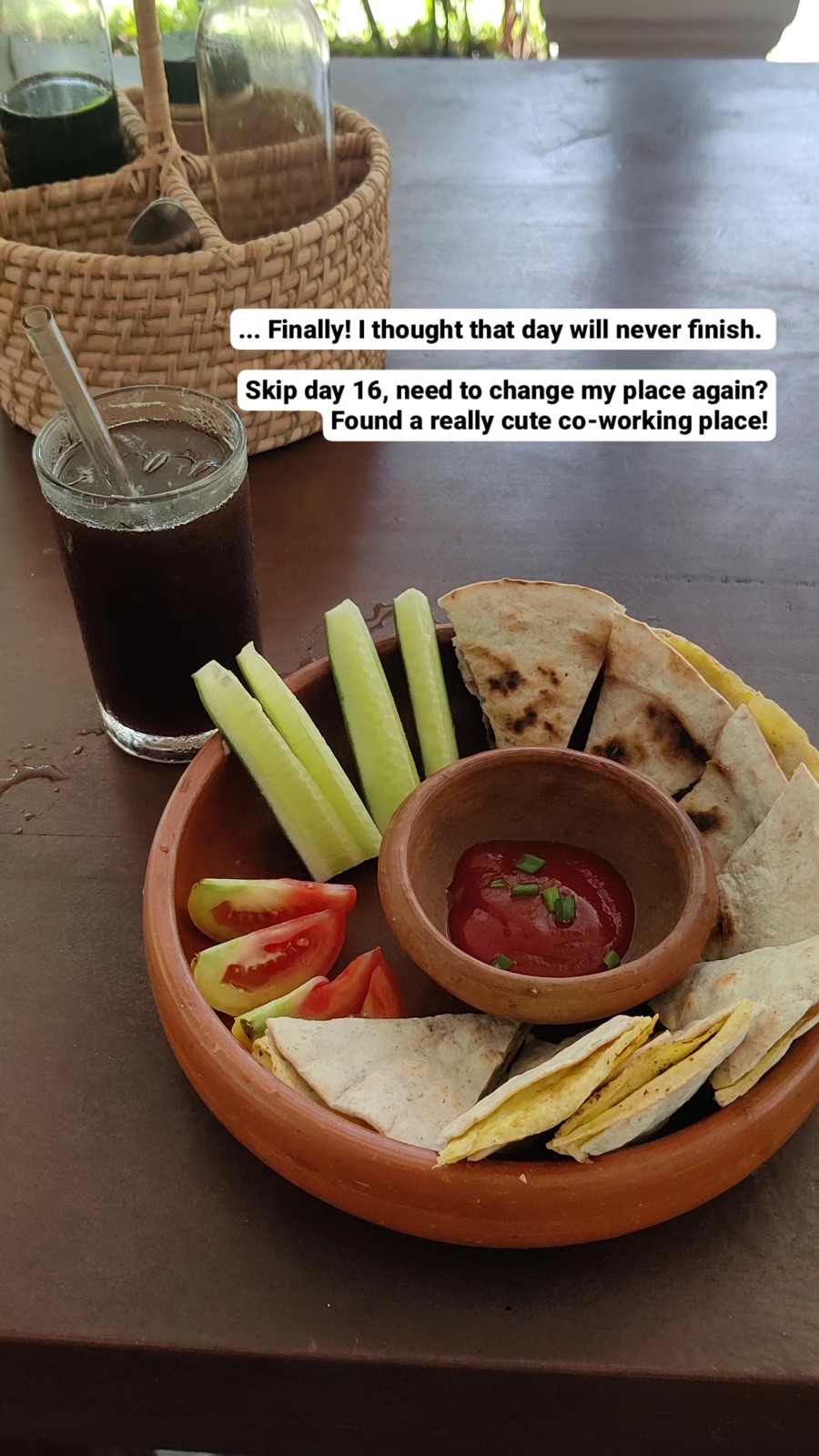
On day 16 I moved into Clics, and that’s when the trip quietly stopped being a trip. A garden out front, coconut in hand, the beach two minutes away, and a co-working desk with a second monitor and sliding doors where the cubicle wall should be. I paid about 60 euros for the week.
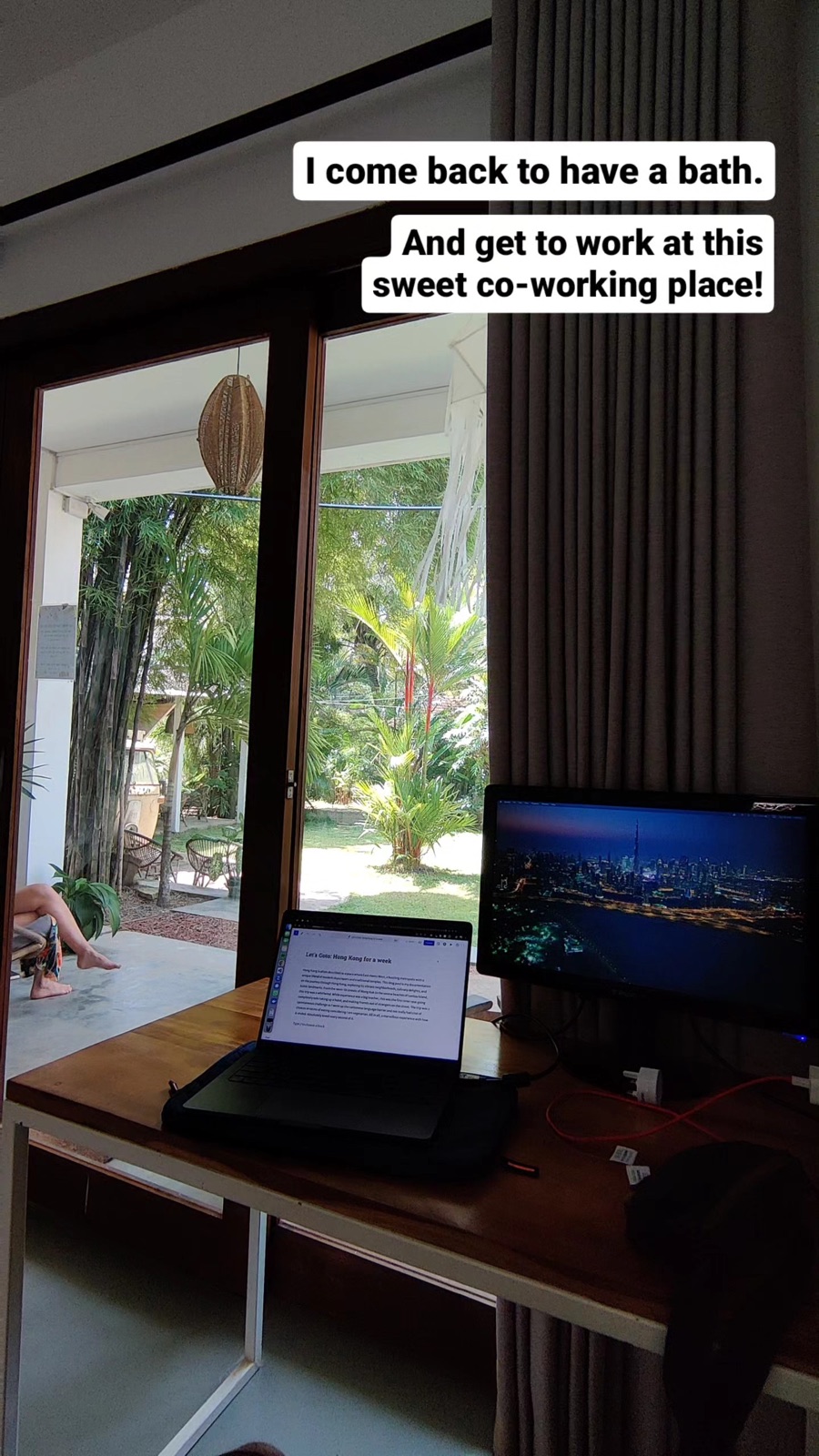
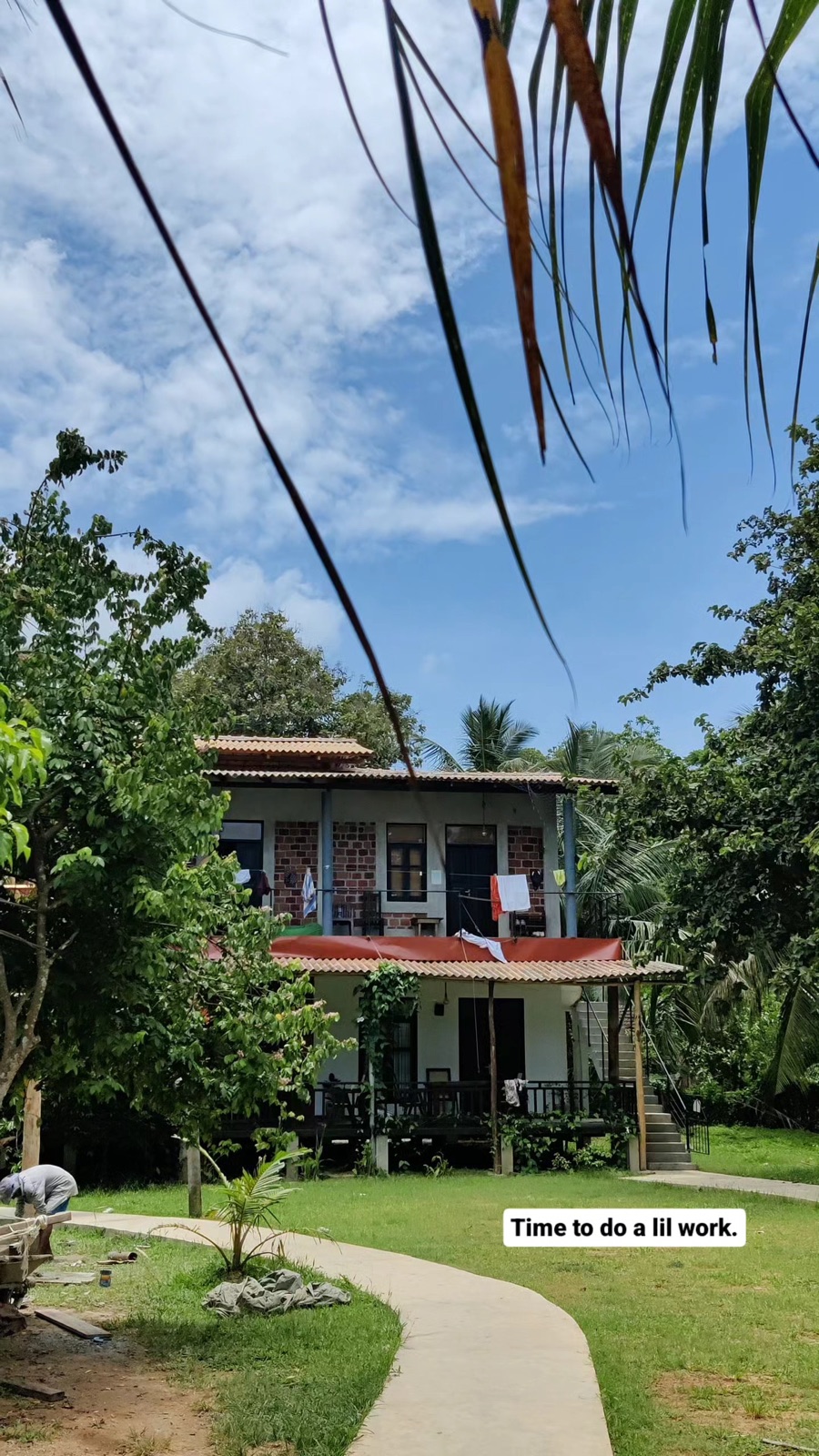
I was up at 7 am every day, which is unheard of for me. Swim in the ocean, get my coffee, talk to strangers who had become friends, work, then sunset. There was yoga on the beach, a new coffee shop every few days (Locos and its stuffed pancakes won), and barbecue nights back at Chill Vibes with Ali, Elli and Ellen. I’d basically become the hostel’s unofficial social coordinator.
Clics also came with a guardian. Kreemy, the hostel dog, ran the place from the top of the stairs and supervised my comings and goings, especially the 4 am ones. Brownie, the other dog I adopted around town, was a total simp for pets and brought out a baby voice I didn’t know I had.

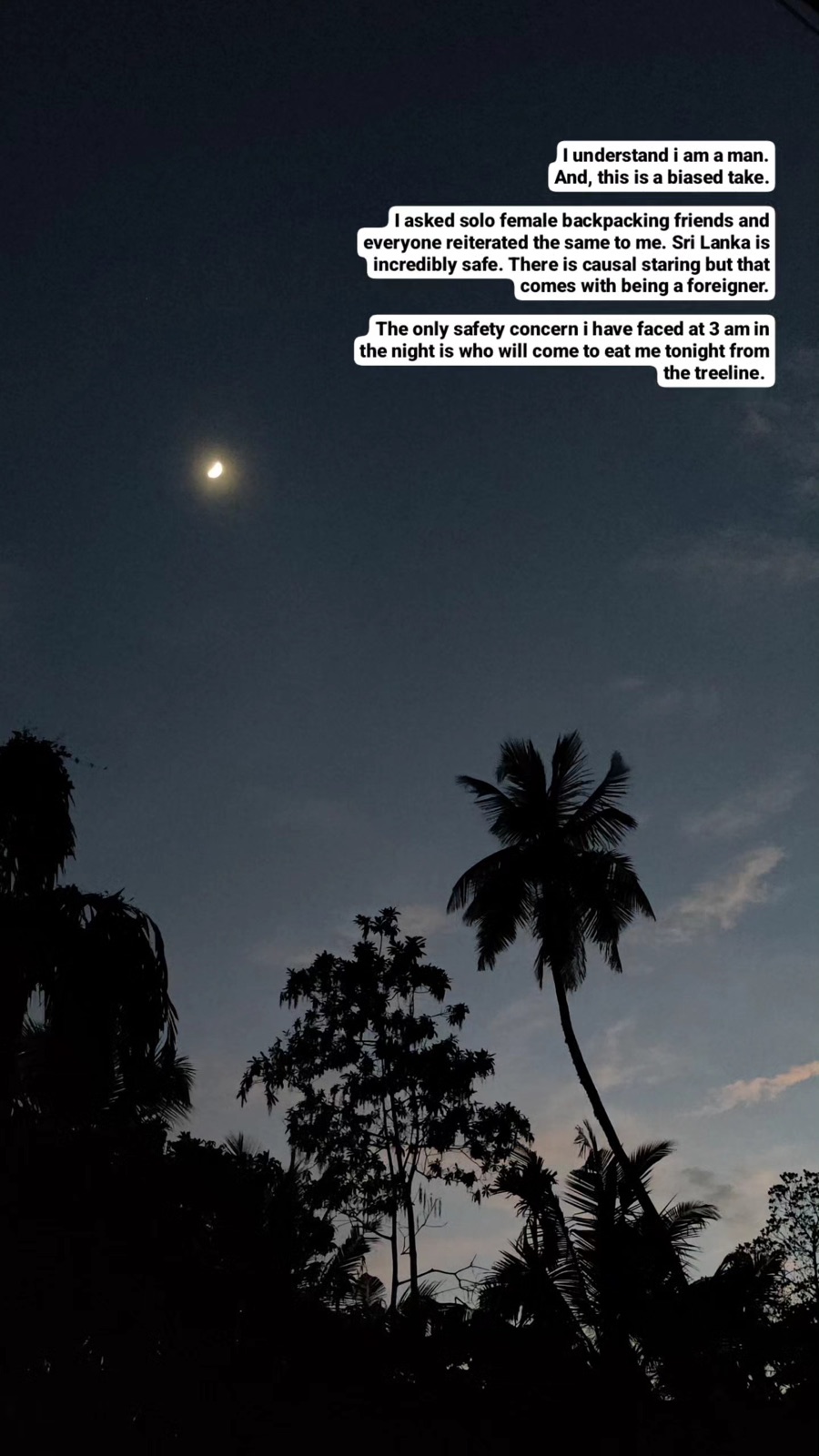
And then there was the walk home. The road back to Clics was astonishingly dark, with no street lights anywhere. I’ve never been as afraid of the dark as I was on that road, and nothing could have been further from the truth. I didn’t have a single incident or a single unsafe experience in Sri Lanka. I know that’s a man’s take, so I asked the solo female backpackers I met, and every one of them said the same (minus some casual staring that comes with being a foreigner). My only real concern at 3 am was what might come out of the treeline to eat me.
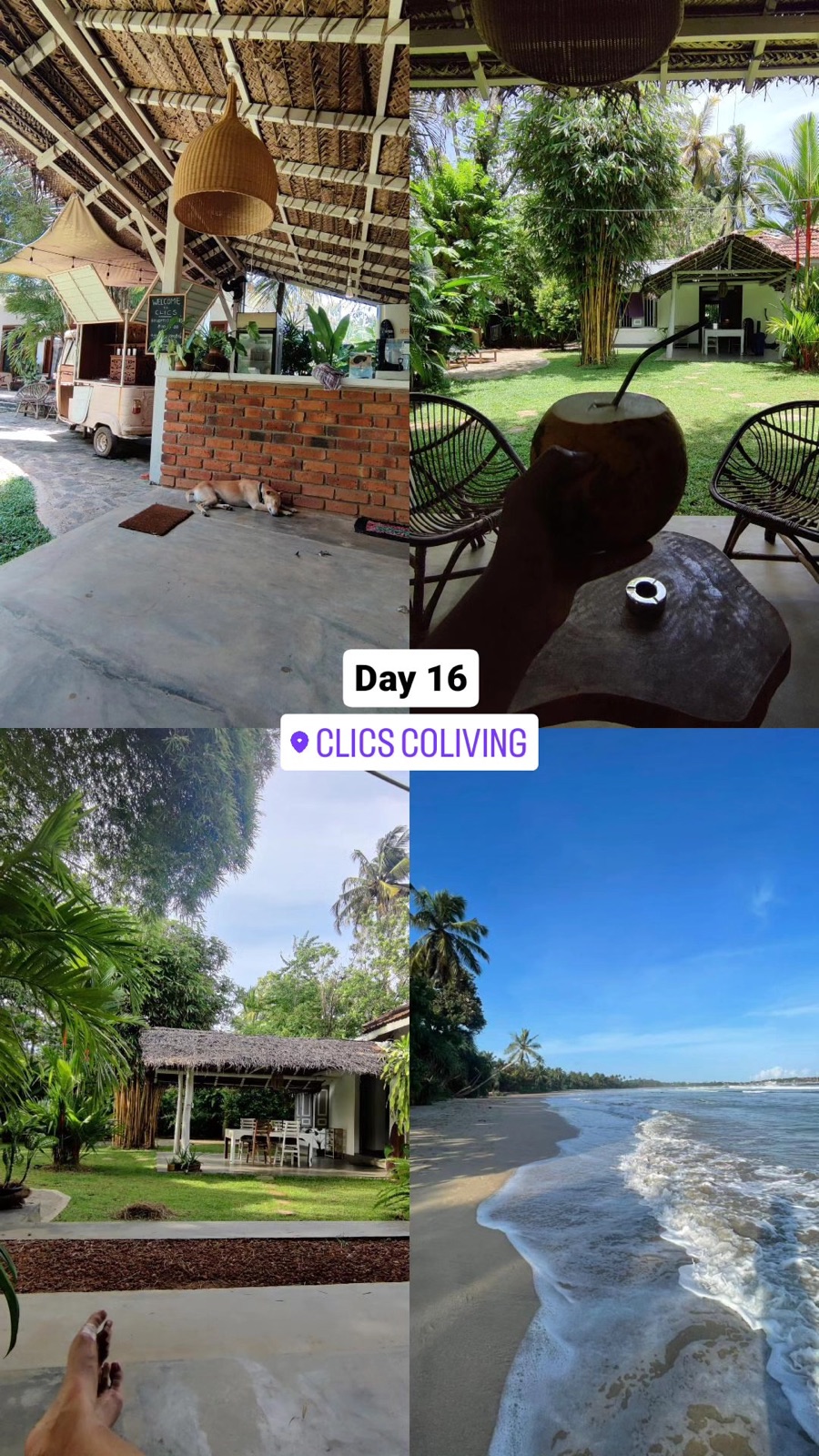
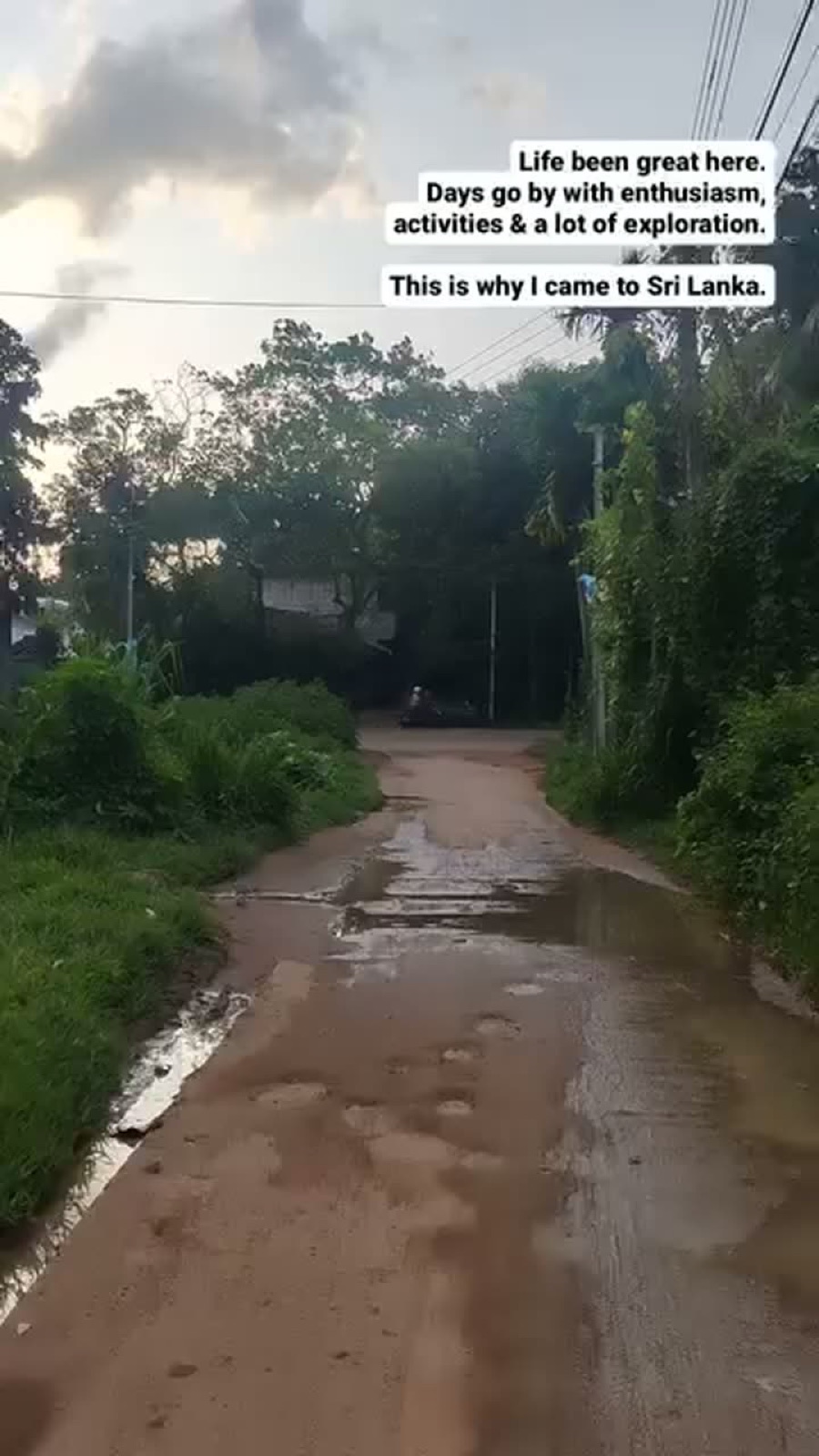
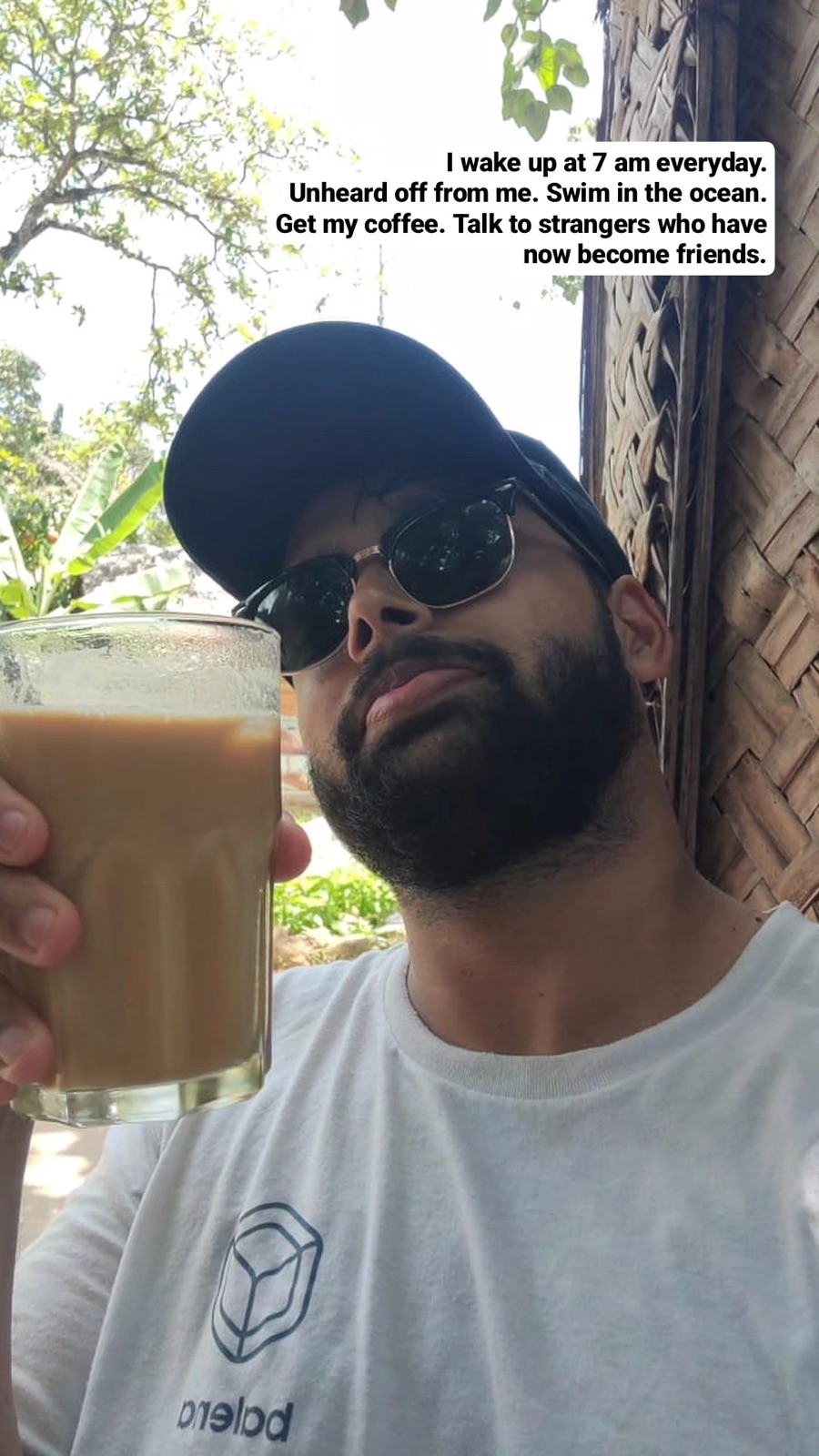
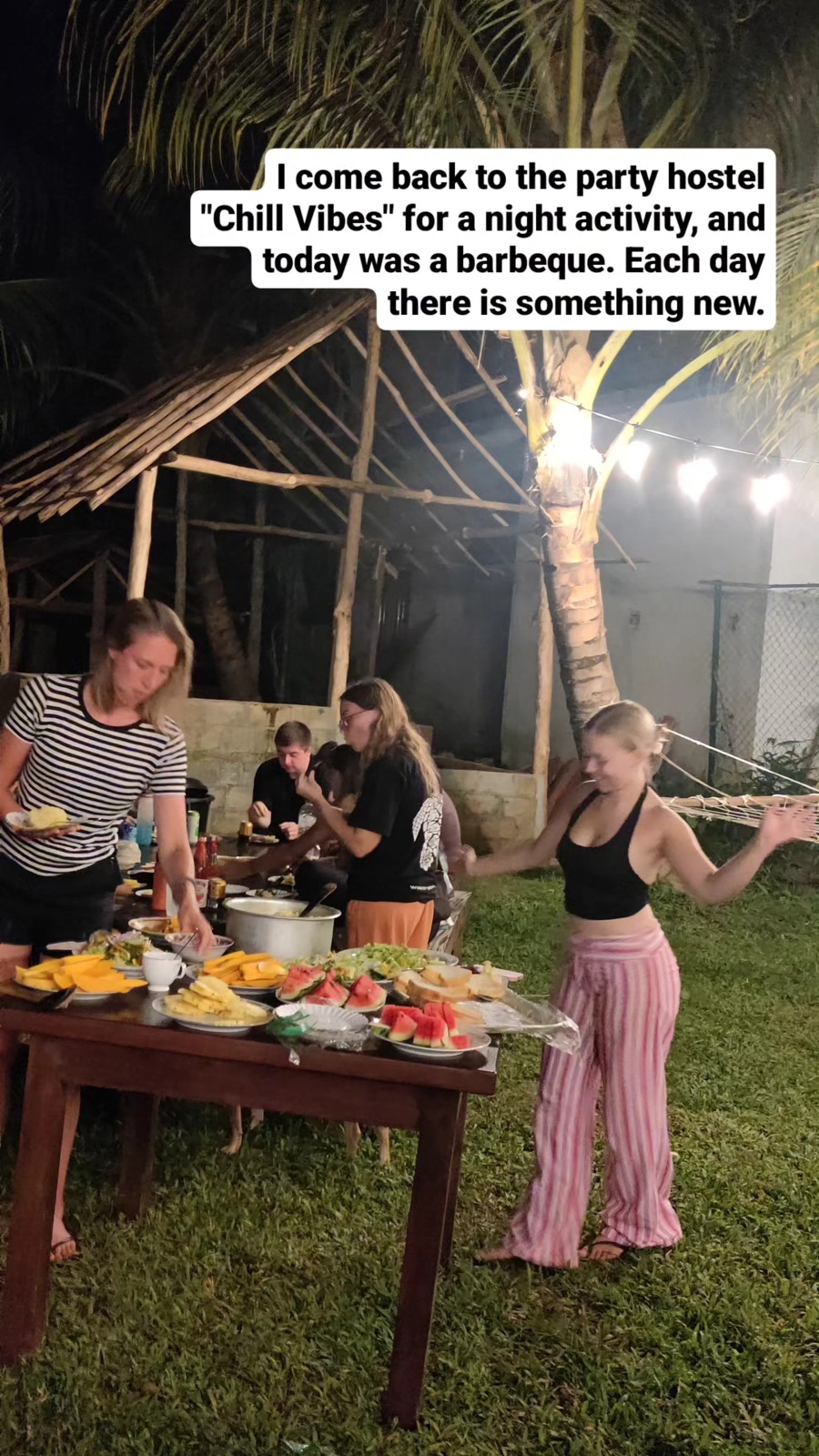
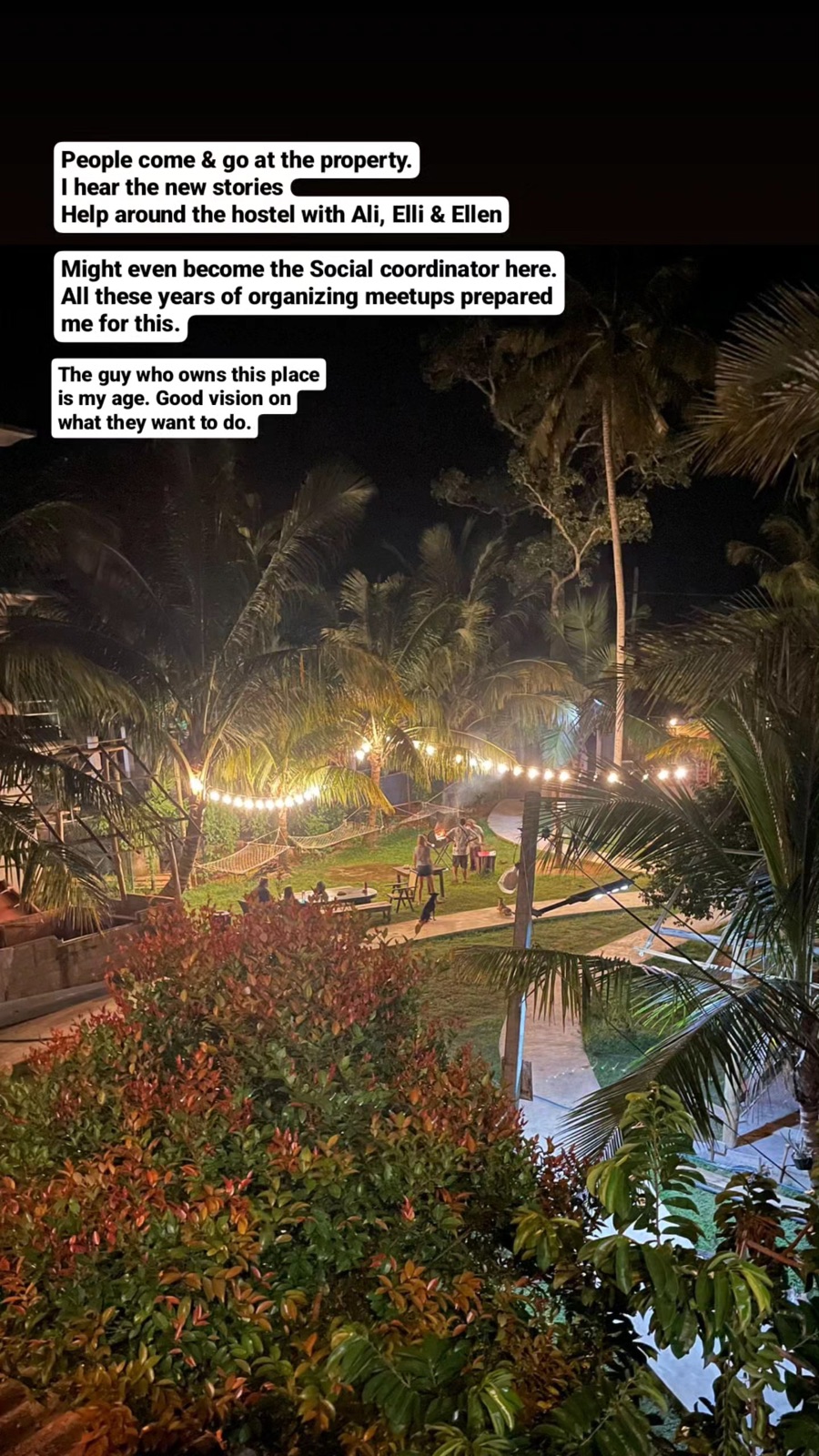
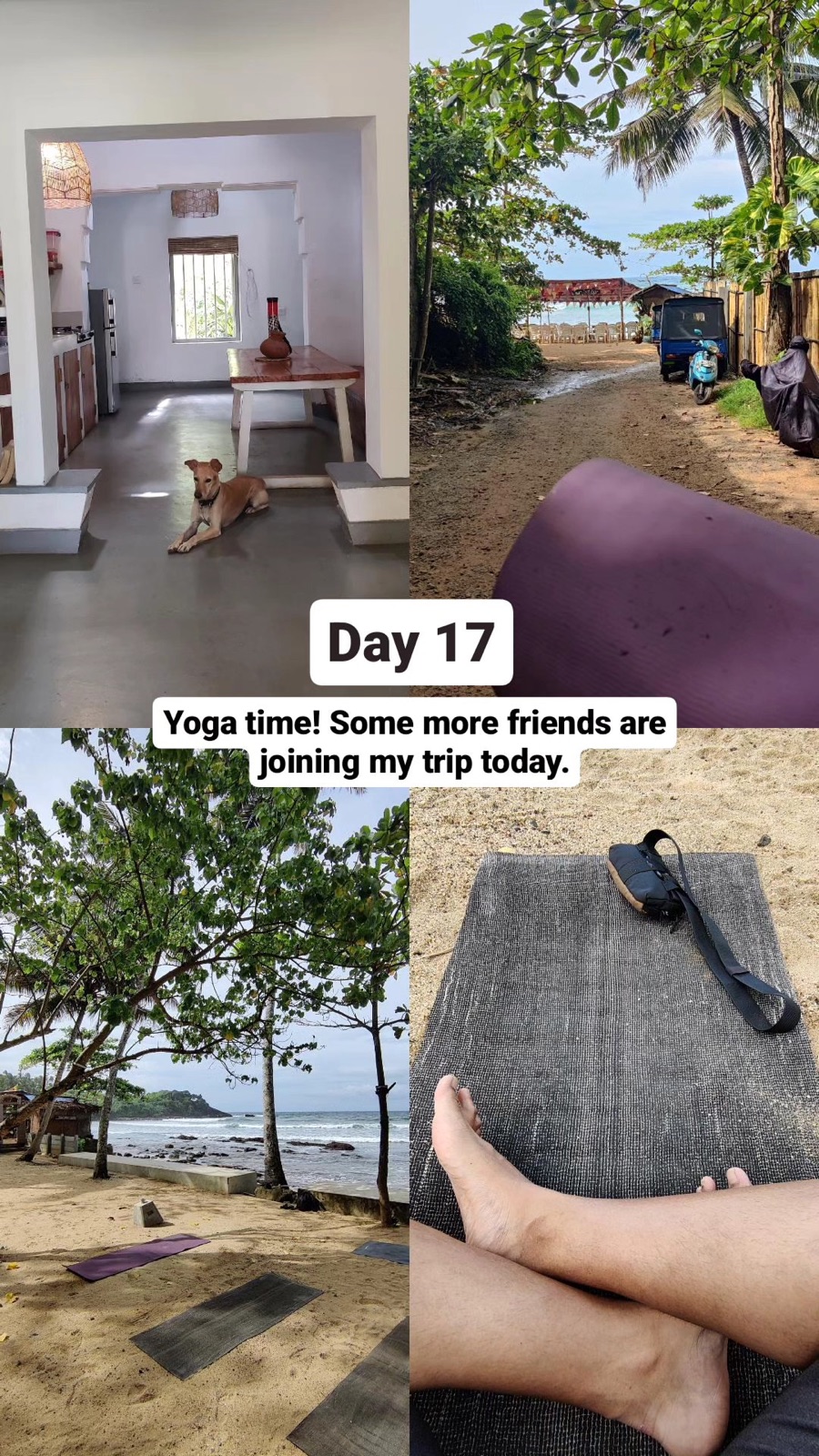
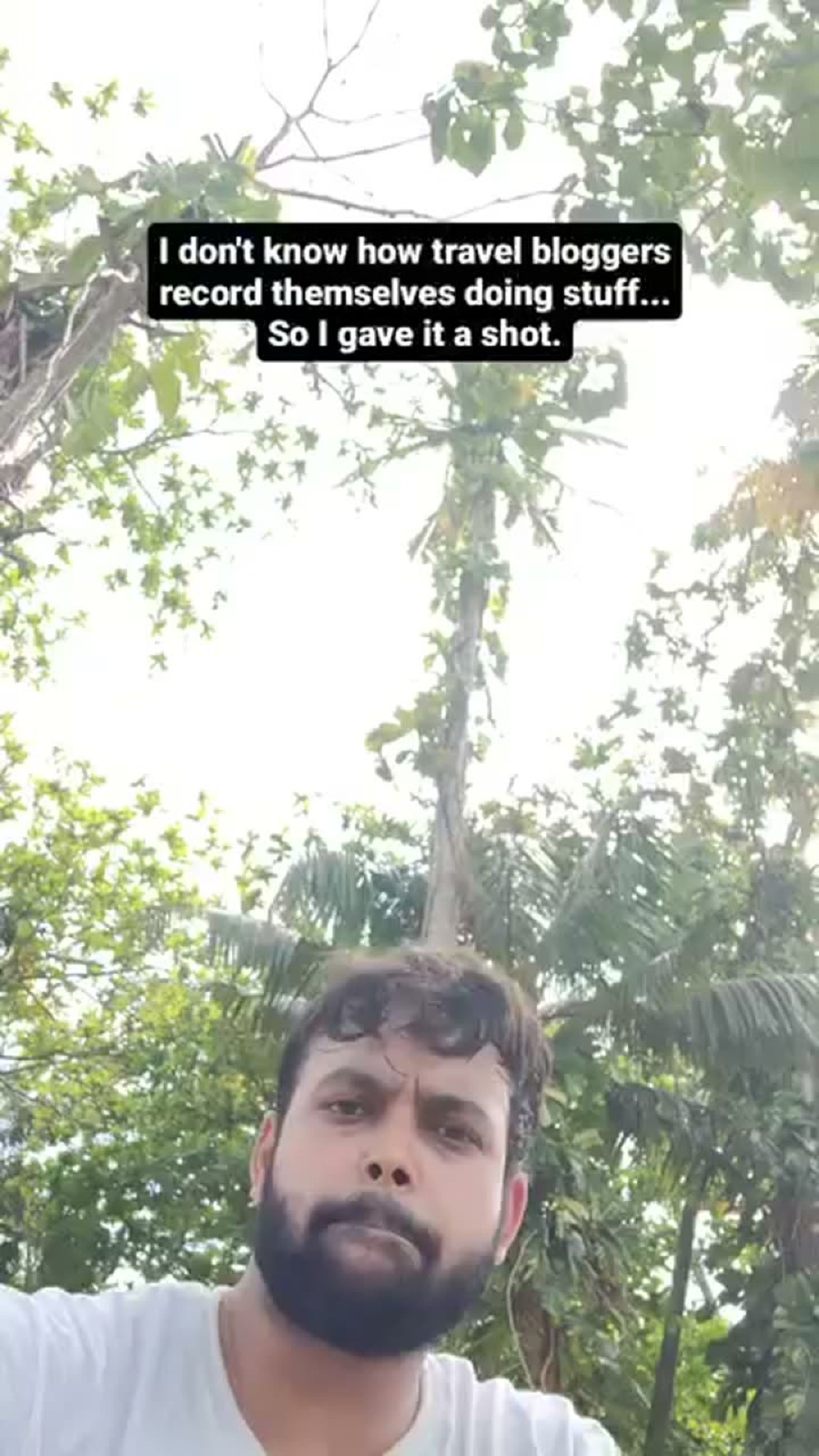

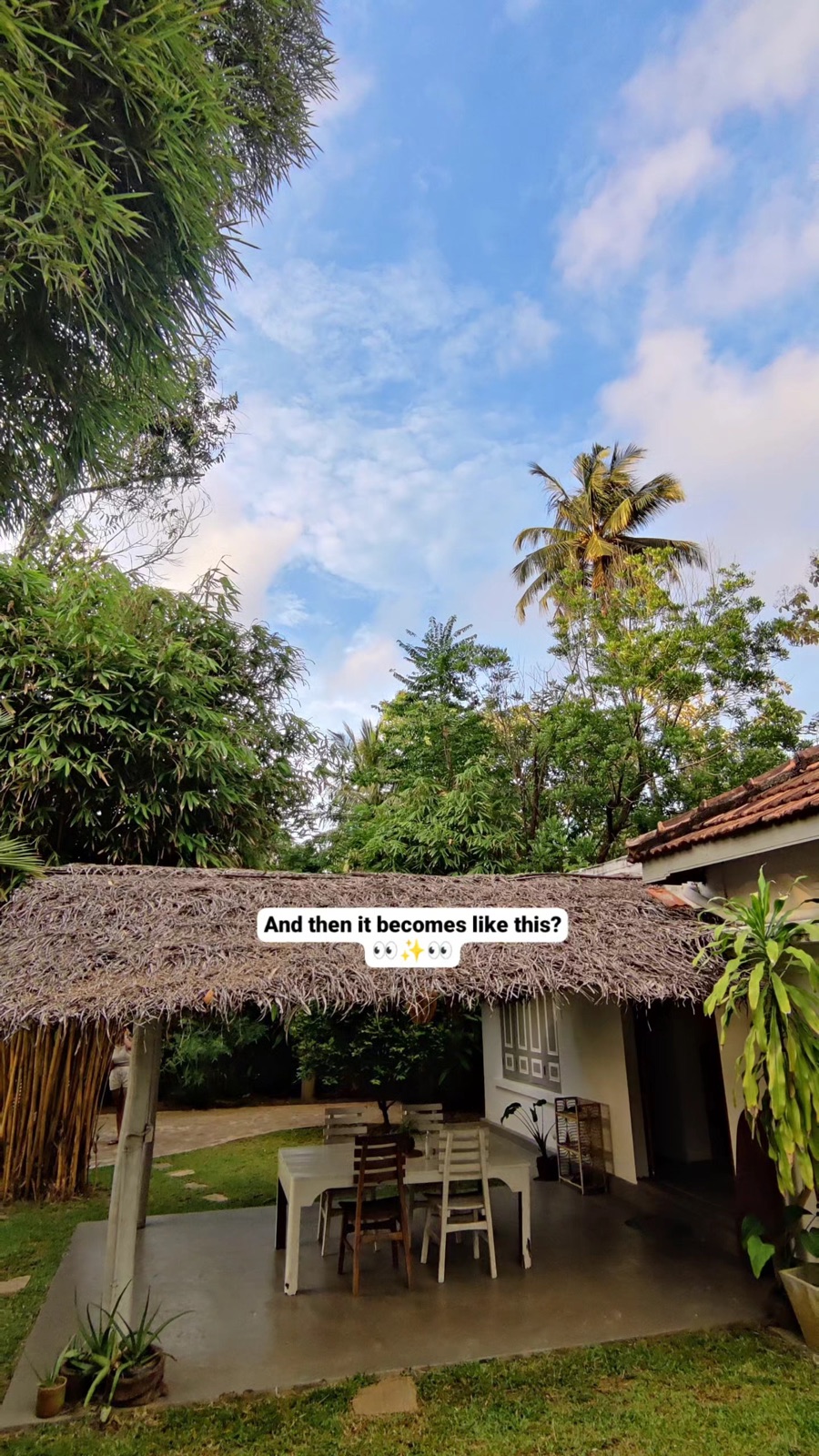
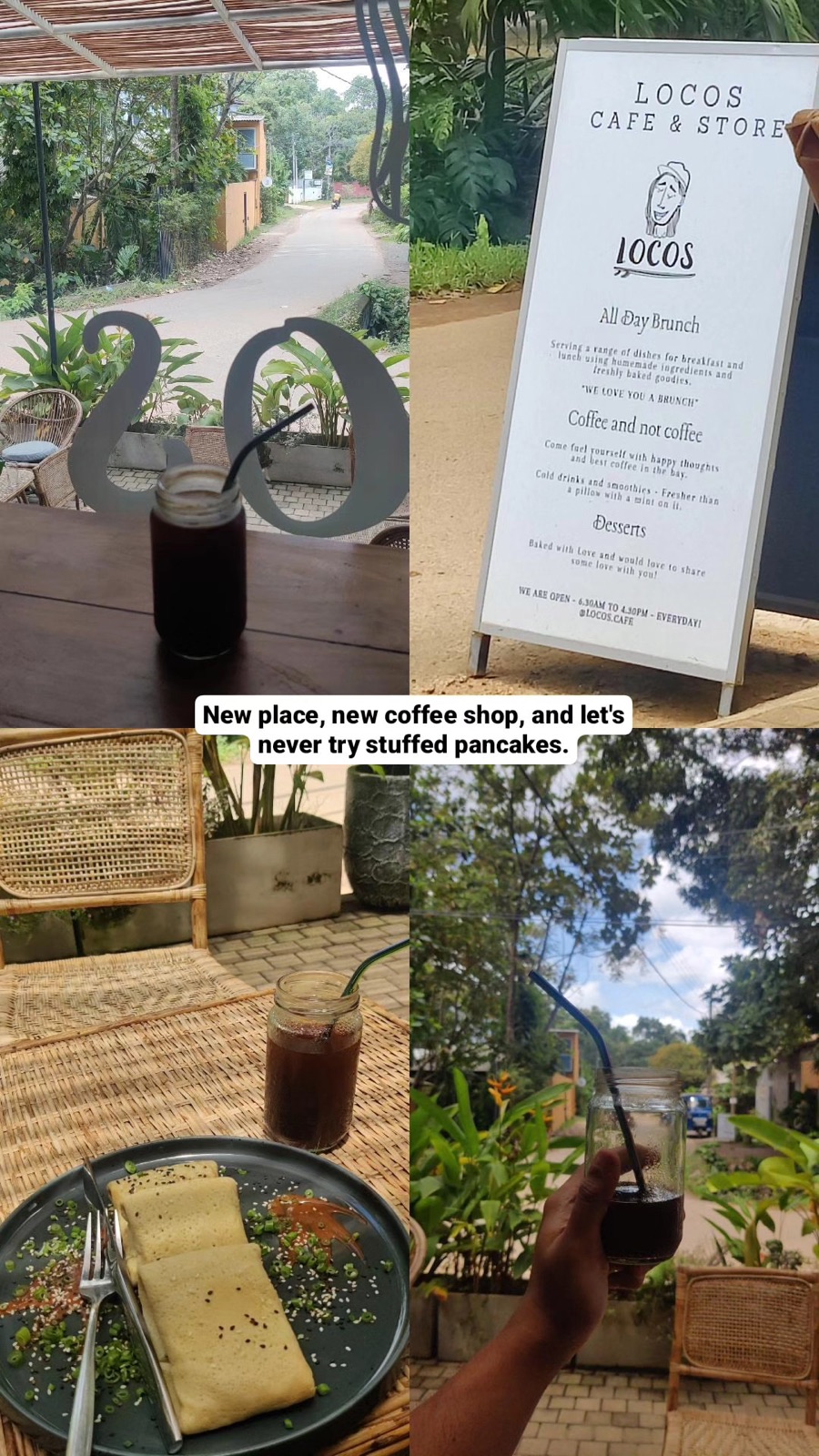
A week of not travelling: 7 am swims, yoga with a dog, two hostel dogs, and a new coffee shop every few days.
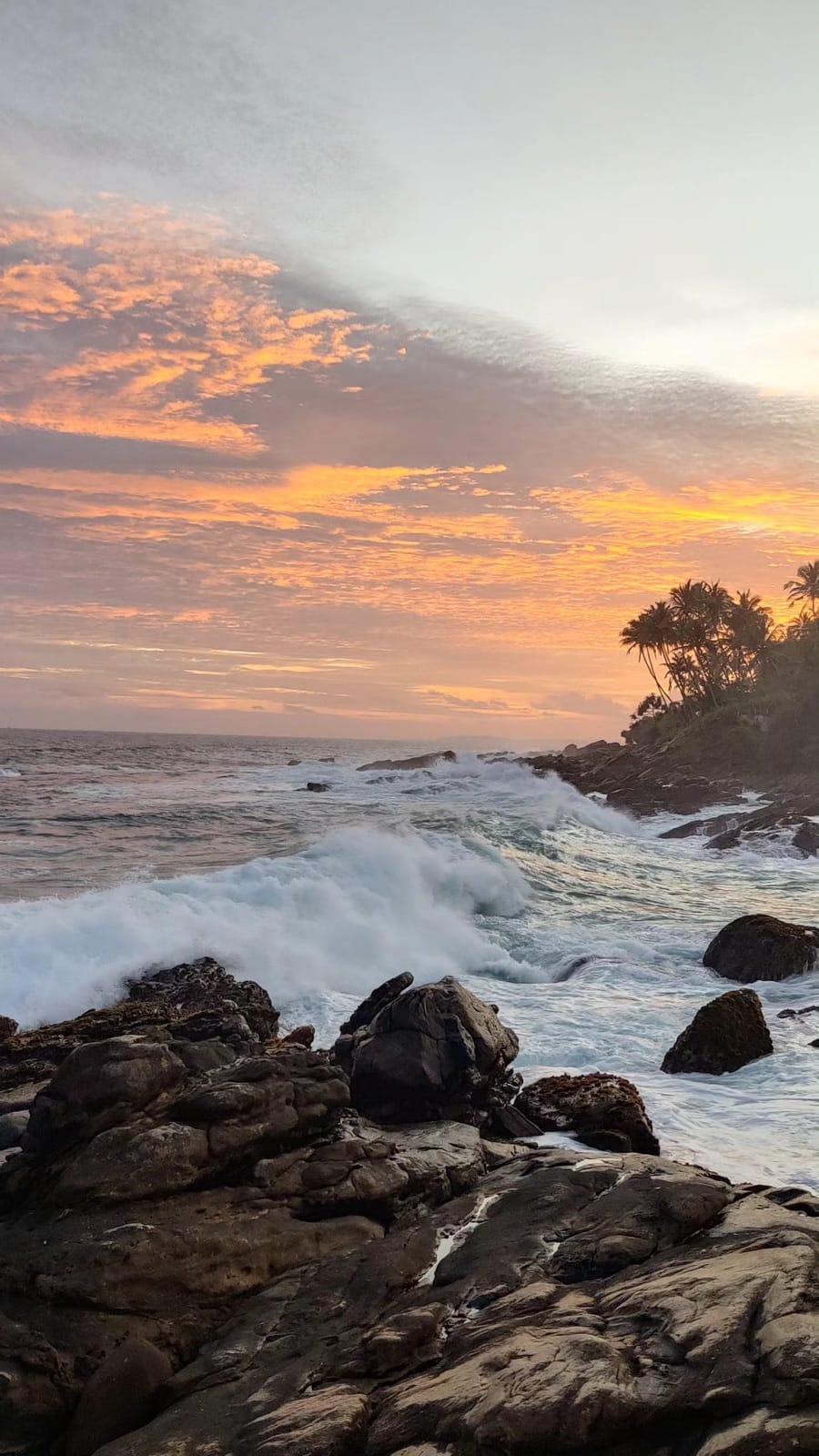
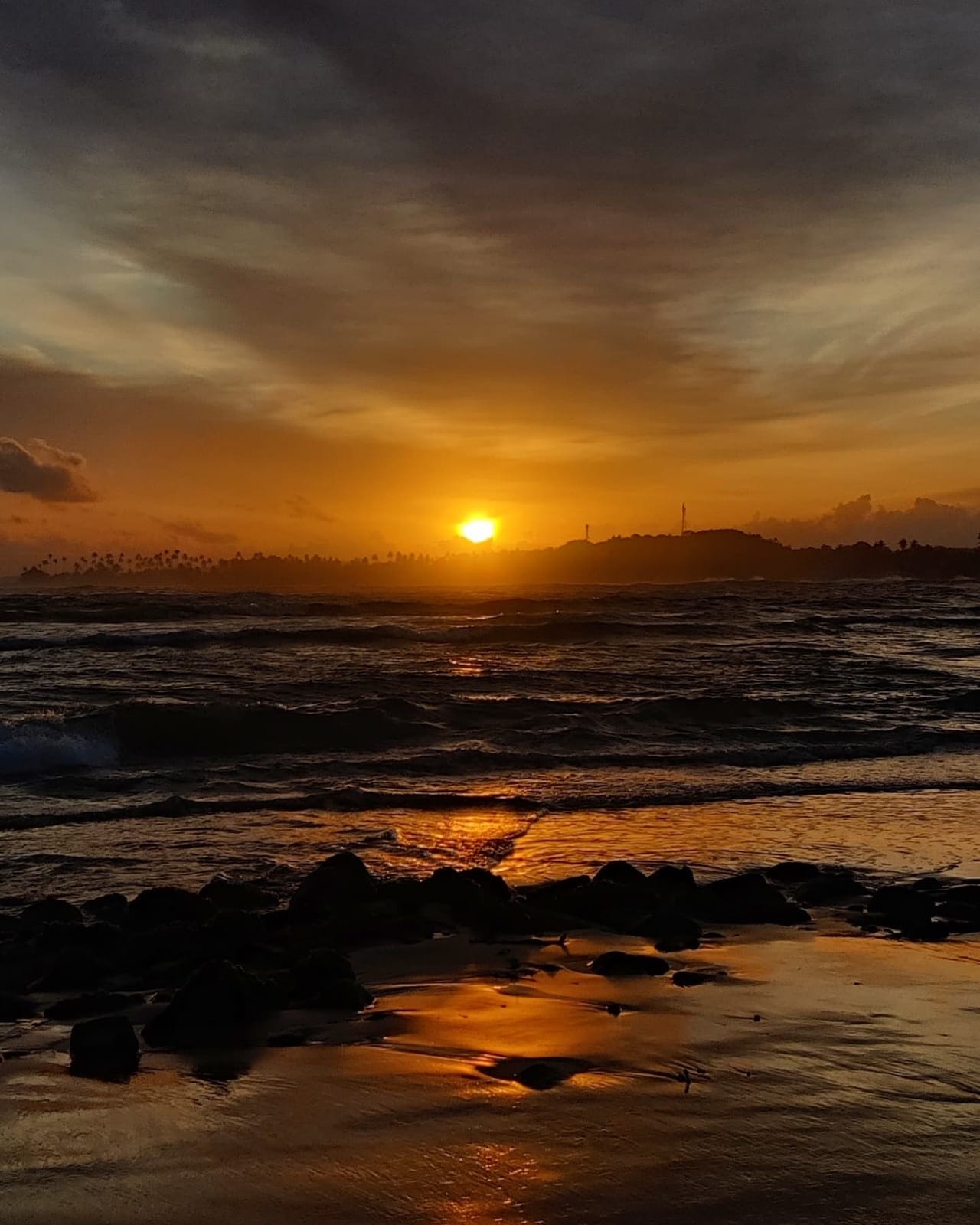
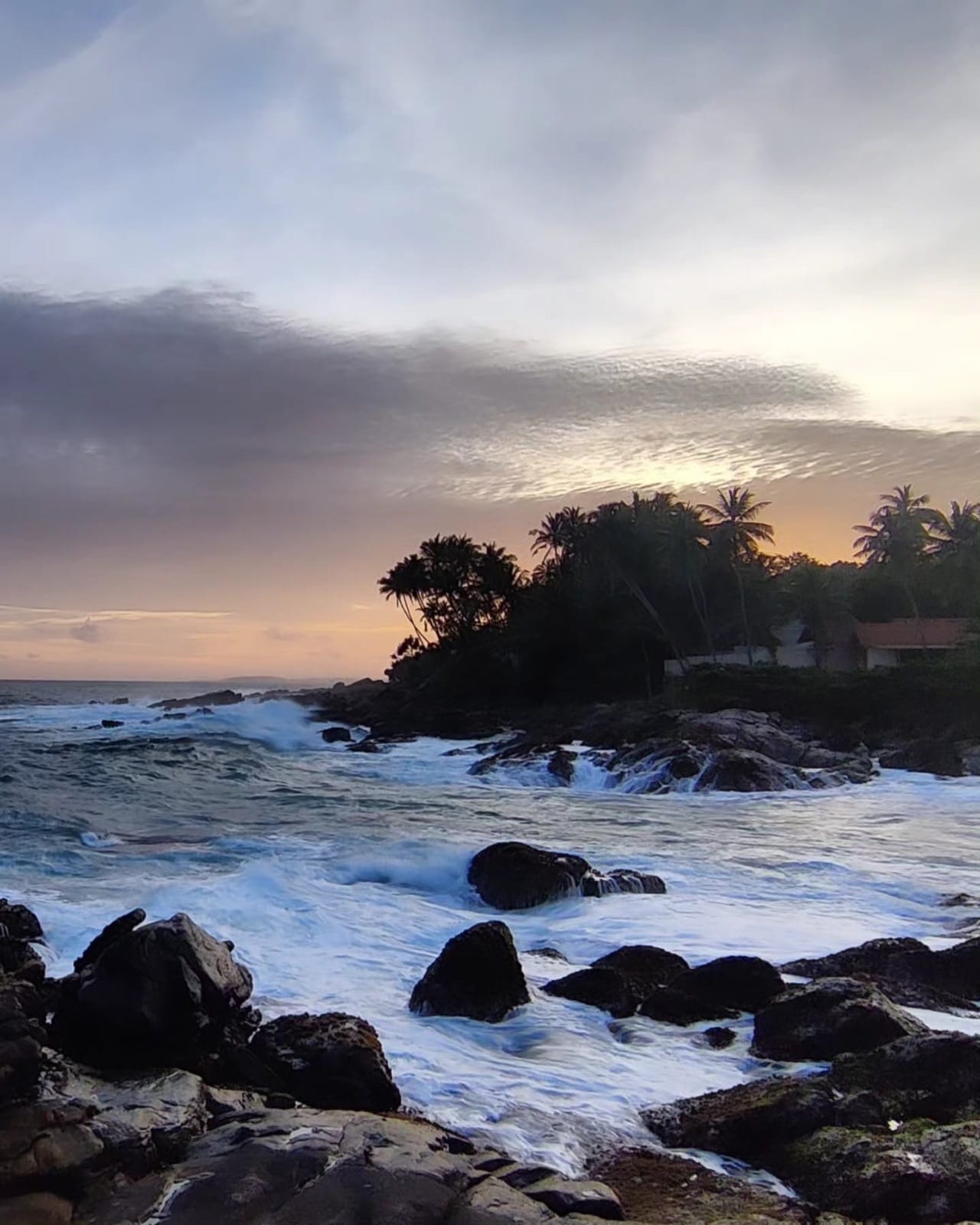
After an honest day’s work one evening, I walked to a little island nearby to catch the sunset. It’s tied to the mainland by a sandbar that only exists at low tide. Give it an hour and the bridge is gone, so I was racing the tide, the tourists and the sun all at once. Quite possibly the best sunset of the whole trip.
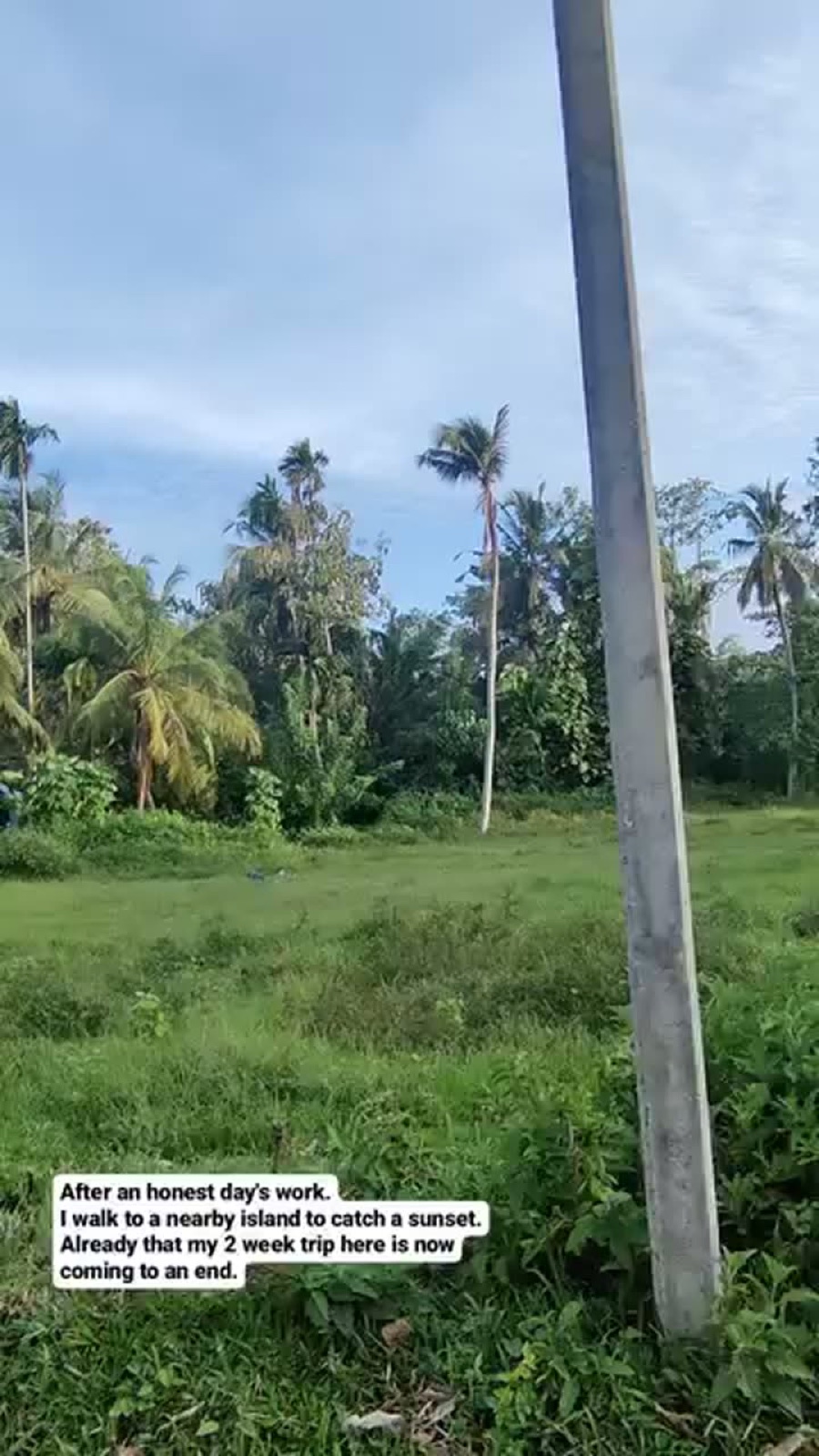
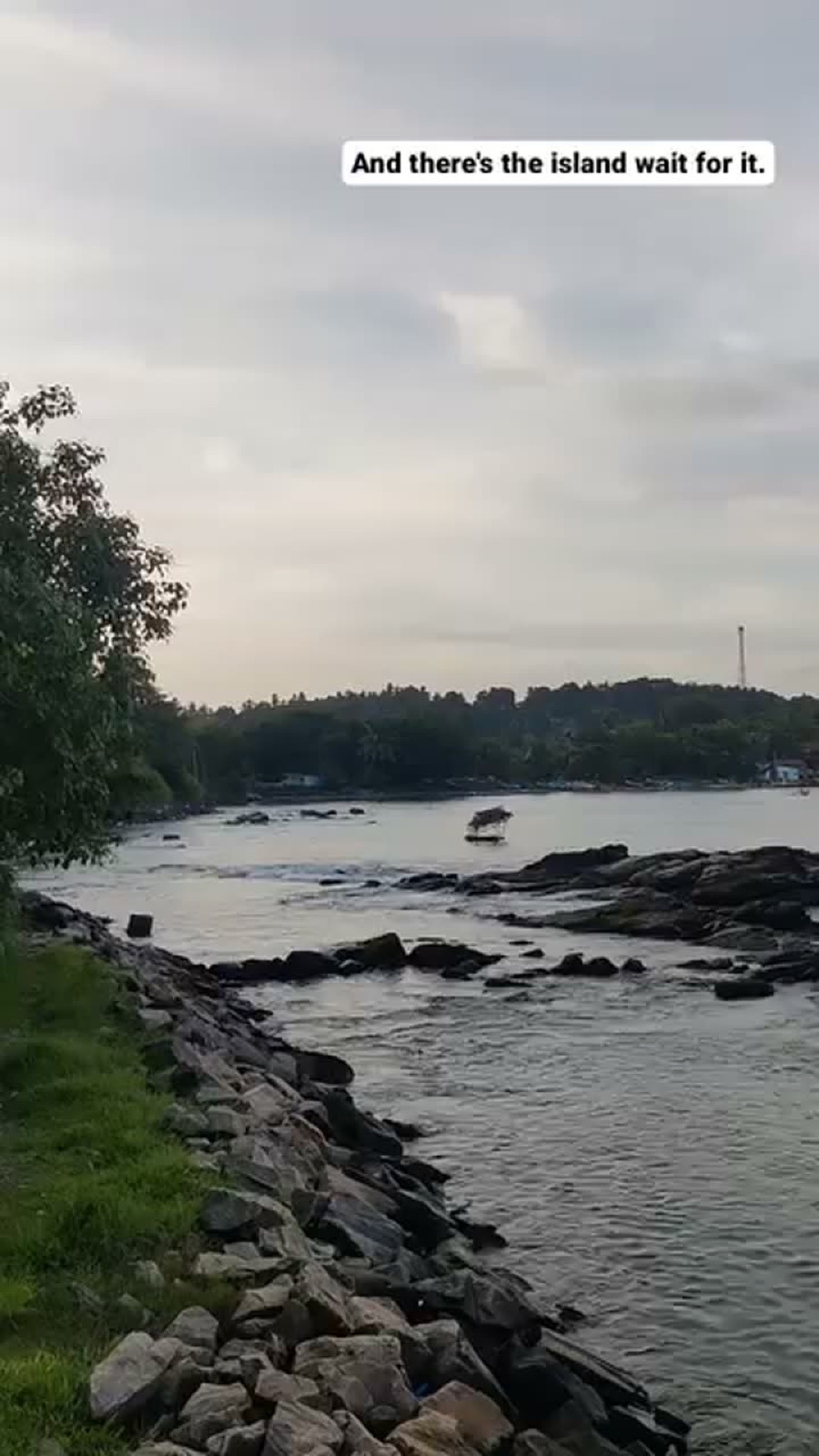

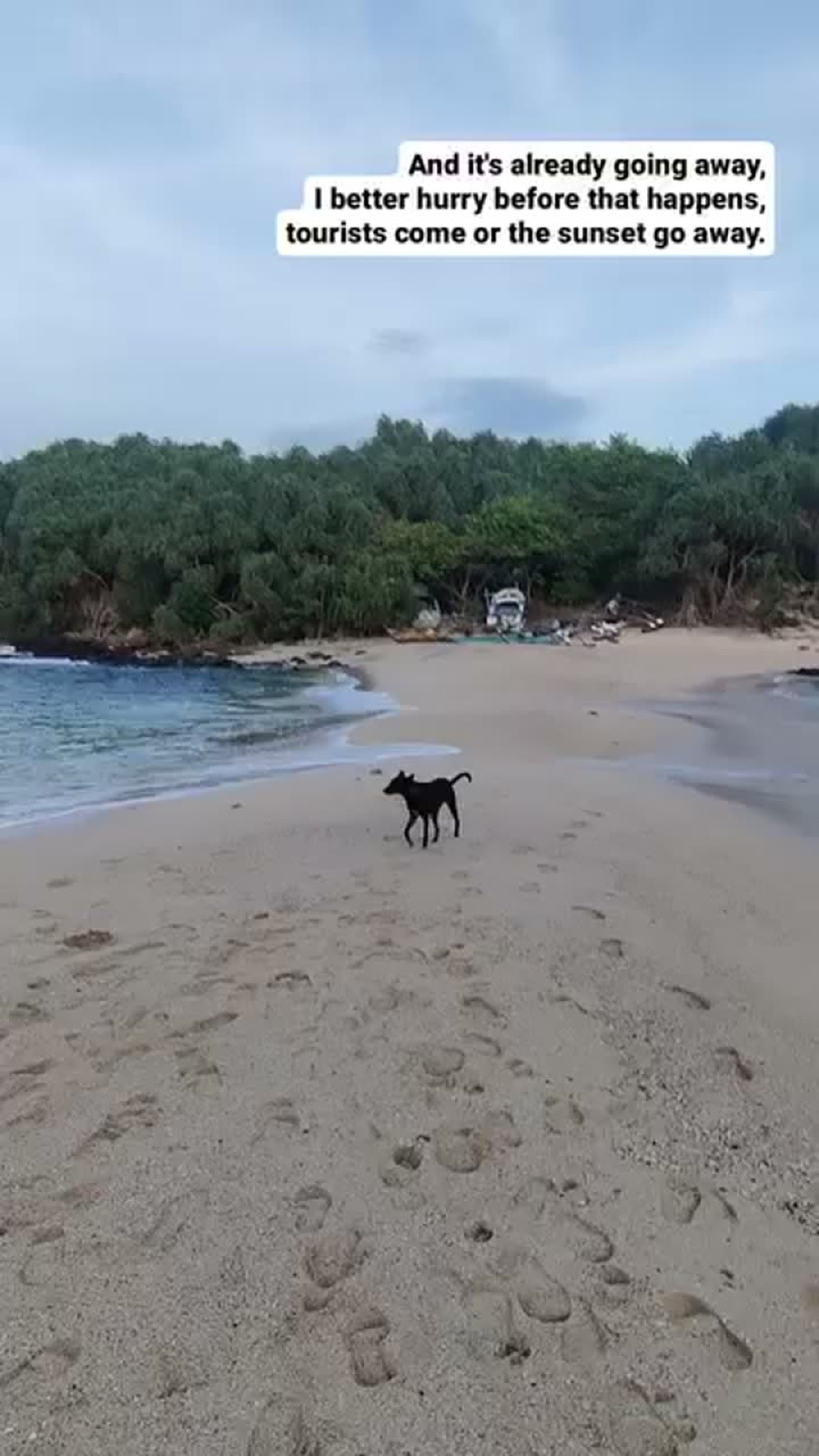
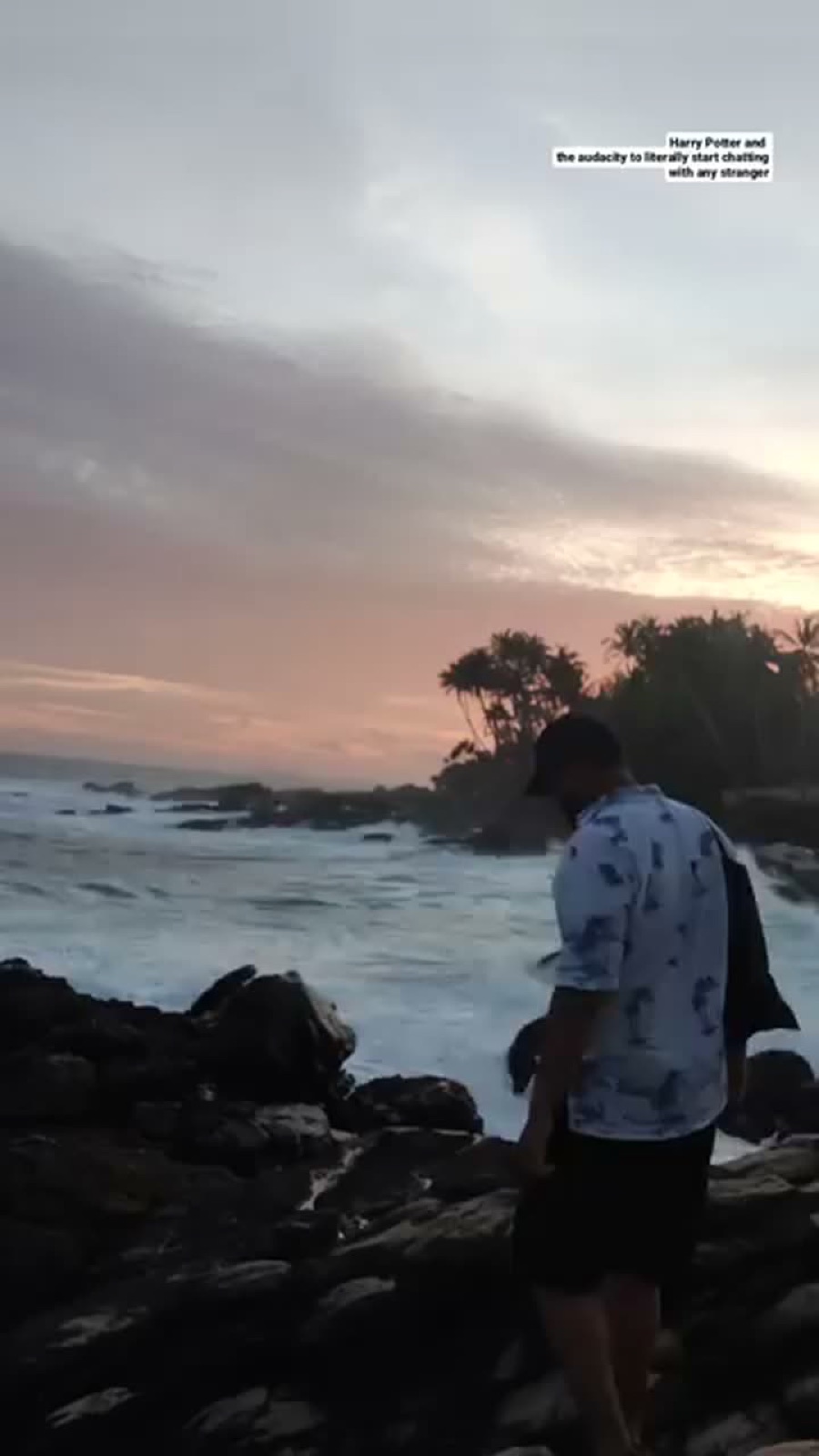

The island you can only walk to for an hour.
Nights at the Doctor’s House, and dinner at Rosie’s
The Doctor’s House became the default after work. Some nights were long, loud parties that ended at sunrise. Some nights were karaoke. And some nights were even better than both.
The best one started at Rosie’s Kitchen & Homestay. A group of us from the hostel went over for a proper family dinner, hosted by a lovely woman who also runs Sri Lankan cooking classes, and she cooked a huge spread for all of us: 18 dishes. Then, with enough beer, Ali (one of the hostel managers) and I decided dinner should become karaoke, and the rest of the managers were in. The video of us singing is in the slideshow below, and that night is one of my core memories of Hiriketiya.
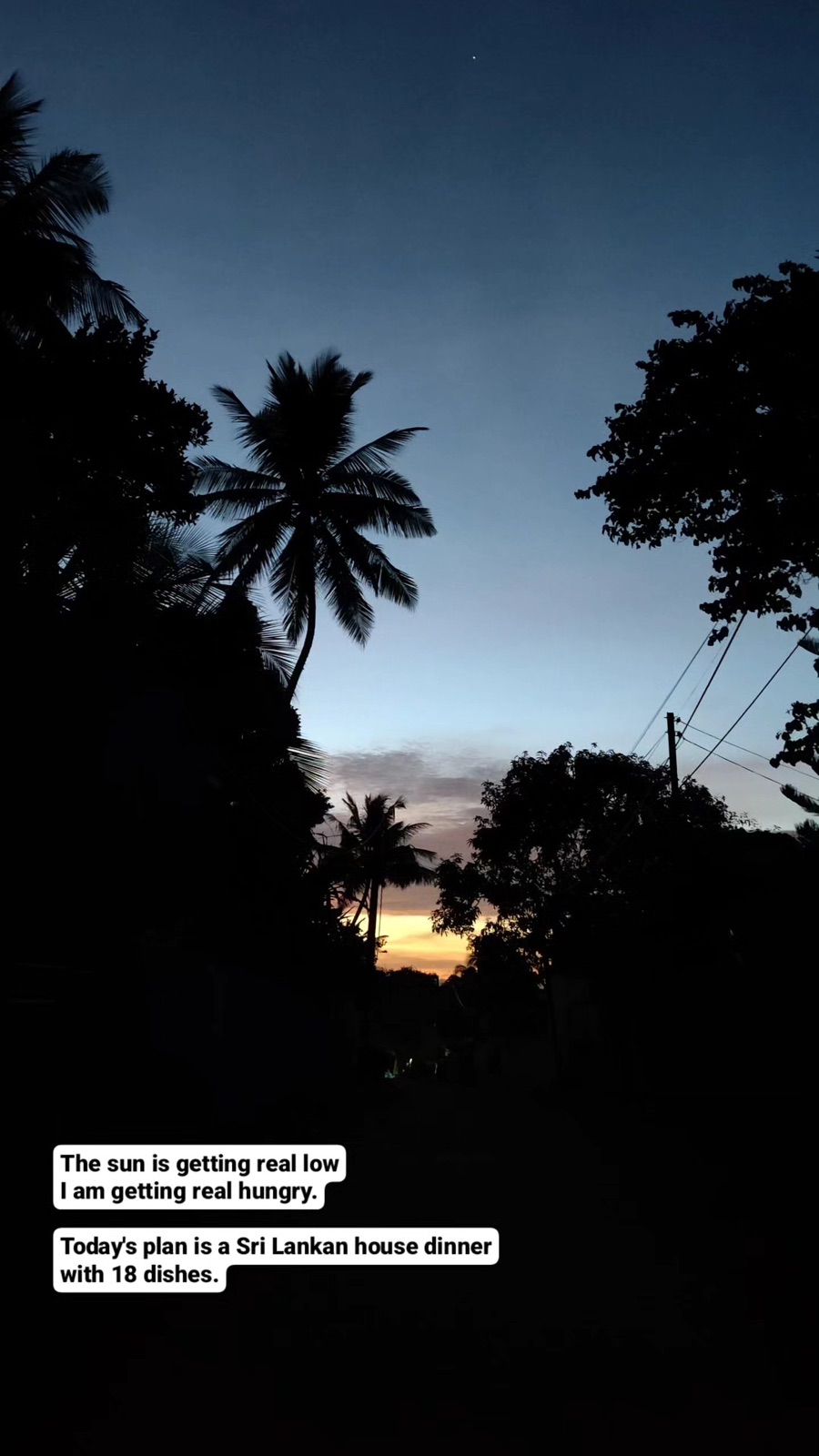
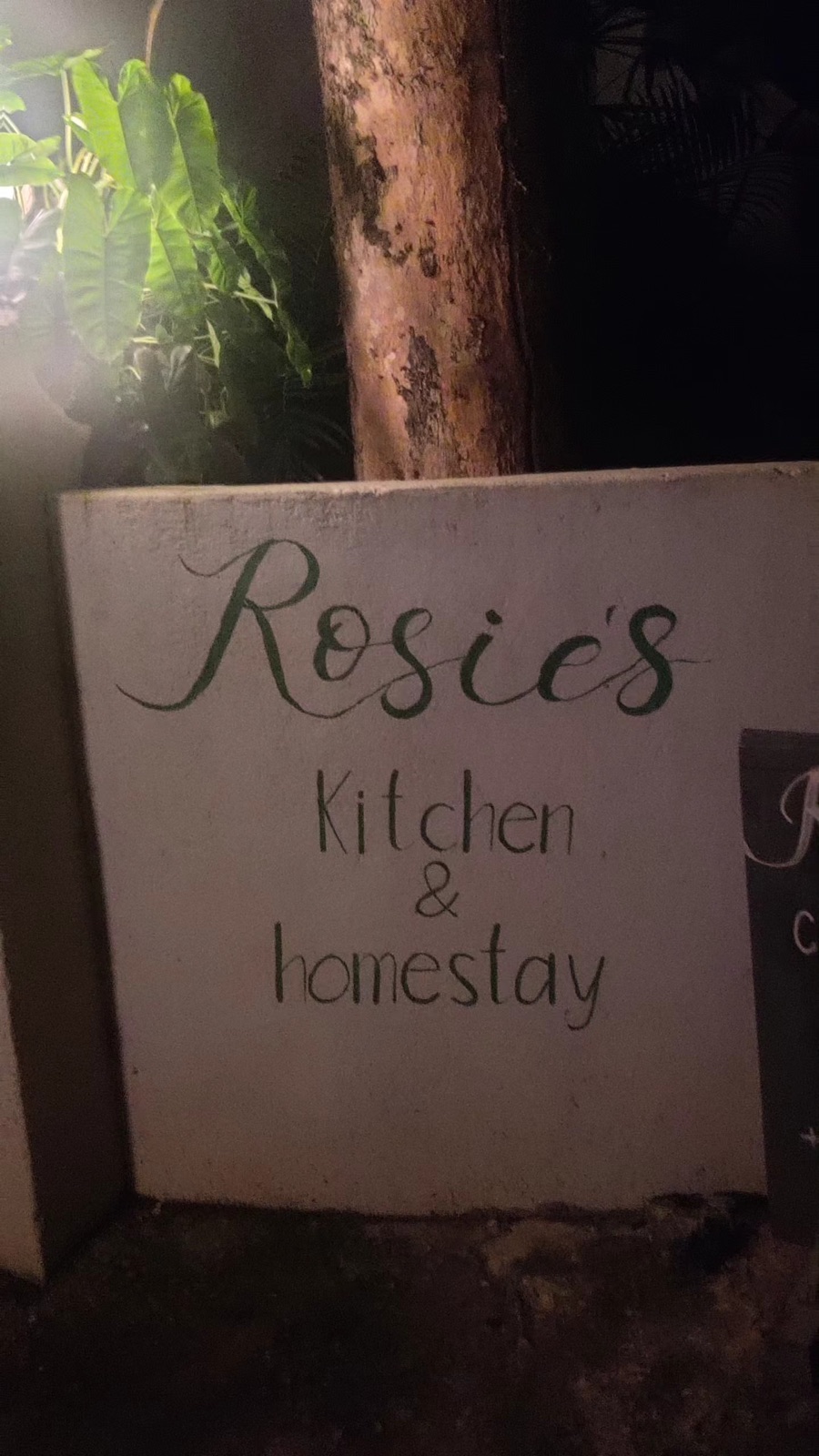
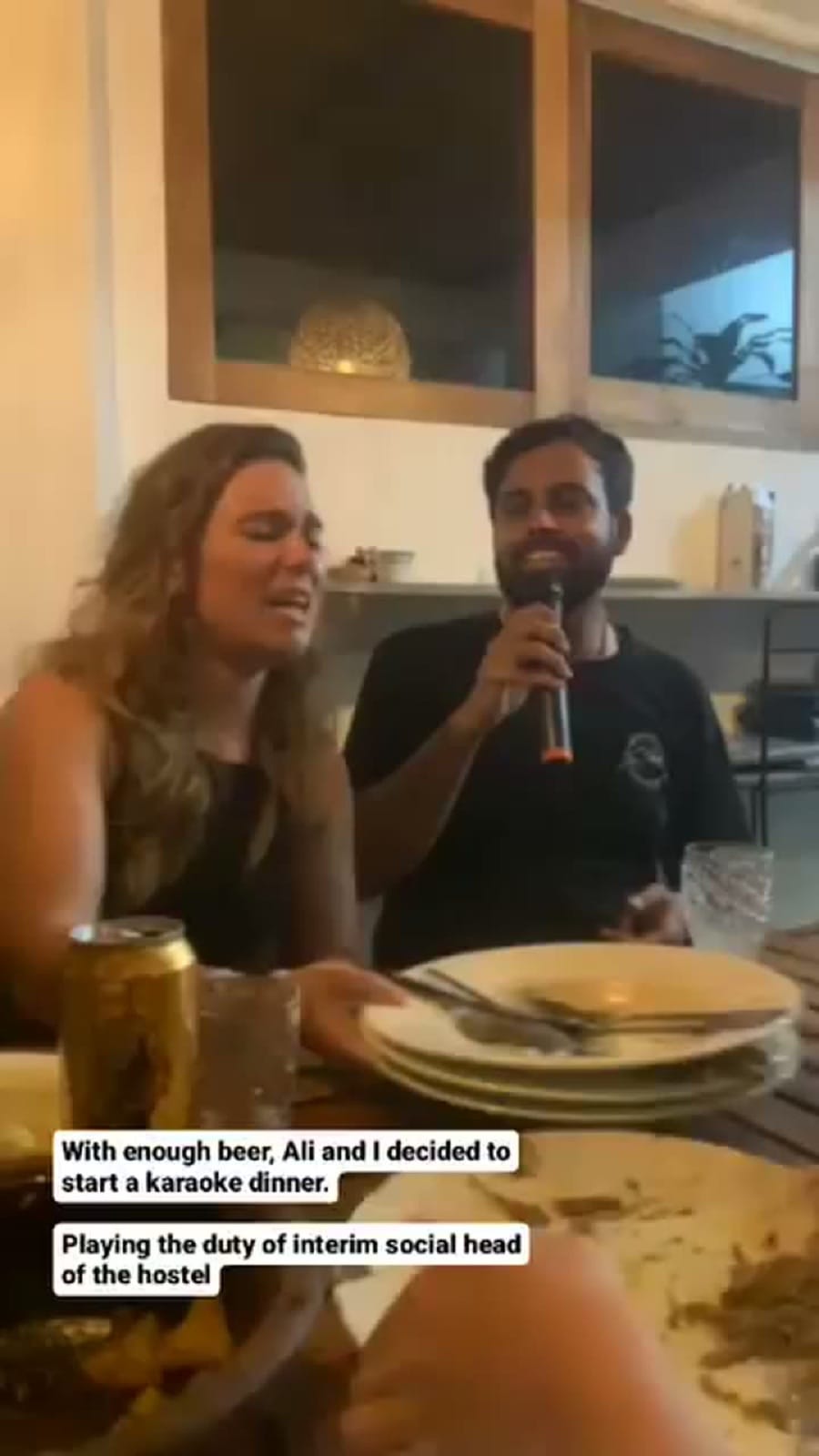

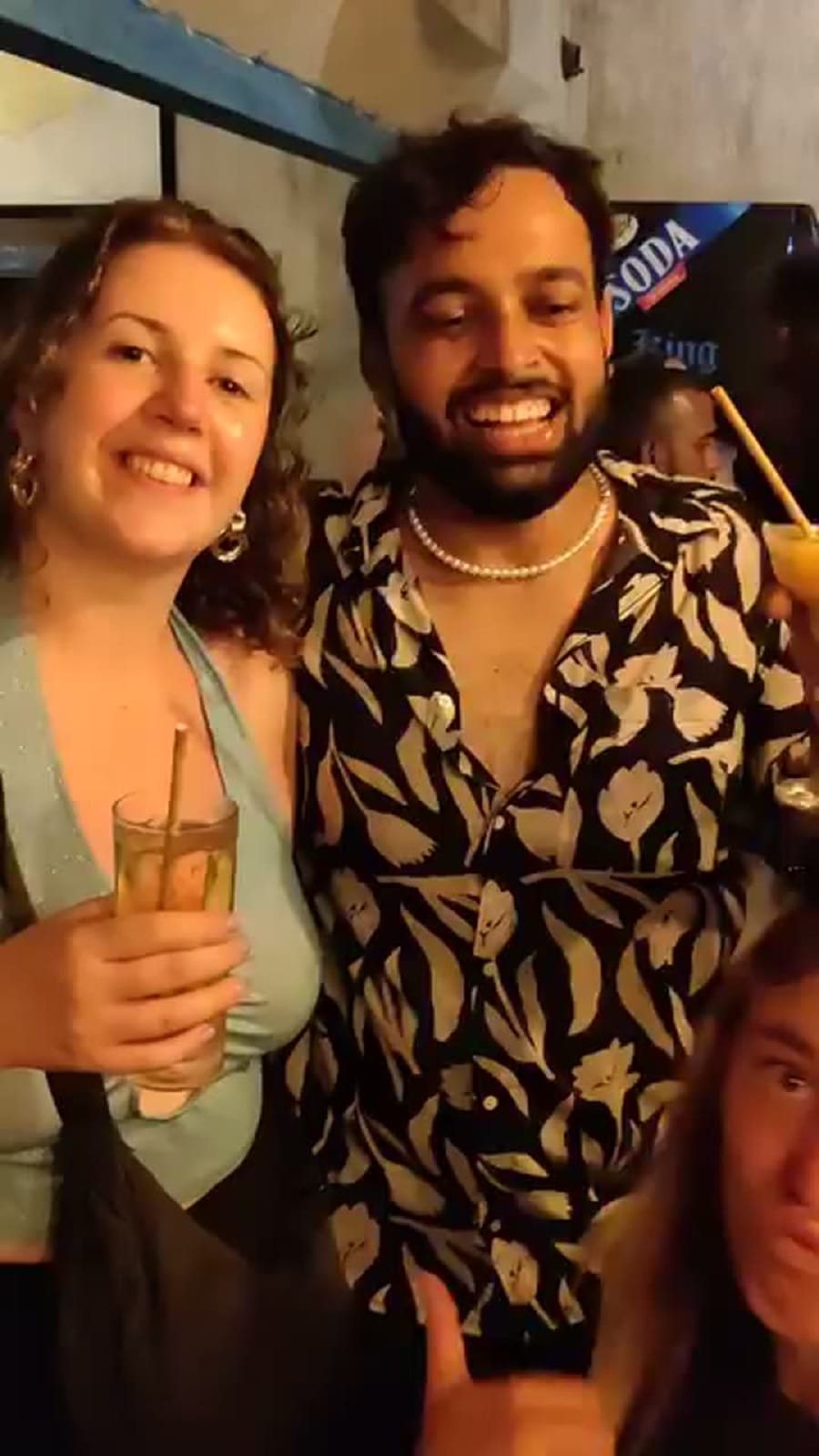

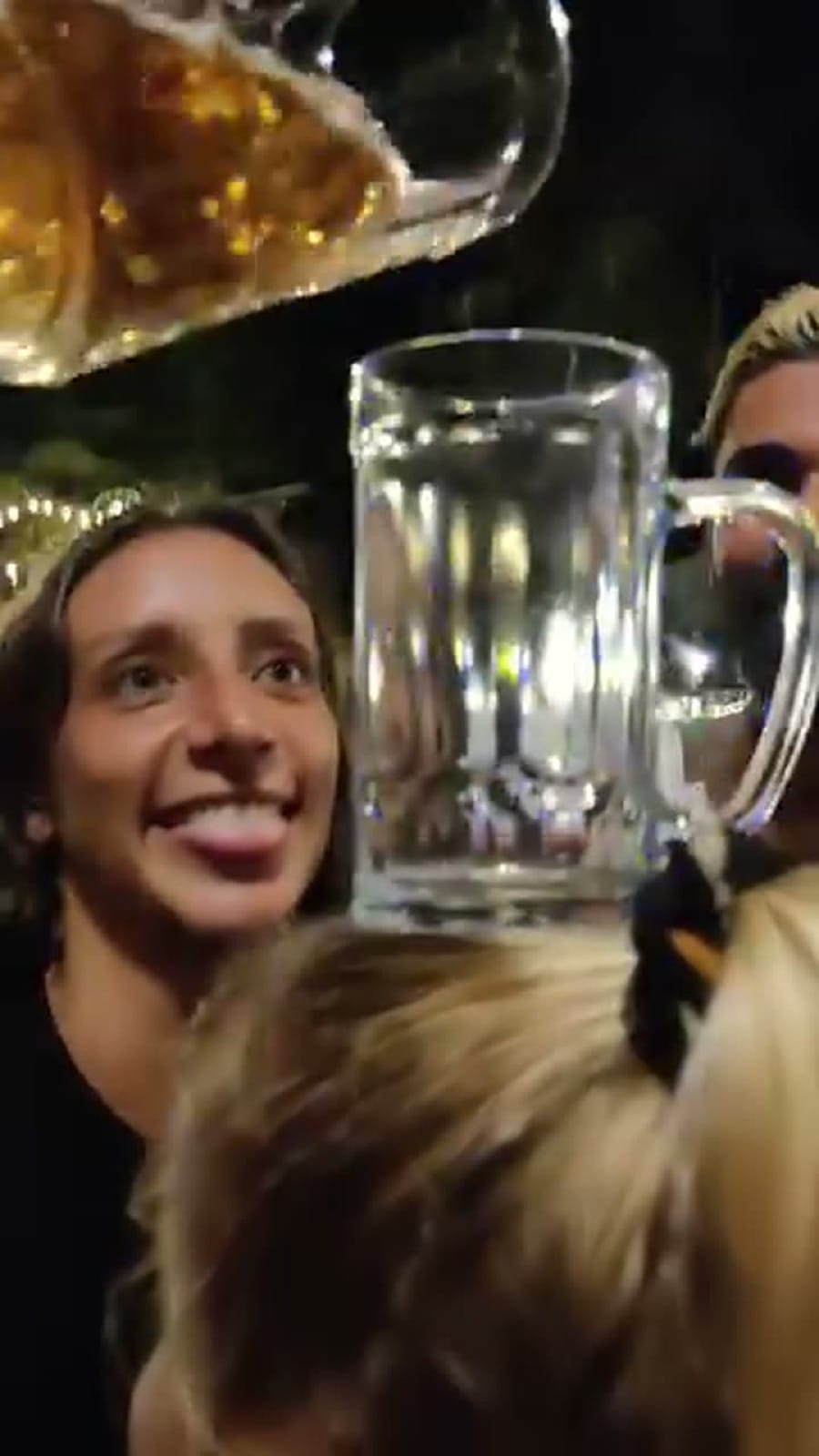

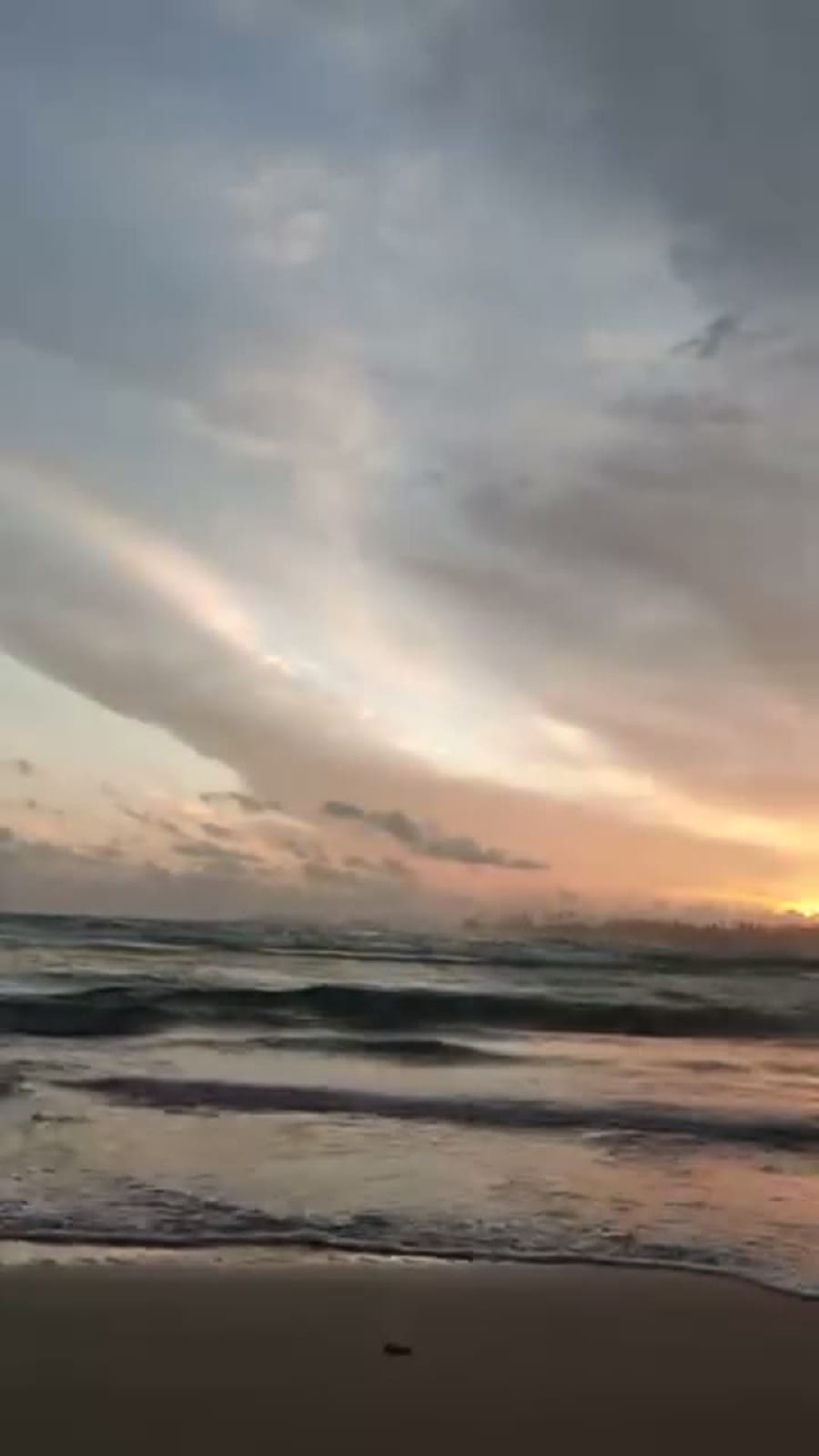
An 18-dish dinner at Rosie’s, karaoke with Ali, 1 am at the Doctor’s House, 4 am in the back of a pickup.
That’s what got me about this place. It’s such a small town, and there’s so much to do, and partying is far from the only thing going on. Still, one in the morning at the Doctor’s House when exactly the right song comes on, and 4 am in the back of a pickup begging someone to take me home, are hard to beat. I have a few receipts from that place and exactly zero regrets.
Galle: a fort, a cricket ground, and a cheesecake at sunset

My favourite day trip of Sri Lanka
On day 20, I took a day trip from Hiriketiya to Galle on a cheap coastal bus (300 LKR), and it turned into one of the best day trips I’ve ever done. The Fort is a walled old town on a headland that served as a major port under colonial rule: coral-stone ramparts, a white lighthouse, cobbled lanes, All Saints’ Church, and cafes that have clearly read the same Pinterest board. The Galle cricket stadium sits right below the walls, and I got to see both.
It got off to a rocky start. I reached in the afternoon, it started raining almost straight away, and I spent a good while trying to get my bearings inside the fort walls. A couple of food stops later, the sky cleared and the place won me back.

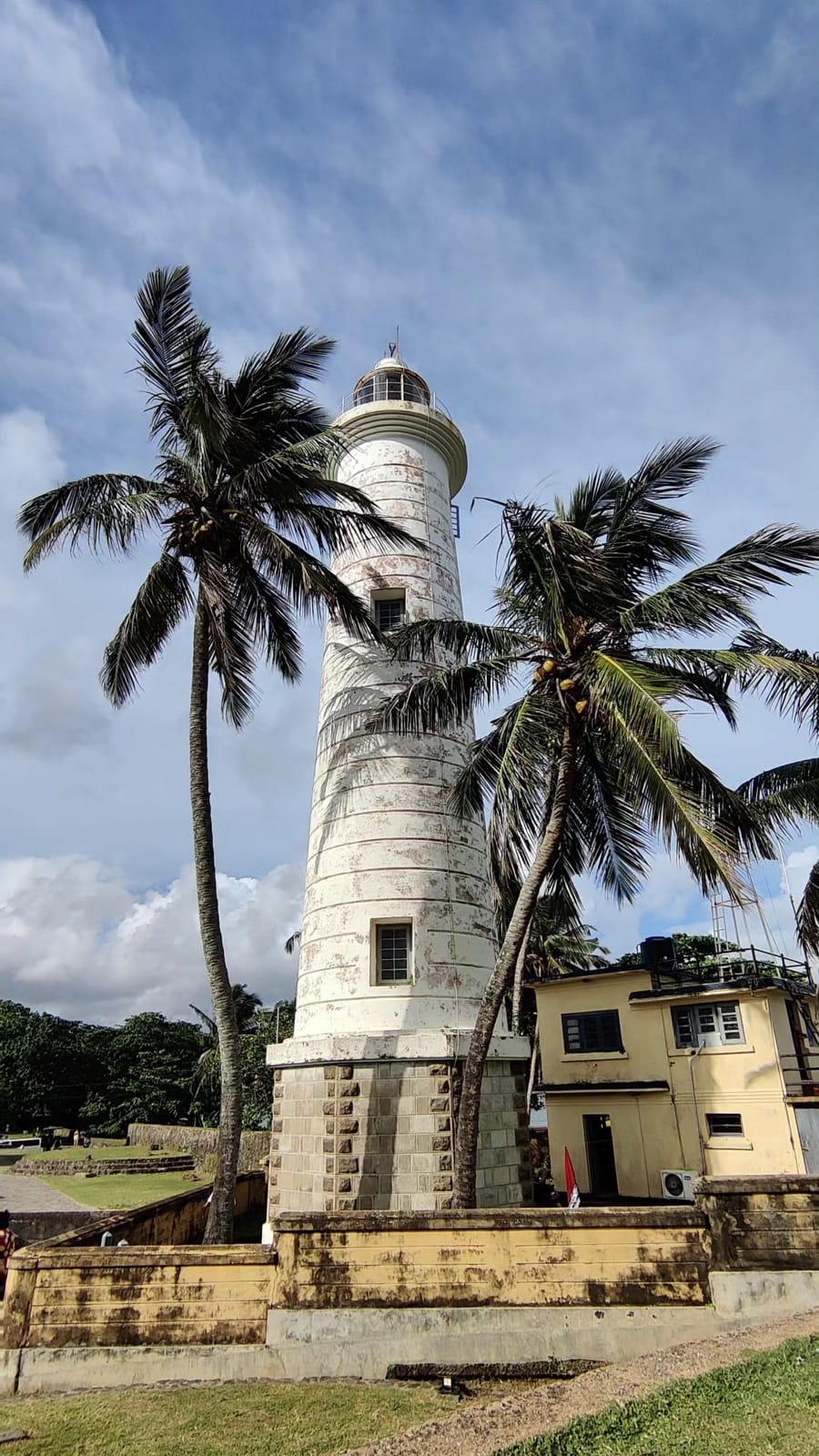


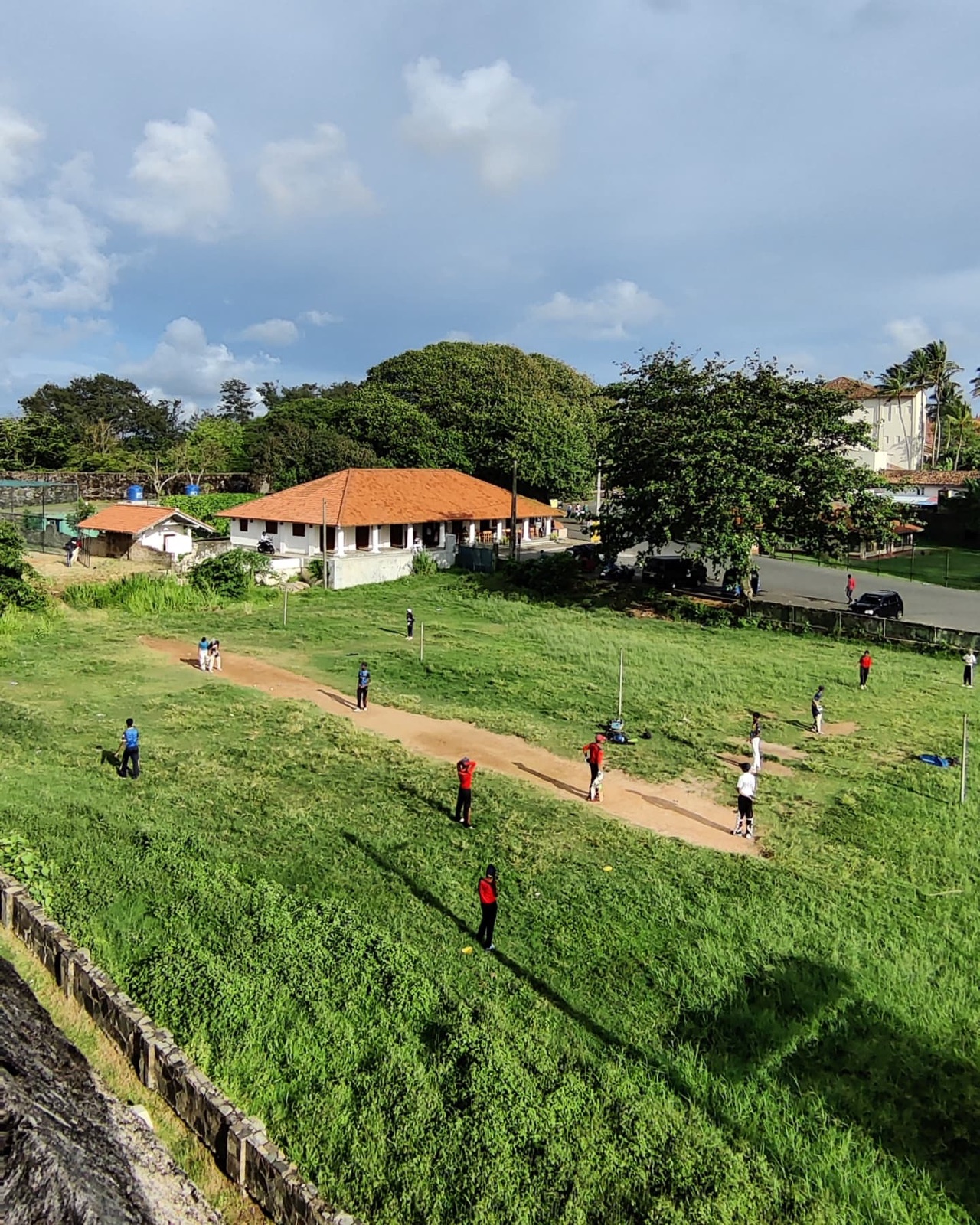
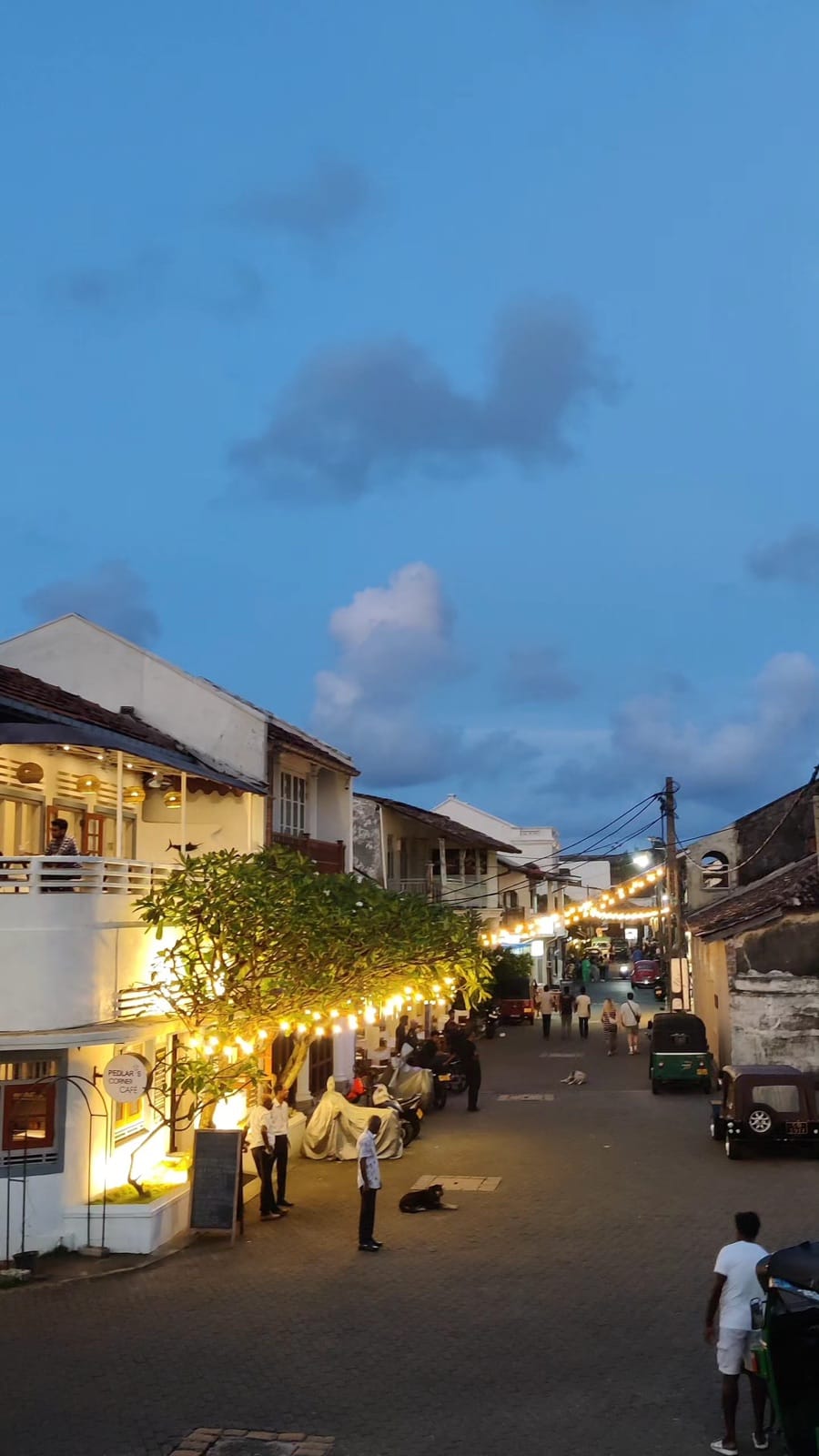
Sunset, with a cheesecake
After all the roaming, I just stopped. I bought a slab of white chocolate salted caramel cheesecake from a British bakery in the fort, purely for sunset purposes, carried it to the edge of the ramparts, and sat there while the whole place turned to honey.
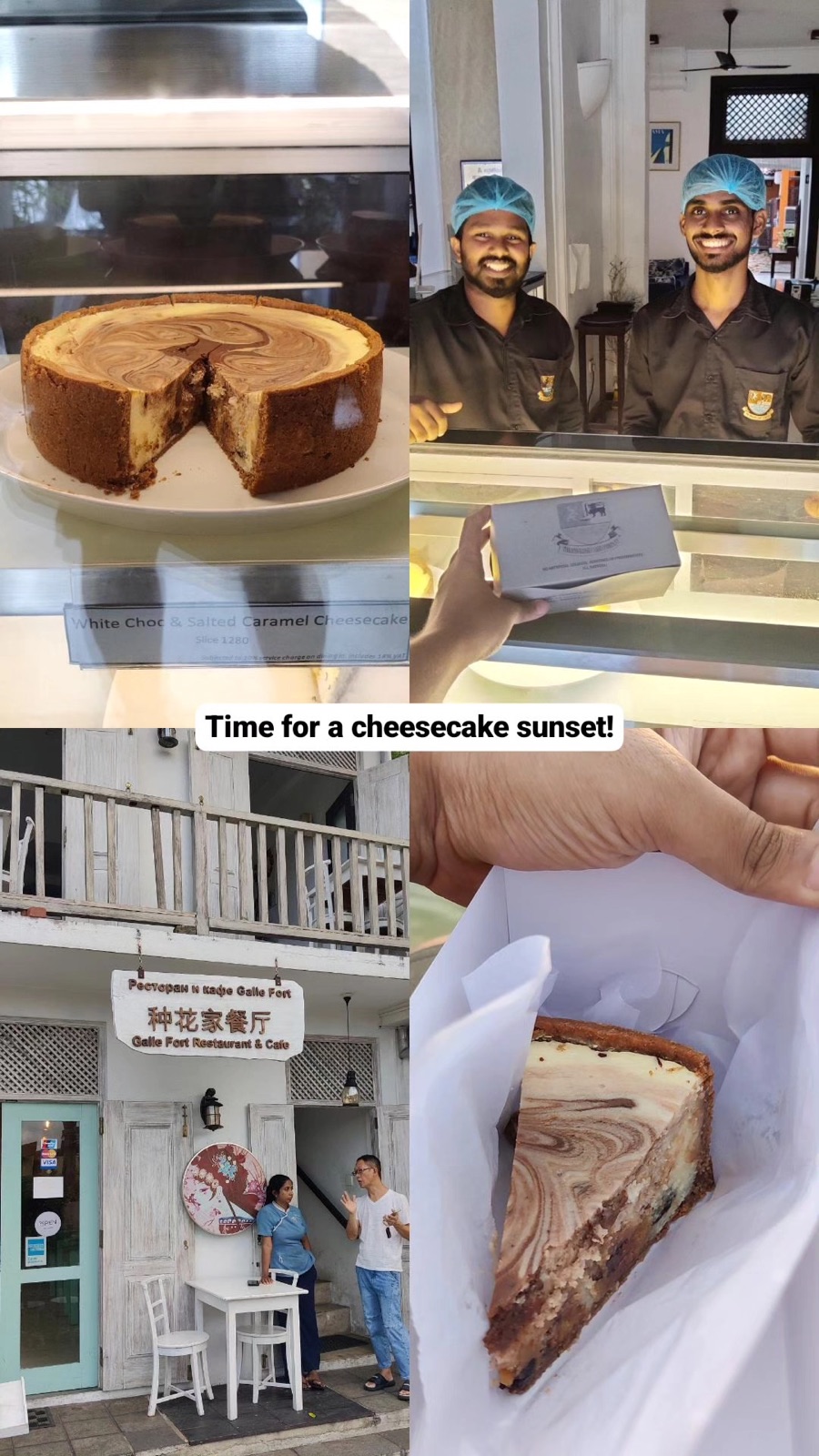

Getting back was its own little trip: a bus to Weligama, another bus to Hiriketiya, and a tuk-tuk to the hostel. A huge day, and one I’d do again tomorrow.
Weligama: a near-bite, a hospital, and plenty of bandages
The morning after Galle, surfing got its revenge, and I came out of the water with a banged-up hand and leg. I sorted it out as best I could and carried on, because of course I did. The very next night, walking back from a party at 3 am, a dog nearly bit me. Nearly. But rabies is not a “probably fine” kind of thing.
So I turned my last day trip, to Matara and Weligama, into a hospital run too. On the way, I found out I could just walk into a state hospital in Sri Lanka and get thoroughly checked and bandaged. A few hours later I was back on a bus, wrapped up like a mummy, grinning like an idiot.

The bill: 3,300 LKR at the hospital, rabies shots included. That’s less than my one night at Smoke & Bitters.
Weligama is where Sri Lanka teaches people to surf, with a wide, flat bay, gentle waist-deep waves, and a row of surf schools along the sand. The irony was not lost on me. I was in no state to get in the water, so I found a shady courtyard cafe under a mango tree instead, then headed back to Hiriketiya for one last night.

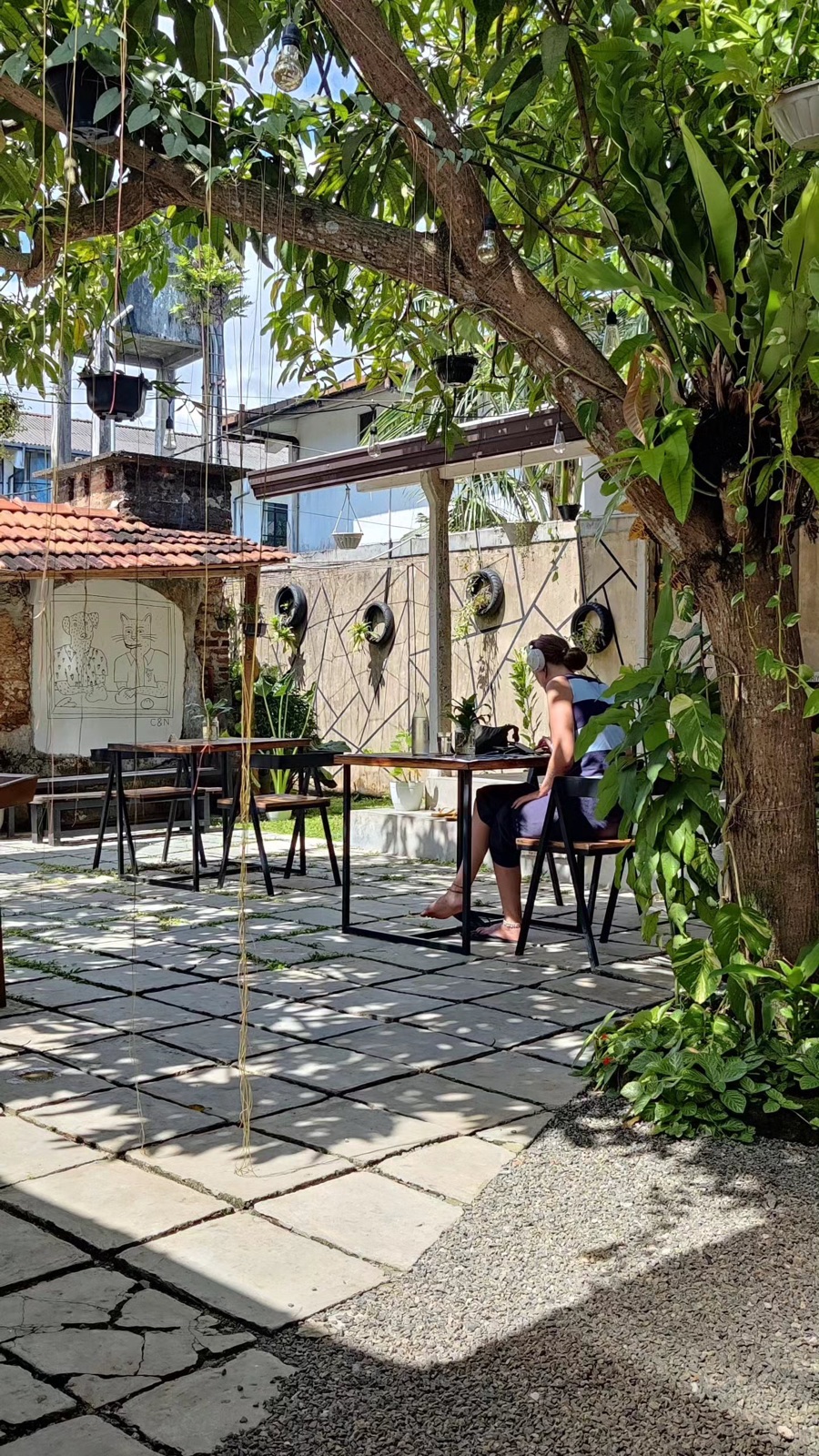
Smoke & Bitters, on my last night
Wherever I travel, I try to visit a bar from the World’s 50 Best or Asia’s 50 Best lists. So when I found out tiny Hiriketiya has one, it made the place even better. Smoke & Bitters is Sri Lanka’s best bar, and it was No. 29 on Asia’s 50 Best Bars the year I went.
It was day 22, my last night in Hiriketiya. I caught one more sunset on the beach, then walked over for a cocktail served in a cup shaped like a Sri Lankan devil mask, with a cinnamon stick smoking on top. Great drink, good people, and a 4,000 LKR night I’d happily repeat. Fin.
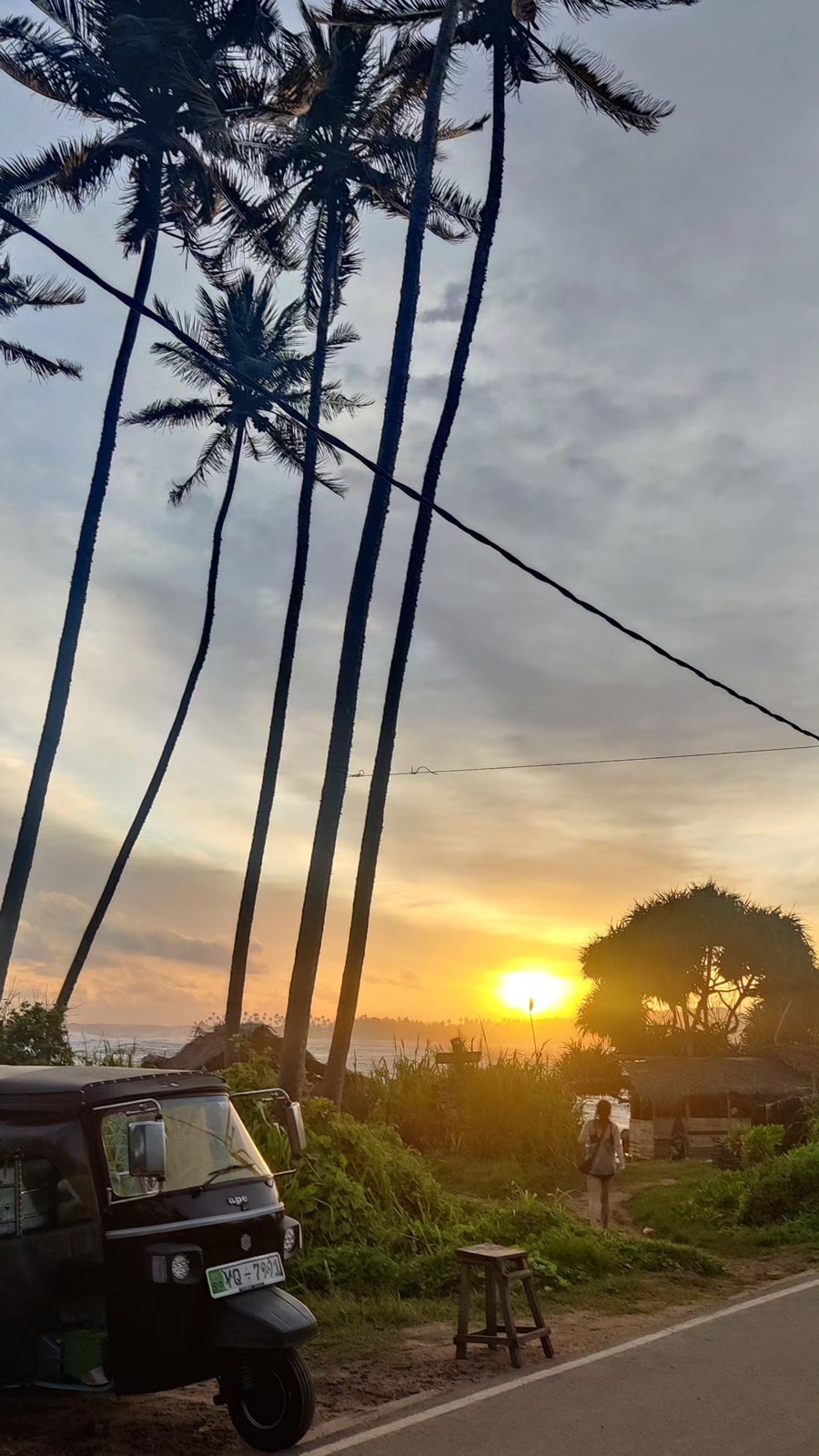


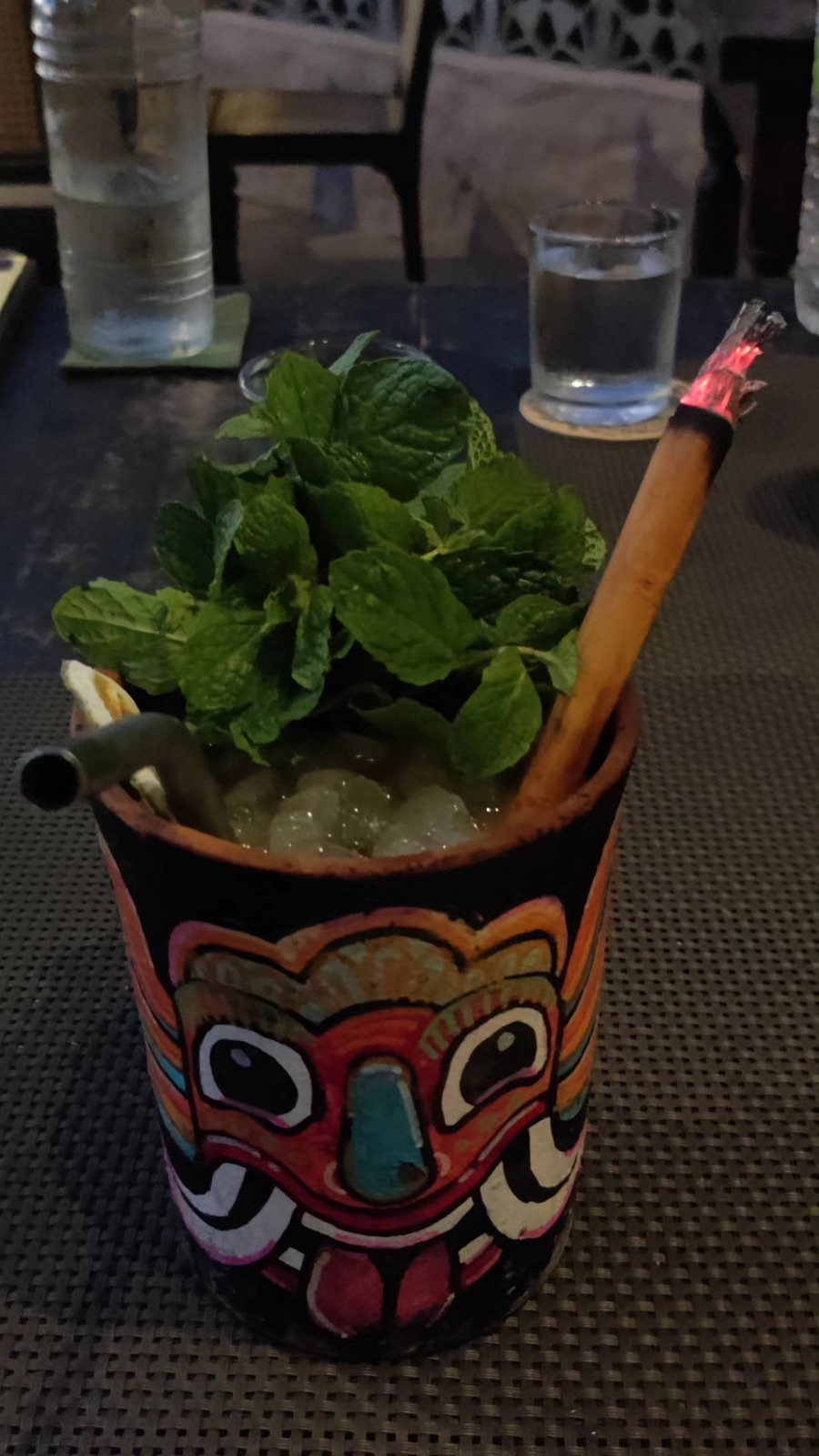

Last night in Hiriketiya: one more sunset, one very good cocktail, and the sign that closed the chapter.
Colombo got the leftovers
The morning after Smoke & Bitters, I checked out of Clics and took a nice chartered bus up the coast to Colombo (1,130 LKR). A good enough ride, and the last long one.
Colombo was for Sanjam. Sanjam is a very good friend I met in Toronto, who showed me around the city there (soup dumplings included). When she mentioned she might be doing a trip to Sri Lanka, that’s the whole reason I came. Then I booked everything and found out she’d booked a completely different trip. So instead of travelling together, we got one day together in Colombo, going around the city till late.
Colombo is a working capital, not a sight in itself, but there’s a good day in it: the Lotus Tower over Beira Lake, the old colonial parliament near Galle Face, and Port City rising on land reclaimed from the sea.
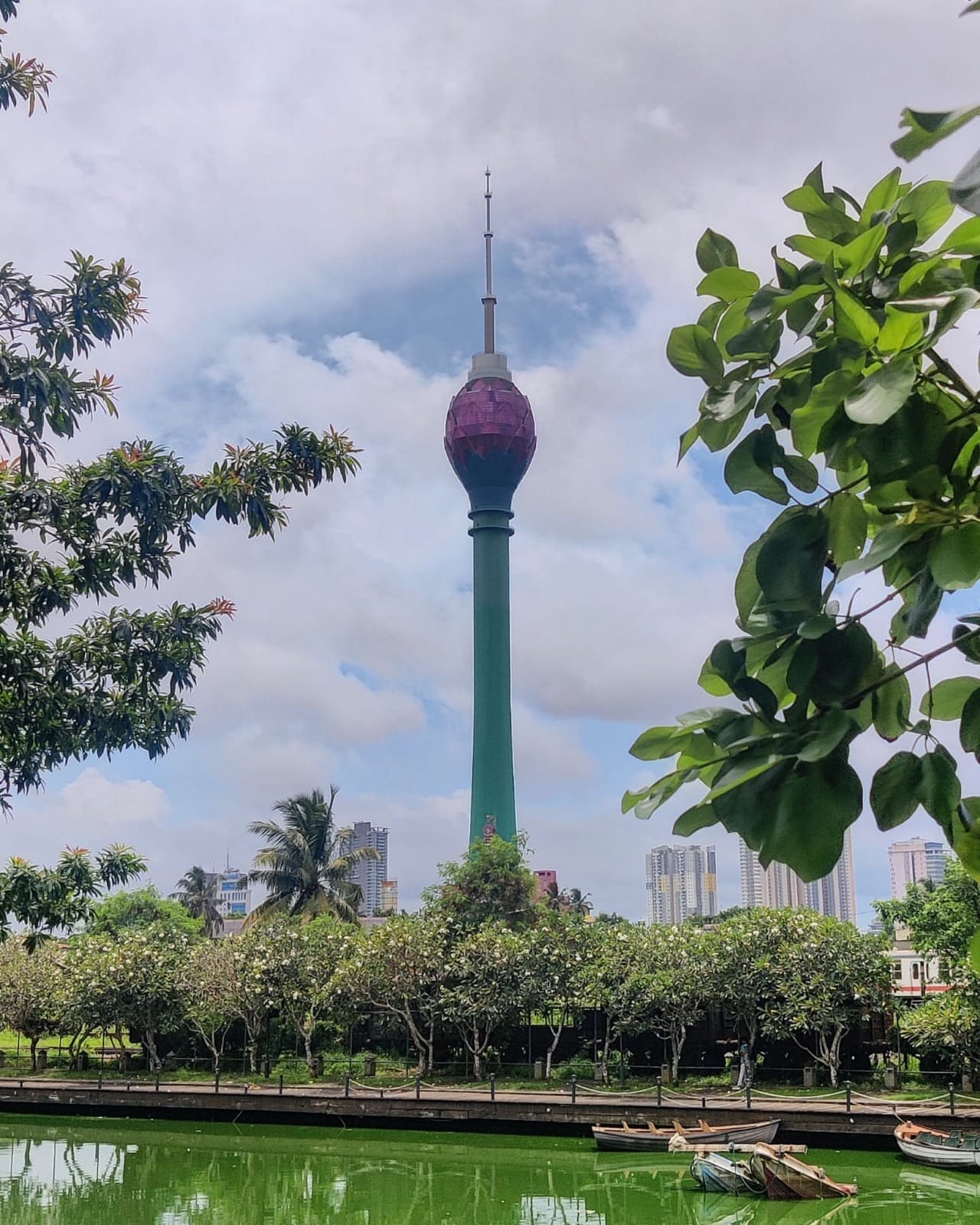
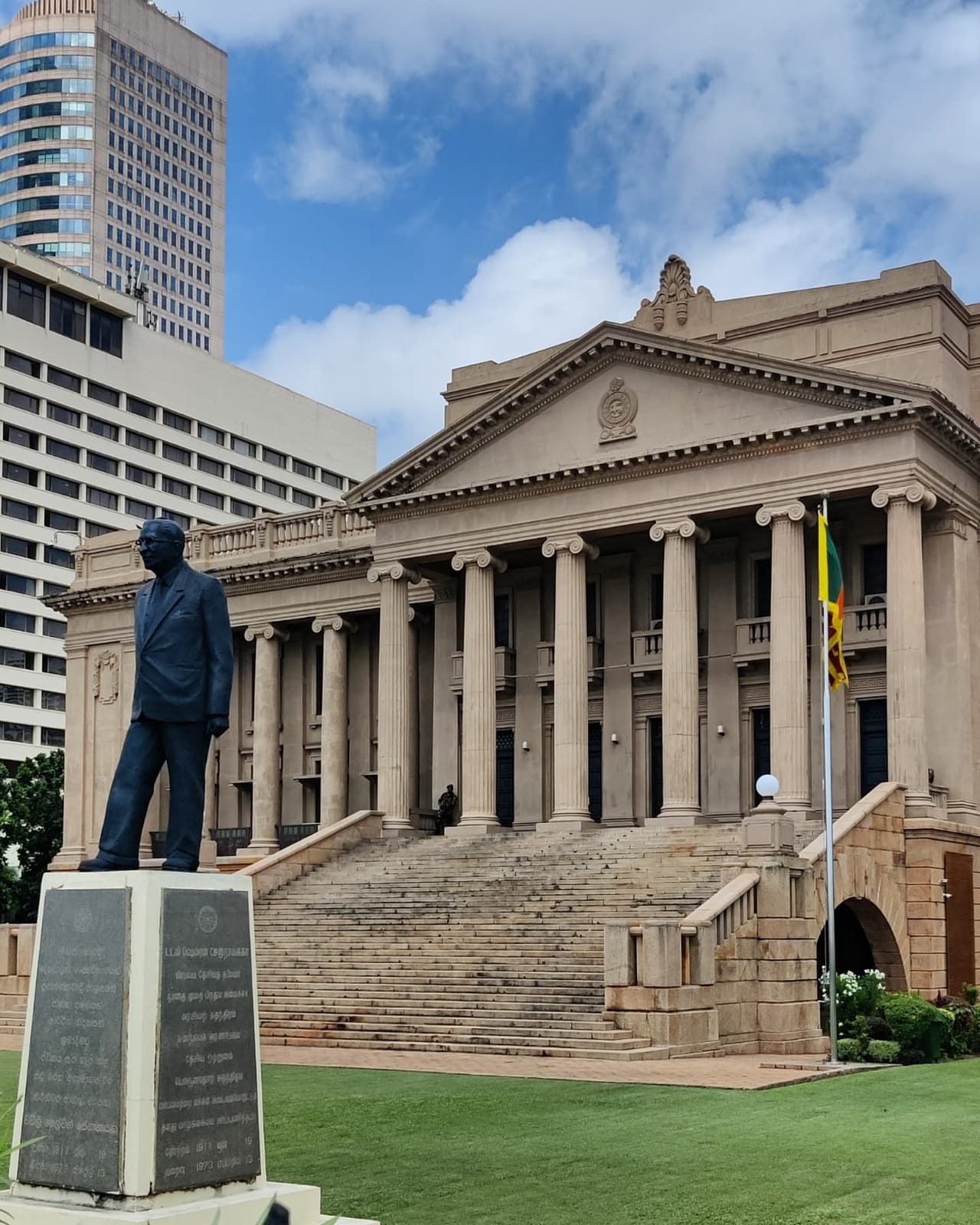
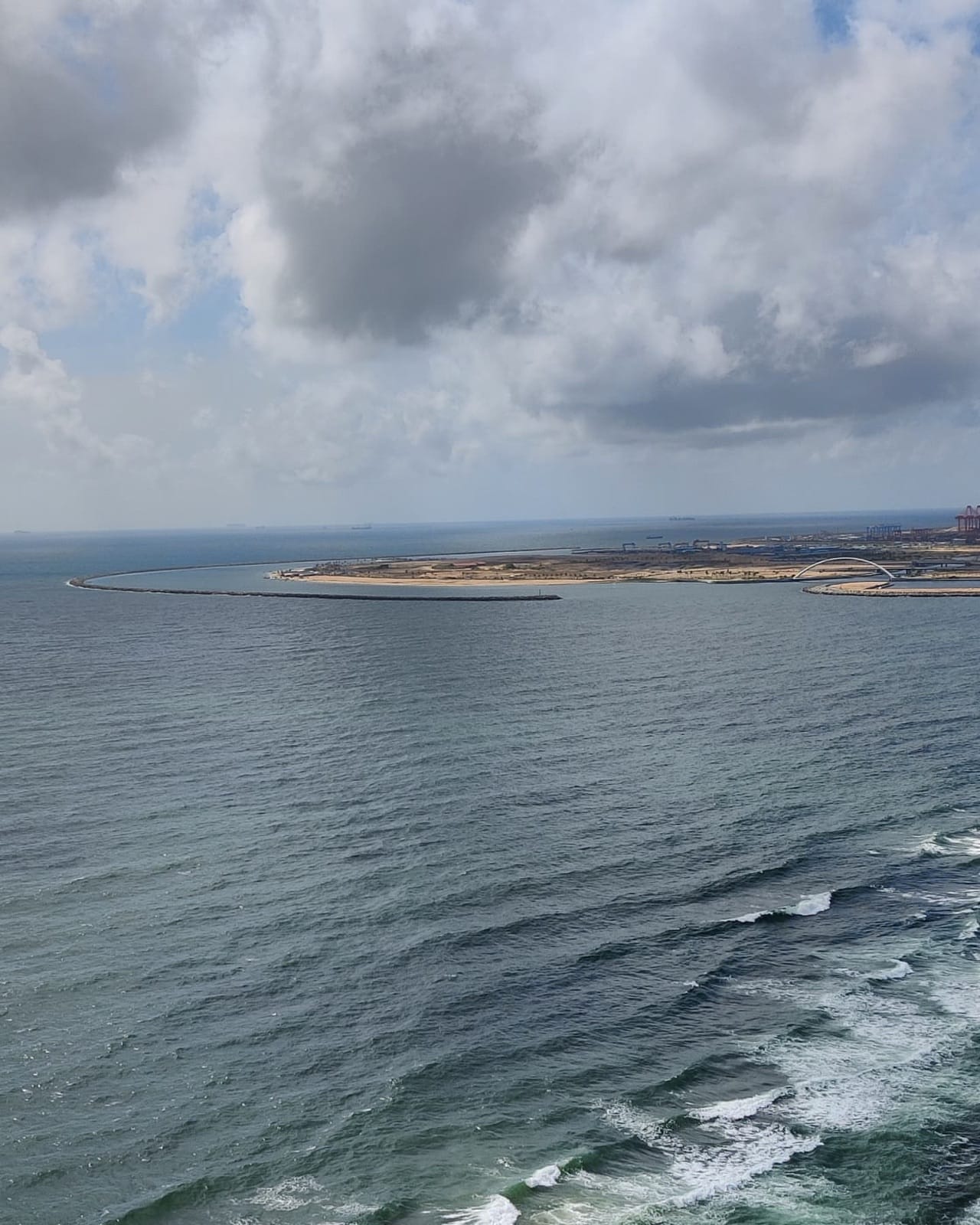

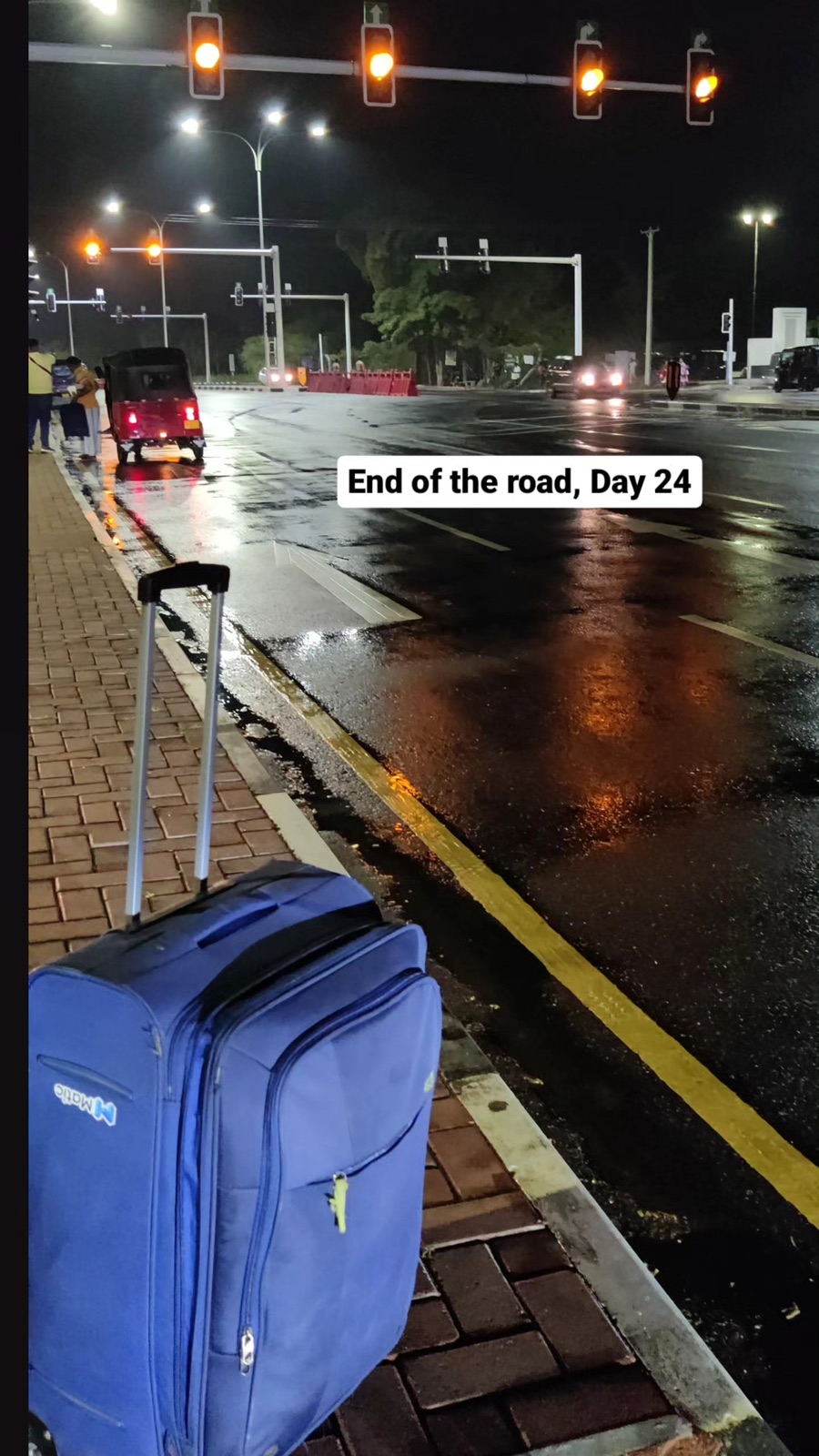
I spent the night at the Hilton Colombo because I had a very early flight and wasn’t taking any chances. Colombo’s airport is basically the only one in the country, so it’s busy. I sat in two different lounges before boarding. At check-in, the staff saw me hopping around with my luggage, so I showed them my leg and explained the surfing. No upgrade at the counter. Then, as I was boarding, the Air India team moved me up to business class. Very kind of them. Honestly, it was the best possible end to a trip that started with their delayed flight and a gate at the far end of Terminal 3.

The friendliest people I’ve met anywhere
Which brings me to the thing I keep coming back to: how gracious this island is. The trader from Jaipur who shared his cab. The hostel owner who woke up at 5 am to get me to my train. The Treehouse driver who dropped me exactly where the Kandy bus stops. The bus conductor who saved me six hours. The man in Nuwara Eliya who was driving to the station anyway and took me along for 700 LKR (I tipped him extra for the generosity). Lilo, who got me on a trek. The woman at Rosie’s Kitchen who fed a whole hostel.
People in Sri Lanka might stare a little on a bus, but they’re polite, and they’re almost always helping you figure things out. The currency gap is stark, and the country has been going through a lot, which made that kindness land even harder. Coming from India, it was a welcome change of pace. That’s not to say people back home aren’t gracious to strangers and tourists. I just had an excellent time in Sri Lanka, and the people are most of the reason.
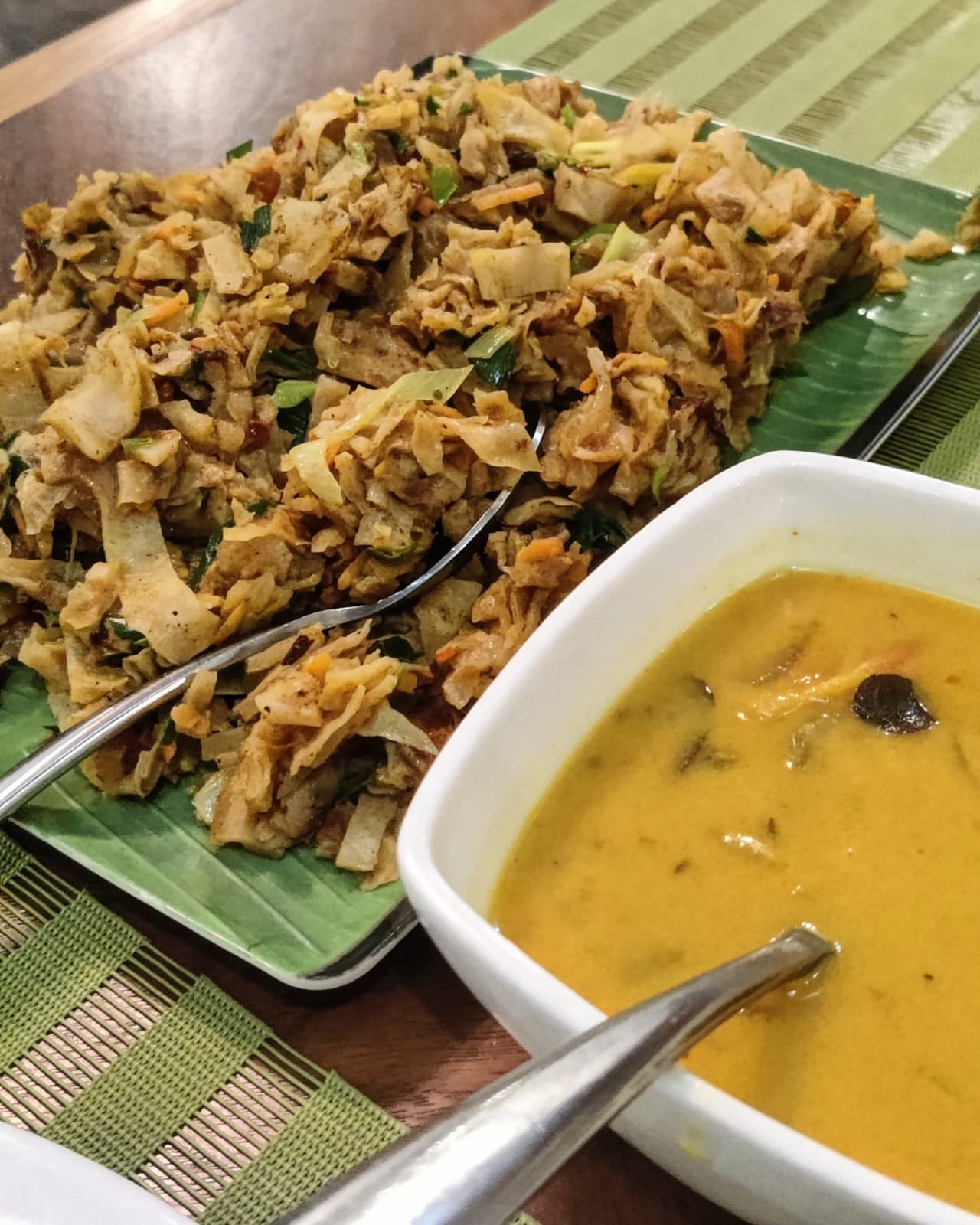
The food was special! Felt like home.
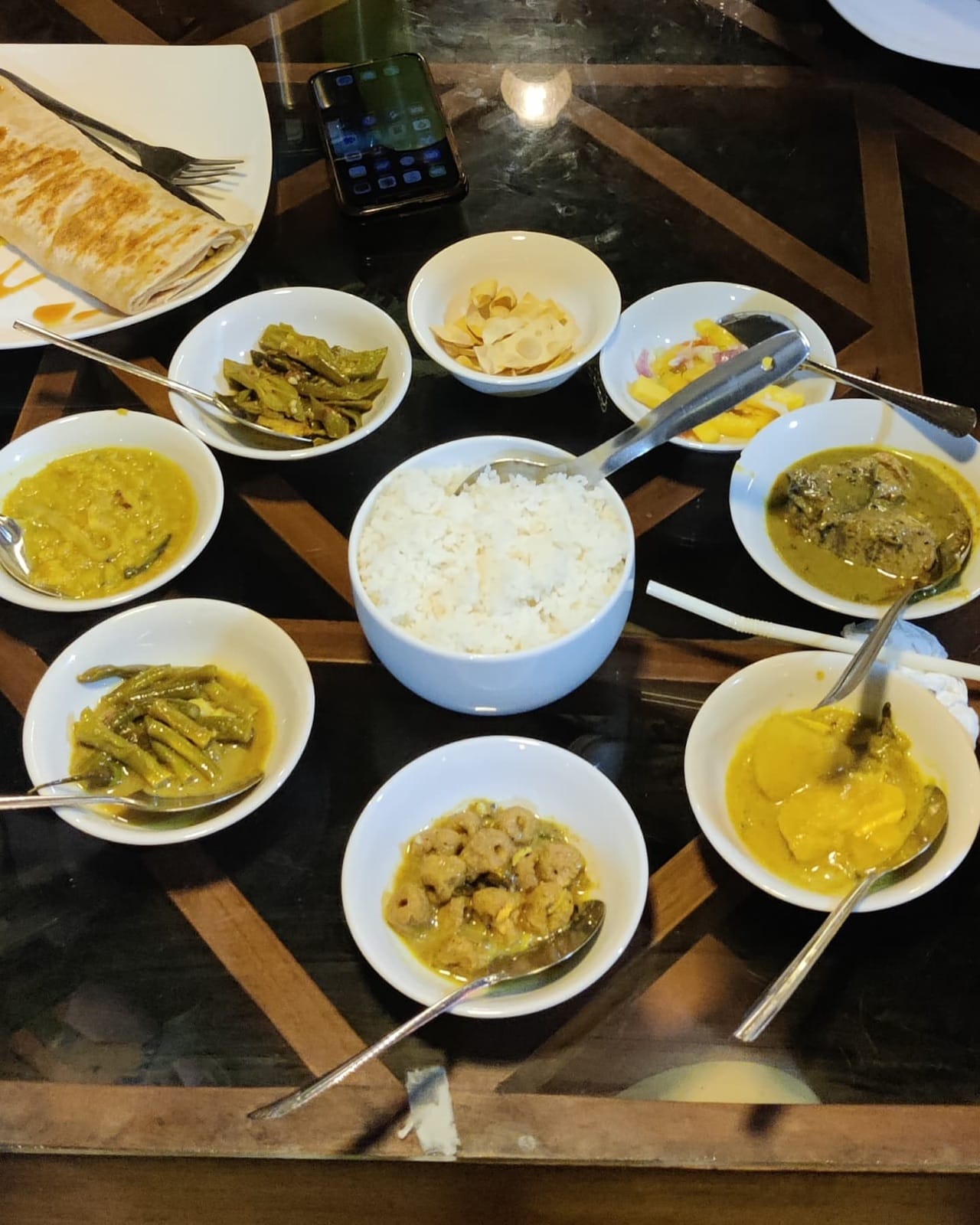
Sri Lankan food is the quiet best thing about the country. Rice and curry is the daily miracle: one plate of rice ringed by five or six little curries, dhal and jackfruit and coconut sambol, and whatever the cook felt like that morning. Kottu roti is the street-food star, chopped flatbread, vegetables, and egg hammered together on a hot plate with a rhythm you can hear from down the road. And up in the hills, a plate of chole and rotis tasted exactly like Delhi.
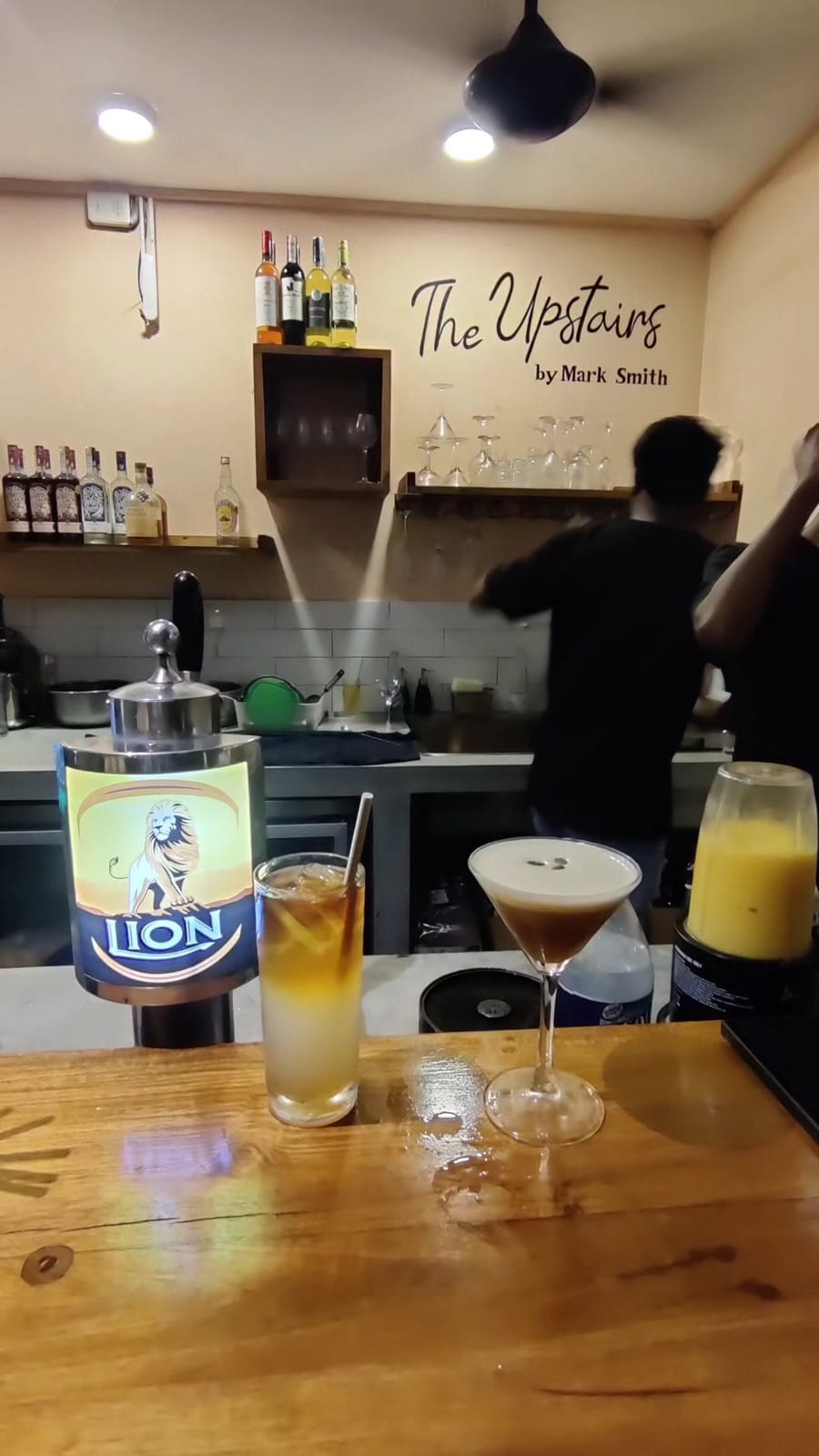
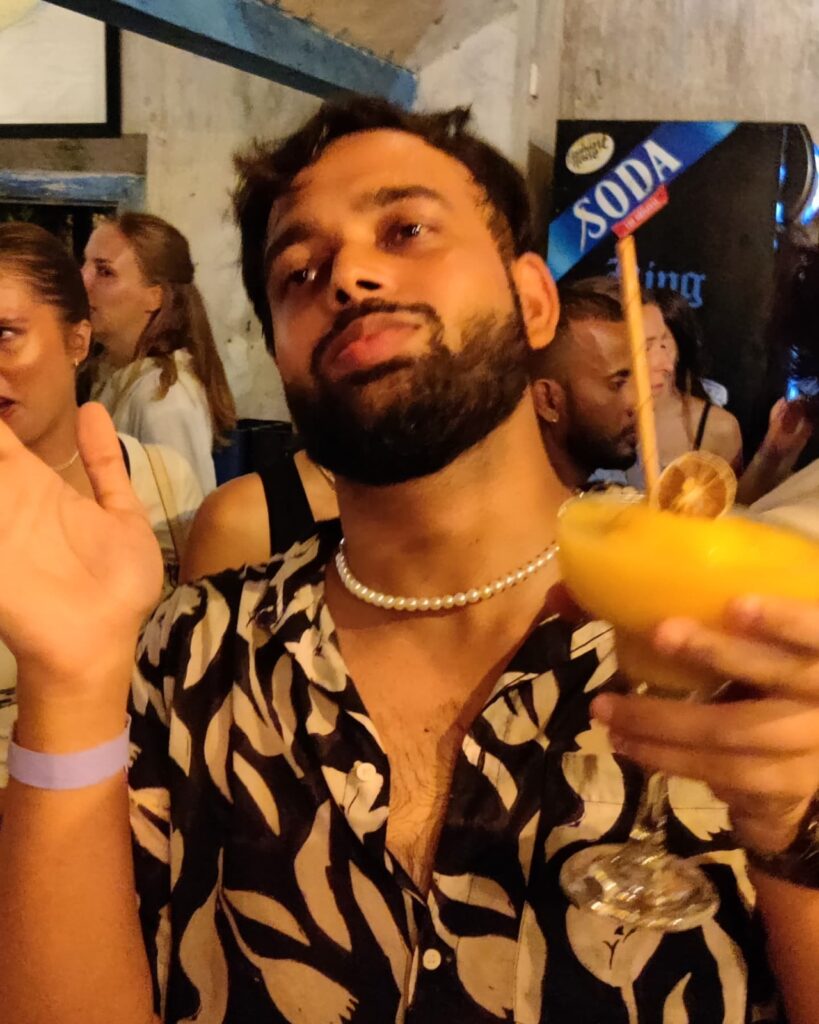
Hiriketiya also turned out to have a cocktail scene I did not expect. Besides Smoke & Bitters, The Upstairs by Mark Smith does an espresso martini worth the walk, and a different person emerges when I get one of their mango frozen margaritas. Between the curries and the cocktails, food, nightlife, and drinks came to 18 percent of the whole trip. No notes.
What it actually cost
Here are the real figures, straight off my card statements and a very abused notes app. 24 days in Sri Lanka came to 58,660 INR, flights included. At the time, 1 INR got you roughly 3.6 LKR, so most things felt cheap to an Indian wallet and the trains felt almost free.
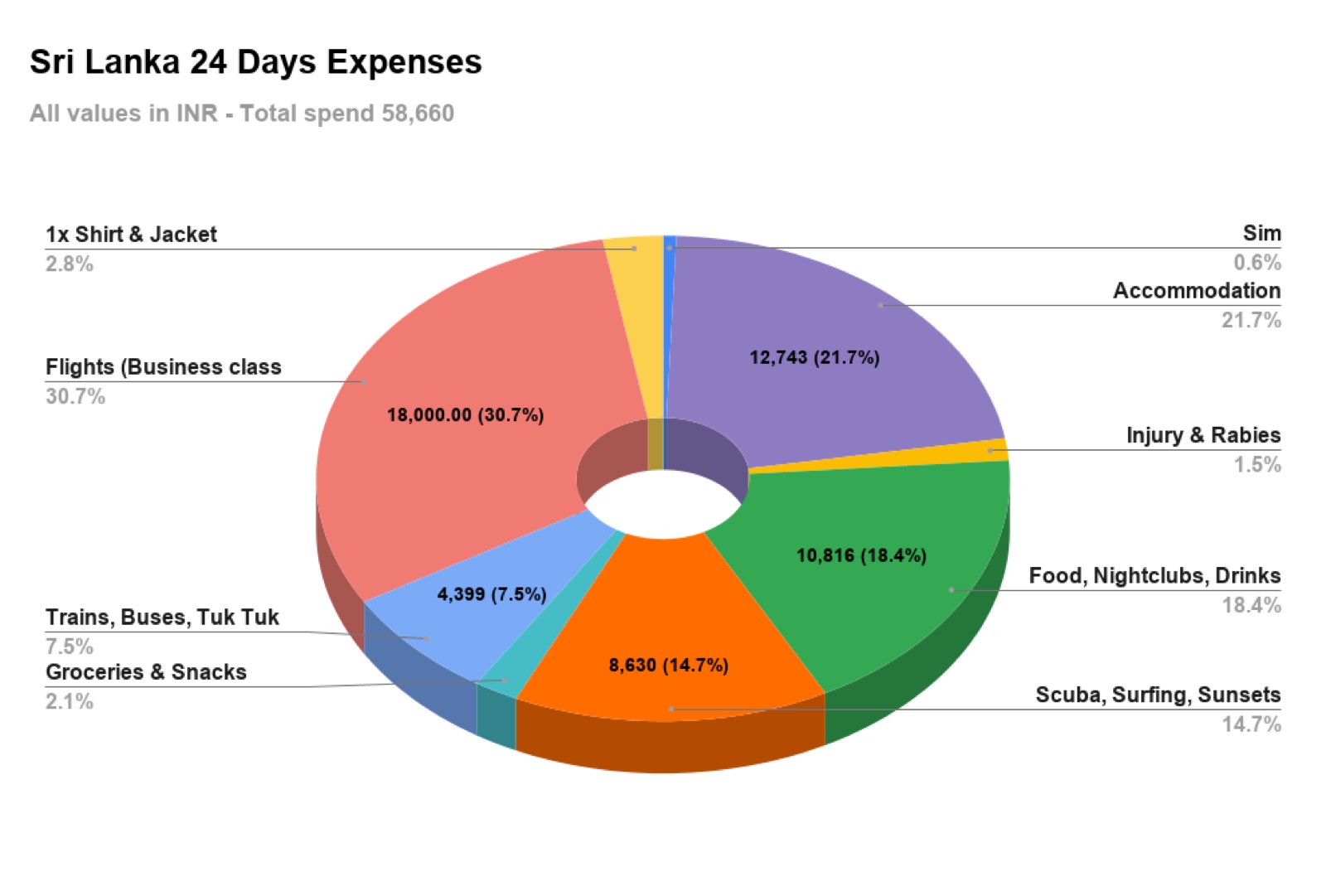
Flights were the biggest slice at 18,000 INR. Accommodation came next at 12,743 INR for two and a half weeks of hostels and one very nice week at Clics, then food, nightlife and drinks at 10,816 INR. The scuba, surfing and sunsets bucket was 8,630 INR, and every train, bus and tuk-tuk on the island added up to just 4,399 INR. The cheapest best thing I did all trip was that 1,200 LKR train to Ella.
Apps and sites to sort before you fly
- PickMe: Sri Lanka’s Uber, and the easiest way to not get overcharged by tuk-tuks in the cities
- Sri Lanka Railways seat reservation site: book the hill-country train seats ahead on the government site, because the good legs sell out. Or do it my way and buy at the counter.
- busseat.lk and sltb.eseat.lk: for long-distance buses. Book the “Super Luxury” option on the longer runs.
- Dialog app: top up your tourist SIM without hunting for a shop
- AllTrails: for the Pekoe Trail, and for inventing your own ending
- PADI app: log your dives so the next refresher isn’t a guessing game
Final thoughts

Come for the train. Stay for the people.
Sri Lanka is the rare place that’s small enough to see in a few weeks and rich enough that you won’t. You can dive on the east coast, ride the prettiest train on earth through the hills, and fall asleep to surf on the south, and still leave with a list of things you missed. I never made it to Arugam Bay or Horton Plains. That’s fine. It’s a reason to go back.
If you take one thing from this, make it the remote-work part. You don’t need to quit your job to live somewhere like this for a while. You need a friendly timezone, a desk facing a garden, and the discipline to close the laptop when the sun starts going down. It’s the same slow-travel idea as my 8 days in Tokyo, just with more rice and curry.
Come for the train, stay for the people, and budget a little extra for the ATM fees and the one dog who didn’t read the script. I post the unfiltered travel version of all this over at @vipulgupta.travel on Instagram, so come say hi.
That’s 24 days on one island and 58,660 INR. Till then, live in the mix!
Wide section banners via Pexels: Sachith Ravishka Kodikara, Andreas Schnabl, Thilina Alagiyawanna, Ravindra Nadkarni, XT7 Core, Charith Kodagoda, and Vika Glitter. Every other photo is mine.
Discover more from Mixster
Subscribe to get the latest posts sent to your email.