
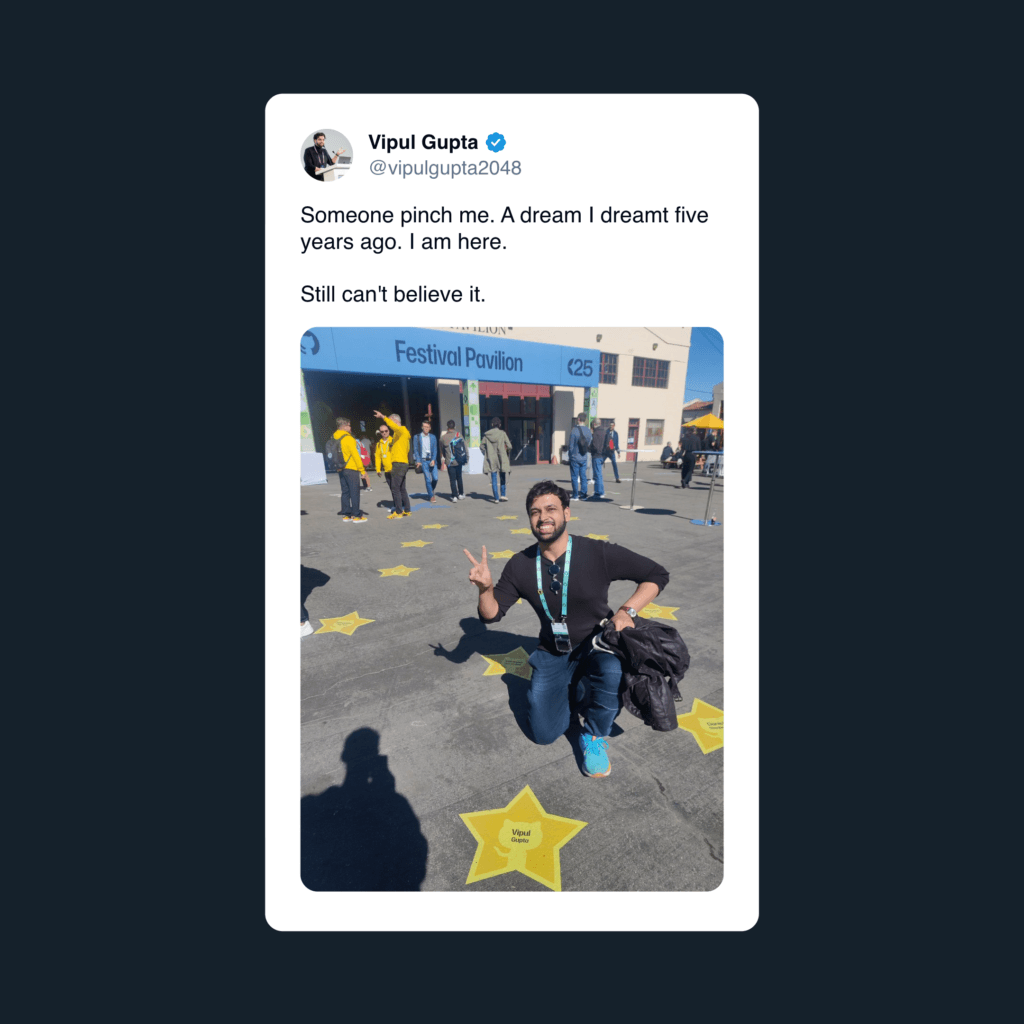
In October 2025, I stood next to my star at GitHub Universe. Incredibly proud of my decade-long journey and yet couldn’t shake off the feeling of being an imposter. I talked to a familiar face about this problem. Four hours later, I had the outline of a new hard problem, a new opportunity to take on.
In early December 2025, I decided to take on a new challenge and left Balena after a nearly 6-year stint. I joined Command Code. Command Code is a terminal-based coding agent that learns your coding taste.
After Six Years at Balena …
I joined balena as the youngest engineer in the team. I saw every stage a company a could go through. Intensive growth/hiring, COVID, Supply Chain Shortages, Layoffs, Funding Rounds, Culture Shifts, Leadership changes, and finally, strategic investments.
In that time frame, my ownership expanded into:
- Built Leviathan, an open-source hardware-in-the-loop testing framework that tests whether
balenaOSactually boots and runs correctly on real physical hardware. When I started, release cycles took 6 weeks. When I left, releases took less than 3 hours. - During the global chip shortage, we built QEMU virtual devices so testing could continue when physical boards couldn’t be sourced. I spoke about this work at CDCon Vancouver, OSS Japan, OSS EU, and GitHub Constellation India.
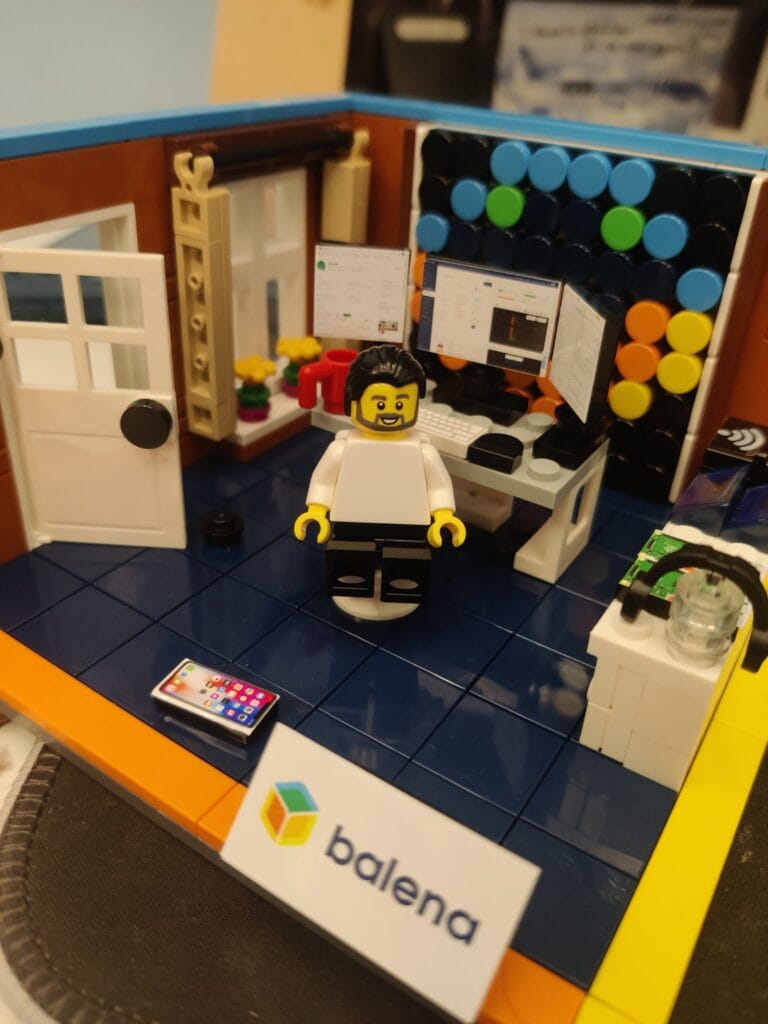
For the last year at Balena, I’d been searching for the next hard problem, exploring observability for CI/CD pipelines. The entire infrastructure layer for AI tooling is being written right now, in real time, and I wanted to be one of the people writing it.
I just didn’t know where, until October.
It all started at the Universe
October 2025. GitHub Universe. My first time in San Francisco. I’d just earned my GitHub Star and was deep in imposter syndrome when I ran into Ahmad Awais.
I knew Ahmad through his work with the Node.js community. When we started talking, it was just two builders comparing notes on hard problems. We talked about code, docs, and open-source. Moving over to the mutual pain we feel when we look at bad Developer Experience (DX).

Time just slipped by. Coffee got cold. As we discussed for four hours. We talked further about taste, Command Code, Langbase, and the thesis that coding agents need to learn how you code, not just what you ask for. By the end of it, we’d started talking about maybe an opportunity.
Over the next few weeks, I had several conversations with Ahmad and the founding team, and the offer came through finally. I put in my notice at Balena. On January 2nd, I hit the ground running with Command Code, taking ownership of all things Product and DX. Can’t believe 2 months have gone by since I joined the company.
Command Code, taste-1 & The Hard Problem.
Here’s what I actually believe: coding agents are the foundational layer. Get this right and you can build every other kind of agent on top of it. Get it wrong and nothing else matters. Right now every coding agent produces output that compiles, works, and feels like it was written by someone who’s never seen your codebase. That’s the problem worth solving.
taste-1 is Command Code’s answer. It watches what you accept, reject, and edit. It extracts your coding preferences as learnings with confidence scores. It conditions every future generation on those learnings. These learnings automatically compound over time.

Before I even interviewed, I spent $110 worth of credits on stress-testing Command Code. I already knew what was broken. I already knew what was worth fixing. What I saw impressed me. Taste was actually learning my patterns, the CLI’s core architecture making the right bets, the potential of the system being built underneath.
What I’ve Built So Far – Solving the Hard Problem
8 weeks in. 77 PRs filed, 309 contributions. Touching every surface of the product.
Every problem from that $110 stress-test? Fixed and Shipped.
It wasn’t smooth from day one. I took ownership of rewiring the entire OAuth flow in my first week, having never read half the codebase. Thanks to Command Code, several coding sessions, and the team taste already dialed in, I was able to ship the feature prod only in my second week. A true testament to Command Code’s potential.

Other huge pieces, I have managed to move along, building Command Code using Command Code.
- Test infrastructure: How do you even test core logic + TUIs + different terminals? I built the entire PTY-based integration test infrastructure from the ground up: the test rig, environment variant helpers, terminal dimension options, and non-interactive test modes. Without it, we couldn’t ship with confidence. With it, the team ships 10x faster.
- VS Code extension. Shipped the full extension and CLI IDE context integration, enabling Command Code to receive context from your editor.
- Terminal Input Experience: I filed 14 PRs just on the terminal input experience: input border highlights, markdown rendering, exit confirmation with Ctrl+C, up/down arrow history with file persistence, fixing Shift+Enter shortcuts,
- Features: I built print mode (
--printflag),/add-dirfor workspace context, and created three new slash commands:/usage,/status,/context.
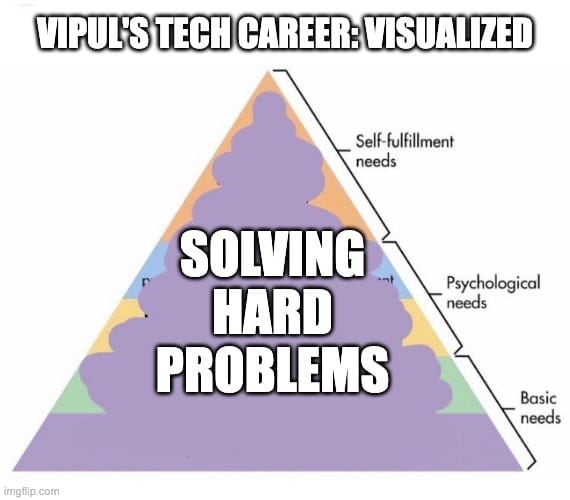
Along with all this, I am restructuring docs and filling the gaps in our information architecture wherever and whenever I see it.
What’s Can you Expect Next from Vipul?
I am working on several hard problems that I will be writing, sharing, and talking about. Includes several work-in-progress items,
- Testing Command Code against Terminal Bench
- Build zero-copy CLI authentication flows: Make no mistakes Edition
- On testing TUI apps end-to-end
- Building VSCode x Terminal integrations
I also remain deeply involved in all things open source, both offline and online.
I’m still organizing developer meetups in New Delhi. Come say hi when you are around! 👋🏼
If you’re building with coding agents, give Command Code a try.
We’re hiring. If you want to talk about coding agents, terminal testing, or taste, find me on Twitter or LinkedIn.

That’s about it for now. Live in the mix.